Choosing the Right Roof for a New Custom Home on Georgian Bay

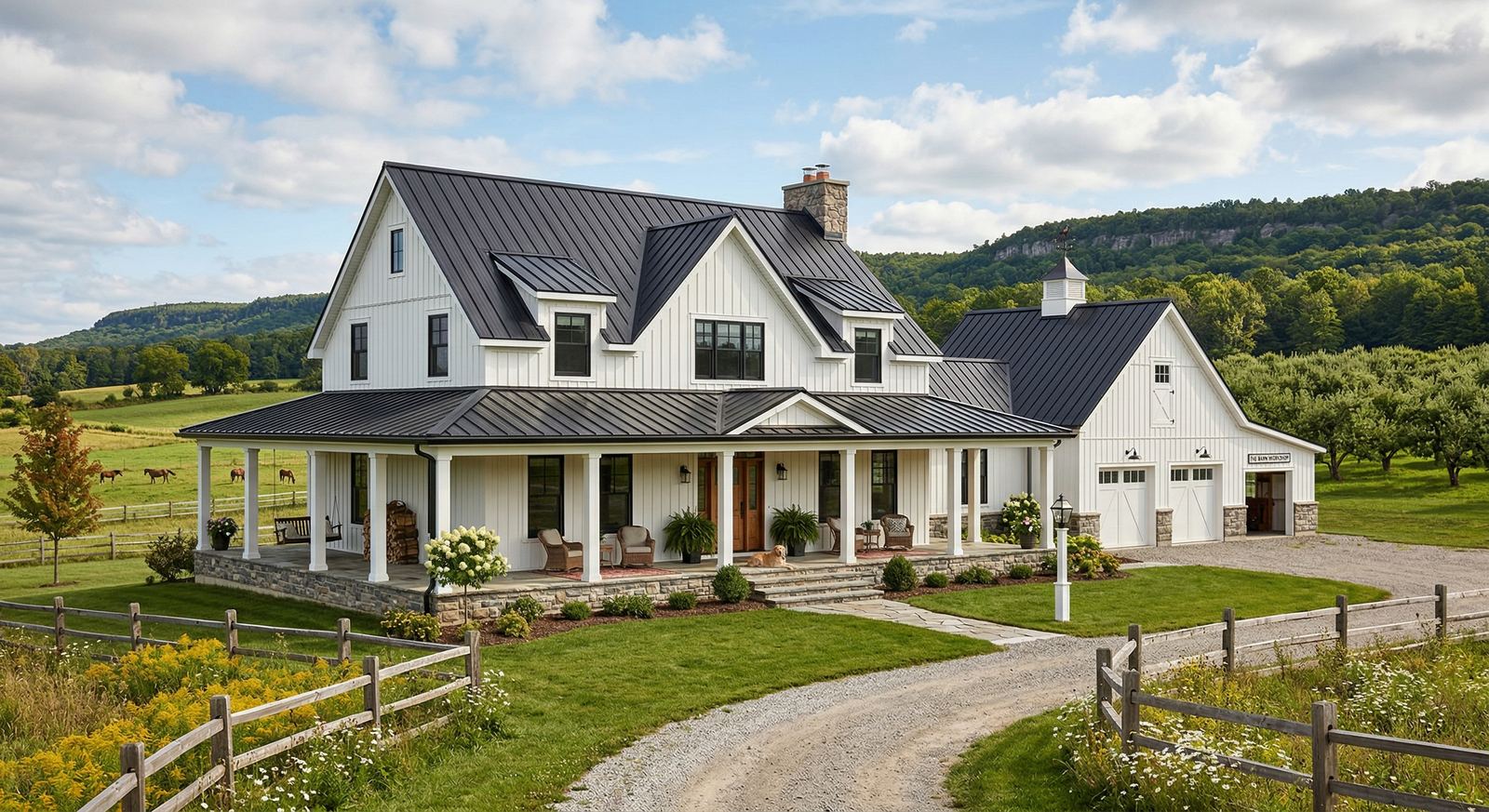
When you’re planning a custom home near Georgian Bay, the roof isn’t a finishing touch you pick from a brochure at the end. It’s one of the first structural decisions in the build, and it quietly shapes everything beneath it — the truss engineering, the attic design, the sightlines of the house itself. That’s because the climate here doesn’t negotiate. Between lake-effect snow rolling off the bay, months of freeze-thaw cycling, and the wind exposure that comes with shoreline living, a Georgian Bay roof works harder than almost any other roof in southern Ontario. The good news: when you’re building custom, you get to plan for all of it on paper, before a single shingle or panel goes on.
What Georgian Bay Weather Asks of a Roof
Start with snow. Lake-effect squalls can stack serious accumulation on a roof in a single weekend, and that weight has to be carried by the structure — which means your roof material and pitch are inputs to the engineering, not afterthoughts. A heavier covering or a lower slope changes the truss design, and the time to make that call is during planning, not framing.
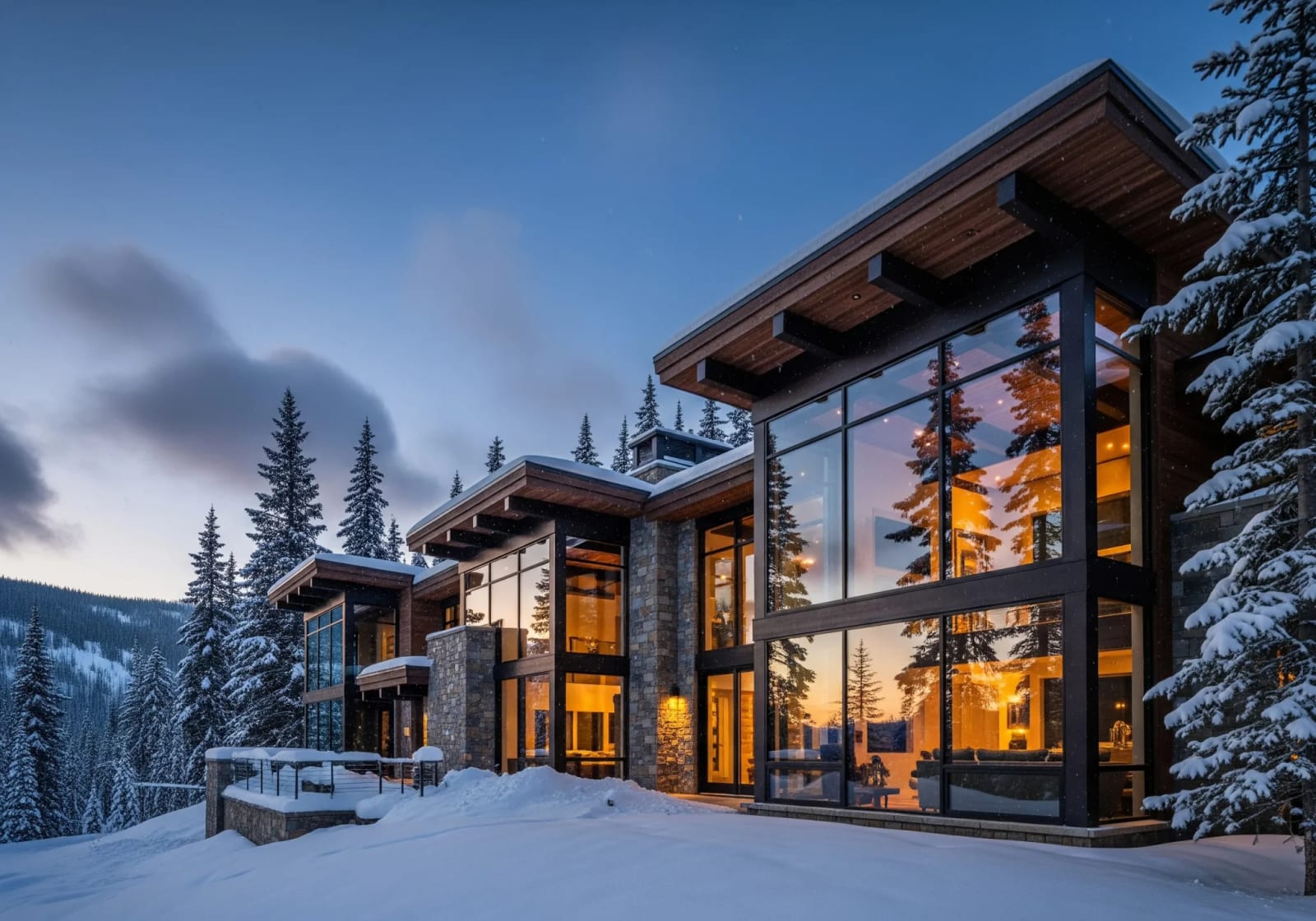
Then there’s ice damming, the quiet destroyer of roofs in this region. Heat escaping into the attic melts the underside of the snowpack; the meltwater runs down and refreezes over the cold eaves; the resulting ice ridge backs water up underneath the roof covering and into the house. The fix is almost entirely a design-stage package: an airtight ceiling, deep insulation, continuous ventilation from soffit to ridge, and eave protection membranes run well up the slope. A custom build is the one chance to get every layer of that assembly right without compromise — the same logic that governs the rest of the building envelope, where the roof is simply the top of the shell.
Add shoreline wind and strong summer UV, and the picture is clear: the material question only makes sense once you know what the site itself demands.
Metal, Architectural Shingle, or Cedar?
Standing-seam metal is the snow-country workhorse. It sheds snow instead of holding it, shrugs off freeze-thaw cycling, and realistically lasts 50 years or more. It costs more upfront, and shedding snow is its own design consideration — snow guards belong above entries, walkways, and decks, and that placement should be drawn in, not improvised later. Visually, it suits both modern builds and the clean cottage-modern look that’s become a Georgian Bay signature.
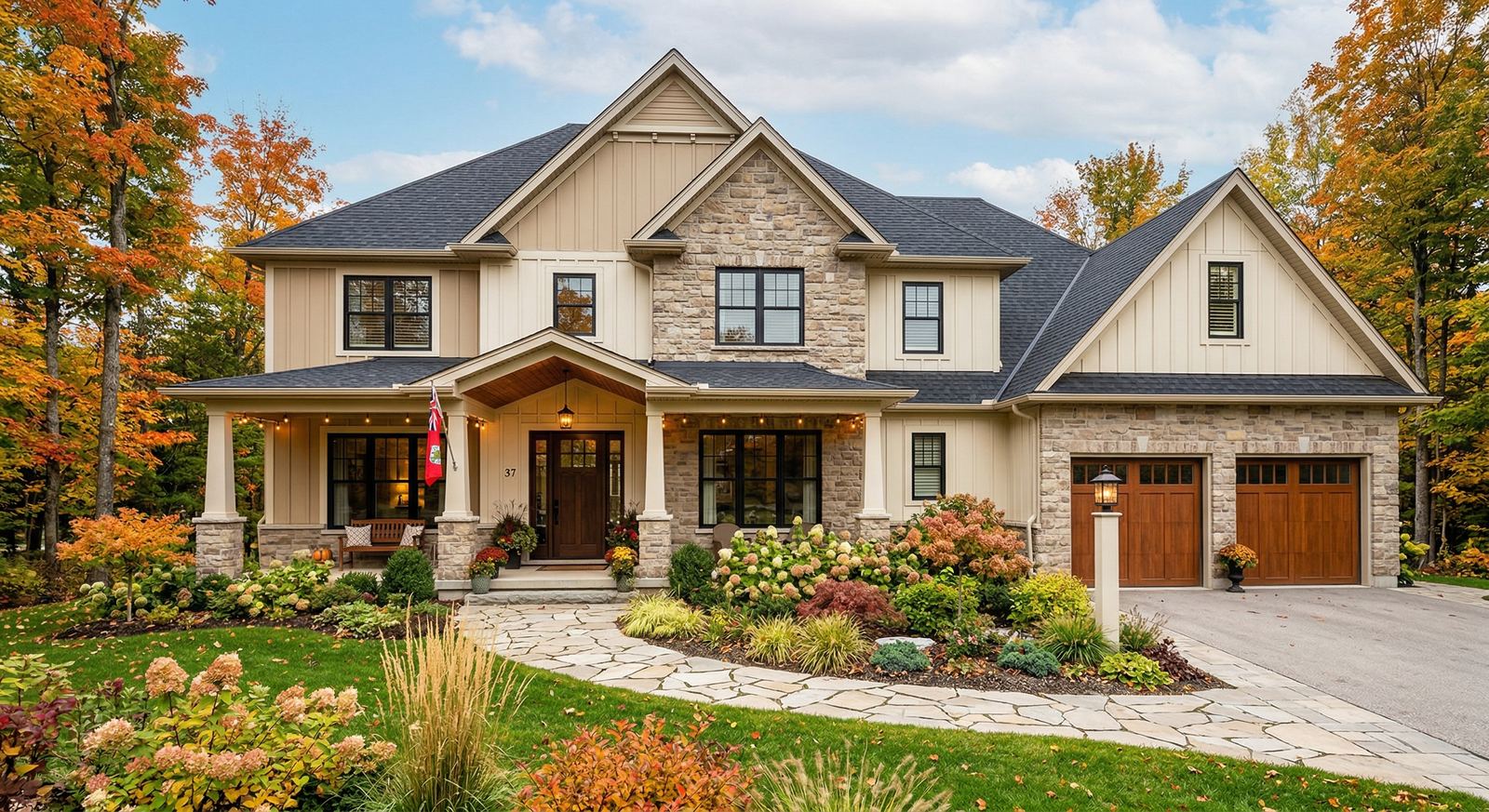
Architectural shingles remain the value play, and a good one. Modern laminated shingles handle this climate well for 25 to 30 years, come in a wide range of colours and profiles, and are the easiest roof to repair down the road. The honest caveat: a shingle roof leans harder on everything underneath it — the ice-and-water shield, the ventilation, the attic detailing. On a custom build where you control those layers, shingles perform far better than their reputation on older cottages suggests.
Cedar shakes are the romantic’s choice, and on the right design nothing else looks like them. Cedar insulates naturally and weathers into the landscape. It’s also the highest-maintenance option in a freeze-thaw climate — moisture and moss need managing, periodic treatment is part of ownership, and it carries a premium price. Some insurers will also have questions. If the aesthetic is the point, cedar rewards owners who go in with clear eyes.
Each choice feeds back into the design: structural weight, minimum pitch, eave and fascia details, even how the roofline frames the windows. That’s exactly why the conversation belongs at the planning table, alongside the floor plan and site analysis work that sets the house on the lot in the first place.
A Roof Spec’d to the Site Beats “Good Enough”
Here’s the thing about designing for a hard climate: the logic is universal, even when the threat isn’t. In South Florida, Coral Springs roofing experts run this exact conversation in reverse — down there the enemy is hurricane wind uplift instead of snow load, so they spec fastening schedules and wind-rated materials the way a Georgian Bay builder specs truss capacity and ice-and-water protection. Different weather, same principle: the roofs that last are the ones engineered for the specific site they sit on, not the ones that merely meet code minimum.
That’s the real takeaway for a custom build on the bay. A roof spec’d precisely to your property — its snow exposure, its orientation, its tree cover, the way the wind comes off the water — will outlast and outperform a generic package that ignores all of it. It also pairs with the rest of the shell: an ICF wall system and a properly vented, properly insulated roof assembly are what make an energy-efficient home actually perform through a Georgian Bay winter.
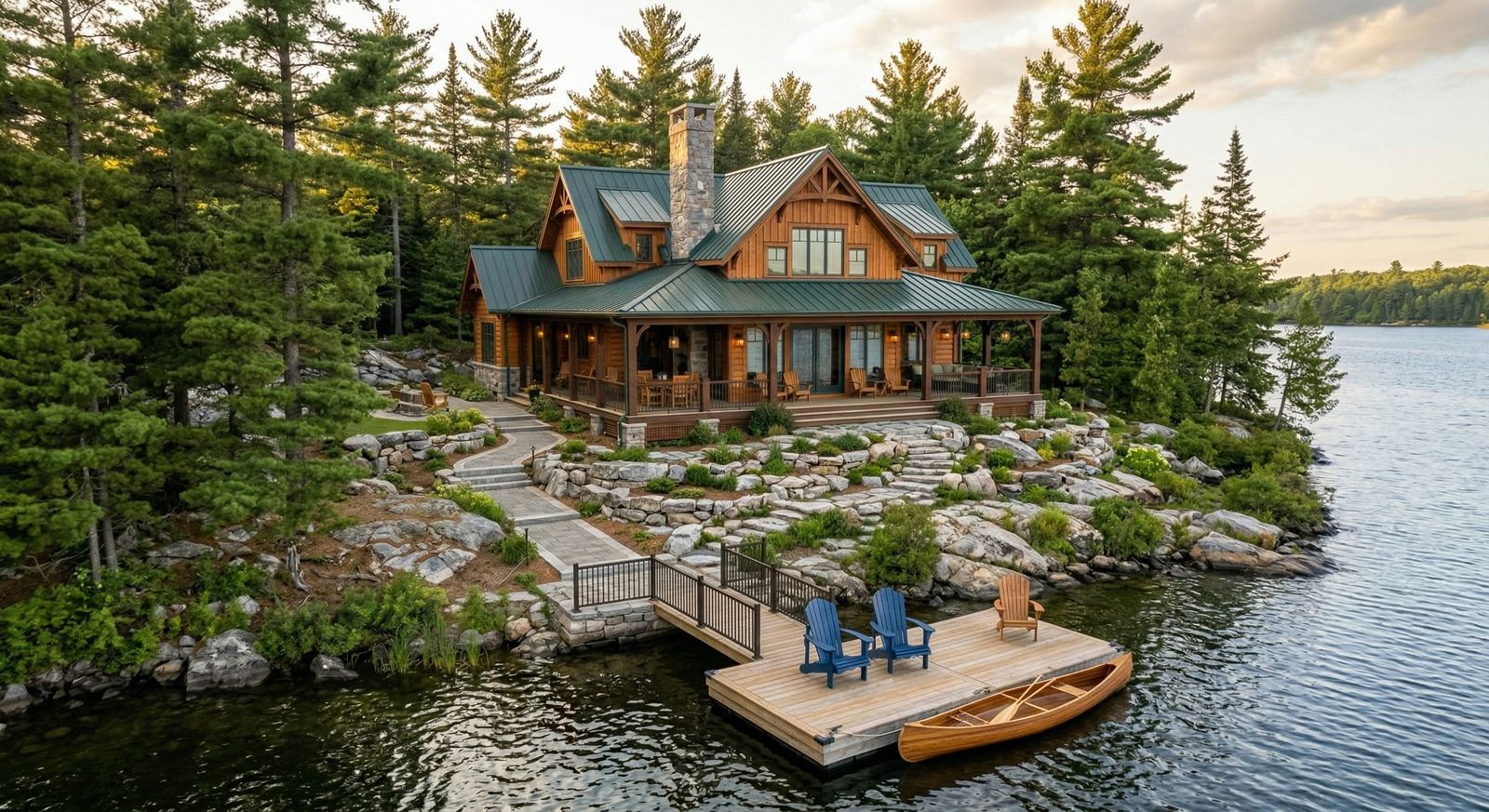
Exposure varies more than people expect across our service area. An open shoreline lot in Wasaga Beach takes wind off the water that a treed lot inland never sees. A chalet near Blue Mountain carries snow loads well beyond what the same house would see a half-hour south. And a waterfront cottage has to handle wind, ice, and UV all at once. The roof should be specified to the lot, not to the region.
Frequently Asked Questions
What is the best roof material for a custom home on Georgian Bay? There’s no single answer, but standing-seam metal is the strongest all-round performer in heavy-snow, freeze-thaw conditions — it sheds snow, resists ice, and lasts 50 years or more. Architectural shingles are an excellent value choice when the attic and ventilation details are done properly, and cedar is a premium aesthetic option for owners who accept the maintenance.
How do I prevent ice dams on a new build? Ice damming is solved in design, not in maintenance. It takes an airtight ceiling plane, deep attic insulation, continuous soffit-to-ridge ventilation, and ice-and-water membrane run well up the slope from the eaves. Because all four are assembly decisions, a custom build is the best opportunity you will ever have to eliminate the problem.
Does the roof material affect the structure of the house? Yes. Material weight and roof pitch are inputs to the truss and framing engineering, so the roof needs to be decided during design rather than at the shingling stage. Changing to a heavier covering or a lower slope after the trusses are engineered means redesign and cost.
Do metal roofs need snow guards? On most Georgian Bay homes, yes — at least above entries, walkways, decks, and anywhere people or vehicles sit below a shedding slope. Snow guard placement should be drawn into the roof plan during design, not added after the first winter makes the problem obvious.
Bring the Roof Into the Design Conversation Early
If you’re planning a custom home or new cottage in the Wasaga Beach or Georgian Bay area, bring the roof into the design discussion early — weighing snow load, ice-damming defenses, and material trade-offs before the first drawing is finalized is the cheapest roof insurance you’ll ever buy.
Mighton Construction has been building across South Georgian Bay for over 30 years, with Jeff and Adam personally involved in every project. We handle these decisions where they belong: at the planning table, before the drawings are locked. Explore our custom home building and custom cottage and waterfront building services, or read our guide to choosing a builder for your custom home.
Ready to start? Talk to Mighton Construction about your build.