What is smart home integration? expert guide for luxury homes

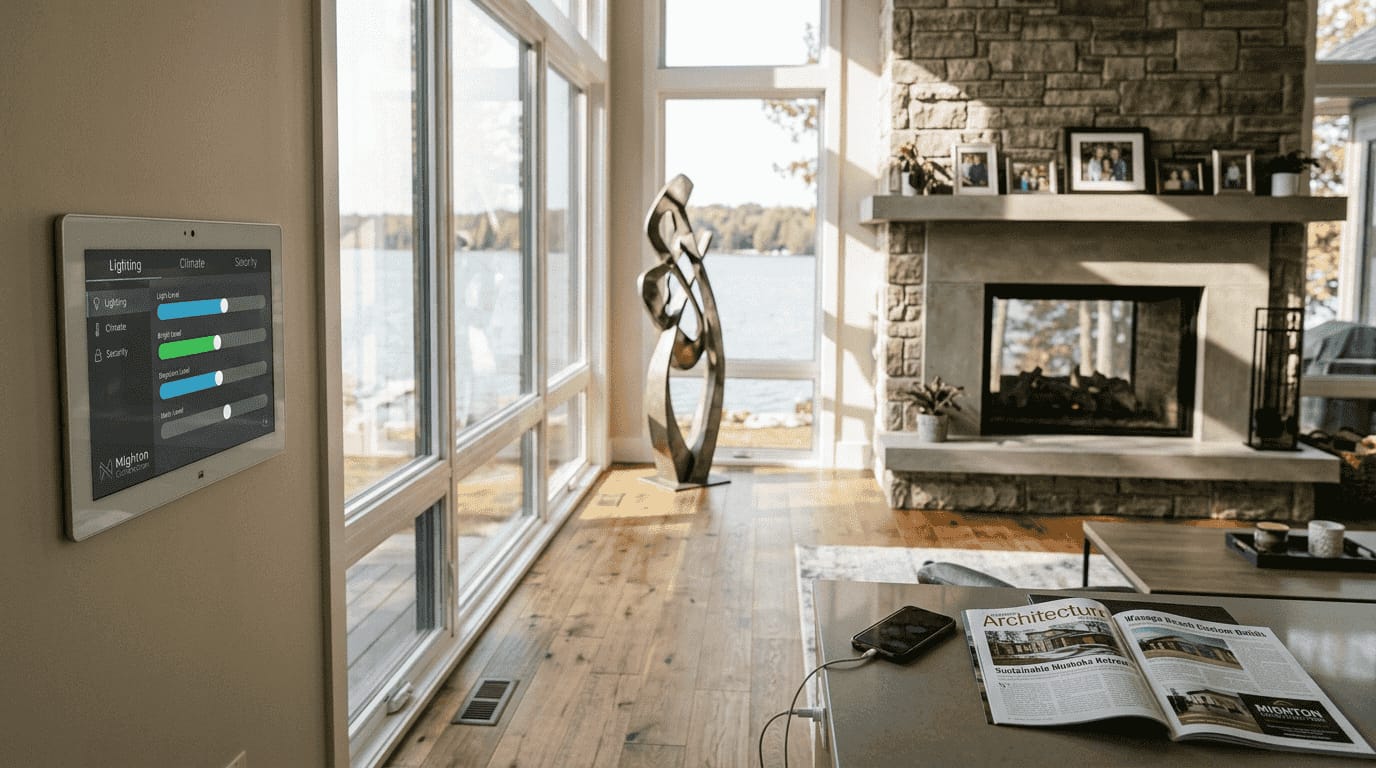
Many homeowners think smart home integration means buying a few connected gadgets and calling it done. True integration creates a responsive automated environment where lighting, climate, security, and entertainment systems work together seamlessly. For luxury custom homes in South Georgian Bay, understanding this distinction transforms how you approach technology during design and construction. This guide reveals what smart home integration really means, which protocols power reliable systems, and how to avoid the costly mistakes that derail 40% of new installations.
Table of Contents
- Understanding Smart Home Integration In Luxury Custom Homes
- Protocols And Technologies Powering Smart Home Systems
- Common Challenges And Expert Strategies In Smart Home Integration
- Adding Value And Lifestyle Benefits With Smart Home Integration
- Explore Premium Custom Homes With Smart Integration
Key takeaways
| Point | Details |
|---|---|
| Integration creates harmony | Smart home integration connects lighting, climate, security, and entertainment into one seamless, lifestyle-matched system. |
| Protocol choice prevents failure | Selecting compatible protocols like Thread and Matter ensures reliable performance and future-proofs your investment. |
| Value enhancement | Well-executed smart integration can boost property value by 10% whilst elevating daily comfort. |
| Planning prevents problems | Early collaboration between builder and integrator during design avoids expensive retrofits and compatibility issues. |
Understanding smart home integration in luxury custom homes
Smart home integration goes far beyond installing individual connected devices. It creates a responsive automated environment where multiple systems communicate and coordinate actions based on your preferences and routines. When you adjust the thermostat, compatible window coverings might lower to reduce heat gain. When you activate a scene for movie night, lights dim, shades close, and the entertainment system powers up automatically.
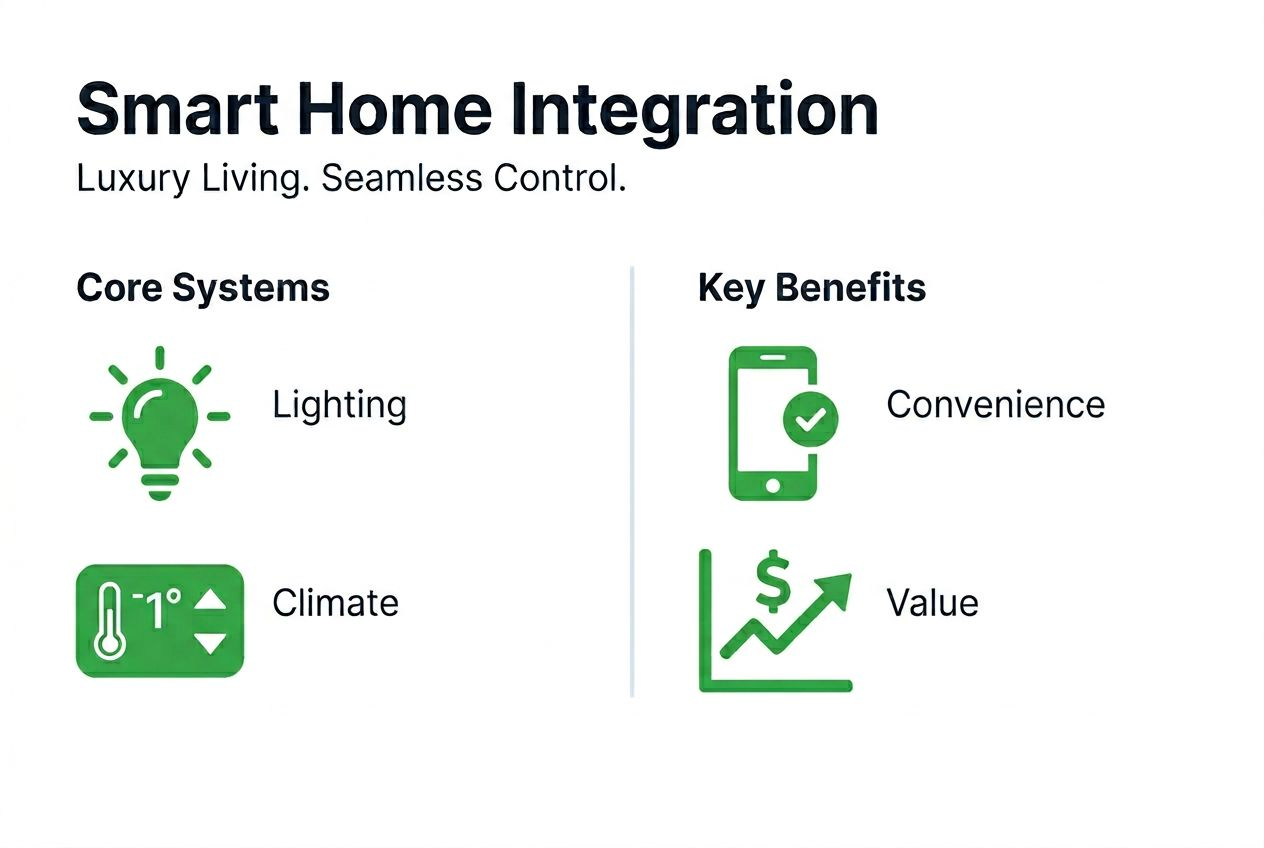
True integration harmonises four core systems. Lighting control manages ambiance throughout your home, from task lighting in kitchens to mood lighting in living spaces. Climate systems maintain comfort whilst optimising energy efficiency across zones. Security encompasses cameras, sensors, locks, and access control working as one cohesive network. Entertainment systems deliver audio and visual experiences seamlessly across rooms.
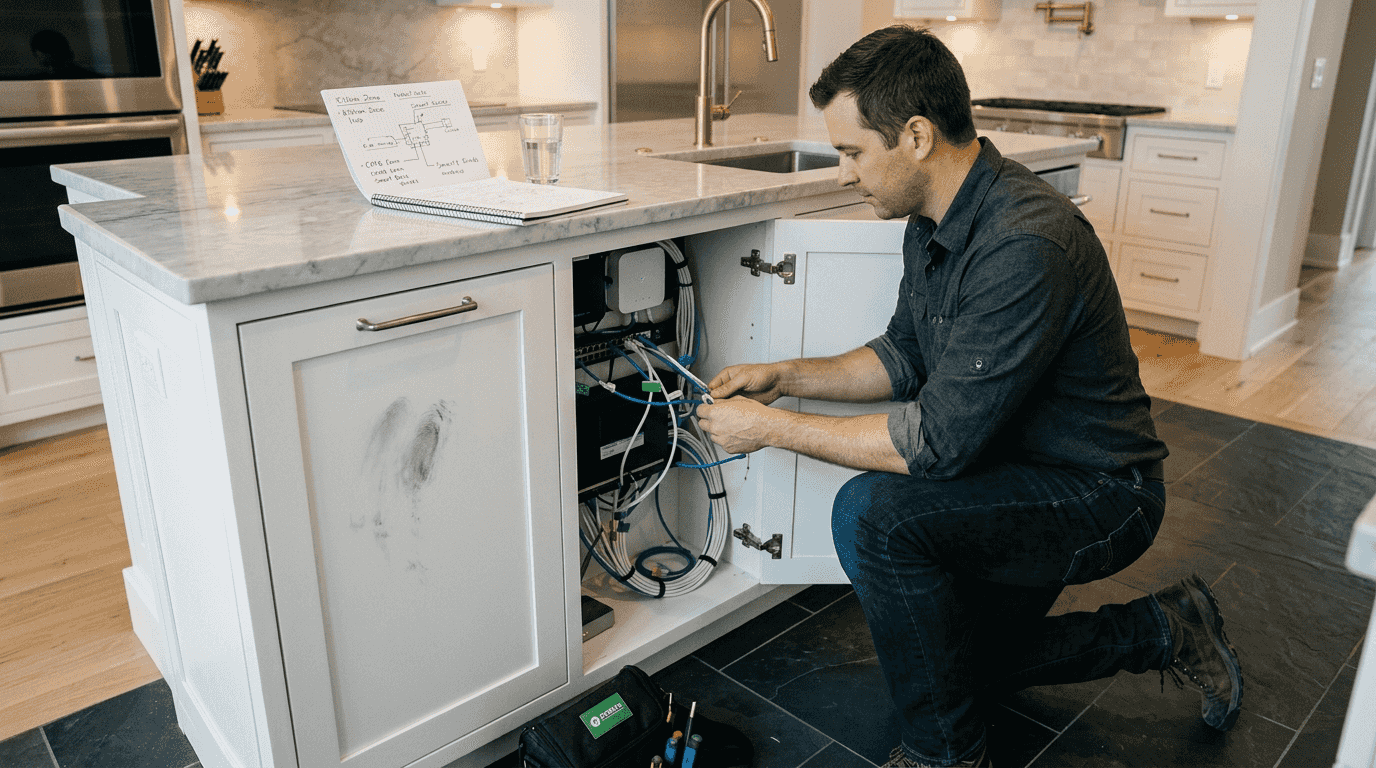
The goal is creating technology that becomes invisible. You shouldn’t need to think about which app controls what or remember complex sequences. Your home responds intuitively to your lifestyle patterns, time of day, and explicit commands. This effortless experience defines luxury home automation in custom homes.
Successful integration requires these essential elements:
- Unified control platform that manages all systems from one interface
- Compatible protocols ensuring devices communicate reliably
- Robust network infrastructure supporting bandwidth demands
- Thoughtful programming that anticipates lifestyle needs
- Professional installation guaranteeing proper configuration
Pro Tip: Schedule planning meetings with your builder and smart home integrator during the design phase, before walls close. This timing allows proper wire runs, strategic device placement, and infrastructure planning that would cost significantly more to retrofit later.
Protocols and technologies powering smart home systems
The invisible backbone of any smart home is its communication protocols. These wireless standards determine how devices talk to each other, affecting everything from response speed to battery life. Understanding protocol differences helps you make informed choices that prevent compatibility headaches and ensure long-term reliability.
Zigbee has served as a workhorse protocol for years, creating mesh networks where devices relay signals to extend range. It operates on 2.4 GHz frequency with moderate power consumption and reasonable latency for most applications. Thread represents newer technology offering superior latency and battery efficiency compared to Zigbee and Bluetooth LE. Thread builds IPv6-based mesh networks with no single point of failure, making systems more resilient.
Matter changes the integration game entirely. Rather than replacing existing protocols, Matter operates as an application layer running over IP networks. Matter devices can use Wi-Fi, Ethernet, or Thread as their transport mechanism whilst maintaining compatibility across ecosystems. This unified approach means your devices work together regardless of manufacturer, reducing the ecosystem lock-in that plagued earlier smart home technology adoption.
| Protocol | Latency | Battery Life | Network Type | Best Use Cases |
|---|---|---|---|---|
| Zigbee | Moderate | Good | Mesh (2.4 GHz) | Sensors, lighting, basic automation |
| Thread | Very Low | Excellent | IPv6 Mesh | Time-sensitive controls, battery devices |
| Matter | Varies by transport | Depends on underlying protocol | IP-based (Wi-Fi/Thread/Ethernet) | Cross-ecosystem integration |
| Wi-Fi | Low to Moderate | Poor (mains powered) | Star topology | High-bandwidth devices, cameras |
Choosing the right protocol mix depends on your specific requirements. Battery-powered sensors benefit from Thread’s efficiency. High-bandwidth cameras need Wi-Fi or Ethernet. Matter compatibility future-proofs your investment as more manufacturers adopt the standard.
Pro Tip: Prioritise local automations that process on your network rather than relying on cloud services. Local control reduces latency, maintains functionality during internet outages, and enhances privacy by keeping data within your home.
Common challenges and expert strategies in smart home integration
Even with premium equipment, smart home projects face predictable obstacles. Research shows over 40% of installations fail within six months when underlying protocols get ignored. Most failures stem from mismatched expectations about how different technology layers interact.
The three-layer architecture requires careful alignment. The application layer defines what users see and control. The network layer handles communication protocols like Thread or Zigbee. The physical layer encompasses actual devices and their capabilities. Problems arise when these layers don’t align properly, like trying to use a Zigbee device on a Thread-only network or expecting cloud-dependent features to work offline.
Expert integrators follow proven strategies to ensure reliability:
- Test latency requirements before committing to protocols, especially for time-sensitive functions like lighting and security responses
- Design redundancy into critical systems so secondary paths exist if primary communication fails
- Implement regular automated backups of configuration and programming to enable quick recovery from failures
- Create detailed device maps documenting every component, its protocol, firmware version, and network connections
- Prioritise local processing over cloud dependency wherever possible to maintain functionality during internet disruptions
- Schedule firmware updates systematically rather than applying them randomly, testing changes in isolation before wide deployment
Pro Tip: Maintain a living document tracking firmware versions, automation scripts, and configuration changes. When troubleshooting issues months or years later, this documentation proves invaluable for identifying what changed and when problems started.
“The most reliable smart home systems treat integration as an architectural challenge, not just a collection of compatible devices. Success requires understanding how application, network, and physical layers interact throughout the entire system lifecycle.”
For luxury homes in South Georgian Bay, these strategies prevent the frustration of systems that work brilliantly at installation but degrade over time. Proper planning addresses common luxury smart home challenges before they impact your daily experience.
Adding value and lifestyle benefits with smart home integration
Smart home integration delivers measurable financial returns alongside lifestyle improvements. Market data shows well-executed projects boost property value by as much as 10%. More specifically, properties with smart features command a 5-10% premium in sales prices or rental rates, particularly in luxury markets where buyers expect advanced technology.
Beyond resale value, integration transforms daily living. Climate systems learn your preferences and adjust automatically, maintaining perfect comfort whilst reducing energy waste. Lighting adapts throughout the day, supporting natural circadian rhythms and creating ideal ambiance for different activities. Security systems provide peace of mind through intelligent monitoring that distinguishes between routine events and genuine threats.
| Benefit Category | Specific Improvements | Estimated Value Impact |
|---|---|---|
| Property Value | Market premium for smart features | 5-10% increase |
| Energy Efficiency | Optimised climate and lighting control | 15-25% reduction in utility costs |
| Security Enhancement | Integrated monitoring and access control | Insurance discounts up to 20% |
| Lifestyle Comfort | Automated routines and scenes | Immeasurable daily convenience |
| Future Adaptability | System scalability and updates | Extended useful life of investment |
Adaptability represents a often-overlooked advantage. Quality smart home systems enable what industry experts call virtual rewiring. Instead of running new cables to change how switches control lights, you simply reprogram the system. This flexibility proves invaluable as families grow, room purposes change, or new technologies emerge.
Scalability ensures your investment grows with you. Start with core systems like lighting and climate, then add entertainment, shading, or pool controls as budget allows. Proper infrastructure planning during construction makes future expansion straightforward rather than disruptive.
For South Georgian Bay homeowners, these benefits align perfectly with the region’s luxury market expectations. Waterfront properties, custom estates, and vacation homes all gain competitive advantages through thoughtful smart integration. The technology enhances the lifestyle these properties promise whilst protecting long-term investment value, similar to how quality renovations add lasting value.
Explore premium custom homes with smart integration
Mighton Construction brings over 30 years of expertise to custom homes across South Georgian Bay, seamlessly integrating smart home technology into every project. Our collaborative approach connects you with experienced integrators during the design phase, ensuring your technology infrastructure supports both current needs and future expansion.
Explore our custom home projects gallery to see how we’ve incorporated smart systems into waterfront cottages, luxury estates, and vacation properties throughout Wasaga Beach, Collingwood, and Blue Mountain. Each project demonstrates our commitment to craftsmanship that honours both traditional building excellence and cutting-edge technology. Visit our luxury home gallery for inspiration on creating your ideal integrated home.
FAQ
What devices are typically integrated in smart home systems?
Lighting controls, thermostats, security cameras, door locks, and entertainment systems form the core of most integrations. Luxury installations often add motorised window coverings, whole-home audio, pool and spa controls, and irrigation management. Device selection balances functionality with aesthetic design, ensuring technology enhances rather than clutters your living spaces.
How does smart home integration impact property resale value in South Georgian Bay?
Smart integration can increase property value by 5-10% in luxury markets. High-end buyers in the region expect modern technology as standard, particularly in custom homes and waterfront properties. Systems that demonstrate reliability, ease of use, and quality installation provide the strongest value enhancement during resale.
What are the key considerations when choosing smart home protocols?
Prioritise protocols offering superior latency and battery efficiency like Thread for time-sensitive controls. Matter compatibility ensures future flexibility across ecosystems. Evaluate mesh network reliability, local processing capabilities, and whether devices require constant cloud connectivity. Work with experienced integrators familiar with modern protocols to match technology choices with your specific requirements.
Can smart home systems be added to existing homes through renovation?
Yes, though the process requires more planning than new construction integration. Wireless protocols like Thread and Zigbee minimise the need for new wiring, whilst strategic placement of control panels and hubs can work within existing layouts. Quality renovation contractors coordinate with integrators to identify opportunities during other upgrades, making technology integration more cost-effective.
How much maintenance do smart home systems require?
Well-designed systems need minimal ongoing maintenance beyond periodic firmware updates and occasional device battery replacements. Professional integrators typically offer service agreements covering software updates, system health monitoring, and priority support. Budget roughly 1-2% of initial system cost annually for maintenance, similar to other home systems. Regular backups and documentation reduce troubleshooting time when issues arise.