Custom Millwork: Elevating Luxury Homes in Canada

A beautifully renovated home in South Georgian Bay is about more than style—it reflects your commitment to quality craftsmanship and timeless materials. For discerning homeowners in Wasaga Beach, Collingwood, and the surrounding region, custom millwork is the key to transforming spaces with seamless precision and sophisticated character. By choosing tailored cabinetry, built-in storage, and architectural details crafted from premium wood, you bring a harmonious, functional elegance to every room that goes far beyond mass-produced alternatives. Custom millwork showcases artistry, durability, and personal vision in your luxury renovation.
Table of Contents
- What Is Custom Millwork In Home Design?
- Key Types Of Custom Millwork Solutions
- Kitchen And Bathroom Cabinetry
- Mouldings, Trim, And Wall Details
- Built-In Storage And Shelving
- Staircases, Railings, And Architectural Features
- Craftsmanship And Materials In Premium Millwork
- The Technology And Precision Behind Modern Millwork
- Material Specifications That Matter
- The Design-To-Installation Process Explained
- Cost, Value, And Common Pitfalls For Homeowners
- Common Pitfalls And How To Avoid Them
Key Takeaways
| Point | Details |
|---|---|
| Custom Millwork Enhances Home Value | Investing in custom millwork significantly boosts property value by providing tailored solutions that cater to specific functional and aesthetic needs. |
| Personalisation is Key | Custom millwork allows for unique design elements that reflect individual lifestyles and aesthetics, ensuring every piece integrates seamlessly with the home. |
| Quality Materials Matter | Selecting premium materials like solid hardwoods or engineered options ensures durability and longevity, making your investment worthwhile over time. |
| Professional Craftsmanship is Essential | Engaging experienced craftspeople ensures precision in design and installation, ultimately delivering a polished finish that enhances the overall quality of your home. |
What Is Custom Millwork in Home Design?
Custom millwork is the craft of designing and building wood-based architectural elements tailored precisely to your home’s exact specifications and aesthetic vision. Unlike mass-produced alternatives, custom millwork involves creating cabinetry, shelving, mouldings, doors, trims, panels, staircases, and built-in features that fit your spaces perfectly and reflect your personal style. This approach combines skilled artisanal techniques with premium materials such as solid wood, reclaimed lumber, and high-quality composites to produce functional pieces that aren’t just beautiful but built to last decades in your home.
For homeowners in Wasaga Beach, Collingwood, and across the South Georgian Bay region, custom millwork represents a significant investment in both the quality and character of a luxury residence. When you work with experienced craftspeople on a custom millwork project, you’re not simply purchasing cabinetry or trim. You’re creating architectural elements that harmonize with your home’s lighting, colour schemes, and structural features. Think of it this way: a mass-produced kitchen cabinet fits into a space, but custom millwork becomes part of your home’s story. The wood patterns, joinery techniques, and material selections reflect deliberate choices that enhance the sophistication and functionality of every room. This level of personalisation is particularly valuable in custom home construction, where every detail contributes to the overall vision.
What separates custom millwork from standard cabinetry is the combination of optimised functionality and seamless design integration. Your millwork must work as hard as it looks. Whether you’re designing a walk-in closet system with hidden storage solutions, a library with floor-to-ceiling shelving that accommodates your rare book collection, or kitchen cabinetry that maximises every inch of space, custom millwork serves your actual lifestyle. Professional craftspeople spend time understanding how you use your spaces, then build solutions that work intuitively. This is especially important in custom kitchen design, where storage needs, workflow, and aesthetics must align perfectly.
The Materials and Craftsmanship Behind Custom Millwork
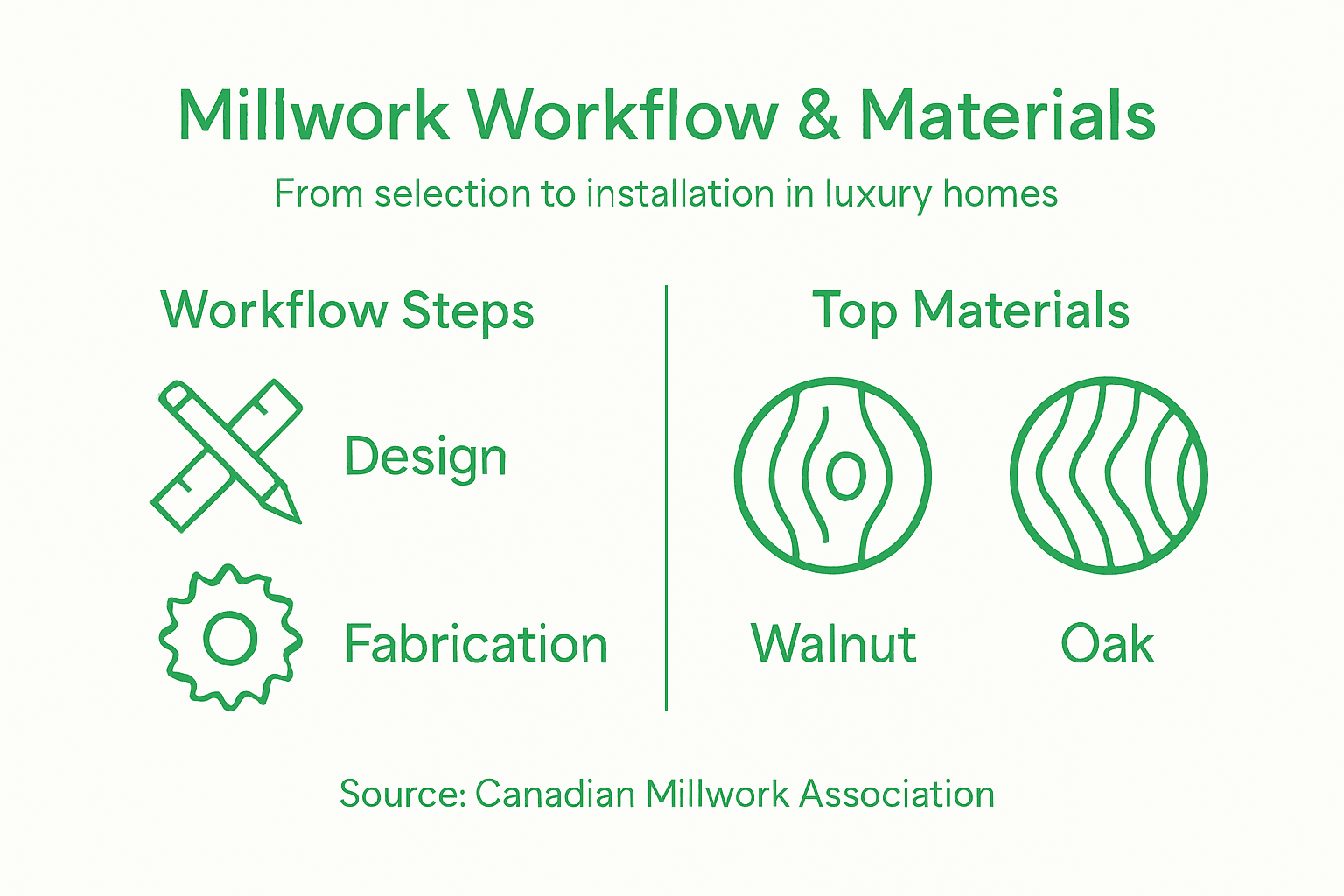
The quality of your finished millwork depends heavily on material selection and execution. Solid hardwoods like walnut, oak, and maple are popular choices for luxury homes because they age beautifully and can be refinished throughout your home’s lifetime. Reclaimed lumber adds character and sustainability, particularly appealing to homeowners who value environmental responsibility. Modern custom millwork also incorporates high-grade MDF and plywood for stability in humid lakefront environments typical of South Georgian Bay properties, where seasonal moisture fluctuations can affect solid wood. A skilled millworker understands which materials perform best in specific applications and how to combine them strategically.
The craftsmanship separates exceptional millwork from adequate work. Hand-cut details, precision joinery, and careful finishing take time. This is not automation. This is problem-solving by experienced artisans who understand wood movement, structural integrity, and aesthetic balance. Details matter. The width of a reveal between a cabinet face and wall, the angle of a crown moulding, how door frames sit perfectly flush—these decisions influence whether a room feels refined or awkward. Professional millwork requires patience and expertise that simply cannot be rushed.
Pro tip: When planning custom millwork for your luxury home, allocate time in your renovation timeline for detailed consultations with your millworker—often 4 to 8 weeks before fabrication begins—so complex design elements can be properly engineered and material selections tested against your home’s lighting and finishes.
Key Types of Custom Millwork Solutions
Custom millwork encompasses a wide range of architectural elements, each serving distinct functional and aesthetic purposes in luxury homes. The most common applications include cabinetry for kitchens, bathrooms, and storage areas; decorative mouldings such as crown moulding and baseboards; built-in shelving and storage units; wainscoting and wall panels; and architectural features like staircases, railings, and arches. What makes each type valuable is how it addresses specific design challenges in your home. A kitchen island with custom cabinetry isn’t just storage. It becomes a focal point that defines your cooking space and workflow. Similarly, custom architectural elements like built-in shelving transform ordinary walls into functional displays that showcase your collections whilst maintaining visual balance throughout the room.
Kitchen and Bathroom Cabinetry
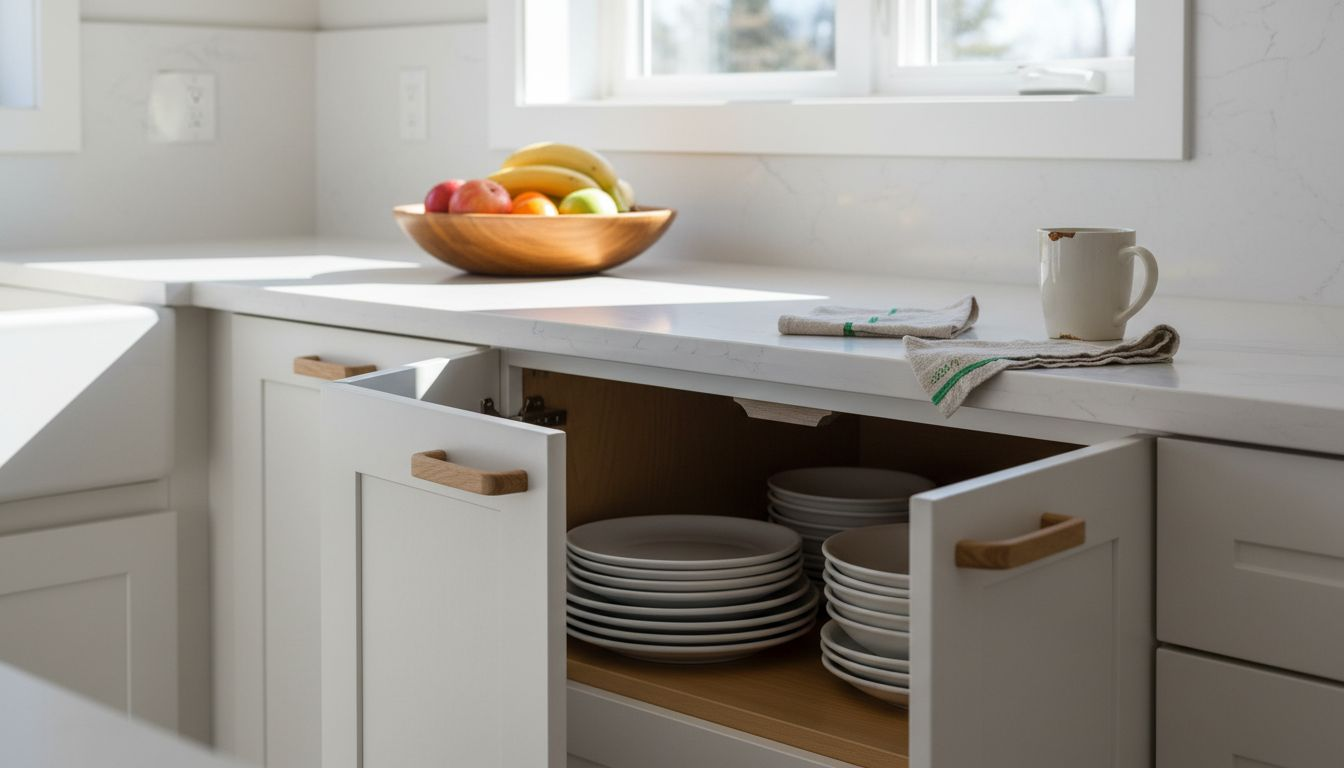
Custom kitchen cabinetry represents one of the most impactful millwork investments in any luxury home. Unlike stock cabinets, custom solutions accommodate your appliances, workflow preferences, and design vision precisely. In Wasaga Beach and Collingwood homes, where kitchens often serve as gathering spaces, bespoke cabinetry can incorporate specialty storage for wine collections, integrated spice racks, hidden pantries, and soft-close mechanisms that feel refined compared to standard alternatives. Bathroom vanities present similar opportunities. A custom vanity doesn’t just hold your sink and countertop. It can integrate hidden storage for cosmetics and linens, accommodate multiple sink configurations for master ensuite bathrooms, and tie together your tiles, lighting, and mirror placement into one cohesive design statement. The material choices matter tremendously. Solid wood resists moisture better than alternatives, whilst waterproof finishes ensure durability in these wet environments for decades.
Mouldings, Trim, and Wall Details
Mouldings are where subtle sophistication becomes visible. Crown moulding installed where walls meet ceilings adds elegance and draws the eye upward, making rooms feel larger. Baseboards polish the transition between walls and floors, grounding your design. Wainscoting adds character and texture to dining rooms, bedrooms, and living spaces, particularly effective in cottages and heritage homes throughout South Georgian Bay. The style variations matter. Traditional ornate mouldings suit Victorian or period architecture, whilst sleek minimal trim complements contemporary designs. The choice between solid wood and MDF influences both the finished appearance and long-term maintenance. Solid wood ages beautifully and can be refinished, whilst MDF offers stability in fluctuating humidity and accepts paint finishes flawlessly. For lakefront properties experiencing seasonal moisture changes, a skilled millworker chooses materials strategically based on exposure and use.
Built-in Storage and Shelving
Built-in shelving transforms awkward spaces into functional design features. A floor-to-ceiling bookshelf in a library or study becomes a design statement that showcases your collection whilst maximising vertical space. Linen closets with custom shelving increase storage capacity significantly compared to standard configurations. Walk-in closets benefit tremendously from bespoke millwork solutions that accommodate hanging rods, drawers, shelves, and accent lighting coordinated with your wardrobe organisation system. These aren’t afterthought storage solutions. They’re thoughtfully engineered spaces that function intuitively and look intentional. Your millworker designs shelving depths and spacing based on what you actually store. Wine collections require different spacing than book collections. Decorative objects need different support than daily-use items.
Staircases, Railings, and Architectural Features
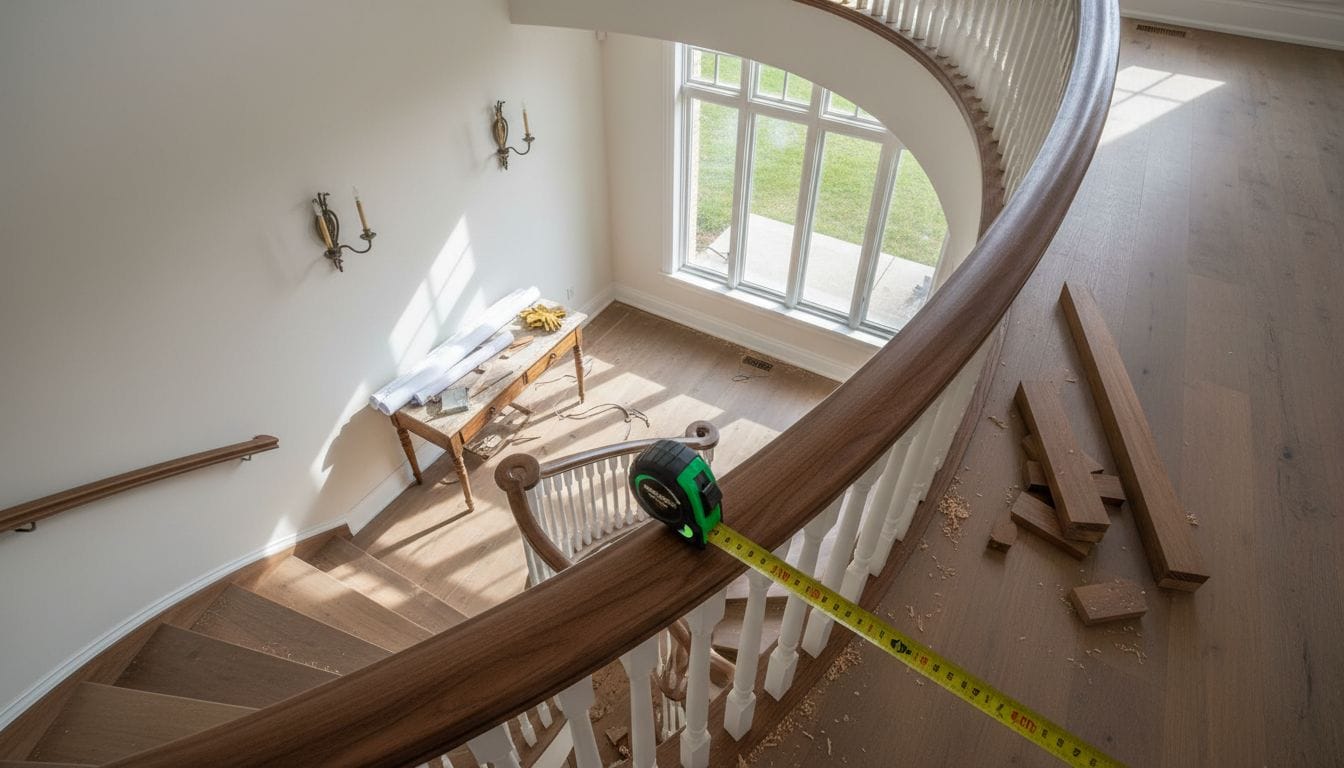
Custom staircases serve as sculptural elements in luxury homes. Beyond moving you between floors, they establish the design tone for your entire residence. A floating staircase with cable railings and natural wood treads creates modern sophistication. A grand curved staircase with ornate railings suits traditional estates. The engineering demands precision. Each step must be identical to ensure safe, comfortable ascent. The railing supports must meet building codes whilst supporting your design vision. Arches, niches, and decorative wall treatments offer opportunities to personalise spaces further. An arched entryway frames a doorway beautifully. A niche built into a hallway creates space for sculpture or plants. These details separate ordinary homes from ones that feel intentionally designed.
Pro tip: When selecting custom millwork types for your project, prioritise high-traffic areas first (kitchens, primary closets, staircases) where quality craftsmanship delivers the greatest functional and aesthetic return, then expand to secondary spaces as budget and timeline allow.
Craftsmanship and Materials in Premium Millwork
Premium millwork separates itself from standard cabinetry through the combination of skilled artisanal craftsmanship and carefully selected materials. When a millworker builds your custom pieces, they’re not following a template or assembly-line process. They’re solving specific problems in your space using techniques refined over decades. Every joint receives attention. The grain patterns in solid wood are matched thoughtfully across cabinet faces. Finishes are applied with precision to bring out the natural beauty of the material whilst protecting it for long-term durability. This level of care demands experience, patience, and an understanding of how wood moves with seasonal changes—something particularly important in South Georgian Bay properties where humidity fluctuates between water-adjacent and inland conditions.
The material selection process is where craftsmanship truly shows itself. A skilled millworker doesn’t simply choose wood because it looks nice. They consider your home’s environmental conditions, the piece’s functional demands, and your long-term vision. Solid hardwoods like walnut, oak, maple, and cherry offer timeless beauty and can be refinished multiple times throughout your home’s lifetime. Reclaimed lumber brings authentic character and sustainability, perfect for homeowners who value environmental responsibility alongside aesthetic uniqueness. For applications where moisture resistance matters most, premium millworkers specify high-quality materials like marine-grade plywood or engineered solutions that remain stable in fluctuating humidity. Medium-density fibreboard, or MDF, has evolved far beyond its reputation. Modern premium MDF accepts finishes beautifully, maintains dimensional stability better than solid wood in wet environments, and allows for intricate design details that would be difficult to achieve in hardwood. The choice isn’t about using the “best” material universally. It’s about matching the right material to the specific application.
Here’s a quick reference comparing popular custom millwork materials for luxury homes:
| Material | Key Benefits | Best Applications | Durability Considerations |
|---|---|---|---|
| Solid Hardwood | Refined look, ages beautifully | Kitchens, living rooms, staircases | Can be refinished repeatedly |
| Reclaimed Lumber | Unique character, eco-friendly | Wall panels, feature shelving | Can show rustic wear; sustainable |
| MDF | Stable in humidity, smooth paint | Trim, mouldings, wet environments | Not refinished, holds paint well |
| Marine-grade Plywood | Moisture resistant, strong | Bathroom vanities, cabinetry | Ideal for humid conditions |
The Technology and Precision Behind Modern Millwork
Contemporary premium millwork blends traditional hand-crafted techniques with advanced technology. Computer-aided design software allows millworkers to visualise every detail before fabrication begins, catching potential issues and optimising designs for your specific space. CNC machinery executes cuts and joints with tolerances measured in fractions of millimetres, ensuring perfect fits across multiple pieces. This technological precision doesn’t diminish craftsmanship. Rather, it amplifies it. A skilled millworker uses technology to handle repetitive precision tasks whilst reserving their expertise for design decisions, material selection, and hand-finishing touches that machines cannot replicate. Hand-planed edges, mortise and tenon joinery, and careful sanding by experienced craftspeople create surfaces that feel refined and look intentional. The blend of machine precision and hand craftsmanship produces results that simply cannot be achieved through either approach alone.
Warranties and industry standards back premium millwork for good reason. High-end millworkers stand behind their work because they’ve invested time ensuring every detail meets exacting standards. When you commission custom millwork in Collingwood or Wasaga Beach from experienced craftspeople, you’re paying for accountability alongside quality. A reputable millworker maintains relationships with suppliers who share their commitment to quality, sources materials from sustainable forests or reclaimed sources, and applies low-VOC finishes that perform beautifully whilst minimising environmental impact. These decisions cost more initially. Over twenty or thirty years, when your millwork still functions flawlessly and continues looking beautiful whilst other homes’ cabinetry deteriorates, the investment becomes clear.
Material Specifications That Matter
When discussing your custom millwork project, understanding material specifications helps you make informed decisions. The thickness of plywood influences stability and weight capacity. The grain direction in solid wood affects both appearance and structural performance. Finish specifications determine whether your pieces will withstand kitchen splashes, bathroom moisture, or sunlight exposure in bright rooms. Joinery methods—whether using mortise and tenon joints, dovetails, or pocket-hole construction—influence both appearance and longevity. A millworker discusses these specifications not to overwhelm you, but to ensure your finished pieces perform exactly as intended. The best custom millwork projects happen when homeowners understand the craftsmanship involved and appreciate why certain material choices and techniques matter for their specific situation.
Pro tip: Request material samples from your millworker and place them in your actual space for several days, observing how they appear under your lighting conditions and alongside your existing finishes before committing to final selections.
The Design-to-Installation Process Explained
Custom millwork projects follow a structured workflow from your initial vision through final installation. This process matters because skipping steps or rushing leads to costly mistakes. A quality millwork experience begins with a detailed consultation where experienced craftspeople listen to your goals, functional requirements, aesthetic preferences, and budget constraints. You’re not simply describing what you want. You’re having a conversation with someone who understands spatial design, material limitations, and how to solve problems creatively. During this consultation, they ask questions that might not seem obvious. How do you actually use this space? What frustrates you about your current setup? What’s your timeline? What’s your priority—appearance, function, or durability? These answers inform every decision that follows.
After the initial consultation, detailed design work begins. This is where vision becomes blueprint. The custom millwork design process involves creating sketches, then advancing to Computer-Aided Design drawings that show exact dimensions and specifications. Three-dimensional renderings allow you to visualise the finished pieces in your actual space before a single board gets cut. This is genuinely valuable. You can see how proportions look, how finishes appear under your lighting, and whether the design achieves the feeling you’re seeking. At this stage, your millworker addresses concerns, refines details, and confirms material selections. You might request adjustments to dimensions, finishes, or hardware. These conversations happen on drawings, where changes cost nothing. Once you approve final designs, fabrication can begin with confidence that everyone understands exactly what’s being built.
Fabrication and Quality Control
Fabrication is where design becomes reality. Your millworker uses precision machinery and traditional hand techniques to build your custom pieces. Computer-controlled equipment cuts components with tolerances measured in millimetres. Hand-craftspeople assemble pieces, apply finishes, and perform quality inspections at multiple stages. A piece might be inspected for dimensional accuracy, then again after assembly to ensure joints are tight and surfaces are true. Finish applications often involve multiple coats, sanding between applications, and careful colour matching across multiple pieces. This isn’t rushed. Quality millwork fabrication takes weeks or months depending on complexity and the millworker’s project schedule. Your pieces aren’t waiting in a warehouse. They’re being built specifically for your home, at your specifications, during a scheduled production window.
Once fabrication completes, professional installation transforms manufactured pieces into finished elements of your home. This step is often underestimated, yet it determines whether your custom millwork looks and functions as intended. Installation specialists understand how to work within existing construction, manage wall irregularities, coordinate with your home’s architectural details, and ensure pieces fit seamlessly. A kitchen island with perfectly fabricated cabinetry looks awkward if installation leaves gaps or doesn’t account for floor slopes common in older South Georgian Bay homes. Professional installers work with general contractors and architects to coordinate timing, protect finished surfaces, and address any site-specific challenges that drawings couldn’t anticipate. They leave your home clean, with all pieces functioning smoothly and finishes protected.
Timeline and Communication
Realistically, a custom millwork project from initial consultation through installation typically spans 12 to 20 weeks, depending on complexity and the millworker’s schedule. Initial design and approval requires 2 to 4 weeks. Fabrication requires 6 to 12 weeks. Installation typically requires 1 to 3 weeks. Throughout this timeline, regular communication keeps everyone informed. You receive updates on design progress, fabrication status, and installation scheduling. Problems surface early when they’re inexpensive to address. A millworker might discover during fabrication that your chosen wood grain pattern requires adjustment, then consults with you rather than proceeding. This transparency builds confidence in the process and ensures final results exceed expectations.
The following table outlines the main project phases and their average durations for a custom millwork project:
| Phase | Typical Duration | Main Activities |
|---|---|---|
| Consultation & Design | 2–4 weeks | Needs assessment, sketches, approvals |
| Fabrication | 6–12 weeks | Material prep, machining, finishing |
| Installation | 1–3 weeks | Site fit, precision mounting, cleanup |
| Communication & Updates | Ongoing (all phases) | Progress reports, issue resolution |
Pro tip: During the design phase, request a detailed project timeline that breaks fabrication into stages with estimated completion dates, allowing you to plan renovations around millwork delivery and installation without costly schedule conflicts with other trades.
Cost, Value, and Common Pitfalls for Homeowners
Custom millwork requires honest budgeting because costs vary significantly based on material choices, design complexity, and project scope. A simple built-in bookshelf with basic moulding costs far less than a fully customised kitchen with specialty cabinetry, integrated appliances, and exotic hardwoods. Understanding cost drivers helps you allocate your budget effectively. Premium hardwoods like walnut or cherry command higher prices than common softwoods or engineered alternatives. Complex designs with multiple curves, intricate joinery details, or unusual dimensions increase fabrication time and costs. Specialty hardware, custom finishes, and integrated lighting all add expense. Installation complexity matters too. A straightforward cabinet installation in a new space costs less than retrofitting cabinetry into an older home with uneven walls and irregular dimensions. Geographic location influences pricing as well. Custom millwork in Collingwood or Wasaga Beach may cost differently than in Toronto due to labour rates and material sourcing. When you understand these variables, you can make informed decisions about where to invest and where to simplify.
The real value question isn’t whether custom millwork costs more than stock alternatives. It does. The question is whether the investment delivers returns over your home’s lifetime. Custom millwork significantly enhances property value because it solves specific functional problems and creates visual cohesion that mass-produced options cannot achieve. A kitchen with cabinetry designed precisely for your cooking style, storage needs, and design vision functions better and looks more intentional than one assembled from stock components. When you eventually sell your home, that intentionality resonates with buyers seeking luxury properties. Custom millwork also outlasts stock alternatives. Quality craftsmanship, premium materials, and precise fitting mean your pieces remain beautiful and functional for 20, 30, or even 50 years. Stock cabinetry typically requires replacement within 10 to 15 years. Over a 30-year timeframe, custom millwork becomes the more economical choice despite higher initial costs. Additionally, custom solutions accommodate your actual lifestyle. A wine enthusiast’s custom kitchen cabinetry includes specialised storage. A reader’s custom shelving displays their collection thoughtfully. These personalisations create homes that work for you, not homes you adapt to.
Common Pitfalls and How to Avoid Them
Most homeowners encounter predictable problems when planning custom millwork. The first pitfall is underestimating costs. You see a beautiful design and imagine it costs modestly, then receive a quote significantly higher than expected. This happens because design complexity, material quality, and professional installation all compound. Avoid this by discussing budget early and honestly with your millworker. A skilled craftsperson helps you achieve your vision within realistic budget parameters, perhaps simplifying certain details or choosing materials strategically to control costs.
The second pitfall involves rushing the timeline. You want your custom millwork completed quickly, so you compress the design phase or accelerate fabrication. This creates stress, increases mistakes, and often costs more to correct than simply allowing adequate time. Quality work cannot be rushed. A 12 to 16 week timeline from initial consultation through installation isn’t excessive. It’s realistic.
A third mistake is skipping professional installation or choosing the least expensive installer. Installation determines whether perfectly fabricated pieces look and function correctly in your home. Hiring experienced installation specialists costs more upfront but ensures flawless results. Poor installation can ruin otherwise exceptional millwork.
The final common pitfall involves choosing materials based on appearance alone, ignoring durability requirements. A beautiful veneer looks stunning initially but may not withstand moisture in a bathroom. Soft woods look lovely but dent easily in high-traffic kitchens. Understanding material specifications and durability characteristics prevents expensive failures. Your millworker guides these decisions based on your specific application and long-term needs.
Pro tip: Request a detailed cost breakdown from your millworker showing material costs, labour for each phase, hardware, finishes, and installation separately, allowing you to identify where costs concentrate and make informed decisions about where quality matters most versus where you can economise.
Transform Your Luxury Home with Expert Custom Millwork and Craftsmanship
Custom millwork elevates every luxury home by combining precise design with expert craftsmanship to create timeless spaces tailored exactly to your lifestyle. If you are seeking to overcome common challenges like inadequate storage, poorly integrated architectural details or cabinetry that does not reflect your unique vision, imagine working with a trusted partner who understands your needs and embraces sophisticated solutions from concept to installation. At Mighton Construction, we bring over 30 years of South Georgian Bay expertise to your project, delivering custom homes and renovations that prioritise quality, durability and seamless integration of premium millwork.
Discover how our comprehensive services in general contracting can transform your kitchen, bathroom, or built-in features with tailored millwork that maximises space and aesthetic appeal. Don’t settle for off-the-shelf solutions that lack personality or longevity. Act now to schedule a consultation at mightonconstruction.com and take the first step toward a home that truly reflects your style and enhances everyday living.
Frequently Asked Questions
What is custom millwork in home design?
Custom millwork refers to the craft of designing and building wood-based architectural elements tailored to fit your home’s specific dimensions and style, including cabinetry, shelving, and mouldings.
How does custom millwork differ from stock cabinetry?
Custom millwork is specifically designed to meet your functional needs and aesthetic preferences, offering optimized functionality and seamless design integration, unlike stock cabinetry that follows standard dimensions and styles.
What are the main materials used in custom millwork?
The primary materials in custom millwork include solid hardwoods like walnut and oak, reclaimed lumber for sustainability, and high-grade MDF or plywood for stability, especially in humid environments.
How long does the custom millwork process typically take?
The complete custom millwork process, from initial consultation to installation, usually spans 12 to 20 weeks, depending on the project complexity and the millworker’s schedule.