Custom home interiors: design, function, and luxury


TL;DR:
- Custom home interiors are crafted from scratch around your lifestyle and site, offering unparalleled layout and material control. They typically take 14 to 20 months to complete, emphasizing early design collaboration to prevent costly rework and ensure cohesive aesthetics. Leveraging AI visualization tools accelerates decision-making, making your interior design process more efficient and accurately tailored to your needs.
Custom home interiors are tailored living spaces where every finish, layout, and detail is designed around your specific lifestyle, not a builder’s standard catalogue. Unlike spec homes or lightly customised production builds, a true bespoke interior starts with who you are and how you live. The result is a home that functions as well as it looks. For homeowners in South Georgian Bay, Wasaga Beach, and Collingwood, where properties range from year-round residences to waterfront retreats, the difference between a generic interior and a genuinely personalised one is felt every single day.
What makes custom home interiors truly different?
Custom home interiors sit on a spectrum, and understanding where your project falls changes everything about your budget, timeline, and expectations. The industry uses three distinct terms: bespoke, custom, and spec. Each means something different.
| Level | What it means | Best suited for |
|---|---|---|
| Spec | Pre-designed, builder-selected finishes | First-time buyers, investment properties |
| Custom | Adapts existing plans with some finish choices | Mid-range builds with moderate flexibility |
| Bespoke | Designed from scratch around your site and lifestyle | Luxury builds, unique sites, long-term family homes |
A bespoke interior starts with site and lifestyle analysis before a single floor plan is drawn. Sun paths, easements, views, and how your family actually moves through a home all shape the layout. Custom interiors, by contrast, typically adapt an existing plan with upgraded finishes. Spec interiors are pre-decided before you arrive.
Boutique builders take on fewer projects at a time with senior-led oversight, which means direct accountability at every stage of design and construction. This matters because the person who understands your vision is also the person managing your trades. That continuity is rare in volume building.
Bespoke design gives you real layout freedom, full material control, and fewer decorative upgrades that look premium but add no functional value. That said, bespoke is not always the right choice. If you are working with a tight timeline, a rental property, or a modest budget, a well-executed custom build with thoughtful finish selections will serve you better than a bespoke process stretched thin.
Pro Tip: Ask any builder whether the person you meet at consultation is the same person who will oversee your project on site. If the answer is no, you are likely working with a volume builder regardless of what they call their service.
How do you balance aesthetics and function in a luxury interior?
The most common mistake in luxury interior design is treating aesthetics and function as separate decisions. They are not. A kitchen that photographs beautifully but lacks adequate storage, or a master suite with dramatic lighting that creates glare at the vanity, reflects a design process where these two priorities were never properly integrated.
Visual rhythm across rooms is one of the clearest markers of a cohesive luxury interior. This means managing cabinetry, millwork, and material selections as a unified package across the entire home, not room by room. When the kitchen island, the built-in library, and the bathroom vanity share a consistent material language, the home reads as intentional rather than assembled.
Coordinating plumbing, lighting, and ceiling structure with your interior finishes early in the design process prevents the most costly rework in any build. Lighting design, in particular, must be incorporated into architectural ceiling plans before framing begins. A pot light placed without reference to cabinetry height or furniture layout will compromise both the room’s aesthetics and its function.
Custom furnishings and built-ins are where tailored home aesthetics become genuinely practical. A built-in mudroom designed around your family’s actual gear, a home office with integrated cable management, or a media room with acoustic wall panels all reflect how a home can be designed around real behaviour rather than aspirational imagery.
- Treat storage as a design element, not an afterthought. Built-in solutions in kitchens, bedrooms, and entryways eliminate visual clutter without sacrificing square footage.
- Plan multi-use zones deliberately. A dining room that doubles as a homework space or a guest suite with a Murphy bed requires structural and electrical decisions made early.
- Specify lighting layers: ambient, task, and accent. Each serves a different purpose and requires different placement in the ceiling plan.
- Coordinate finish samples in your actual space under your actual lighting conditions before committing. Colours read differently under natural Georgian Bay light than under a showroom’s LED panels.
Pro Tip: Partnering with a full-service design studio early in the process protects your investment by integrating storage, smart lighting, and functional requirements from the start, before structural decisions are locked.
What does the custom home interior design process look like?
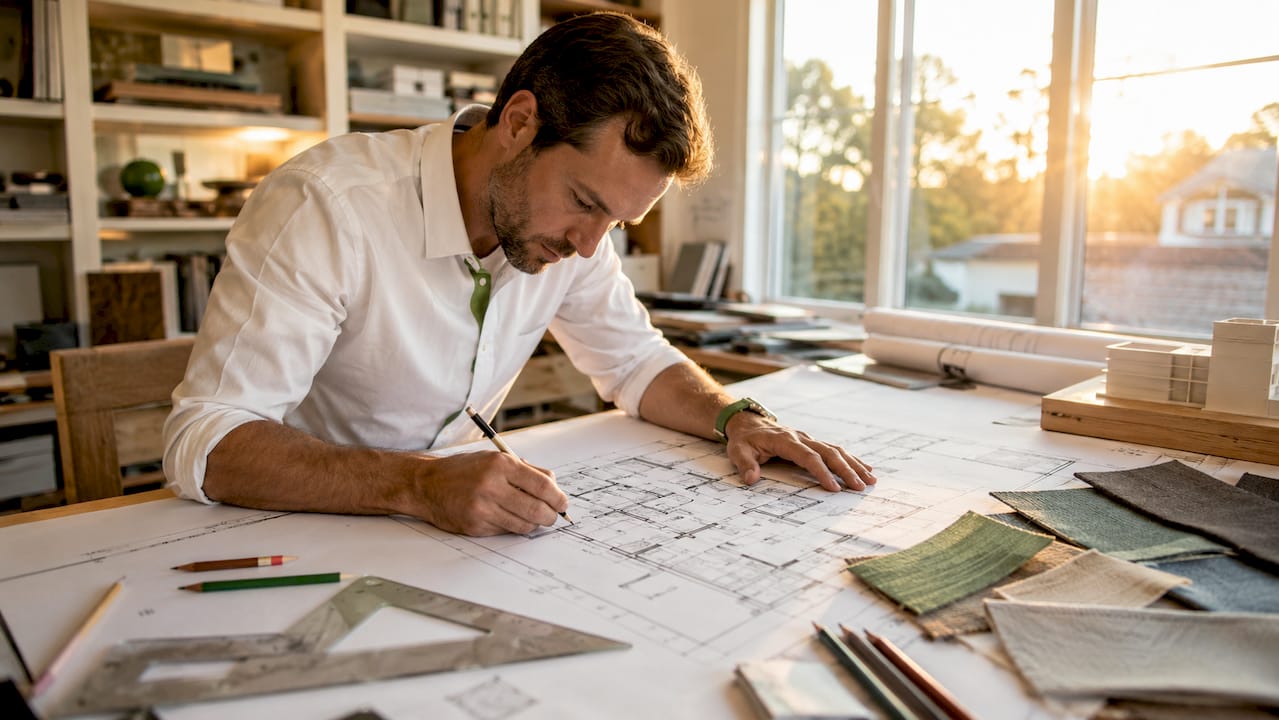
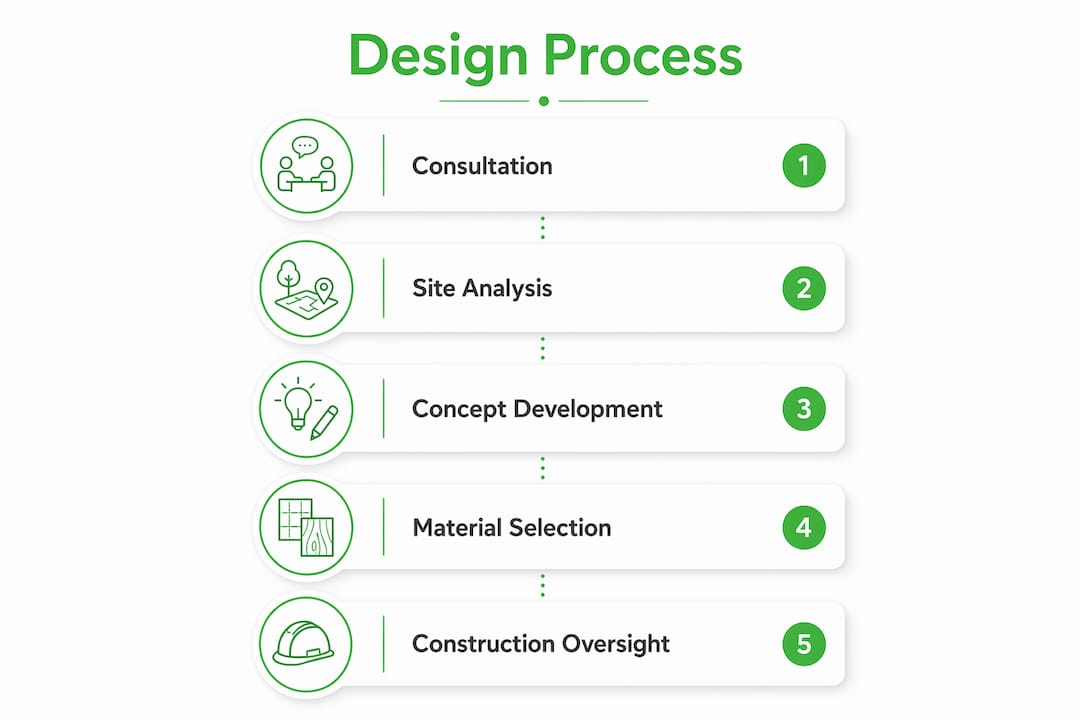
A well-managed bespoke interior project follows a clear sequence. Skipping or compressing any phase creates problems that are expensive to fix later.
- Initial consultation and lifestyle discovery. Your builder and designer map how you live: morning routines, entertaining habits, work-from-home needs, accessibility requirements, and long-term plans. This is not a style conversation. It is a functional brief.
- Site analysis and design constraints. Sun orientation, lot dimensions, views, and local zoning in areas like Clearview Township or Tiny Township all shape what is buildable and what will perform well over time.
- Concept development. Preliminary floor plans and interior concepts are developed. AI-assisted photorealistic visualisations now allow clients to see finished rooms before construction begins, reducing late-stage changes significantly.
- Design iteration and locking. A real bespoke process involves multiple design rounds with site due diligence before final plans are locked. Rushing this phase is where most design regrets originate.
- Trade coordination. Architects, structural engineers, electricians, and plumbers all receive interior finish specifications before work begins. This is where early integration of interior and architectural decisions pays off most clearly.
- Construction and finishing. Millwork, cabinetry, flooring, and fixtures are installed in sequence. Senior oversight at this stage catches discrepancies between drawings and site conditions before they become permanent.
- Final styling and handover. Furniture placement, art, and soft furnishings complete the interior. Initial mockups typically take two to three days, with additional cycles for client feedback before finalising.
| Phase | Typical duration |
|---|---|
| Consultation and discovery | 2 to 4 weeks |
| Concept and design development | 6 to 12 weeks |
| Permits and approvals | 4 to 8 weeks |
| Construction and finishing | 10 to 14 months |
| Total project duration | 14 to 20 months |
Bespoke custom home projects typically run 14 to 20 months from initial consultation to handover. That timeline reflects the depth of the process, not inefficiency. Homeowners who understand this from the start make better decisions throughout.
How is technology changing custom home interior design?
Design technology has shifted the client experience in custom home interiors more in the past three years than in the previous two decades. The most significant change is the speed and accuracy of visualisation.
AI-powered tools now generate photorealistic interior redesigns in as little as 30 to 60 seconds. That speed matters because it allows clients and designers to test multiple material combinations, colour palettes, and furniture layouts in a single meeting rather than waiting days for revised renders. Decisions that once required imagination now require only a screen.
- Exportable shopping lists tied directly to the visualised design allow clients to see exact product specifications alongside the rendered room.
- Contractor task PDFs generated from the same platform give trades a clear, coordinated brief that reduces miscommunication on site.
- AI visualisation tools reduce costly mid-construction changes by surfacing preference conflicts early, before materials are ordered or walls are framed.
- Platforms like Decoratly demonstrate how quickly a client can move from a rough concept to a photorealistic room view, compressing what was once a multi-week design cycle.
For homeowners in Collingwood or Blue Mountain planning a luxury build or major renovation, these tools mean you spend less time imagining and more time deciding. That efficiency protects both your timeline and your budget.
Key takeaways
Custom home interiors succeed when aesthetics, function, and construction are treated as a single integrated process from the first consultation forward.
| Point | Details |
|---|---|
| Bespoke starts with lifestyle | Site analysis and how you live should drive every layout and finish decision. |
| Integrate early or pay later | Coordinating lighting, plumbing, and millwork before framing prevents expensive rework. |
| Manage materials as a whole | Unified cabinetry and millwork across all rooms creates cohesion that room-by-room selections cannot. |
| Expect 14 to 20 months | A genuine bespoke project requires this timeline to deliver quality without shortcuts. |
| Technology accelerates decisions | AI visualisation tools compress design cycles and reduce costly late-stage changes. |
Why I tell every client to design their life first, not their style
After working on custom homes across South Georgian Bay for over three decades, the pattern I see most often is homeowners who arrive with a strong aesthetic vision and a weak functional brief. They know they want white oak floors and a statement kitchen island. They have not thought about where the dog comes in from the yard, where the kids drop their gear, or how the morning coffee routine actually flows through the space.
The homes that hold up best over time, the ones clients call me about years later to say they still love, are the ones where we spent real time on the lifestyle discovery phase before touching a floor plan. A successful custom home aesthetic reflects the client’s unique rhythms and values rather than a signature design style imposed from outside.
The other mistake I see regularly is treating interior finishes as a late-stage decision. Clients who defer their interior selections until after framing begins almost always face rework. Lighting rough-ins get placed without reference to cabinetry. Plumbing locations conflict with the island layout. These are not small problems. They are expensive ones. The value of early design collaboration is not a soft benefit. It is a direct protection of your investment.
If you are planning a custom build in Wasaga Beach, Springwater, or anywhere in Simcoe County, my strongest advice is this: hire your builder and your interior designer at the same time, and make sure they are talking to each other from day one. The homes where that happens are the ones that come in on budget, on time, and exactly as imagined.
— Adam
Build your vision with Mighton Construction
Mighton Construction has been building luxury custom homes across South Georgian Bay for over 30 years, serving Wasaga Beach, Collingwood, Blue Mountain, Clearview Township, and beyond. Every project is managed by senior team members from initial concept through to final finishing, so the person who understands your vision is the same person accountable for delivering it. Whether you are planning a new custom home build or a full interior renovation including a kitchen remodel, Mighton Construction brings the craftsmanship and transparency that luxury interiors demand. Browse the completed project gallery to see how tailored home aesthetics come to life across a range of builds and styles.
FAQ
What is the difference between bespoke and custom home interiors?
Bespoke interiors are designed entirely from scratch around your site, lifestyle, and preferences, with no pre-existing plan as a starting point. Custom interiors typically adapt an existing floor plan with upgraded finish selections, offering less layout freedom but a faster and more affordable process.
How long does a custom home interior project take?
A full bespoke custom home project typically takes 14 to 20 months from initial consultation to handover, covering design, permits, construction, and finishing. Compressed timelines almost always result in design compromises or costly on-site changes.
When should I involve an interior designer in my custom home build?
Involve your interior designer at the same time you engage your builder, before any floor plans are finalised. Early collaboration ensures that lighting, plumbing, and millwork decisions align with your interior vision from the start, preventing expensive rework later.
What role does AI play in designing custom home interiors?
AI visualisation tools now generate photorealistic room renders in 30 to 60 seconds, allowing clients and designers to test material combinations and layouts in real time. These tools also produce exportable shopping lists and contractor briefs that improve coordination across the build team.
How do I achieve a cohesive look across all rooms in a luxury interior?
Manage your cabinetry, millwork, and material selections as a unified package across the entire home rather than making room-by-room decisions in isolation. Consistent materials and a shared design language across spaces create the visual rhythm that defines a cohesive luxury interior.