How to prepare for major renovations: a homeowner's guide

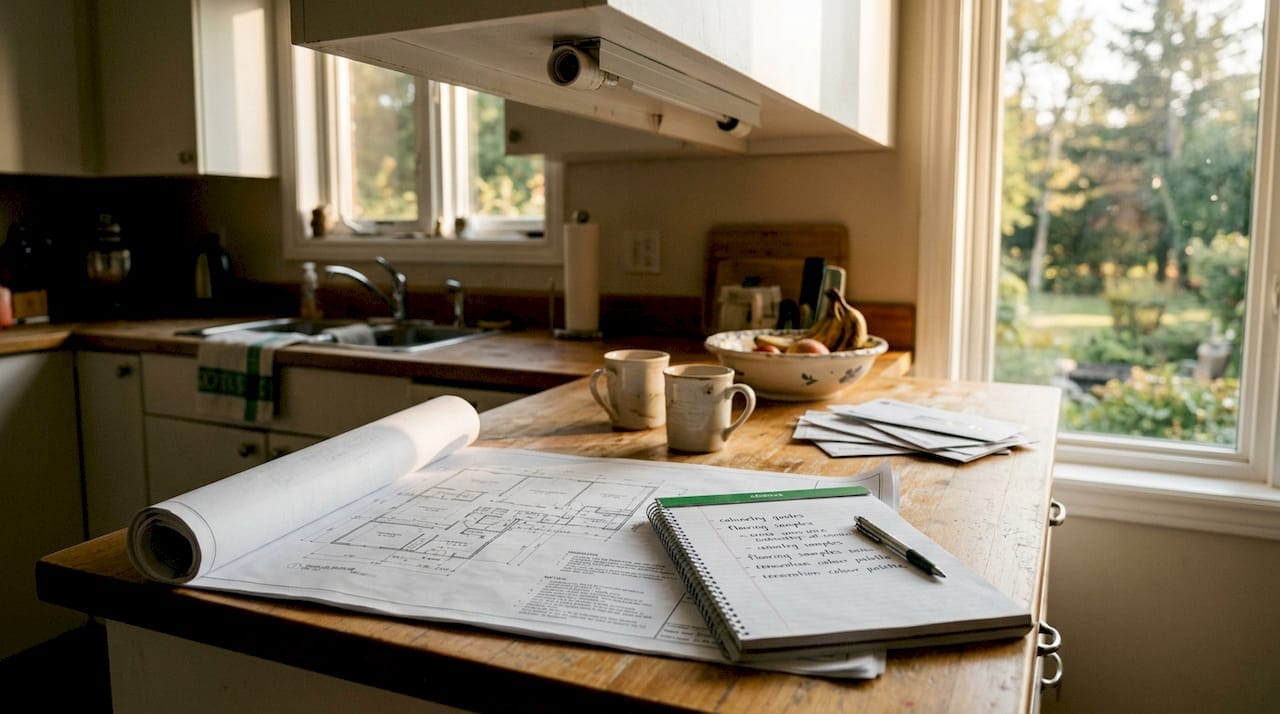
Major renovations in South Georgian Bay can be exciting, but they can also spiral quickly when key preparation steps are missed. Unexpected structural issues, permit delays, and budget overruns are among the most common reasons projects stall or cost far more than planned. The good news is that most of these setbacks are preventable. With the right preparation, you can protect your investment, reduce stress, and get the quality results your home deserves. This guide walks you through every critical stage, from defining your goals to protecting your family during construction.
Want to see what happens after you have prepared? Our renovation and addition process walks through each stage.
Table of Contents
- Understand your renovation goals and scope
- Assess your home’s condition and risks
- Gather permits, approvals, and expert team
- Plan your budget and timeline
- Prepare your home and family for construction
- Major renovation preparation checklist
- How Mighton Construction can help make your renovation a success
- Frequently asked questions
Key Takeaways
| Point | Details |
|---|---|
| Define your goals | Clarity about your renovation objectives will guide every step of planning and execution. |
| Never skip inspections | Assess your home thoroughly to uncover and address hidden risks before work starts. |
| Permits take time | Start the permit process as early as possible to avoid costly delays. |
| Plan for the unexpected | Always include a contingency in your budget to manage hidden costs or surprises. |
| Protect your family and home | Take measures to safeguard people, pets, and possessions so everyone stays safe and comfortable. |
Understand your renovation goals and scope
Before a single wall comes down, you need a clear picture of what you actually want to achieve. Are you adding space for a growing family? Boosting resale value before listing? Improving energy efficiency for those cold Georgian Bay winters? Your answer shapes every decision that follows.
According to thorough renovation planning, preparation begins with defining goals, assessing your home’s structure, setting a realistic budget with a 10 to 30% contingency, and creating a detailed timeline. Skipping any of these steps is where projects begin to unravel.
Start by listing your priorities clearly:
- Primary objective: More space, updated aesthetics, improved function, or increased value
- Scope of work: Is this a renovation, an addition, or a full custom rebuild? Understanding what counts as a major renovation helps you plan accordingly
- Long-term needs: Accessibility features, energy upgrades, or resale considerations
- Affected areas: Which rooms or systems will be touched, and in what order
Writing these down keeps your budget and decisions aligned throughout the project. It also gives your contractor a clear brief from day one. If you are weighing whether to renovate or rebuild entirely, reviewing the benefits of home renovation can help you decide.
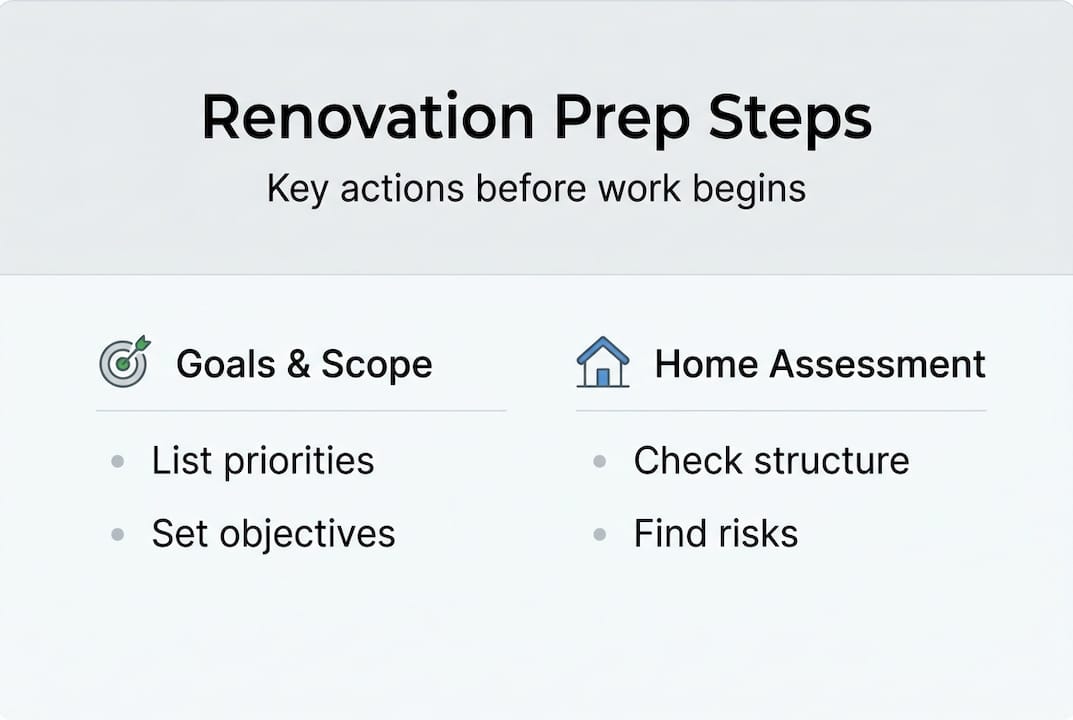
With your renovation goals in focus, the next step is to take a hard look at the current state of your home.
Assess your home’s condition and risks
This is the step many homeowners skip, and it is often the most expensive mistake they make. A thorough inspection before work begins can reveal issues that would otherwise surface mid-demolition, when fixing them costs two or three times more.
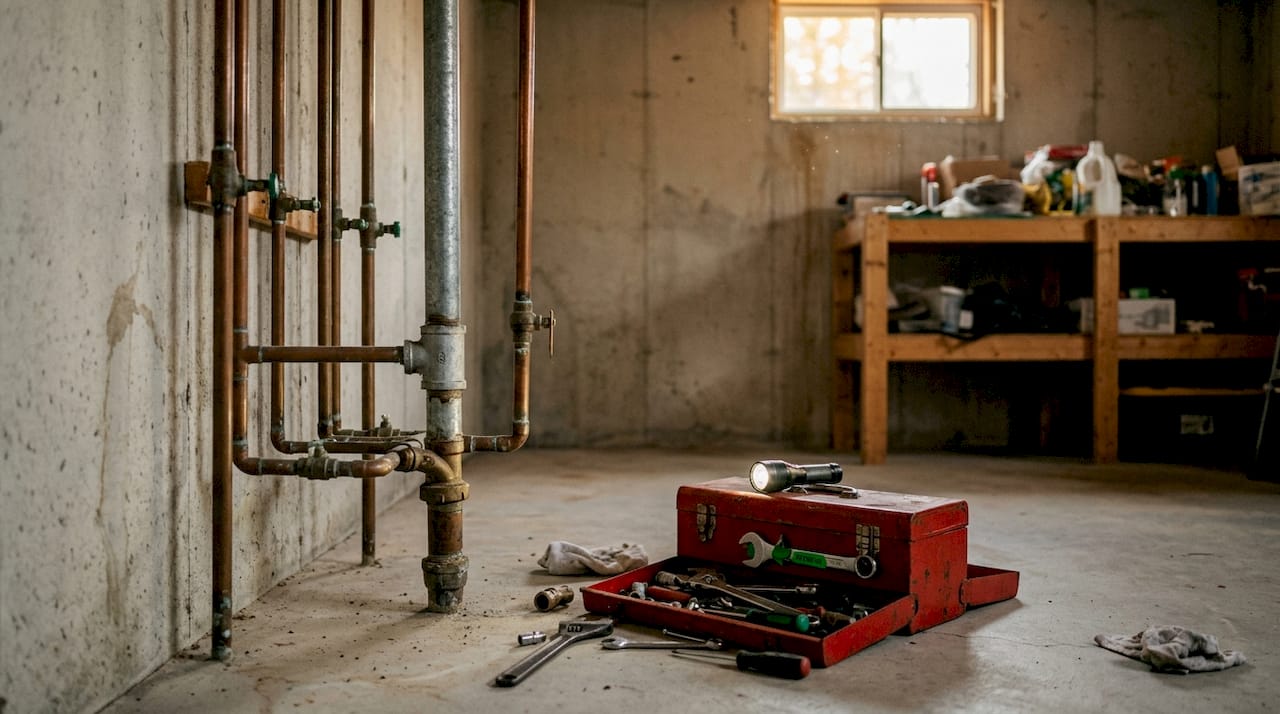
Home inspections before major work are critical for identifying structural, electrical, and plumbing issues. Older homes in Ontario frequently reveal hidden problems like knob-and-tube wiring or asbestos once walls open up.
For South Georgian Bay properties specifically, watch for:
- Foundation issues: Frost heave and freeze-thaw cycles are hard on foundations in this region
- Outdated wiring: Knob-and-tube or aluminum wiring is common in homes built before the 1980s
- Asbestos and lead paint: Found in many homes built before 1990, requiring professional abatement
- Plumbing condition: Galvanised steel pipes corrode over time and may need full replacement
- Moisture and mould: Especially relevant in waterfront or cottage properties
Pro Tip: If you are planning a waterfront build or tear-down, arrange for soil testing and environmental approvals early. Conservation authority requirements in Georgian Bay can add weeks to your timeline if not addressed upfront.
For a detailed walkthrough of what to check before starting, our renovation checklist covers every stage from inspection to completion.
Once your home’s condition is mapped out, you can assemble the necessary requirements and team for your project.
Gather permits, approvals, and expert team
Permits are not optional, and they are not just red tape. They protect you legally, ensure the work meets Ontario Building Code, and matter enormously when you sell your home. Unpermitted work can void insurance, delay sales, and require costly remediation.
In Simcoe County, building permits for structural changes are required for most major renovations, including electrical and plumbing work. The permit process in municipalities like Collingwood can take anywhere from two to twelve weeks, so apply early.
Here is the sequence to follow:
- Contact your municipality to confirm which permits apply to your specific project
- Obtain a zoning certificate before submitting your building permit application
- Engage a licensed designer or architect to prepare required drawings
- Submit your permit application with all supporting documents
- Wait for approval before any structural work begins
For custom builds or tear-downs near the water, early soil testing and conservation authority approval are essential steps that many homeowners overlook until it is too late.
Renovating in Wasaga Beach? Our Wasaga Beach renovation guide walks through the Town’s building permit, NVCA clearance, lot grading plans and the Road Occupation Permit, with realistic costs and timelines.
When choosing your contractor, look for Tarion warranty registration, strong local references, and demonstrated experience with South Georgian Bay’s climate and building conditions. For a full overview of what to expect, our guide on the Ontario renovation process is a helpful starting point.
Pro Tip: Ask your contractor for a list of all permits they will pull on your behalf. A reputable builder handles this as part of their service, not as an add-on.
With your approvals and expert team in place, it is time to focus on the nuts and bolts: budget and timeline.
Plan your budget and timeline
Budget surprises are the number one source of renovation stress. The fix is not to spend more; it is to plan more precisely from the start.
Ontario renovations average a 25% cost overrun without sufficient planning, and a 10 to 30% contingency is the standard benchmark for absorbing surprises once walls open up.
Here is a sample budget breakdown for a mid-scale South Georgian Bay renovation:
| Cost category | Estimated share of total budget |
|---|---|
| Materials | 35 to 45% |
| Labour | 30 to 40% |
| Permits and design fees | 5 to 10% |
| Temporary living or storage | 3 to 7% |
| Contingency reserve | 10 to 30% |
For your timeline, build in buffer at every stage. Permit approvals, material lead times, and trade scheduling all introduce delays that are largely outside your control. A realistic kitchen renovation in this region takes eight to fourteen weeks from permit approval to completion. A full home addition can run six months or more.
Pro Tip: Lock in your material selections before construction starts. Late changes to tile, cabinetry, or fixtures are one of the biggest drivers of cost overruns and delays.
For more detail on managing costs effectively, our renovation budget tips article covers smart upgrade strategies that stretch your dollar without cutting corners.
Budget and timing in place, you can now protect your household for a smooth project experience.
Prepare your home and family for construction
Living through a renovation is genuinely disruptive. The more you prepare your household in advance, the less stressful the process will be for everyone involved.
Clearing work areas, using dust barriers, and arranging off-site storage are practical steps that protect your belongings and keep the job site safe and efficient.
Follow this sequence before work begins:
- Remove furniture, art, and valuables from all work zones
- Label and pack items carefully, using off-site storage if needed
- Install heavy-duty floor coverings and plastic dust barriers at zone boundaries
- Set up a temporary kitchen or bathroom if those rooms are being renovated
- Arrange alternative accommodation for pets, young children, or elderly family members if the scope is large
A few additional points worth noting:
- Notify your neighbours at least one week before work begins. Let them know expected hours, duration, and who to contact with concerns
- Confirm site access with your contractor, including where materials will be staged and where workers will park
- Secure valuables in a locked room or off-site location for the duration of the project
For guidance on moving and storage options during a renovation, we have covered the most practical approaches for South Georgian Bay homeowners.
With physical preparations done, here is a summary of tools, professional contacts, and key requirements for major renovations.
Major renovation preparation checklist
Use this table as a quick reference before your project begins. Sequence your work from the top down and outside in to contain dust and protect finished areas, a method that experienced Ontario contractors consistently recommend alongside a 20 to 30% contingency reserve.
| Stage | Key actions | Status |
|---|---|---|
| Goals and scope | Define objectives, list priorities, confirm project type | To do |
| Home inspection | Check structure, electrical, plumbing, hazardous materials | To do |
| Permits and zoning | Confirm requirements, obtain zoning certificate, apply early | To do |
| Team assembly | Hire licensed contractor, designer, and trades | To do |
| Budget and timeline | Itemise costs, set contingency, build in buffer | To do |
| Household preparation | Clear zones, install barriers, arrange storage and living | To do |
| Neighbour notification | Inform neighbours of schedule and contact details | To do |
For a deeper look at managing your project from start to finish, our home renovation project management guide walks through every phase in detail.
Now you are set for execution. Here is how professional guidance can add value and peace of mind to your project.
How Mighton Construction can help make your renovation a success
Preparing for a major renovation is a significant undertaking, and having the right builder beside you from the start makes all the difference. At Mighton Construction, we bring over 30 years of local expertise in South Georgian Bay, which means we understand the permit process, the climate challenges, and the craftsmanship standards that this region demands.

From the first consultation through to the final walkthrough, our team manages permits, inspections, budgeting, and construction with full Tarion warranty backing. Whether you are planning a kitchen remodel, a home addition, or a full custom build, you can see our completed projects to get a sense of the quality we deliver. Our custom home building services and renovation and remodel services are designed to take the complexity off your plate so you can focus on the result. Reach out today to book your consultation and start your project on the right foot.
Frequently asked questions
What contingency should I include for major renovation costs?
Include a 10 to 30% contingency on top of your base budget to cover unforeseen issues, price changes, and scope adjustments that commonly arise once work begins.
Do I need a building permit for all major renovations in Collingwood?
Most structural, electrical, and plumbing changes require a building permit in Collingwood, and the approval process can take two to twelve weeks depending on the scope.
How do I protect my belongings during a renovation?
Clear the work zone completely, install dust barriers and floor coverings, and move valuables to a locked room or off-site storage before construction begins.
Is it better to move out during a major renovation?
For large-scale projects affecting kitchens, bathrooms, or multiple rooms, moving out reduces stress and speeds up the work. Smaller scopes can often be managed by staging areas within the home.
What approvals do I need for a waterfront custom build?
You will need a zoning certificate first, and waterfront builds in Georgian Bay typically require conservation authority approval along with soil testing and septic or well feasibility assessments before permits are issued.