What is the average cost to build a house in 2026?
TL;DR:
- The average cost to build a house in Canada in 2026 varies between $150 and $300 per square foot, depending on location, build type, and finish quality. Soft costs like land, permits, and site preparation are not included in this estimate and can significantly increase the total budget. Proper segmentation of hard and soft costs, local quotes, and contingency planning are essential for accurate budgeting and avoiding unexpected expenses.
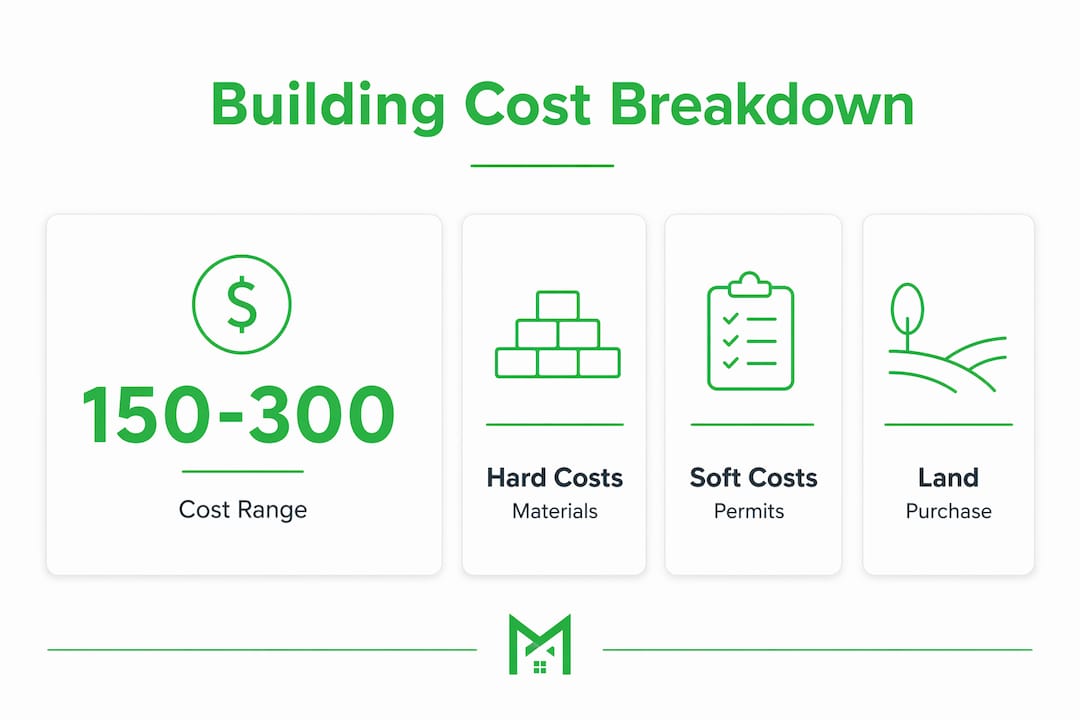
The average cost to build a house in Canada in 2026 falls between $150 and $300 per square foot, depending on your region, build type, and finish quality. That range translates to a wide spread in real dollars. Construction-only costs average around $323,077 in North America, with most projects landing between $138,937 and $531,039 before land and site preparation are added. For homebuyers and property investors in South Georgian Bay, Wasaga Beach, and Simcoe County, understanding what drives that range is the difference between a realistic budget and a costly surprise.
What is the average cost to build a house and what does it include?
The average cost to build a house is the total spend on labour, materials, and contractor fees required to complete a residential structure from foundation to finishing. This figure, however, does not automatically include land purchase, site preparation, utility connections, permits, or design fees. Those additions are called soft costs, and they can push your all-in budget tens or hundreds of thousands of dollars beyond the construction-only number.
Breaking your home construction budget into clear categories is the most reliable way to avoid underestimating. Here is how a typical project budget is structured:
- Hard construction costs: Framing, roofing, mechanical systems, insulation, drywall, flooring, and all finishing work. This is the number most cost-per-square-foot estimates reflect.
- Land acquisition: The purchase price of your lot, which varies enormously between rural Clearview Township and waterfront properties near Collingwood or Blue Mountain.
- Site preparation: Grading, excavation, tree removal, and foundation work. On sloped or heavily treed lots, this alone can add $20,000 to $60,000 or more.
- Utility connections: Hooking up water, sewer or septic, natural gas, and electrical service to the property line.
- Permits and inspections: Permit fees typically range from $150 to $2,000 depending on municipality, though complex custom builds in Ontario can run higher when engineering reviews are required.
- Soft costs: Architectural drawings, engineering reports, surveys, and legal fees.
Separating hard costs from soft costs is the single most important discipline in home construction budgeting. Buyers who skip this step routinely discover their “budget” covered only the building itself, leaving them short for the lot, the driveway, and the landscaping. For a thorough checklist of overlooked expenses, the hidden building costs guide from Shed Homes is a useful reference for Canadian buyers planning a full-scope budget.
Pro Tip: When requesting quotes from builders, always ask for a line-item breakdown that separates hard construction costs from site work and soft costs. A single lump-sum number makes it nearly impossible to compare bids accurately.
What factors influence the cost per square foot when building a house?
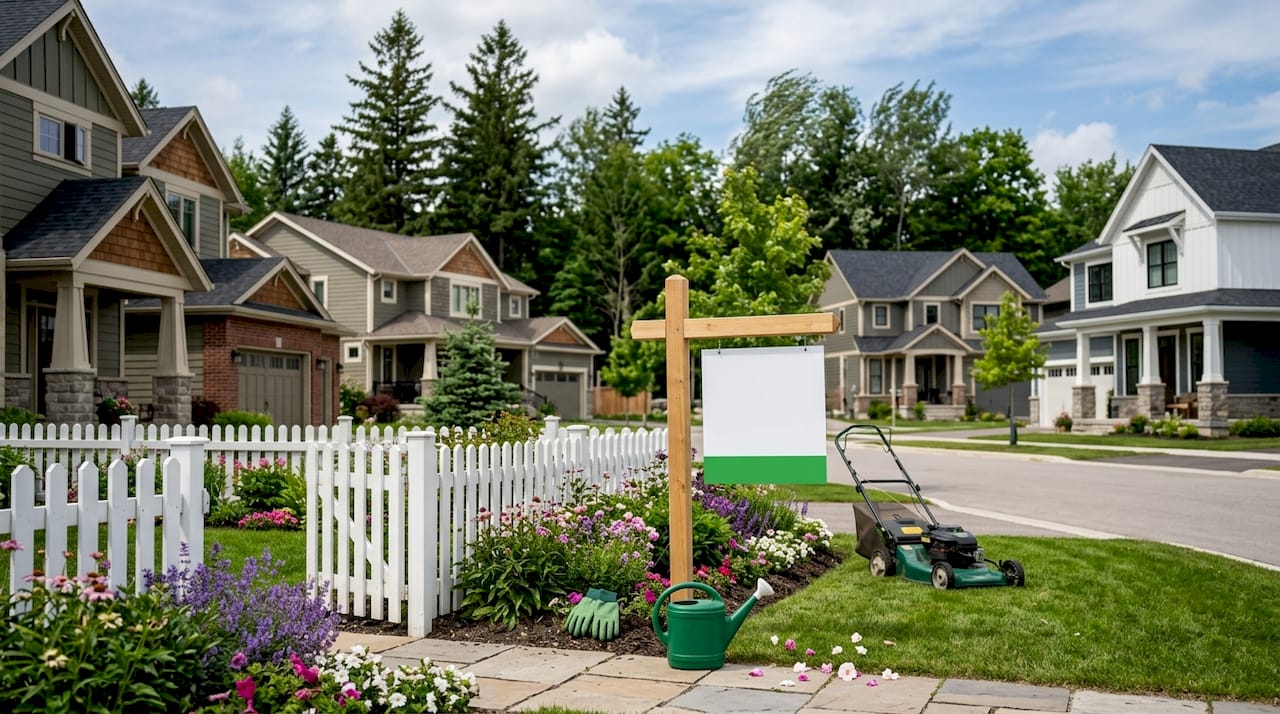
Cost per square foot is not a fixed number. It shifts based on where you build, what you build, and who builds it. Understanding these variables helps you anticipate where your budget is most at risk.
-
Location and regional labour rates. Labour accounts for 30% to 50% of total construction spending, making it the single largest cost driver. Trades in urban Ontario markets command higher wages than those in rural Simcoe County, though demand in resort communities like Wasaga Beach and Collingwood can push local rates up during peak building seasons.
-
Build type and specification level. Entry-level production homes cost approximately $130 to $175 per square foot. Mid-range custom builds run $175 to $250 per square foot. High-end custom homes, including luxury waterfront cottages and ICF-constructed properties, start at $250 and can exceed $400 per square foot. Each tier reflects a fundamentally different level of design complexity, material quality, and trade specialisation.
-
Finish quality and material selection. Swapping standard vinyl windows for triple-glazed wood-clad units, or upgrading from laminate to engineered hardwood throughout, can add $30,000 to $80,000 to a mid-sized build. Finish decisions are where budgets most commonly expand beyond original estimates.
-
Supply chain and permit timelines. A typical single-family build takes approximately 8 to 10 months from permit approval to occupancy. Delays in permit processing or material delivery extend that timeline and inflate labour costs, since trades continue to bill during idle periods on site.
-
Lot characteristics. A flat, serviced lot in a subdivision costs far less to prepare than a sloped, unserviced rural property. Waterfront lots in Tiny Township or Springwater often require additional environmental assessments and shoreline setback compliance, adding both time and cost.
The cost per square foot in Canada is best understood as a range with a floor and a ceiling, not a single reliable number. Your actual figure sits somewhere in that range based on the five factors above.
How do regions and build types compare in average house building price?
Regional variation in house construction costs is significant enough that national averages can mislead more than they inform. NAHB 2025 data shows New England custom homes exceeding $190 per square foot, while Southern U.S. regions fall to $140 or below. Canadian markets follow a similar pattern, with Ontario and British Columbia commanding premiums over Prairie provinces.
Build type
Typical cost per sq ft
Notes
Entry-level production home
$130 to $175
Standardised plans, volume materials, limited customisation
Mid-range custom home
$175 to $250
Architect-designed, quality finishes, moderate complexity
High-end custom or luxury
$250 to $400+
Premium materials, complex design, specialist trades
Waterfront cottage (Ontario)
$275 to $450+
Site access, environmental compliance, premium finishes
ICF construction (Ontario)
$200 to $300+
Higher upfront cost, significant long-term energy savings
One critical point for property investors: mixing median prices for spec starts with custom builds produces distorted budget assumptions. A spec home built by a production builder on a serviced lot bears almost no resemblance in cost structure to a custom waterfront cottage in South Georgian Bay. Treat each category separately when building your pro forma.
Land prices add another layer of regional complexity. A serviced lot in a Wasaga Beach subdivision may cost $150,000 to $300,000, while a comparable lot in rural Clearview Township could be half that price. In Blue Mountain resort areas, premium lots regularly exceed $400,000 before a single nail is driven.
Pro Tip: Always request local quotes from at least three builders before finalising your land purchase. The cost to build on a specific lot can vary by $50,000 or more depending on site conditions, and knowing that number before you buy protects you from committing to land your budget cannot support.
What should homebuyers and investors keep in mind when budgeting to build?
A realistic home construction budget accounts for more than the cost to build the structure. These are the practical considerations that separate projects that finish on budget from those that do not.
- Build in a contingency buffer. Most experienced builders recommend reserving 10% to 15% of your total construction budget for unexpected costs. Soil conditions, weather delays, and material substitutions are common on custom builds, and having a buffer prevents these from becoming crises.
- Account for timeline risk. Schedule delays inflate labour costs because trades continue to bill during extended project periods. A two-month delay on a $400,000 build can add $15,000 to $25,000 in unplanned labour expense. Realistic timelines, agreed in writing, reduce this risk.
- Phase your budget approvals. Approve spending in stages: lot acquisition, design and permits, foundation and framing, mechanical rough-in, and finishing. This gives you natural review points to assess actual versus projected costs before committing to the next phase.
- Get multiple local bids. Labour and material rates fluctuate by local market conditions. Three competitive bids from builders active in your specific area, whether Springwater, Collingwood, or Tiny Township, give you a far more accurate picture than any national average.
- Do not overlook carrying costs. If you are financing the build, construction loan interest accrues throughout the project. On a 12-month build with a $500,000 construction loan at current rates, carrying costs alone can exceed $30,000.
- Plan for the gap between possession and move-in. Landscaping, window coverings, appliances, and furniture are rarely included in construction contracts. Budget an additional 5% to 10% of construction cost for these post-possession expenses.
For a structured approach to assembling a complete build budget, the owner-builder checklist for South Georgian Bay covers site prep, permits, utilities, and the line items most buyers miss on their first pass.
Key takeaways
Building a house in Canada requires a full-scope budget that separates hard construction costs, land, site preparation, permits, and soft costs, because construction-only averages routinely understate the true cost to build by tens of thousands of dollars.
Point
Details
Baseline cost range
Canadian builds typically run $150 to $300 per sq ft depending on region and build type.
Soft costs are separate
Land, permits, site prep, and utilities are not included in standard cost-per-sq-ft figures.
Labour is the largest variable
Labour represents 30% to 50% of total construction cost and rises with schedule delays.
Regional differences matter
National averages are poor guides; local quotes from South Georgian Bay builders give accurate numbers.
Contingency is non-negotiable
Reserve 10% to 15% of your total budget for unexpected costs before breaking ground.
Why averages can mislead you more than they help
I have seen clients arrive at their first consultation with a number in their head, usually something they found on a general real estate website, and that number is almost always too low. Not because the source was wrong, but because it was answering a different question than the one the client was actually asking.
The published average cost to build a house reflects construction costs on a typical lot with typical conditions. It does not reflect a sloped waterfront lot in Tiny Township, a custom ICF build in Wasaga Beach, or a project where the nearest utility connection is 400 metres away. Those variables are invisible in a national average, but they are very visible in your final invoice.
What I tell every client is this: the average is a starting point for a conversation, not a budget. Your actual number comes from your lot, your design, your finish selections, and your timeline. The only way to get that number is to work through each cost category with a builder who knows your local market. In South Georgian Bay, that means understanding permit timelines in Simcoe County, the cost of trades during peak cottage season, and the site-specific challenges that come with building near the water or in the escarpment.
The clients who build on budget are not the ones who found the best average online. They are the ones who asked the right questions early, built a segmented budget with a real contingency, and stayed in close communication with their builder throughout. That process is not complicated, but it does require discipline from day one.
— Adam
Build your custom home with confidence in South Georgian Bay
Planning a custom home or cottage build in Wasaga Beach, Collingwood, or anywhere across South Georgian Bay starts with understanding what your project will actually cost, not what a national average suggests. Mighton Construction has delivered premium custom homes, waterfront cottages, and ICF builds across Simcoe County for over 30 years, with a process built around transparent budgeting and clear communication at every stage.
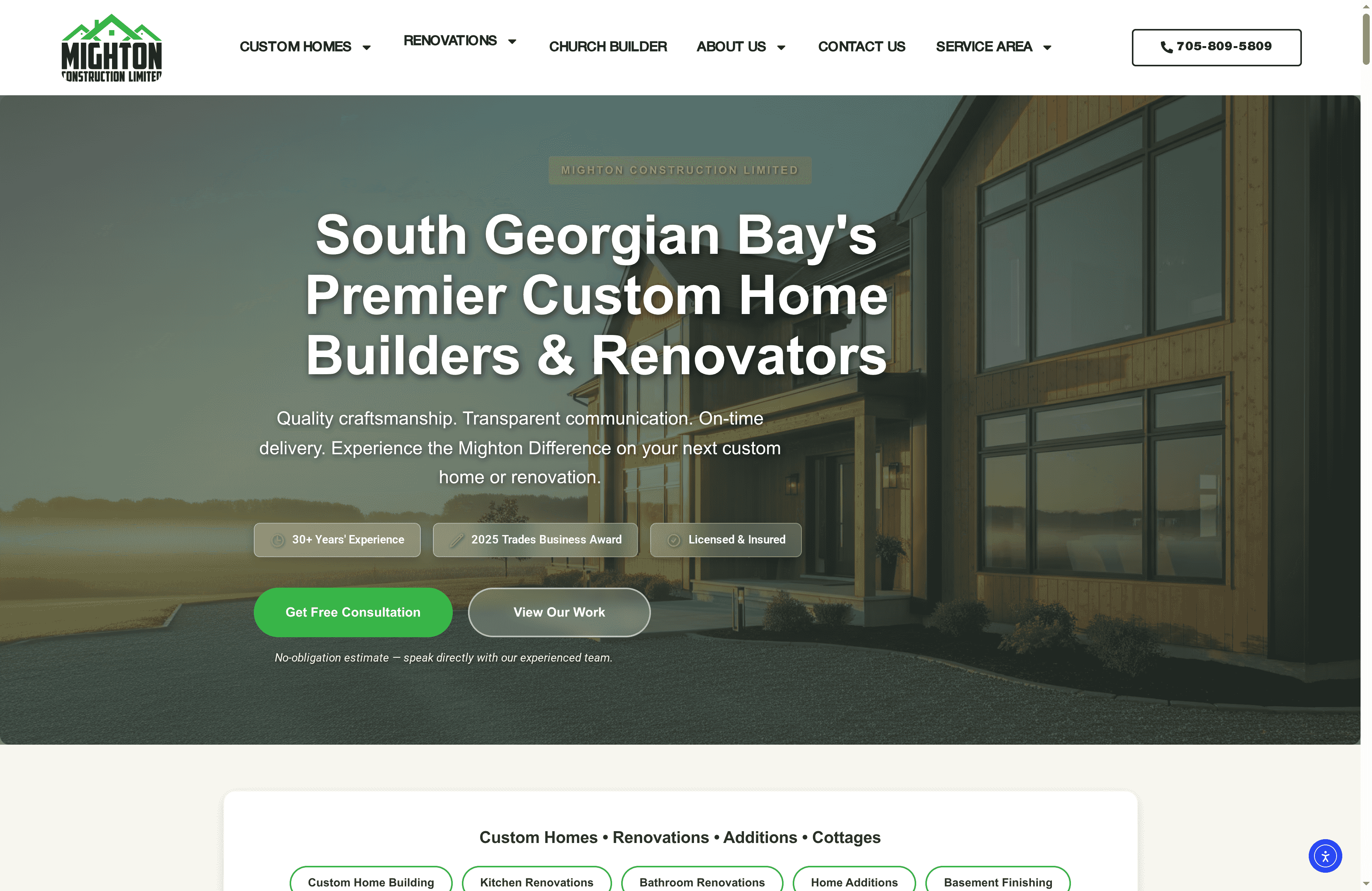
Whether you are planning a luxury waterfront cottage in Wasaga Beach or exploring ICF construction for energy efficiency and durability, Mighton Construction provides detailed cost estimates, local expertise, and a turn-key build experience from concept to completion. Contact us today to start your personalised consultation.
FAQ
What is the average price to build a house in Canada in 2026?
The average cost to build a house in Canada in 2026 ranges from $150 to $300 per square foot for construction only, with total all-in costs varying widely based on lot price, site conditions, and finish level. Mid-range custom builds in Ontario typically fall between $175 and $250 per square foot before land and soft costs are added.
Does the average building cost include land and permits?
No. Standard cost-per-square-foot figures cover hard construction only. Land purchase, site preparation, permit fees, utility connections, and design costs are all separate line items that must be added to reach your true total budget.
How long does it take to build a house in Canada?
A typical single-family build takes approximately 8 to 10 months from permit approval to occupancy. Custom builds with complex designs or challenging site conditions in areas like Blue Mountain or Tiny Township can run 12 to 18 months depending on permit timelines and trade availability.
Why do custom homes cost more than production homes?
Custom homes are designed and built to a specific client’s requirements, using architect-drawn plans, specialist trades, and premium materials. Production homes use standardised plans and volume purchasing to reduce costs. That difference in process and specification is why custom builds start at $175 per square foot while entry-level production homes begin closer to $130.
How much contingency should I budget when building a house?
Most experienced builders recommend a contingency of 10% to 15% of your total construction budget. This buffer covers unexpected site conditions, material substitutions, and schedule-related cost increases that are common on custom residential projects in Ontario.