What is green building? A guide for South Georgian Bay 2026
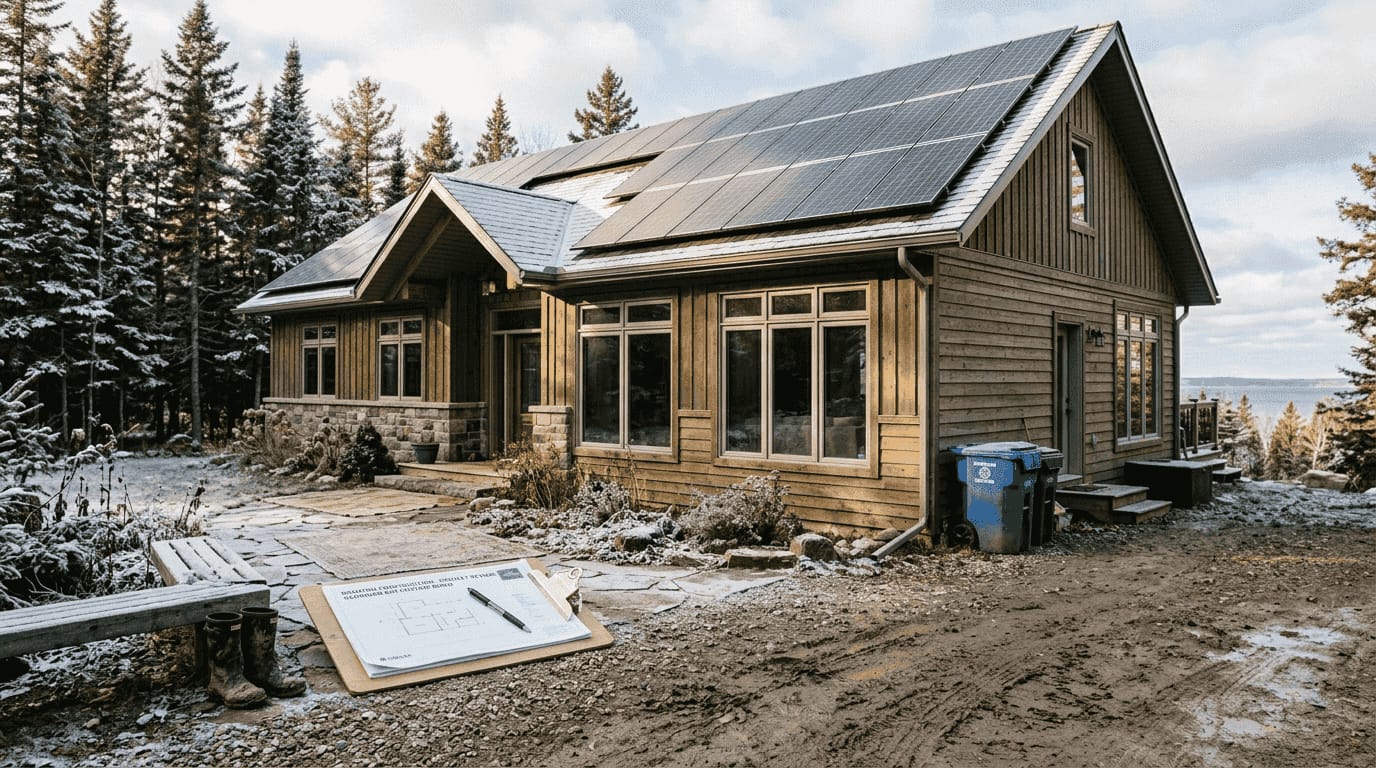
Most homeowners think green building means slapping solar panels on the roof and calling it a day. In reality, green building is a holistic approach that integrates energy efficiency, water conservation, material selection, and indoor air quality from the ground up. Whether you’re planning a custom cottage in Wasaga Beach or renovating a century home in Collingwood, understanding these principles helps you make smarter decisions that reduce operating costs, enhance comfort, and protect South Georgian Bay’s natural beauty. This guide walks you through the essential concepts, certifications, techniques, and practical considerations for sustainable construction in our region.
Table of Contents
- The Core Principles Of Green Building
- Proven Green Building Techniques And Materials For Custom Homes
- Understanding Certifications And Energy Performance Measures
- Renovation Or New Build? Evaluating Green Building Options In South Georgian Bay
- Explore Custom Green Home Building With Mighton Construction
Key takeaways
Point
Details
Holistic approach
Green building addresses energy, water, materials, and indoor quality throughout a building’s entire lifecycle.
Verified standards
Certifications like LEED, Passive House, and Net Zero ensure measurable performance and accountability.
Advanced techniques
Super-insulation, airtight construction, and heat recovery ventilation drastically cut energy consumption.
Lifecycle thinking
Embodied carbon and operational efficiency inform whether renovation or new construction makes more sense.
Local expertise matters
South Georgian Bay’s climate demands builders who understand cold-weather performance and regional certifications.
The core principles of green building
Green building is fundamentally about creating structures that minimise environmental harm while maximising occupant health and comfort. Green building refers to structures and processes that are environmentally responsible and resource-efficient throughout the lifecycle, including planning, design, construction, operation, maintenance, renovation, and demolition. This comprehensive view separates genuine sustainability from superficial greenwashing.
Five core principles guide every green building project:
- Energy efficiency reduces heating, cooling, and electrical consumption through superior insulation, airtight construction, and high-performance mechanical systems.
- Water efficiency conserves potable water via low-flow fixtures, rainwater harvesting, and greywater systems.
- Materials efficiency prioritises recycled content, local sourcing, durability, and low embodied carbon to reduce resource extraction and transportation impacts.
- Indoor environmental quality ensures healthy air through proper ventilation, non-toxic materials, and moisture control.
- Sensitive site design preserves natural drainage, protects vegetation, and minimises disturbance to local ecosystems.
These principles apply equally to new custom homes and major renovations. A 1920s cottage in Tiny Township can achieve remarkable efficiency gains through strategic upgrades, while a new waterfront build in Blue Mountain can incorporate passive solar orientation and advanced envelope systems from day one. The key is understanding that every decision, from foundation type to window placement, contributes to the building’s overall environmental footprint and long-term performance.
In South Georgian Bay’s cold climate, energy efficiency takes centre stage. Winter heating demands dominate annual energy consumption, making envelope performance and mechanical system choices critical. A poorly insulated home wastes money every month while a well-designed green building pays dividends through lower utility bills, enhanced comfort, and resilience during power outages.
Proven green building techniques and materials for custom homes
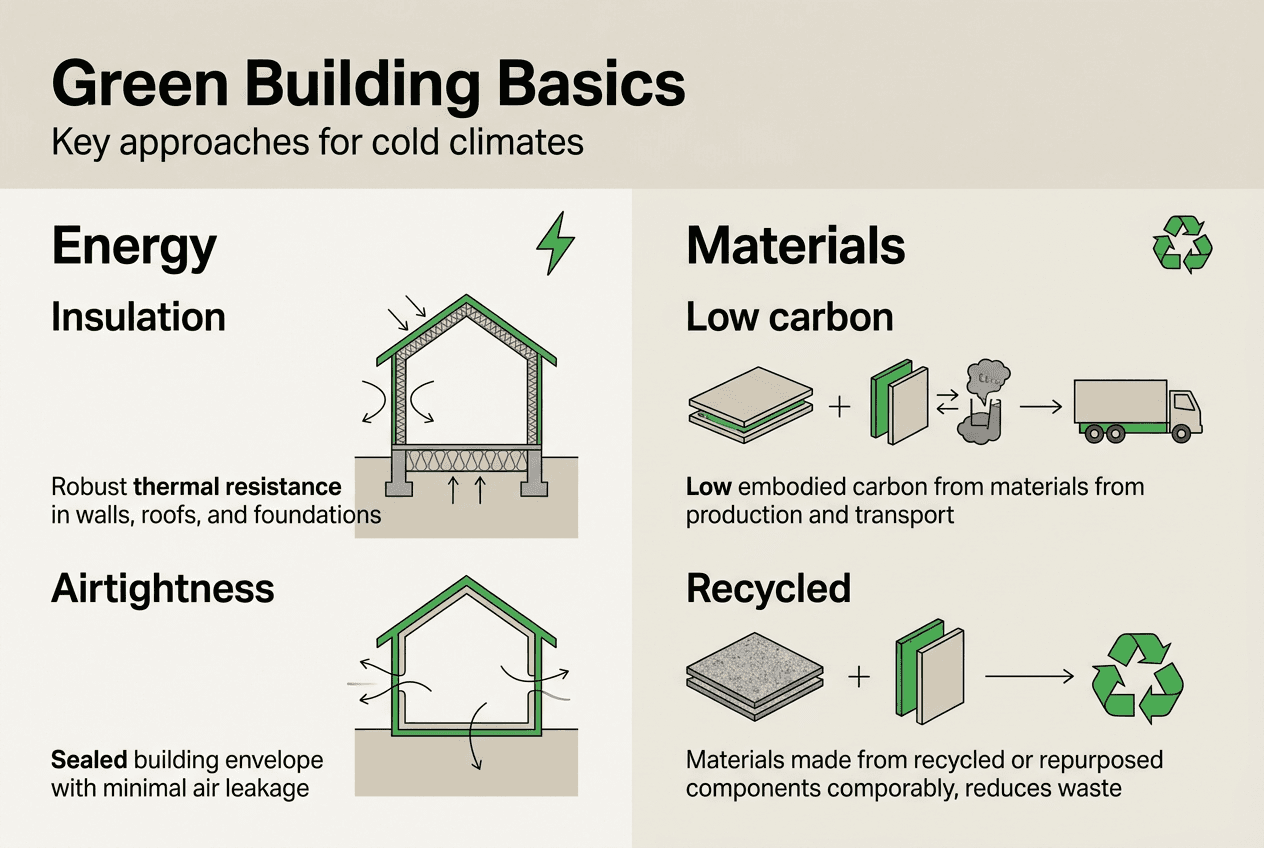
Translating principles into practice requires specific methodologies and material choices suited to our regional climate. Key methodologies include super-insulation, airtight construction, high-performance windows, mechanical ventilation with heat recovery, passive solar design, and use of low-carbon materials like ICF blocks and recycled wood chips.
Here’s how these techniques work together:
- Super-insulation uses thicker-than-code insulation layers to dramatically reduce heat transfer through walls, roofs, and foundations, keeping warmth inside during Georgian Bay’s harsh winters.
- Airtight construction eliminates drafts and uncontrolled air leakage through careful sealing of joints, penetrations, and transitions, often achieving less than 1.5 air changes per hour at 50 Pascals pressure.
- High-performance windows feature triple glazing, low-emissivity coatings, and insulated frames that prevent heat loss while allowing beneficial solar gain on south-facing exposures.
- Mechanical ventilation with heat recovery ensures continuous fresh air without energy penalty by transferring warmth from outgoing stale air to incoming fresh air, recovering up to 90% of heat energy.
- Passive solar design orients living spaces and windows to capture winter sun for natural heating and daylighting, reducing artificial lighting and mechanical heating loads.
- Low-carbon materials like insulated concrete forms provide exceptional thermal mass and insulation while sequestering carbon in recycled wood chip aggregates.
- Radiant floor heating distributes warmth evenly at lower temperatures than forced-air systems, improving comfort and efficiency while eliminating ductwork that can leak conditioned air.
Modular prefabrication offers additional advantages. Factory-built wall panels and roof trusses reduce on-site waste, improve quality control through consistent manufacturing conditions, and accelerate construction timelines. This approach particularly suits South Georgian Bay’s short building season, allowing weather-sensitive assembly to happen indoors before rapid site installation.
Pro Tip: Prioritise envelope performance over mechanical systems. A super-insulated, airtight building shell reduces heating and cooling loads so dramatically that you can install smaller, less expensive mechanical equipment while achieving superior comfort and lower operating costs.
Material selection extends beyond performance to consider embodied carbon, the greenhouse gas emissions associated with extraction, manufacturing, and transportation. Locally sourced wood framing, recycled steel reinforcement, and low-carbon concrete alternatives reduce this hidden environmental cost. Durability matters too, a building that lasts 100 years without major intervention has far less lifecycle impact than one requiring replacement after 50.
Understanding certifications and energy performance measures
Certifications provide third-party verification that a building meets rigorous sustainability standards, giving homeowners and developers confidence in performance claims. Canadian certifications relevant for South Georgian Bay include LEED, Zero Carbon Building Standards, Built Green Canada, Net Zero/Ready, and Passive House.
Each certification emphasises different aspects:
- LEED (Leadership in Energy and Environmental Design) uses a point-based system across multiple categories, with levels from Certified (40 points) to Platinum (80+ points), addressing site, water, energy, materials, indoor quality, and innovation.
- Zero Carbon Building focuses specifically on eliminating operational carbon emissions through extreme efficiency and renewable energy, ensuring the building produces as much clean energy as it consumes annually.
- Built Green Canada offers a tiered checklist approach (Bronze, Silver, Gold, Platinum) covering energy, materials, indoor air quality, and business practices, with flexibility for regional variations.
- Net Zero Ready prepares buildings for zero-carbon operation by maximising efficiency, even if renewable energy systems are added later, making it accessible for budget-conscious projects.
- Passive House sets strict performance targets: annual heating demand below 15 kWh per square metre, total energy use under 120 kWh per square metre, and airtightness under 0.6 air changes per hour at 50 Pascals.
Certification
Primary Focus
Performance Metric
Best For
LEED
Holistic sustainability
Point-based across categories
Commercial and institutional projects
Passive House
Energy performance
Heating demand and airtightness
Cold climate residential
Net Zero
Carbon neutrality
Annual energy balance
Future-proofed custom homes
Built Green
Practical sustainability
Tiered checklist
Budget-conscious builders
Choosing the right certification depends on your priorities and budget. Passive House delivers unmatched energy performance and comfort in cold climates, making it ideal for South Georgian Bay custom homes where heating dominates energy costs. LEED suits clients seeking comprehensive sustainability credentials, particularly for larger or institutional projects. Net Zero Ready offers a pragmatic path for homeowners who want efficiency now with renewable energy options later.
Certification isn’t mandatory for green building, but it provides accountability and market recognition. Certified homes command premium resale values and attract environmentally conscious buyers who appreciate verified performance over marketing claims.
Renovation or new build? Evaluating green building options in South Georgian Bay
Deciding between renovating an existing home and building new involves weighing embodied carbon, achievable performance, costs, and long-term goals. Lifecycle assessment shows deep energy retrofits often have lower embodied carbon than new builds, but airtightness and performance challenges may favour new construction in cold climates.
Renovation advantages include:
- Reusing existing structure and foundation saves the embodied carbon of new materials, particularly significant for concrete and framing.
- Preserving heritage character maintains neighbourhood fabric and cultural value while upgrading performance.
- Lower upfront costs in some cases, especially when the existing envelope and systems are sound.
- Immediate occupancy without land acquisition or lengthy permitting for new construction.
Renovation challenges include:
- Achieving airtightness in older buildings requires meticulous sealing of countless gaps, joints, and penetrations that weren’t designed for modern standards.
- Hidden conditions like rot, outdated wiring, or inadequate structure can escalate costs unpredictably.
- Thermal bridging through existing framing and foundations limits achievable insulation values.
- Mechanical system integration often requires creative solutions when chasing walls or adding ductwork isn’t feasible.
New construction advantages include:
- Optimal design from the ground up allows perfect solar orientation, window placement, and room layout for passive strategies.
- Superior envelope performance through continuous insulation, advanced framing, and factory-level airtightness.
- Modern mechanical systems sized precisely for reduced loads, with clean integration and accessibility.
- Future-proofing for evolving codes, climate adaptation, and technology integration.
New construction challenges include:
- Higher embodied carbon from virgin materials, concrete foundations, and transportation.
- Land costs and availability in desirable South Georgian Bay locations.
- Longer timeline from concept to occupancy, including design, permitting, and construction.
Pro Tip: Run an energy model comparing deep retrofit versus new construction for your specific site and goals. Factor in the existing building’s condition, achievable performance targets, and how long you plan to own the property. Sometimes a hybrid approach, preserving portions worth saving while rebuilding others, optimises both carbon and performance.
South Georgian Bay’s cold climate intensifies the performance gap between mediocre and excellent envelope design. A drafty cottage might cost $4,000 annually to heat, while a well-renovated home or new Passive House might cost $800. Over 25 years, that $3,200 annual saving compounds to $80,000, easily justifying higher upfront investment in superior building science.
Explore custom green home building with Mighton Construction
Turning green building knowledge into reality requires a builder who understands both the science and the craft. Mighton Construction specialises in sustainable custom cottages and homes throughout South Georgian Bay, bringing over 30 years of local expertise to every project. Whether you’re envisioning a Net Zero waterfront retreat or upgrading a heritage home with modern efficiency, our team manages the entire process from initial design through final finishing.
Our ICF construction services deliver the superior insulation and thermal mass that cold-climate performance demands, while our renovation expertise helps existing homeowners achieve remarkable efficiency gains without compromising character. We understand South Georgian Bay’s unique climate challenges, building code requirements, and certification pathways, ensuring your project meets both your sustainability goals and your vision for comfort and beauty. Partner with Mighton Construction to realise a home that performs as beautifully as it looks.
FAQ
What is green building certification and why does it matter?
Green building certification provides third-party verification that your home meets strict sustainability and energy performance standards. It assures you that efficiency claims are measurable and verified, not just marketing promises. Certified homes often command higher resale values and attract buyers who prioritise environmental responsibility and lower operating costs.
How much can green building reduce energy costs in cold climates like Georgian Bay?
High-performance buildings save 77-80% of heating energy compared to conventional construction in cold climates. This translates to dramatically lower utility bills, often reducing annual heating costs from thousands of dollars to just hundreds. The savings compound over decades, making green building a sound financial investment beyond environmental benefits.
What green building materials are best for sustainable custom homes?
Insulated concrete forms provide exceptional thermal performance and durability while incorporating recycled content. Locally sourced wood framing reduces transportation emissions, while low-carbon concrete alternatives and recycled steel reinforcement minimise embodied carbon. High-performance windows with triple glazing and low-emissivity coatings prevent heat loss while allowing beneficial solar gain.
Is it greener to renovate an old home or build a new green home?
Renovation typically has lower embodied carbon by reusing existing structure and materials. However, achieving Passive House-level airtightness and insulation proves extremely difficult in older buildings, especially in cold climates where performance gaps cost thousands annually. New construction allows optimal envelope design and mechanical integration from the ground up. The best choice depends on your existing building’s condition, your performance goals, and how long you plan to own the property. Consider running an energy model comparing renovation versus new construction for your specific situation.