What is an initial consultation for custom home projects?

TL;DR:
- The initial consultation lays the foundation for clear communication and project success.
- Preparing documents, ideas, and defining priorities ensures a productive meeting.
- Skipping or rushing this step often leads to costly misunderstandings and project delays.
Skipping the initial consultation is one of the most costly mistakes a homeowner can make when planning a custom home or major renovation. Many people assume it is simply a meet-and-greet or a formality before signing a contract, but this first meeting is actually where projects are made or broken. When you sit down with your builder before a single shovel touches the ground, you create the foundation for clear communication, realistic expectations, and a process that is far more likely to deliver exactly what you envisioned. This guide walks you through what to expect, how to prepare, and why this single meeting deserves your full attention.
Table of Contents
- What is an initial consultation?
- What happens during an initial consultation?
- Why the initial consultation matters: Benefits for your project
- How to prepare for your initial consultation
- What most homeowners miss about the initial consultation
- Ready to start your project? Connect with local experts
- Frequently asked questions
Key Takeaways
| Point | Details |
|---|---|
| Sets project direction | The initial consultation establishes clear vision and expectations for your custom home or renovation. |
| Prevents costly mistakes | Discussing budget, site, and scope early reduces surprises and delays in later stages. |
| Maximizes your investment | Investing in a thorough consultation leads to smoother builds and fewer headaches. |
| Preparation is key | Arrive with notes, inspiration, and key questions to make the most of your meeting. |
What is an initial consultation?
An initial consultation is the first formal, structured meeting between you and your prospective builder or contractor. It is not a casual chat over coffee, and it is certainly not a sales presentation designed to get you to sign on the dotted line. Think of it as a working session where both parties lay everything on the table, your vision, your budget, your site, your concerns, and your timeline.
The purpose is straightforward: to determine whether your project is viable, whether the builder is the right fit, and whether both parties share a realistic understanding of what is involved. Common questions about the process are a natural part of this meeting, and experienced builders expect them.
What often happens during a well-run initial consultation:
- The builder reviews your property or site, including access, topography, and any zoning restrictions
- You describe your project goals, lifestyle needs, and design preferences
- The builder assesses broad feasibility and flags any obvious challenges
- You discuss budget ranges, not down to the dollar, but enough to confirm the project is realistic
- You explore timeline expectations, from start date through to occupancy
- Both parties agree on next steps and what information each needs to gather
What happens when you skip or rush this meeting? Projects go sideways fast. Builders proceed with assumptions, clients have unspoken expectations, and the gap between vision and reality widens with every passing week. The cost of misalignment discovered during framing is far greater than the cost of an honest conversation before a single permit is pulled.
What happens during an initial consultation?
Understanding the typical flow of an initial consultation helps you show up prepared and confident. Here is how a thorough session usually unfolds with a seasoned builder.
-
Introductions and context setting. You share who you are, what you are hoping to build or renovate, and what brought you to this builder. The builder shares their experience, relevant completed projects, and their general approach to project management.
-
Reviewing your big ideas. You walk the builder through your vision. This could mean sharing sketches, Pinterest boards, photos clipped from home magazines, or even a video walkthrough of a house you admire. The more specific you can be, the more useful the feedback.
-
Site and regulatory assessment. The builder asks about your lot or existing home, including location, size, orientation, soil conditions, municipal zoning rules, and any known restrictions. For South Georgian Bay properties, this might include waterfront setback requirements, Simcoe County building codes, or seasonal access limitations.
-
Budget conversation. This is where many homeowners feel nervous, but it is essential. You share your budget range, and the builder gives an honest assessment of what that budget typically achieves in the current market. Understanding the custom home design build process makes this conversation far less daunting.
-
Identifying your non-negotiables. What must this project include? What can be phased in later? The builder helps you prioritise so that your core vision is protected even if adjustments are needed.
-
Scheduling and construction methods. You discuss your preferred start date, how long you can tolerate construction disruption, and whether specific building methods like ICF construction are relevant to your project goals.
-
Next steps. The session ends with a clear plan. The builder tells you what they need from you, such as survey documents, soil tests, or design drawings, and you agree on when to reconnect.
| Who brings what | What you bring | What your builder brings |
|---|---|---|
| Documents | Property survey, site plan | Portfolio, licences, insurance proof |
| Ideas | Inspiration photos, sketches | Similar project examples |
| Numbers | Budget range, financing status | Preliminary cost benchmarks |
| Questions | Priority list, deal-breakers | Regulatory knowledge, feasibility input |
| Timeline | Move-in goals, flexibility | Construction schedule framework |
This step-by-step guide to project workflow provides a broader picture of what follows once the consultation stage is complete.
Pro Tip: Bring at least 10 to 15 reference photos of homes, rooms, or details you love. Visual references eliminate guesswork and give your builder immediate, concrete direction. The more you show, the less explaining you need to do.
Why the initial consultation matters: Benefits for your project
A well-run initial consultation does not just start the relationship on the right foot. It actively shapes the entire outcome of your project in measurable ways. Here is why skipping or shortchanging this step so often leads to expensive regrets.
First, it ensures that your priorities and vision are fully understood before any commitments are made. A builder who truly understands your goals can advocate for them throughout design and construction. One who is guessing will make decisions that reflect their own preferences rather than yours.
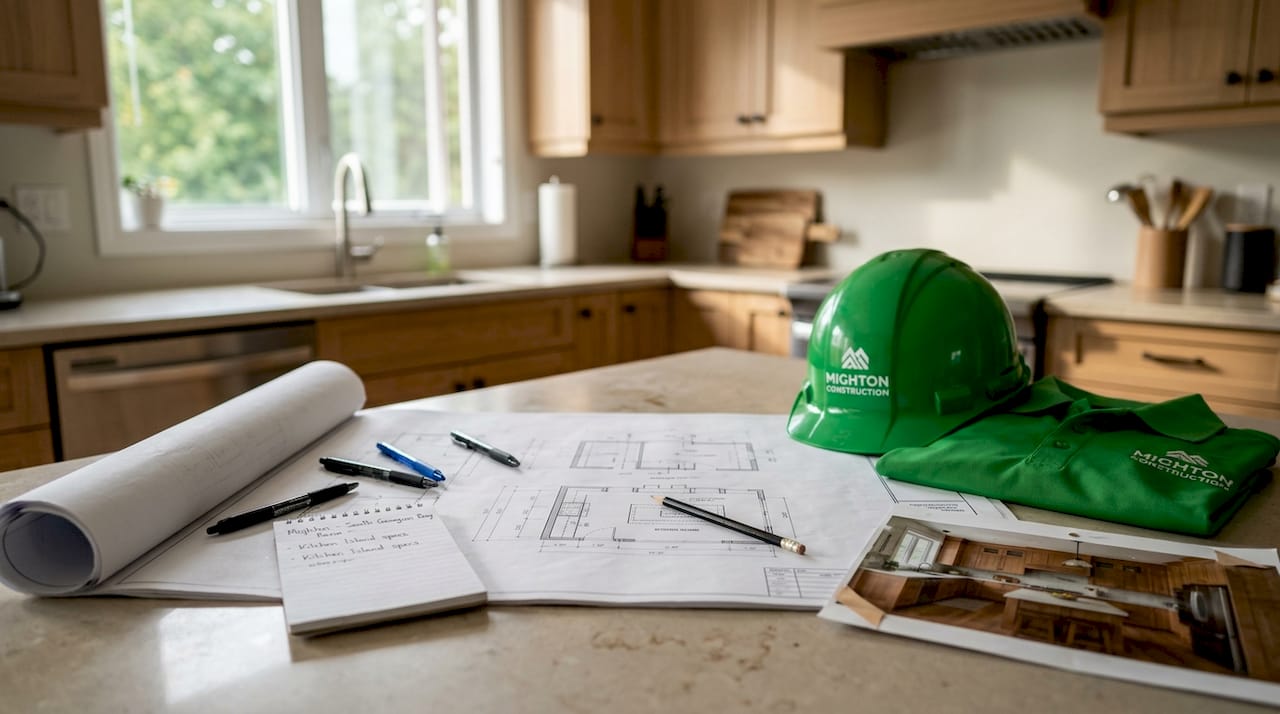
Second, it surfaces red flags early. Maybe your lot has drainage issues. Maybe your timeline conflicts with your builder’s schedule. Maybe your budget needs to be adjusted to match your wish list. Discovering these realities before a contract is signed is far better than discovering them mid-build.
Third, it sets realistic expectations on all sides. Planning a custom home for success consistently points to expectation alignment as one of the strongest predictors of client satisfaction. When both parties have the same picture in mind, the likelihood of conflict drops dramatically.
Fourth, it builds the foundation for trust and open communication. Large projects can run 12 to 18 months or longer. The relationship between homeowner and builder needs to be honest, direct, and resilient. A productive first meeting signals what that relationship will look like going forward.
Projects that include a thorough consultation phase are significantly more likely to finish on time and within budget than those that rush straight into design and permitting. That outcome alone justifies investing two hours in a proper conversation.
Tangible outcomes homeowners experience after a thorough consultation:
- Fewer surprises during the construction phase
- A design that reflects actual lifestyle needs rather than generic trends
- A more confident and informed decision about which builder to hire
- Reduced stress throughout the project because expectations are clear
- A stronger sense of partnership with the construction team
- Better cost control because the scope is defined from the start
Reviewing tips for designing your dream home before your meeting can help you articulate your priorities more clearly when the conversation starts.
How to prepare for your initial consultation
Walking into a consultation without preparation is a missed opportunity. The more you bring to the table, the more value you take away. Here is how to set yourself up for a productive session.
-
Gather your documents. Pull together anything related to your property: the survey, lot plan, any existing blueprints if you are renovating, and photos of the current state of the space. If you are building on a new lot, obtain the site plan from the municipality.
-
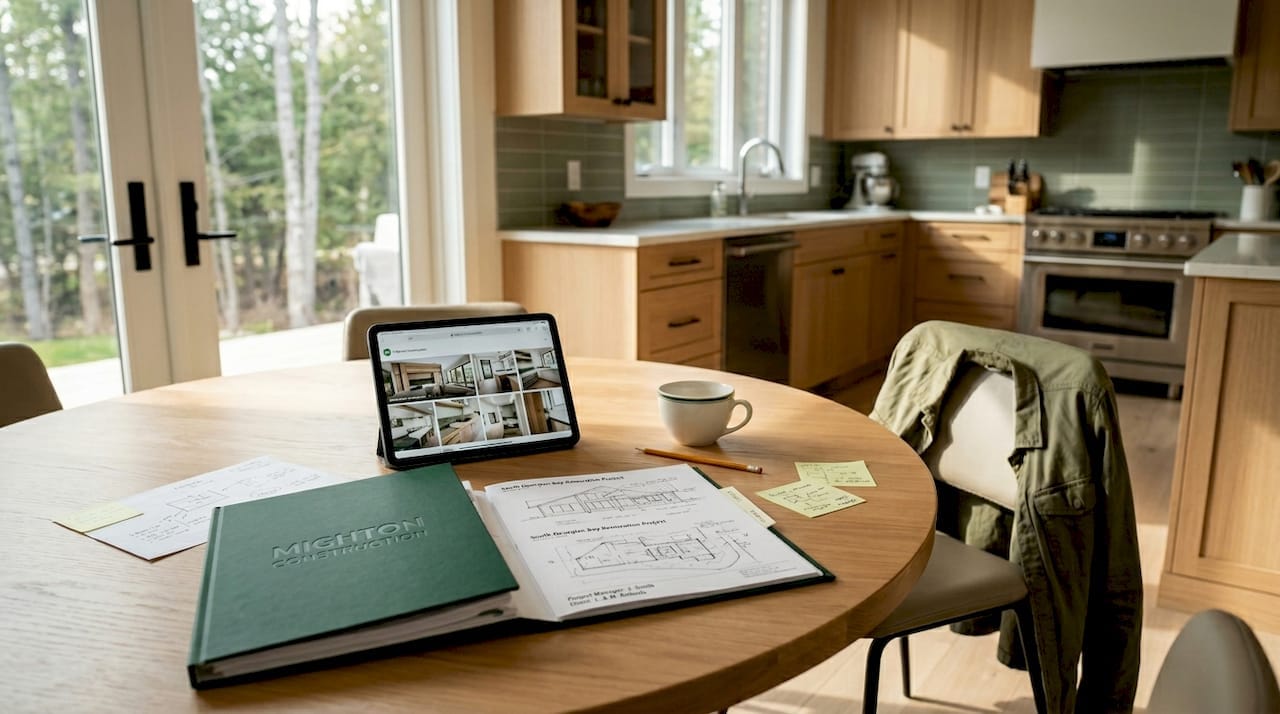
Build an inspiration library. Collect photos of homes, kitchens, facades, layouts, and outdoor spaces that resonate with you. Organise them by category so you can share them quickly during the meeting. Digital folders or a printed binder both work well.
-
Define your must-haves versus nice-to-haves. Write two separate lists. Your must-haves are non-negotiable features your project must include. Your nice-to-haves are items you would love but could live without if budget or timeline demanded it. This distinction helps the builder understand where to focus.
-
Know your budget range and flexibility. You do not need an exact number, but you need a range you are comfortable with and an honest sense of where you have flexibility. Choosing the right construction company is far easier when both parties are aligned on financial reality from the outset.
-
Set your timeline goals. Do you have a target move-in date? Is there a seasonal deadline, such as wanting to be in before the next winter? Are you flexible if the project requires it? Understanding your own timeline constraints helps the builder structure a realistic schedule.
-
Bring all decision-makers. If your partner, parent, or business partner will be involved in approving major decisions, they should be in the room. Decisions made without key stakeholders present often need to be revisited, which wastes everyone’s time.
Using a custom home selection guide can help you frame the right questions before you arrive, and reviewing advice on communicating with contractors will help you get the most honest answers during the session.
Pro Tip: Create a one-page project summary to hand to your builder at the start of the meeting. Include your project type, location, rough budget, timeline goals, and top three priorities. It takes 20 minutes to prepare and saves 20 minutes of back-and-forth at the start of the session.
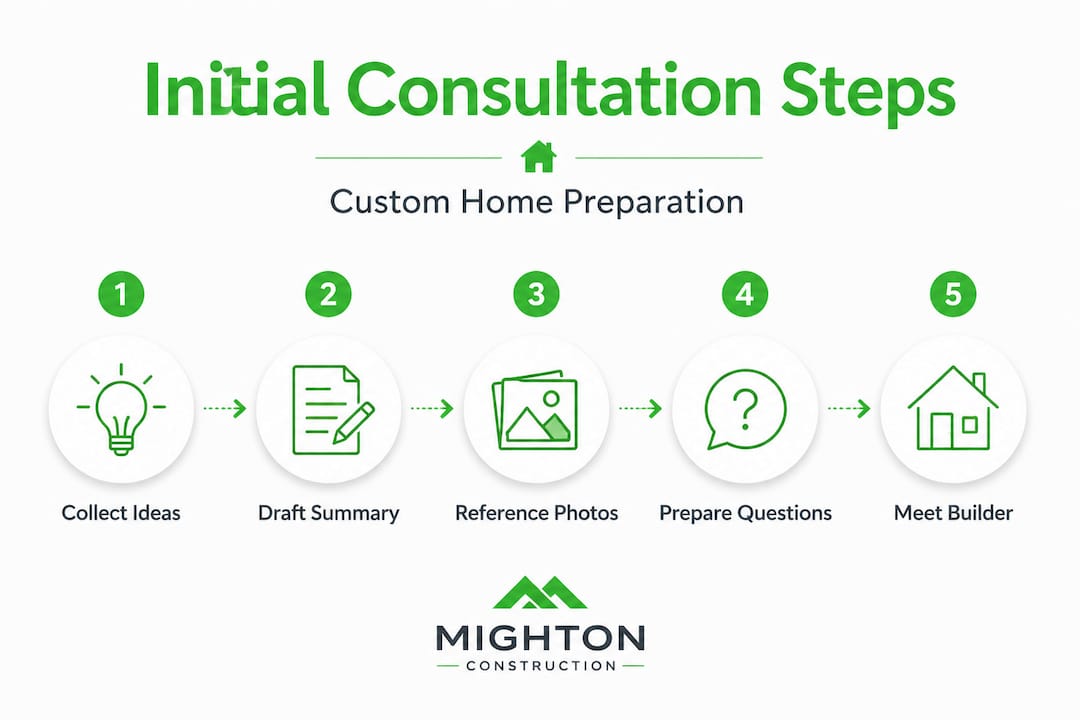
Having prepared well, you will enter the initial consultation with clarity, ready to turn your vision into something real and achievable.
What most homeowners miss about the initial consultation
Here is a perspective we have developed over more than 30 years of building custom homes and completing major renovations across South Georgian Bay. Most homeowners approach the initial consultation as a formality, a box to tick before the real work begins. That mindset consistently costs them.
The initial consultation is not a hurdle on the way to construction. It is often the single most important conversation in the entire project. Everything that follows, the design decisions, the material selections, the budget management, the relationship with your builder, traces back to the quality of that first meeting.
What surprises many homeowners is that the goal of the consultation is not for you to have all the answers. It is for you to surface the right questions. The builder brings the technical expertise. You bring the lived experience of how you want to use your home. When those two things meet honestly and openly, the project has a fundamentally better chance of succeeding.
The role of the architect in construction highlights how early-stage collaboration between all parties shapes design outcomes in ways that are very difficult to correct later. The same principle applies to the relationship between homeowner and builder. What is discussed and agreed upon at the beginning sets the trajectory for everything else.
We have seen firsthand what happens when homeowners hold back concerns, whether out of politeness, uncertainty, or a desire to seem easy to work with. Those unspoken concerns surface later, often at a point where addressing them means redesigning something already under construction. Rushing through the consultation, or treating it as a chance to simply hand over a wish list and wait for a quote, produces the same result.
The most successful projects we have delivered began with the most candid initial consultations. Clients who asked hard questions, shared real constraints, and engaged as true partners in the process ended up with homes that exceeded their expectations. That is not coincidence.
Ready to start your project? Connect with local experts
If this article has made one thing clear, it is that the initial consultation is where your vision becomes a plan. And the quality of that plan depends entirely on who you sit down with.
At Mighton Construction Limited, we have guided South Georgian Bay homeowners through this exact process for over three decades. Whether you are envisioning a luxury waterfront property, exploring options as a Wasaga Beach custom cottage builder, or considering advanced construction methods with an expert ICF contractor for lasting durability in Ontario’s climate, our team brings the experience, honesty, and craftsmanship your project deserves. Reach out today to schedule your initial consultation and take the first real step toward building the home you have been planning.
Frequently asked questions
How long does an initial consultation usually take?
Most initial consultations run between 60 and 90 minutes, though complex projects involving large custom builds or significant renovations may require a longer session to cover all relevant details.
Is there a fee for an initial consultation with a builder?
Many builders offer a complimentary first consultation, though some may charge a fee for in-depth or site-specific sessions that require travel or detailed assessment.
What should I bring to my initial consultation?
Come prepared with sketches or inspiration photos, a written list of your must-haves, your budget range, your ideal timeline, and any property documents such as a survey or existing floor plans.
Can the initial consultation be virtual?
Yes, many experienced builders now offer virtual consultations via video call, which can be especially convenient for homeowners who are still in the planning stages or are considering properties in another area.
What happens after the initial consultation?
Your builder will typically outline clear next steps, which may include sharing a preliminary cost estimate, identifying required documents or tests, and proposing a timeline for moving the project into the design or pre-construction phase.
Recommended
- Frequently Asked Questions about Building Custom Homes
- 10 Tips for Designing Your Dream Custom Home
- Custom Home Project Workflow: Step-by-Step Guide for Success
- Custom Home Selection Guide for Luxury Living Success
- Role of Pool Design Consultation in Central Florida