Waterfront landscaping ideas for South Georgian Bay homes

TL;DR:
- Successful waterfront landscaping in South Georgian Bay emphasizes beauty, resilience, usability, and regulatory compliance.
- Living shorelines and native plants are recommended for erosion control and ecological health.
- Proper planning, drainage, and early permit approval are essential for durable, compliant waterfront landscapes.
Landscaping a waterfront property in South Georgian Bay is one of the most rewarding and demanding design challenges a property owner can face. You’re working with stunning natural scenery, but also unpredictable weather, ice pressure, wave action, and a web of conservation regulations that govern nearly every shovel you put in the ground. Get it right and your property becomes a true sanctuary, one that holds its value and deepens your connection to the bay for decades. Get it wrong and you’re looking at erosion, regulatory fines, and a landscape that simply doesn’t survive a Georgian Bay winter. This article walks you through expert-backed strategies to create a waterfront landscape that is beautiful, resilient, and fully compliant.
Table of Contents
- Criteria for outstanding waterfront landscaping in South Georgian Bay
- Layered planting and zoning: Form meets function
- Living shorelines: Hybrid approaches for stability and ecology
- Mastering drainage and grading for lasting landscapes
- Navigating permits and conservation regulations
- Why thoughtful planning trumps trendy designs on the waterfront
- Explore custom waterfront possibilities with local experts
- Frequently asked questions
Key Takeaways
| Point | Details |
|---|---|
| Balance beauty and compliance | Outstanding waterfront landscapes require careful planning to meet both aesthetic and regulatory demands. |
| Layered and native planting works | Layering plant heights and choosing native species ensure year-round interest and shoreline protection. |
| Living shorelines last longer | Hybrid approaches that blend vegetation and natural structures outperform hard barriers for stability and ecology. |
| Drainage is non-negotiable | Proper grading, permeable surfaces, and tree retention are critical for sustainable waterfront projects. |
| Ask the experts early | Consult local authorities and experienced builders at the start to prevent costly delays and maximize results. |
Criteria for outstanding waterfront landscaping in South Georgian Bay
Before choosing a single plant or paving stone, it helps to understand what separates a truly outstanding waterfront landscape from one that looks impressive in summer photos but crumbles by spring. Four pillars drive every successful project here: beauty, resilience, usability, and compliance.
Beauty goes beyond aesthetics. On the bay, a landscape earns its keep by framing views, softening hard edges, and creating a sense of arrival that feels both natural and intentional. Seasonal colour, layered textures, and thoughtful lighting all contribute to a property that genuinely enhances your lifestyle.
Resilience is where Georgian Bay separates itself from typical cottage country. Ice heave in winter, wave energy during storms, and spring runoff can destroy poorly designed landscapes in a single season. Proper grading, drainage, and retention of trees are essential for sustainable design and to reduce runoff. This isn’t optional engineering; it’s the foundation of every decision you make.
Usability means your landscape works for how you actually live. Layered planting creates natural zones for fire pits, dining terraces, and quiet viewing spots. Accessible pathways connect the cottage to the dock without destroying shoreline vegetation. When you’re planning waterfront builds, usability planning from the outset saves costly retrofits later.
Compliance is non-negotiable. Regulatory compliance with local conservation authorities is mandatory for shoreline work and tree removal. Authorities like the Nottawasaga Valley Conservation Authority (NVCA) have jurisdiction over most shoreline activities in this region, and violations carry real consequences.
Pro Tip: Start by zoning your waterfront property into three bands: a natural shoreline buffer, a transition zone for pathways and seating, and a private retreat zone closer to the cottage. This simple framework guides every design decision that follows.
- Prioritise native plants that tolerate both drought and flooding
- Avoid turf grass right to the water’s edge
- Plan for ice and snow load on any structural features
- Explore living shoreline strategies as an alternative to hard armouring
Layered planting and zoning: Form meets function
With criteria in hand, the next step is to dive into techniques that offer both beauty and utility. Layered planting is the single most effective tool in a waterfront designer’s kit. It creates depth, manages privacy, and gives your landscape a living, evolving quality that flat lawns simply cannot match.
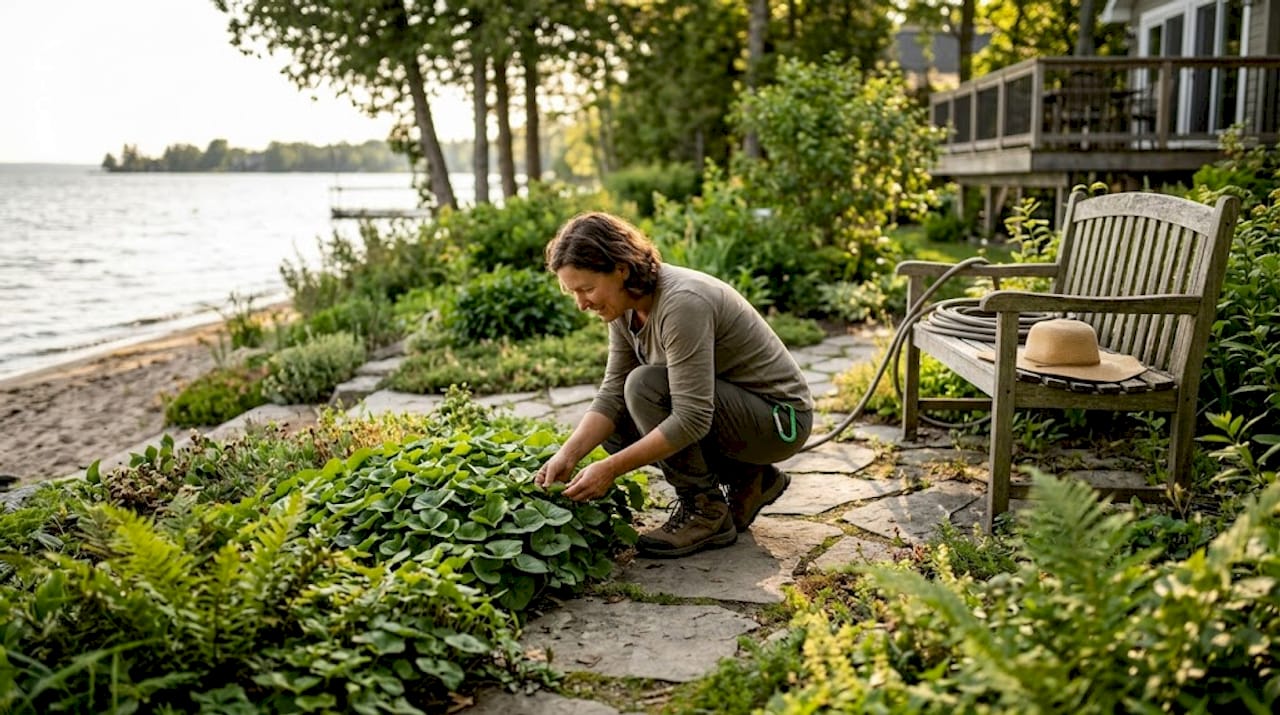
At the water’s edge, native groundcovers do the heavy lifting. Species like bearberry, creeping juniper, and wild ginger stabilise soil with deep, fibrous root systems that hold firm through freeze-thaw cycles. Moving inland, mid-height native grasses and perennials like switchgrass, wild bergamot, and black-eyed Susan add seasonal colour and attract pollinators. Taller shrubs such as serviceberry and red osier dogwood create natural screens without forming a solid wall that blocks your view of the bay.
Mixing plant heights, from groundcovers to tall grasses and shrubs, creates depth, enhances privacy, and supports biodiversity. This approach also reduces maintenance dramatically compared to a traditional lawn, which requires constant mowing, fertilising, and watering near a sensitive shoreline.
Zoning your outdoor space into functional areas transforms a beautiful landscape into a genuinely liveable one. A fire pit zone set back from the water, a dining terrace with a clear sightline to the bay, and a shaded reading nook tucked behind a stand of native shrubs each serve a distinct purpose. These ideas connect naturally with broader outdoor living space ideas that suit the South Georgian Bay lifestyle.
Pro Tip: Integrate permeable stone pathways between zones. They handle foot traffic, drain beautifully, and look far more refined than poured concrete near the water.
- Use native groundcovers at the shoreline for root stability
- Layer mid-height grasses and perennials for colour and habitat
- Position taller shrubs to screen neighbouring docks without blocking views
- Explore design trends for luxury homes for inspiration on integrating landscape with architecture
Living shorelines: Hybrid approaches for stability and ecology
Once zones and plantings are conceptualised, consider how your shoreline edge both enhances habitat and withstands nature. Living shorelines are the most exciting development in waterfront design over the past decade, and they perform exceptionally well on Georgian Bay.
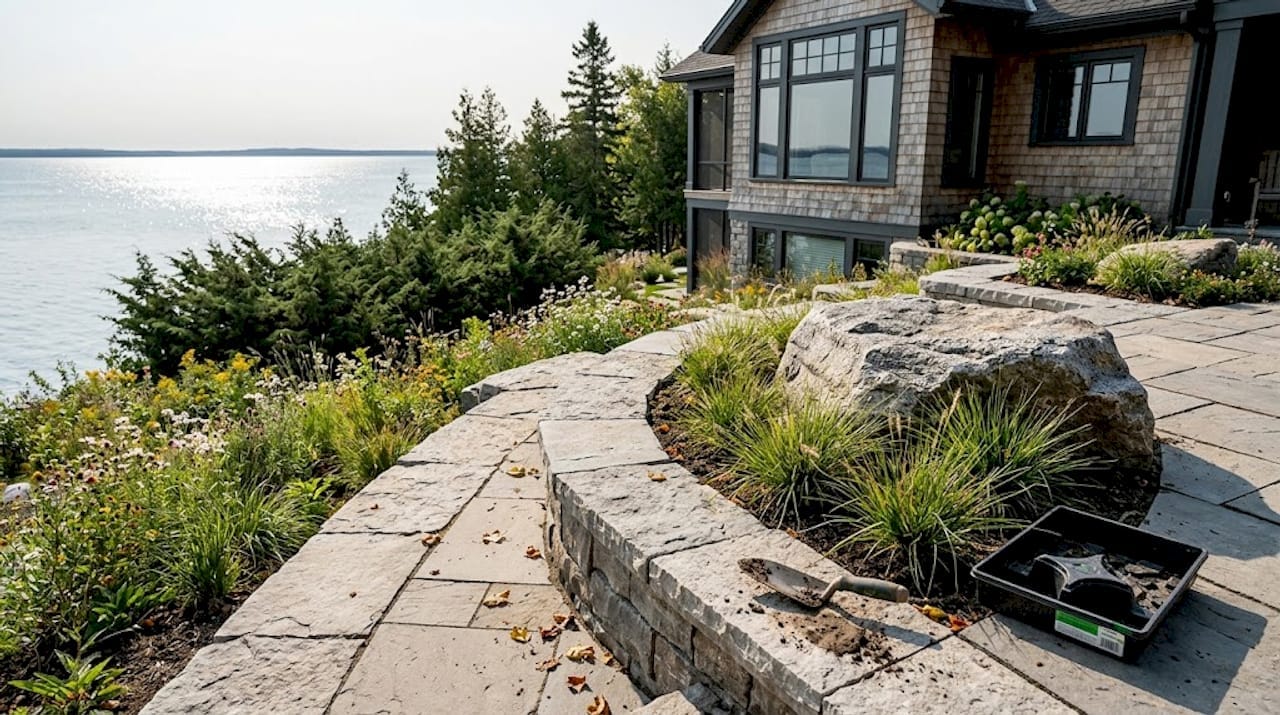
A living shoreline combines natural materials, vegetation, logs, boulders, and rock sills, to absorb and deflect wave energy rather than simply blocking it. Unlike a concrete seawall, which reflects wave energy and often accelerates erosion beside and beneath it, a living shoreline dissipates energy gradually and improves over time as roots establish.
Hybrid living shorelines outperform hard armouring for ecological benefits, reduce cost, and excel in Great Lakes conditions. For exposed, high-energy sites on the open bay, a hybrid approach using rock sills or large boulders anchored by native vegetation is ideal. For sheltered coves and inlets, vegetation alone often provides sufficient protection.
“Natural slopes and boulders soften wave impact, minimise erosion, and outlast turf.” This is especially true on Georgian Bay, where ice pressure in late winter can shear off turf and topsoil in a single event.
| Feature | Hard armouring (seawall) | Living shoreline |
|---|---|---|
| Wave energy management | Reflects, can worsen erosion | Absorbs and dissipates |
| Wildlife habitat | Minimal | High |
| Maintenance over time | High (concrete cracks) | Low once established |
| Visual appearance | Industrial | Natural, seasonal |
| Regulatory approval | Increasingly difficult | Generally preferred |
Before finalising your shoreline approach, review boathouse regulations alongside your landscaping plans, as both are governed by the same conservation authority framework and are best coordinated together.
Mastering drainage and grading for lasting landscapes
A beautiful shoreline can quickly lose its edge without proactive water management. Here’s how to build for longevity.
Proper grading is the first line of defence. All hard surfaces, patios, driveways, and pathways, should slope away from your cottage foundation and toward planted areas or swales rather than directly toward the water. A swale is simply a shallow, vegetated channel that slows and filters runoff before it reaches the shoreline. They are inexpensive to install and remarkably effective.
Use proper grading, swales, and permeable materials to channel runoff; retain trees wherever possible for natural filtration. A mature tree can absorb hundreds of litres of water per day through its root system, making tree preservation one of the highest-value decisions you can make on a waterfront lot.
Here is a practical sequence for planning your drainage strategy:
- Map existing drainage patterns before any construction begins
- Identify low points where water collects and plan swales to redirect flow
- Specify permeable pavers or gravel for all pathways and parking areas
- Retain every mature tree possible within the 30-metre shoreline buffer
- Install a vegetated buffer strip of at least 15 metres between any lawn area and the water
| Surface type | Runoff rate | Recommended use near water |
|---|---|---|
| Concrete or asphalt | Very high | Avoid within 30 metres of shore |
| Compacted gravel | Moderate | Use sparingly, with swales |
| Permeable pavers | Low | Ideal for paths and patios |
| Native groundcover | Very low | Best for shoreline buffer |
| Mature tree canopy | Minimal | Prioritise preservation |
These principles apply equally when designing your dream home on a waterfront lot, where site grading decisions made at the build stage are far cheaper than corrections made after landscaping is complete.
Navigating permits and conservation regulations
Equally important to design is ensuring you remain on the right side of local regulations. Here’s what to know before you break ground.
In South Georgian Bay, nearly all shoreline work falls under the jurisdiction of a conservation authority. The NVCA covers much of the region, while other areas may fall under the Lake Simcoe Region Conservation Authority or Georgian Bay proper. Any shoreline work or significant tree removal requires permits and an approved Landscape Rehabilitation Plan from the local conservation authority.
This is not bureaucratic red tape. These rules exist because the cumulative impact of hundreds of individual waterfront properties shapes the health of the entire bay ecosystem. Understanding and respecting them is part of being a responsible waterfront owner.
Key permit triggers to be aware of include:
- Any grading or filling within 30 metres of the high-water mark
- Removal of trees or vegetation in the shoreline buffer zone
- Installation of docks, retaining walls, or rock sills
- Construction of pathways or stairs leading to the water
- Changes to existing drainage patterns near the shore
Pro Tip: Start your conservation authority consultation at least six months before your planned construction date. Approvals for complex shoreline projects can take several months, and starting late can push your entire build schedule back by a full season.
Working with a builder who understands this regulatory landscape is invaluable. Review custom home planning tips that address permit timelines and how to integrate landscape planning into your overall project schedule from the very beginning.
Why thoughtful planning trumps trendy designs on the waterfront
In light of these practical steps and design possibilities, it’s worth considering a deeper perspective on what sets exceptional waterfront projects apart.
After more than 30 years building on Georgian Bay, we’ve seen a consistent pattern. The projects that age beautifully are never the ones that chased the latest design trend. They’re the ones where the owner invested time in understanding their specific site, its exposure, its drainage, its regulatory constraints, before a single aesthetic decision was made.
A cantilevered fire pit terrace looks spectacular in a magazine. It looks considerably less spectacular after two seasons of ice heave and one conservation authority compliance order. The unique value of Georgian Bay builds comes from working with the landscape, not imposing on it. Resilience, compliance, and lived experience are the true measures of a successful waterfront landscape. Trends are a starting point for conversation, not a blueprint.
The most satisfied waterfront property owners we work with are those who prioritised expert guidance early, treated their landscape as an integrated system rather than a series of features, and gave native plants and natural materials the respect they deserve. The result is always a property that feels inevitable, as if it simply belongs there.
Explore custom waterfront possibilities with local experts
If you’re inspired by the possibilities and ready to begin your waterfront project, local expertise matters most.

Mighton Construction has spent over 30 years crafting custom luxury homes and luxury cottage builds throughout South Georgian Bay. We understand the conservation regulations, the seasonal demands, and the design opportunities that make this region unlike anywhere else in Ontario. Browse our project gallery to see how we’ve helped property owners transform their waterfronts into extraordinary, compliant outdoor retreats. When you’re ready to talk through your vision, our team is here to guide you from first concept to finished landscape.
Frequently asked questions
Do I need a permit to change my waterfront landscaping in South Georgian Bay?
Yes, most shoreline alterations and significant tree removal require permits from your local conservation authority. Regulatory compliance and permits are necessary for virtually all shoreline work in this region.
Which plants are best for stabilising waterfront shores in the Georgian Bay area?
Native groundcovers like bearberry and creeping juniper, and tall grasses, offer excellent shoreline stability and resilience. Native species, including groundcovers and grasses, are well suited to rocky Shield shorelines and freeze-thaw conditions.
How can I manage drainage and runoff near my waterfront home?
Use permeable paths, swales, and proper grading to direct runoff away from buildings and toward natural filtration zones. Proper grading and permeable surfaces reduce runoff and erosion significantly near sensitive shorelines.
What are living shoreline approaches and why are they recommended?
Living shorelines combine plants and natural structures to protect against erosion, support wildlife, and require less maintenance than hard armouring. Hybrid living shorelines offer ecological and maintenance benefits over hard engineering, making them the preferred choice for most Georgian Bay sites.