Universal design homes: 7 principles for accessible living

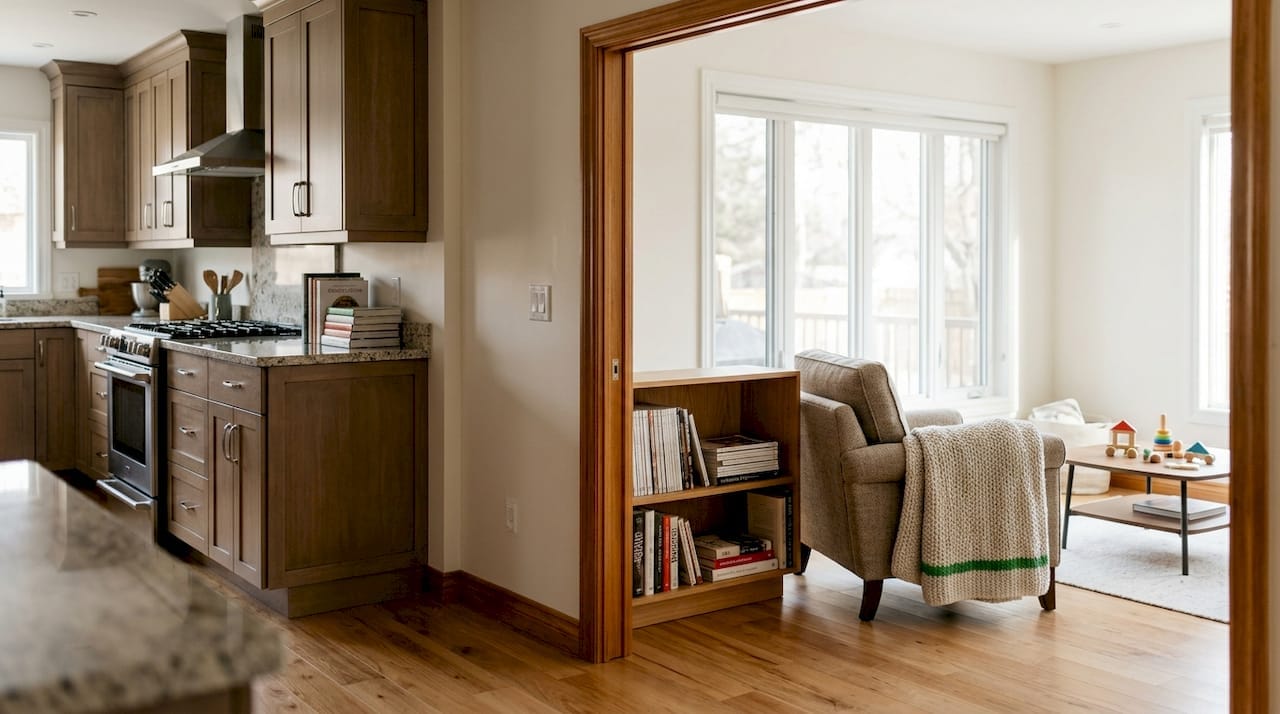
Many homeowners believe accessible design only matters for people with disabilities or mobility challenges. That’s a costly misconception. Universal design creates homes that work beautifully for everyone, from young families with strollers to aging parents visiting for holidays. When you build or renovate with these principles in South Georgian Bay, you’re investing in a space that adapts to life’s changes without expensive retrofits. The seven core principles transform ordinary custom homes and cottages into welcoming, functional environments that serve diverse needs while maintaining the luxury aesthetic you expect.
Table of Contents
- Key takeaways
- What is universal design and why it matters for homeowners
- The seven core principles driving universal design in homes
- Implementing universal design in custom homes and cottages
- Regulations, challenges and balancing form with function
- Explore custom universal design homes with Mighton Construction
- Frequently asked questions about universal design in homes
Key Takeaways
| Point | Details |
|---|---|
| Universal design benefits all | Universal design creates homes that work for people of diverse abilities and ages, reducing retrofit costs and expanding market appeal. |
| Seven principles guide homes | The seven core principles steer decisions to keep spaces usable, adaptable, and stylish throughout a home. |
| Single level living | Designs prioritise single level living and wide doorways to accommodate wheelchairs, strollers, and aging in place. |
| Ontario accessibility rules | Ontario regulations influence how accessible features are implemented and can impact project timing and budgeting. |
| Balance aesthetics and function | The goal is to balance aesthetics with effortless function that serves real life. |
What is universal design and why it matters for homeowners
Universal design creates products and environments accessible to people with diverse abilities, ages, and sizes without requiring modifications. Unlike accessibility retrofits that address specific disabilities after construction, universal design builds inclusion into the original blueprint. This proactive approach saves money and delivers better results than adding ramps or widening doorways later. The philosophy emerged in the 1980s when architect Ronald Mace recognised that designing for the broadest possible audience benefits everyone. A zero-step entrance helps wheelchair users, parents with prams, delivery workers with heavy packages, and anyone recovering from surgery. Wide hallways accommodate walkers and wheelchairs while making furniture moves easier for all residents. Homeowners in South Georgian Bay gain particular advantages from universal design. Waterfront cottages often serve multiple generations during summer holidays. Custom homes need to accommodate aging parents, visiting grandchildren, and the homeowners’ own changing needs over decades. Building these features from the start costs far less than retrofitting. Universal design delivers practical benefits:
- Increases home resale value by appealing to broader buyer demographics
- Reduces injury risk through thoughtful layout and safety features
- Supports aging in place, eliminating need for costly moves
- Accommodates temporary disabilities like broken bones or surgery recovery
Consider this perspective from design experts:
Universal design isn’t about special accommodations. It’s about creating environments so intuitive and flexible that everyone navigates them effortlessly, regardless of ability or experience.
When you integrate custom home design tips with universal principles, you create spaces that feel luxurious rather than clinical. The goal isn’t institutional accessibility but seamless, beautiful function that serves real life.
The seven core principles driving universal design in homes
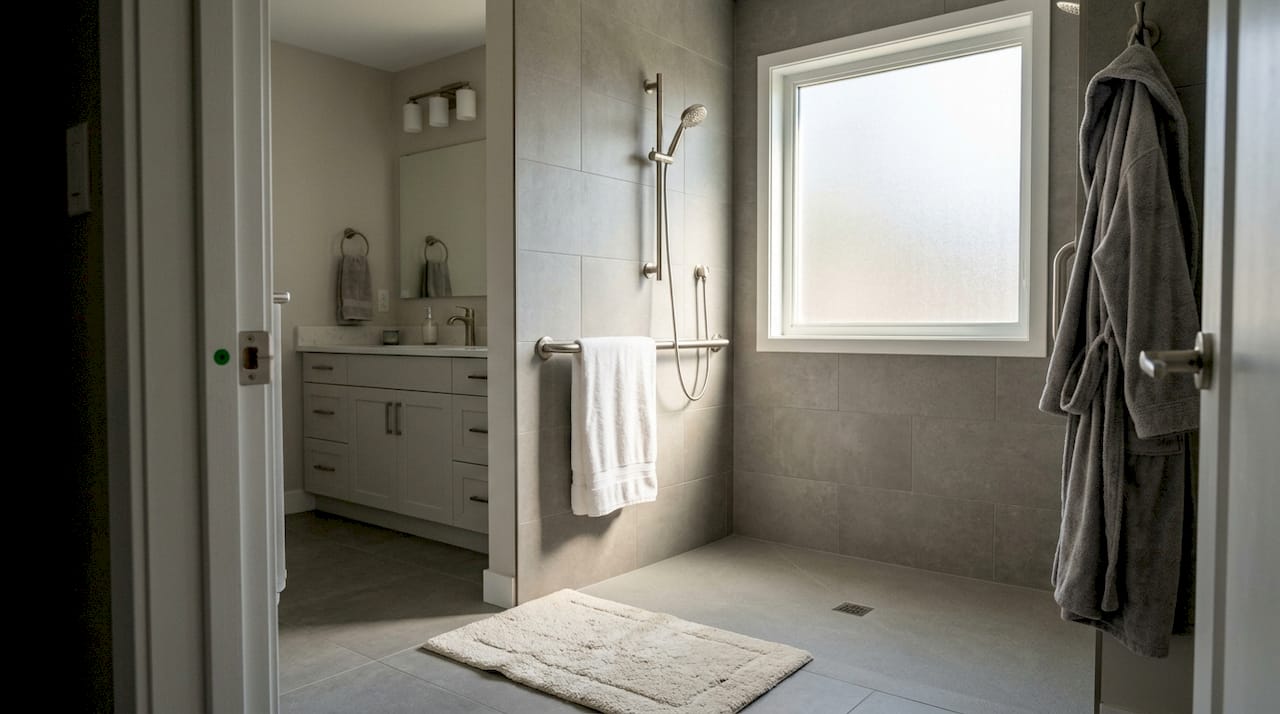
Seven fundamental principles guide every universal design decision in custom homes and cottages. These frameworks ensure your space works for the widest range of users without sacrificing style or comfort. Understanding each principle helps you make informed choices during design and construction. 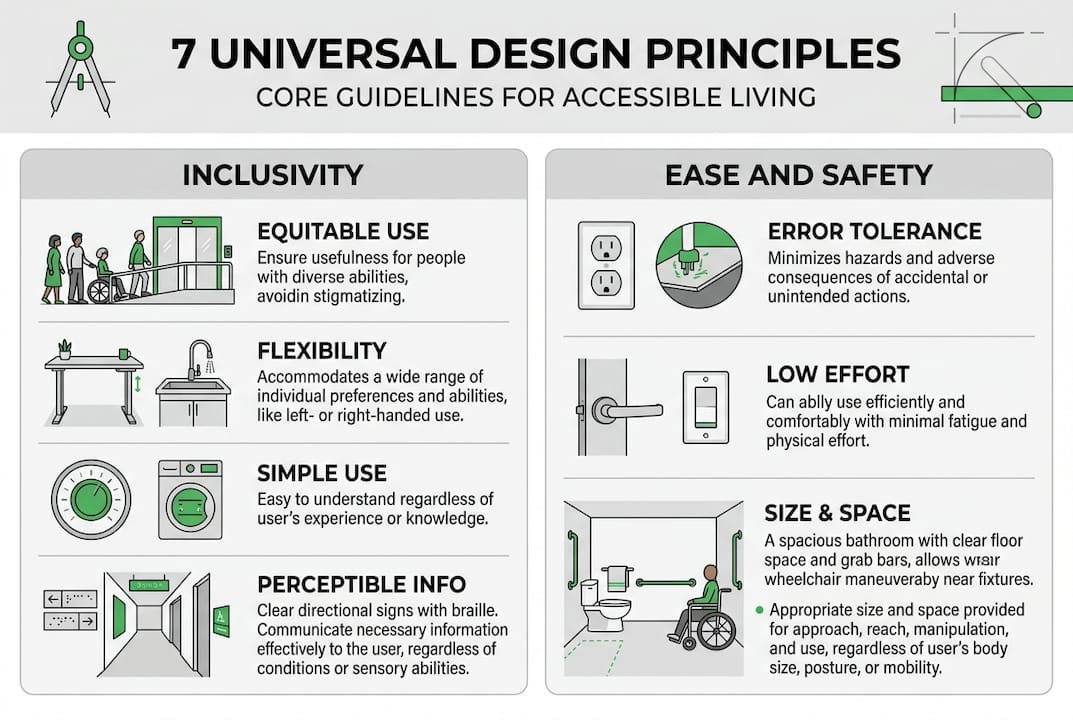 1. Equitable use: Design serves people with diverse abilities equally. Main entrances feature zero-step access rather than relegating wheelchair users to back doors. Kitchen layouts allow seated or standing work. Bathroom fixtures accommodate various heights and reach ranges. 2. Flexibility in use: Spaces adapt to individual preferences and abilities. Adjustable-height countertops serve different users. Pocket doors work for people who struggle with traditional door operation. Shower controls mount at multiple heights. 3. Simple and intuitive use: Design remains easy to understand regardless of experience or cognitive ability. Clear sightlines help navigation. Consistent hardware placement reduces confusion. Obvious visual cues indicate function without complex instructions. 4. Perceptible information: Design communicates necessary information effectively through multiple sensory channels. Visual and audible doorbells alert all residents. Contrasting colours help people with vision impairments distinguish surfaces. Tactile indicators mark important features. 5. Tolerance for error: Design minimises hazards and adverse consequences of accidents. Non-slip flooring reduces fall risk. Rounded counter edges prevent injuries. Automatic shut-off features on appliances prevent disasters. 6. Low physical effort: Design allows efficient, comfortable use with minimum fatigue. Lever handles require less grip strength than knobs. Motion-sensor lighting eliminates switch operation. Pull-out shelving reduces reaching and bending. 7. Size and space for approach and use: Design provides appropriate dimensions for approach, reach, and manipulation regardless of body size or mobility device. Hallways accommodate wheelchairs and walkers comfortably. Turning circles in bathrooms allow manoeuvrability. Clear floor space enables side transfers. These principles work together in interior design decisions. A bathroom applying all seven principles features a curbless shower (equitable, simple), adjustable showerhead (flexible), contrasting grab bars (perceptible), textured floor (tolerance for error), lever controls (low effort), and generous turning space (appropriate size).
  Pro tip: Avoid the common mistake of focusing solely on wheelchair accessibility. Universal design addresses vision impairments, hearing loss, limited grip strength, cognitive differences, and temporary conditions. Design for the broadest spectrum, not a single disability category.
Implementing universal design in custom homes and cottages
Translating principles into physical spaces requires specific design choices and construction techniques. South Georgian Bay homeowners building custom homes or cottages can incorporate features that enhance accessibility while maintaining luxury aesthetics. These elements work together to create genuinely inclusive living environments. Single-level living eliminates stairs as barriers. Open floor plans improve navigation and sightlines. When multiple levels are necessary, design spaces so primary living occurs on one floor. Place the primary bedroom, full bathroom, kitchen, and living areas together. This layout serves mobility device users and anyone who finds stairs challenging. Zero-step entrances welcome everyone without ramps or lifts. Grade the landscape so at least one door sits flush with exterior surfaces. Cover these entrances to prevent ice accumulation during Ontario winters. This approach suits covered entry design perfectly while serving universal design goals. Essential universal design features for homes:
- Wide doorways measuring 36 inches minimum for wheelchair passage
- Lever door handles and pulls requiring no tight grasping
- Rocker light switches operable with closed fist or elbow
- Non-slip flooring throughout with minimal thresholds
- Reinforced bathroom walls for future grab bar installation
- Adjustable or handheld showerheads with pressure-balance valves
- Kitchen counters at varied heights for seated and standing work
- Pull-out shelves in cabinets reducing reach requirements
Smart home technology amplifies universal design benefits. Voice-controlled lighting, temperature, and security systems help people with mobility or vision challenges. Automated door locks eliminate fumbling with keys. Video doorbells assist those with hearing impairments. These technologies integrate seamlessly into luxury custom homes.
| Design feature | Primary benefit | Secondary advantage |
|---|---|---|
| Curbless shower | Wheelchair and walker access | Easier cleaning, modern aesthetic |
| Lever handles | Reduced grip strength requirement | Operable with full hands or elbows |
| Wide hallways | Mobility device passage | Furniture moving, spacious feel |
| Open floor plan | Clear sightlines and navigation | Contemporary style, social connection |
| Motion-sensor lights | Hands-free operation | Energy efficiency, convenience |
| Adjustable counters | Seated or standing work | Accommodates different user heights |
The custom cottage design workflow naturally accommodates universal design when you raise these priorities early. Discuss accessibility goals during initial consultations. Your design team can integrate features organically rather than forcing them into completed plans. Pro tip: Install blocking (reinforced framing) in bathroom walls during construction even if you don’t need grab bars immediately. This costs minimal money upfront but saves thousands later. Mark blocking locations on your as-built drawings for future reference.
Regulations, challenges and balancing form with function
Ontario Building Code establishes minimum accessibility standards for residential construction, but these requirements represent baselines rather than best practices. Provincial and local programmes support accessible housing through various initiatives. Understanding regulatory context helps you make informed decisions that exceed minimums. The code mandates specific doorway widths, ramp slopes, and clear floor areas in certain circumstances. New multi-unit residential buildings face stricter requirements than single-family homes. However, building only to code minimums often falls short of true universal design. A 32-inch doorway meets code but a 36-inch opening provides genuinely comfortable wheelchair passage. Common implementation challenges:
- Multi-level homes on sloped lots requiring creative grading solutions
- Existing structural limitations in renovation projects
- Bathroom layouts with insufficient space for turning circles
- Slippery natural stone or tile popular in luxury finishes
- Balancing modern minimalist aesthetics with visible safety features
These obstacles require thoughtful problem-solving rather than compromise. Sloped sites can incorporate walkout basements with accessible entries. Tight bathrooms benefit from pocket doors that don’t swing into limited space. Textured stone finishes provide slip resistance without sacrificing beauty.
| Aspect | Building code minimum | Full universal design |
|---|---|---|
| Interior doorway width | 32 inches | 36 inches for comfortable passage |
| Hallway width | 36 inches | 42-48 inches for device turning |
| Bathroom clear space | 30 x 48 inches | 60-inch turning circle |
| Ramp slope | 1:12 maximum | 1:20 preferred for easier use |
| Grab bar blocking | Not required | Installed throughout bathrooms |
The aesthetic challenge deserves particular attention. Many homeowners fear universal design creates institutional or clinical appearances. This misconception stems from outdated examples in healthcare facilities. Contemporary universal design embraces beauty alongside function. Choose grab bars in finishes matching your bathroom hardware. Install them as towel bars that happen to support weight. Select lever handles in styles complementing your door design. Integrate curbless showers with elegant tile work and frameless glass. These choices prove accessibility and luxury coexist beautifully. Renovation projects face unique constraints. Load-bearing walls limit layout changes. Existing plumbing and electrical systems complicate modifications. Foundation heights create entrance challenges. Despite these obstacles, strategic upgrades significantly improve accessibility. Focus renovation efforts on high-impact areas. Converting a main-floor powder room to a full accessible bathroom provides enormous value. Widening the primary bedroom doorway and installing a zero-threshold entrance addresses critical access points. Even partial improvements help, especially when structural blocking supports future enhancements. Pro tip: Collaborate with experienced designers and builders early in your project. Professionals familiar with universal design challenges spot opportunities and solutions you might miss. They balance code compliance, aesthetic preferences, and functional requirements seamlessly. This expertise prevents costly mistakes and delivers better outcomes.
Explore custom universal design homes with Mighton Construction
Creating an accessible, inclusive custom home or cottage in South Georgian Bay requires expertise in both luxury construction and thoughtful design. Mighton Construction brings over 30 years of experience crafting spaces that serve diverse needs without compromising on beauty or quality.  Our custom cottage building services in Wasaga Beach integrate universal design principles from initial concept through final finishes. We understand how waterfront properties, sloped lots, and multi-generational use patterns influence accessibility decisions. Whether you’re building new or renovating existing spaces, our team delivers turn-key solutions that anticipate life’s changes. Explore our portfolio of recent custom home projects to see how universal design enhances rather than limits architectural possibilities. From wide-open great rooms to spa-inspired accessible bathrooms, these completed homes prove that inclusive design elevates every aspect of residential construction. Ready to discuss your accessible home vision? Our comprehensive contracting and remodelling services cover everything from accessibility upgrades to complete custom builds throughout South Georgian Bay.
Frequently asked questions about universal design in homes
How does universal design differ from building code accessibility requirements?
Building codes establish legal minimums for safety and basic accessibility in specific circumstances. Universal design exceeds these minimums by proactively creating spaces usable by the broadest possible range of people. Code compliance might mandate a 32-inch doorway; universal design specifies 36 inches for comfortable wheelchair passage and furniture moving.
What does incorporating universal design typically cost in a custom home?
Universal design features add 1-3% to total construction costs when integrated from the start, often less than $5,000-$15,000 in a typical custom home. Single-level layouts, wider doorways, and reinforced bathroom walls cost minimally during new construction. Retrofitting these features later costs 3-5 times more due to demolition, structural modifications, and finish replacement.
Can I retrofit universal design features into my existing South Georgian Bay cottage?
Yes, though costs and complexity vary by project scope. High-impact retrofits include converting bathtubs to curbless showers, widening doorways, installing lever hardware, adding exterior ramps or graded walkways, and upgrading to smart home controls. A professional assessment from experienced custom home builders identifies the most effective improvements for your specific property and budget.
Which smart home technologies best support universal design accessibility goals?
Voice-controlled lighting, climate, and security systems help users with mobility or vision challenges. Video doorbells with smartphone integration assist people with hearing impairments. Automated door locks eliminate key manipulation difficulties. Motion-sensor lighting provides hands-free operation. Smart appliances with app controls allow remote monitoring and adjustment. These technologies integrate seamlessly into luxury custom homes while dramatically improving accessibility.
Where can I find resources for planning a universal design project in Ontario?
Start with certified aging-in-place specialists and universal design consultants who understand Ontario Building Code requirements. Local accessibility organisations provide guidance on provincial programmes and funding. Experienced custom home builders familiar with South Georgian Bay properties offer practical insights on site-specific challenges. Design professionals specialising in inclusive environments translate principles into beautiful, functional spaces that suit your lifestyle and budget.