
Types of bungalow homes: a complete 2026 guide
TL;DR:
- Bungalows in Canada are often misunderstood but offer a diverse range of styles from historic Craftsman to modern designs with advanced technology. They provide efficient, single-story living suitable for families, downsizers, and multigenerational households, with customizable layouts and modern wellness features. Building or renovating a bungalow today involves strategic planning, sustainable options, and innovative technology, making them a versatile and valuable housing choice.
Bungalows are one of the most misunderstood housing styles in Canada. Many buyers assume they are small, dated, or lacking in design potential. The reality is the opposite. The types of bungalow homes available today range from century-old Craftsman masterpieces to modern bungalows with floor-to-ceiling glass and smart automation systems. Whether you are downsizing, building your first home, or looking for a property that works for multiple generations, there is a bungalow style built for your life. This guide breaks down every major type, layout, and feature worth knowing before you make a decision.
Table of Contents
- Key takeaways
- Types of bungalow homes: five core styles
- Interior design in modern bungalows
- Bungalow layouts: sizing and flexibility
- Modern features that upgrade bungalow living
- My take on bungalows: tradition with serious potential
- Build your ideal bungalow with Mighton Construction
- FAQ
Key takeaways
Point
Details
Five core architectural styles
Craftsman, California, Chicago, Mission, and Prairie bungalows each have distinct materials and regional features.
Modern interiors have evolved
Open floor plans, natural textures, and wellness-focused spaces define today’s bungalow interiors.
Layouts suit many lifestyles
Most bungalows range from 1,000 to 2,000 square feet, making them ideal for families and downsizers alike.
Smart technology is standard
High-end bungalows now integrate automated lighting, climate control, and security systems as baseline features.
Renovation requires planning
Removing load-bearing walls to open a floor plan demands proper engineering, permits, and expert guidance.
Types of bungalow homes: five core styles
The word “bungalow” comes from the Bengali word bangla, originally describing a low, thatched house in colonial India. In Canada and the United States, the term evolved to describe single-storey or storey-and-a-half homes with wide porches, low-pitched roofs, and an emphasis on natural materials. Bungalows reject ornate Victorian excess, favouring honest craftsmanship and practical design instead. That philosophy is exactly why they are experiencing a strong resurgence in 2026.
Understanding the different bungalow design styles starts with knowing the five main architectural categories.
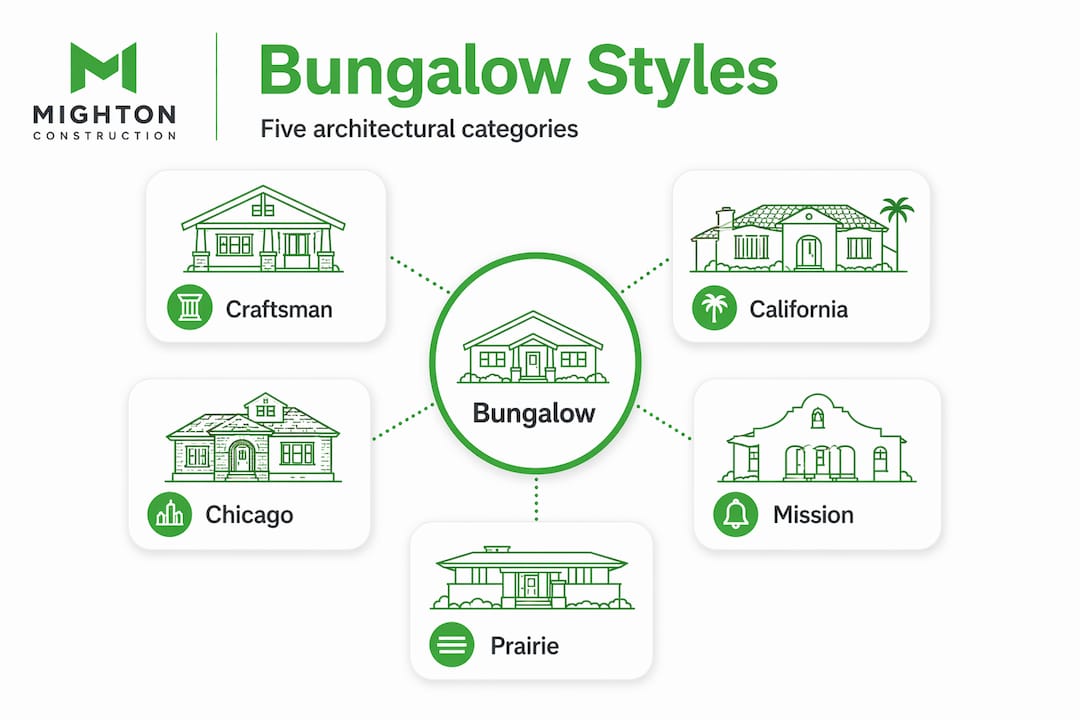
Style
Key materials
Roof type
Defining feature
Craftsman
Wood, stone, brick
Low-pitched gable
Exposed rafter tails, tapered columns
California
Stucco, wood siding
Shallow hip or gable
Covered verandas, warm-weather detailing
Chicago
Brick (common bond)
Low hip or flat
Full brick exterior, raised first floor
Mission
Stucco, clay tile
Red clay tile parapet
Spanish-influenced arches, smooth plaster walls
Prairie
Brick, stucco
Very low-pitched hip
Horizontal emphasis, grouped windows
Craftsman bungalows
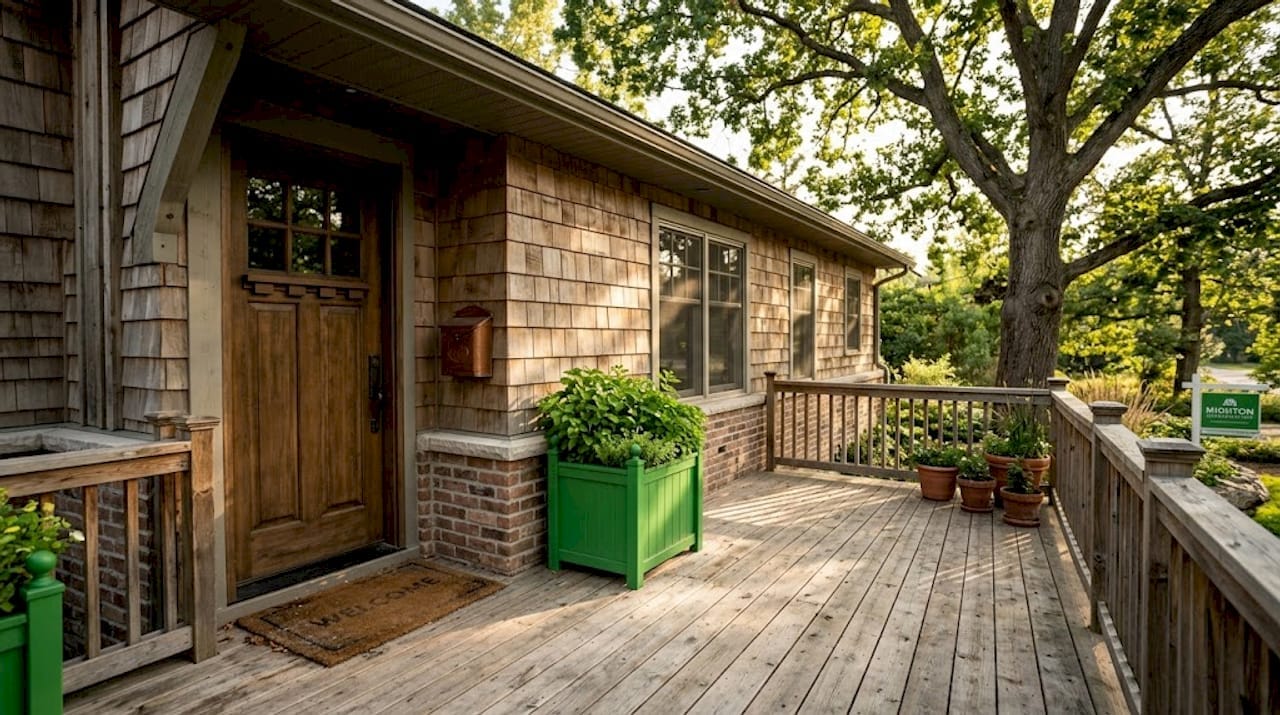
The Craftsman style is probably the most recognisable bungalow in Canada and is especially popular in older neighbourhoods across Ontario. These homes feature exposed wooden beam ends under the eaves, wide front porches with tapered stone or wood columns, and multi-pane windows. The interior typically showcases built-in cabinetry, natural wood trim, and fireplaces with craftwork tile surrounds. Craftsman bungalows age beautifully and are among the most sought-after homes for renovation projects.
California and Chicago bungalows
The California bungalow developed along the Pacific Coast and features lighter construction suited to warmer climates. Stucco cladding, broad eave overhangs, and open verandas are its hallmarks. The Chicago bungalow is a different animal entirely. Chicago bungalows represent 33% of single-family homes in that city, numbering over 80,000 units. They are typically full-brick construction with a raised first floor to allow light into a semi-basement. This layout is directly relevant for buyers in Collingwood or Wasaga Beach who want a bungalow that performs well in cold Canadian winters.
Mission and Prairie bungalows
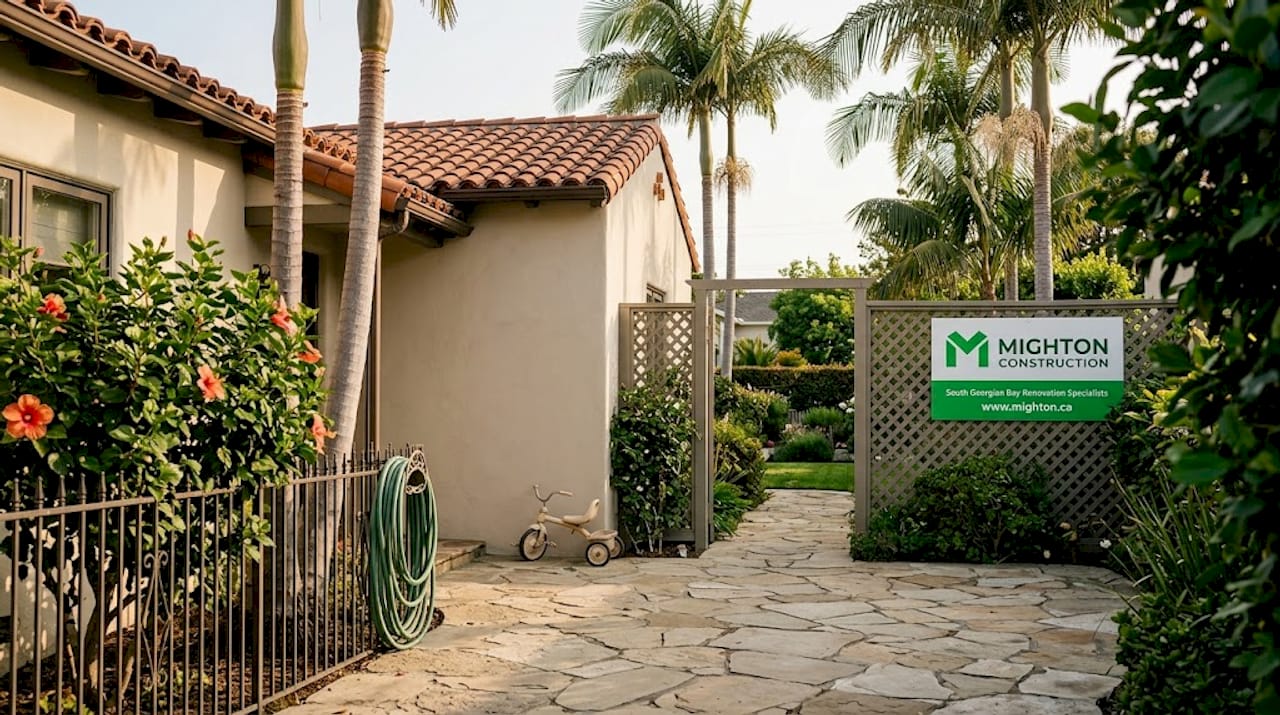
Mission bungalows borrow heavily from Spanish colonial architecture. Smooth stucco walls, red clay tile roofs, and arched openings give them a warm, Mediterranean quality that pairs well with drought-tolerant or naturalistic landscaping. Prairie bungalows, influenced by Frank Lloyd Wright’s design principles, emphasise horizontal lines, low-pitched roofs, and grouped windows that blur the line between interior and exterior. Both styles translate remarkably well to custom builds in South Georgian Bay communities like Blue Mountain or Springwater.
Interior design in modern bungalows
Bungalow interiors have shifted dramatically over the past decade. Traditional bungalows featured compartmentalised rooms, which offered privacy but felt closed off. Today’s buyers want connected living. Open floor plans are now the standard, but getting there requires work. Removing load-bearing walls to create open spaces without compromising roof integrity demands engineering review and, in most municipalities, building permits.
The materials and finishes driving modern bungalow interiors align with what designers call “quiet luxury.” This means no flashy finishes or statement-for-statement’s-sake choices. Instead, you see:
- Warm timber accents with visible grain
- Honed stone countertops in muted tones
- Limewash or textured plaster walls
- Linen, wool, and jute in soft furnishings
- Spa-inspired bathrooms with deep soaker tubs and rainfall showers
Luxury bungalow interiors prioritise rich tactile textures, warm palettes, and biophilic design. Biophilic simply means bringing nature inside: large plants, natural light, raw materials, and views to outdoor greenery. This is not just an aesthetic choice. Research links biophilic interiors to reduced stress and better sleep quality.
Ceiling height is another consideration that buyers often overlook. Because bungalows are single-storey, vaulted or cathedral ceilings can dramatically change how a room feels. Pairing high ceilings with clerestory windows draws in natural light without sacrificing privacy at street level.
Pro Tip: Because bungalow windows sit closer to the street than in two-storey homes, strategic landscaping for privacy is far more effective than heavy window treatments. Use mature shrubs or hedgerows to screen sightlines while keeping your interior bright.
Wellness-focused upgrades are also appearing in new bungalow builds across Simcoe County. Think circadian lighting systems that shift colour temperature throughout the day, radiant in-floor heating, and thermal wall assemblies that keep interiors stable year-round. You can explore how raised bungalow designs incorporate these features into livable, stylish spaces.
Bungalow layouts: sizing and flexibility
One of the biggest advantages of a bungalow is how efficiently its floor plan uses space. Typical 3-bedroom bungalows range from 1,000 to 2,000 square feet, fitting comfortably on standard residential lots of around 140 square metres. That footprint works exceptionally well in communities like Wasaga Beach and Tiny Township, where lot sizes are often generous enough to allow for outdoor living extensions without crowding the property.
Here is how common bungalow layouts compare across household types:
Layout type
Square footage
Ideal for
Key feature
2-bedroom compact
900–1,200 sq ft
Couples, retirees
Lower maintenance, smaller utility costs
3-bedroom family
1,200–1,800 sq ft
Families with children
Flexible third room for office or playroom
3-bedroom accessible
1,400–2,000 sq ft
Multigenerational living
Wide hallways, step-free entry, adaptable bathrooms
4-bedroom open plan
1,800–2,400 sq ft
Larger families
Combined living and dining, bonus storage
The single-storey format is ideal for multigenerational living because everything is on one level. No stairs means easier access for young children, elderly parents, or anyone with mobility considerations. If you are building new, you can also follow universal design principles from the start, which costs far less than retrofitting later.
For buyers renovating an older bungalow, the good news is that you do not always need to add square footage to feel more space. Rearranging bedroom locations can unify living areas and completely change how a floor plan flows, often without the cost or complexity of an addition. In heritage-designated areas of Collingwood or Clearview Township, this approach also keeps you within zoning constraints while delivering a genuinely better result.
Modern features that upgrade bungalow living
The bungalow of 2026 is not your grandparent’s bungalow. New builds and high-end renovations are incorporating technology and sustainability features that would have seemed extraordinary a decade ago. High-end bungalows now feature floor-to-ceiling glass walls, smart automation for lighting and climate, and prefabricated structural systems that speed up construction without reducing quality.
The most impactful modern features being added to new bungalow builds include:
- Smart lighting systems that adjust automatically based on time of day, occupancy, or personal preference, reducing energy use and improving comfort
- Automated climate control with zoned heating and cooling so each room operates independently, ideal for homes with guests or home office spaces
- Security automation including cameras, smart locks, and remote monitoring accessible from any device
- Prefabricated steel frame panels that deliver faster construction timelines, better dimensional accuracy, and superior resistance to moisture and pests
- ICF (insulated concrete form) construction for exceptional thermal performance, which is especially relevant in South Georgian Bay where winter temperatures demand high-performance building envelopes
Pro Tip: If you are building a new bungalow in a colder climate like Collingwood or Blue Mountain, ask your builder about ICF construction in Wasaga Beach. ICF walls offer dramatically better insulation values than standard wood-frame construction, which translates directly into lower heating costs and a quieter home.
Sustainable building methods are no longer a premium add-on. In many regions of Ontario, they are becoming a baseline expectation. Buyers in Springwater and Tiny Township are increasingly requesting solar-ready rooflines, grey-water recycling systems, and locally sourced materials as part of their standard builds. For a deep look at how smart technology layers into this, the smart home integration guide at Mighton Construction walks through the practical options clearly.
My take on bungalows: tradition with serious potential
I have been working with homebuyers and custom builds across South Georgian Bay for a long time, and the one thing that surprises me most is how consistently people underestimate a well-designed bungalow.
What I have seen is that buyers who overlook bungalows often do so because of what they imagine, not what is actually possible. When someone walks into a Craftsman bungalow that has been thoughtfully renovated with vaulted ceilings, an open kitchen, and a spa bathroom, the reaction is almost always the same: “I had no idea a bungalow could feel like this.”
The other thing buyers consistently miss is the lifestyle advantage. Single-level living is not a compromise. It is a genuinely better way to live for most households, particularly once children are young or as parents age. The maintenance is simpler, the energy costs are lower, and the connection between indoor and outdoor spaces is much easier to achieve than in a two-storey home.
If I were advising someone today, I would tell them not to dismiss a bungalow because of square footage alone. The layout, the ceiling treatment, the window placement, and the quality of the build matter far more than total size. A well-built 1,400-square-foot bungalow will outlast and outperform a poorly built 2,200-square-foot house every time.
— Adam
Build your ideal bungalow with Mighton Construction
If you are ready to move from research to reality, Mighton Construction is the team to call in South Georgian Bay and Simcoe County. With over 30 years of experience building custom homes across Wasaga Beach, Collingwood, Blue Mountain, and Clearview Township, Mighton specialises in bringing exactly the kind of bungalow you have been reading about to life.
Whether you are drawn to the warmth of a Craftsman-style custom bungalow, interested in the energy performance of an ICF bungalow in Collingwood, or looking to build a waterfront cottage near Wasaga Beach, Mighton Construction manages every detail from design to final finishing. The team works with smart home technology partners and sustainable material suppliers to deliver homes that perform as well as they look. Reach out to schedule a consultation and start designing the bungalow that fits your life.
FAQ
What are the most popular types of bungalow homes?
The five most popular bungalow styles are Craftsman, California, Chicago, Mission, and Prairie. Each has distinct materials, roof styles, and regional characteristics that suit different climates and design preferences.
How big is a typical bungalow floor plan?
Most bungalows range from 1,000 to 2,000 square feet, with three-bedroom layouts being the most common choice for families and downsizers seeking single-level living.
Can a bungalow have an open floor plan?
Yes, but opening up a traditional bungalow requires careful engineering. Removing load-bearing walls to create open spaces must be done with permits and professional structural guidance to protect the roof and overall integrity of the home.
Are bungalows good for multigenerational families?
Bungalows are an excellent fit for multigenerational living. Their single-storey layout removes barriers for elderly parents and young children, and the flexible room configurations can accommodate a home office, accessible bathroom, or private guest suite.
What modern features can be added to a new bungalow build?
New bungalow builds in 2026 commonly include smart lighting and climate automation, ICF construction for thermal performance, prefabricated structural systems, and sustainable materials such as locally sourced timber and stone.