Sustainable construction for luxury homes: top materials

TL;DR:
- Sustainable luxury homes in South Georgian Bay focus on energy performance, material choice, and airtightness.
- Passive House standards achieve 80 to 90% energy savings with high design flexibility.
- Natural materials like straw bale and rammed earth offer distinctive aesthetics and long-lasting durability.
Luxury homeowners and property developers in South Georgian Bay are facing a sharper question than ever before: how do you build a home that is genuinely beautiful, built to last, and ready for rising energy costs? Energy bills are climbing, environmental expectations are tightening, and the buyers who matter most are no longer willing to choose between performance and prestige. The good news is that you do not have to. This article walks through a proven framework for evaluating and comparing the best sustainable construction practices and premium materials available for custom luxury homes in the region, so you can make confident decisions from the very first conversation with your builder.
Table of Contents
- Key criteria for sustainable construction in luxury homes
- Passive House standards: Setting the bar for energy efficiency
- Locally-suited natural materials: Straw bale and rammed earth
- Comparing sustainable construction methods: Which is right for your project?
- A luxury builder’s perspective on sustainable construction in South Georgian Bay
- Explore premium sustainable building solutions with Mighton Construction
- Frequently asked questions
Key Takeaways
| Point | Details |
|---|---|
| Operational savings matter | Selecting the right sustainable methods can cut home energy use by up to 90%. |
| Natural materials excel | Straw bale and rammed earth walls offer both top insulation and striking aesthetics for luxury builds. |
| Green premium is minimal | You typically pay less than 1.1% extra—recouped fast with lower bills. |
| Regional expertise counts | Choose builders with knowledge of South Georgian Bay’s climate, codes, and supply chain. |
Key criteria for sustainable construction in luxury homes
Choosing sustainable construction for a high-end home is not about ticking boxes. It is about making decisions early that will define the comfort, cost, and character of your home for decades. Understanding the right criteria before you break ground is where the best projects begin.
The first factor is energy performance. Operational savings over the lifetime of a home are far more significant than most buyers realise. Lifecycle focus yields 75 to 90% operational savings and a negligible green premium of just 0 to 1.1% on luxury homes. That means the upfront investment in better performance is almost invisible in the overall budget, while the long-term savings are substantial.
The second factor is material selection. Embodied carbon, durability, and regional suitability all matter. A material that performs brilliantly in Vancouver may behave very differently in South Georgian Bay’s cold winters and humid summers. Understanding green building basics for this specific climate is essential before committing to any wall system or cladding.
The third factor is the building envelope: airtightness, insulation value, heat recovery, and moisture management. These are the elements that separate a truly high-performance home from one that merely looks sustainable on paper.
Key criteria to evaluate for any luxury sustainable build:
- Airtightness target (ACH at 50 Pascals)
- Insulation R-value for walls, roof, and foundation
- Heat recovery ventilation system capacity
- Embodied carbon of primary materials
- Moisture management and vapour control strategy
- Code compliance and permitting requirements
- Lifecycle cost versus upfront premium
Pro Tip: Ask your builder for a lifecycle cost analysis before finalising your material choices. A slightly higher upfront cost often translates to dramatically lower operating expenses, and that gap widens every year energy prices rise.
The luxury home building guide on our site covers how premium projects balance these sustainability factors with bespoke design, custom finishes, and the regional aesthetic that defines South Georgian Bay architecture. Refer to Passive House case studies for real-world performance data on how these criteria play out in comparable climates.
Passive House standards: Setting the bar for energy efficiency
Passive House is not a product or a brand. It is a rigorous building science standard that sets precise targets for energy use, airtightness, and indoor air quality. For luxury custom homes in South Georgian Bay, it represents the most thoroughly verified path to exceptional performance.
The core features of a Passive House build include:
- Advanced insulation on all six sides of the building envelope
- Extreme airtightness, targeting less than 0.6 air changes per hour at 50 Pascals
- Heat recovery ventilation, which captures up to 90% of heat from exhaust air
- Passive solar design, orienting glazing to maximise winter sun and minimise summer gain
- Thermal bridge-free construction details
Passive House custom homes achieve 80 to 90% reductions in heating and cooling energy compared to conventional builds. In a region where heating seasons are long and energy costs are rising, that is a transformative difference. It also translates directly into comfort: no cold floors, no drafts, consistent temperatures throughout every room.
“A well-executed Passive House build in South Georgian Bay can reduce your annual heating energy by five times compared to a standard new home, while delivering a quieter, healthier indoor environment year-round.”
The design flexibility of Passive House is often underestimated. You are not locked into a particular aesthetic. Timber, stone, James Hardie fibre cement siding, and premium glazing systems all work within the standard. The Passive House energy savings achievable in this climate make it one of the most compelling choices for discerning owners who want performance without compromise.
Verification matters. A blower door test at the end of construction confirms your airtightness target has been met. Without it, you are relying on assumptions. The building envelope essentials for luxury homes in this region go deeper on what to verify and when.
Pro Tip: Specify your airtightness target in the construction contract, not just the design drawings. This makes verification a contractual requirement, not an afterthought.
Locally-suited natural materials: Straw bale and rammed earth
For owners who want sustainability that goes beyond energy efficiency into the character of the materials themselves, straw bale and rammed earth walls offer something genuinely different. Both have deep roots in natural building traditions and both are seeing a serious revival in premium residential construction.
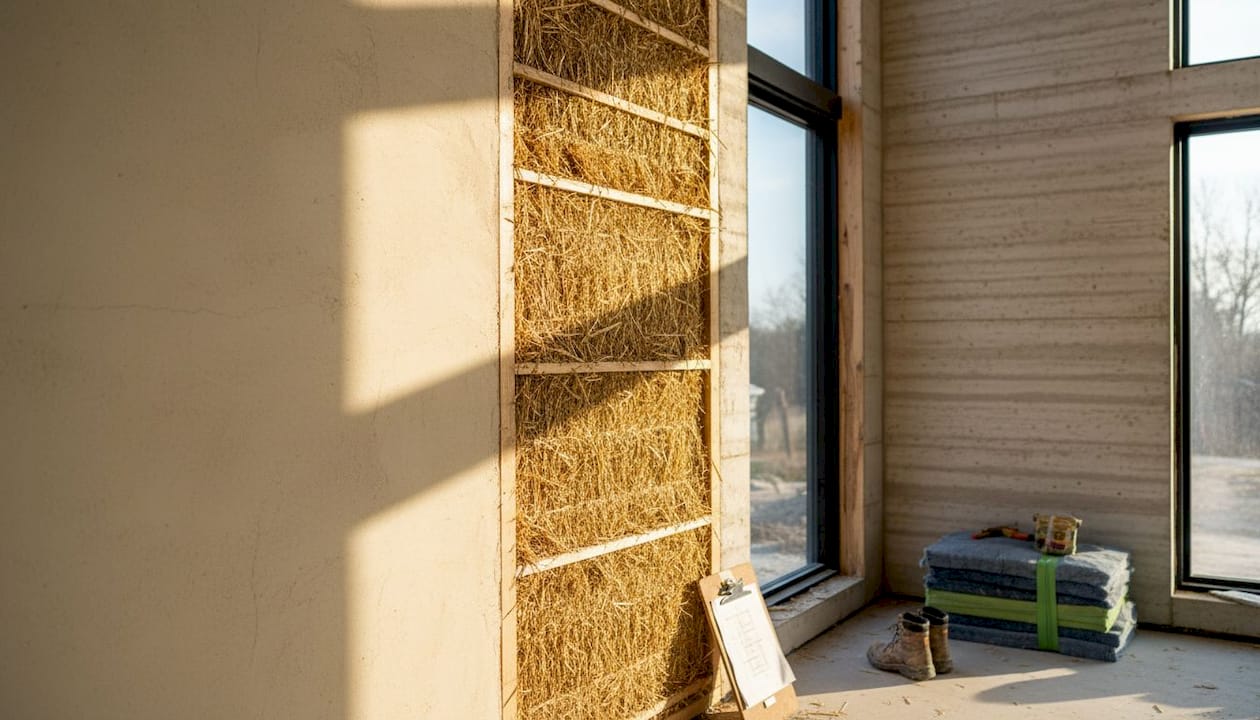
Straw bale walls deliver R-45 or higher insulation values, which outperform most conventional wall assemblies. When properly plastered, straw bale is fire-resistant, pest-resistant, and capable of 75% heating and cooling savings compared to standard construction. The material also sequesters carbon, meaning the walls themselves are a net carbon sink over their lifetime.
Rammed earth walls use compressed local soils to create a thermal mass that moderates indoor temperatures naturally. With an effective R-value of 22 to 30 when combined with insulation, and a lifespan measured in centuries, rammed earth is one of the most durable wall systems available. It also has a visual richness that no synthetic material can replicate.
| Material | Insulation value | Lifespan | Carbon impact | Aesthetic premium |
|---|---|---|---|---|
| Straw bale | R-45+ | 100+ years | Carbon negative | Very high |
| Rammed earth | R-22 to R-30 | Centuries | Low embodied carbon | Very high |
| Standard wood frame | R-20 to R-24 | 50 to 80 years | Moderate | Standard |
The myths around fire and rodent risk are largely addressed by proper detailing. Plastered straw bale walls have passed fire resistance tests that exceed standard wood frame construction. Rammed earth has no organic material for pests to inhabit.
Permitting does require additional steps. An architect’s stamp and detailed drawings are typically needed, and some municipalities require additional review. Factor this into your project timeline. The luxury design strategies that work best with these materials lean into the natural textures and honest materiality that defines the most memorable South Georgian Bay homes. Detailed wall material performance data is available for those who want to go deeper on the numbers.
Pro Tip: If you are drawn to rammed earth, source your soil analysis early. Local soils vary significantly in their suitability, and knowing this before design development saves time and budget.
Comparing sustainable construction methods: Which is right for your project?
With three strong options on the table, the right choice depends on your goals, your site, and your timeline. Here is a direct comparison to make that decision clearer.
| Method | Energy savings | Upfront cost premium | Permitting complexity | Regional suitability |
|---|---|---|---|---|
| Passive House | 80 to 90% | Low (0 to 1.1%) | Moderate | Excellent |
| Straw bale | Up to 75% | Moderate | Higher | Good with detailing |
| Rammed earth | Up to 60% | Moderate to high | Higher | Good with soil testing |
Net-zero retrofits yield 80% energy savings and 40% embodied carbon reductions, confirming that the performance gap between these methods and conventional construction is significant regardless of which path you choose.
A practical decision framework for luxury owners and developers:
- Define your primary goal: Is it operational savings, carbon reduction, or distinctive aesthetics?
- Assess your timeline: Natural material builds often require longer lead times for permitting and sourcing.
- Review your site: Solar orientation, soil type, and exposure all influence which method performs best.
- Confirm builder expertise: Each method requires specific knowledge. Verify your builder’s experience before committing.
- Model the lifecycle cost: Use the custom home cost comparison framework to weigh upfront investment against long-term savings.
For most luxury custom home projects in South Georgian Bay, Passive House offers the best combination of verified performance, design flexibility, and manageable permitting complexity. Natural materials are a compelling addition or alternative for owners who prioritise embodied carbon and architectural character. A detailed lifecycle cost analysis will confirm the right balance for your specific project.
A luxury builder’s perspective on sustainable construction in South Georgian Bay
After more than 30 years building in this region, the most persistent misconception we encounter is that premium aesthetics and genuine sustainability are in tension. They are not. The clients who push hardest for both consistently end up with the best homes.
The mistakes that cost the most are almost never about choosing the wrong wall system. They come from ignoring moisture management in a climate that cycles between hard freezes and humid summers, or from trusting eco-labels without verifying the actual building science behind them. A beautifully specified Passive House detail executed poorly is worse than a conventional build done well.
Our honest view: operational performance and long-term durability matter far more than following the latest sustainable building trend. The advanced envelope strategies that work in South Georgian Bay are the ones that have been tested here, in this climate, with local materials and local trades. Work with builders who know the region’s codes, understand the material supply chains, and have verified results to show you.
Explore premium sustainable building solutions with Mighton Construction
If you are planning a custom home, waterfront cottage, or major renovation in South Georgian Bay and want performance and prestige in equal measure, the next step is a conversation with a builder who has delivered both.
Mighton Construction brings over 30 years of regional expertise to every project, from ICF custom homes built for maximum energy efficiency to luxury waterfront cottages that set new standards for craftsmanship and sustainability. We manage every detail from concept through completion, so your vision is realised without compromise. Contact us to arrange a consultation and explore what a truly high-performance luxury home looks like in this region.
Frequently asked questions
What is the main benefit of Passive House standards for custom homes?
Passive House reduces heating and cooling needs by 80 to 90%, while delivering superior indoor air quality and consistent comfort throughout every season.
Are straw bale and rammed earth walls suitable for luxury builds in South Georgian Bay?
Yes, both methods deliver premium insulation and distinctive aesthetics that complement the region’s luxury design ethos when specified and detailed by experienced builders.
Do sustainable luxury homes cost more to build?
The green premium is typically 0 to 1.1% of the overall budget, and owners recover this quickly through 75 to 90% energy savings and higher long-term property value.
What should owners ask builders when planning a sustainable luxury home?
Ask specifically about local climate experience, how they verify airtightness through blower door testing, their moisture management strategy, and which materials they have successfully used in the South Georgian Bay region.
How do I ensure my new home meets both sustainability goals and luxury standards?
Partner with a builder who combines building science expertise with regional design knowledge, ensuring your home performs at the highest level while meeting your vision for premium finishes and lasting quality.
Recommended
- What Is Luxury Construction? Complete Overview 2024
- The Importance of Quality Materials in Construction
- What Is Luxury Home Construction? Complete Overview
- Custom Home Selection Guide for Luxury Living Success
- Vorteile Neubau Mallorca: Luxusimmobilien 2026 kaufen