Sustainable building materials list for Canadian homeowners

TL;DR:
- Sustainable building materials help reduce environmental harm by being renewable or recycled and lowering carbon footprints. Choosing certified, local, and efficient materials like mass timber, recycled steel, and ICF enhances long-term building performance and sustainability. Proper integration of these materials, along with source reduction and system efficiency, creates durable, eco-friendly homes that outperform conventional designs.
Sustainable building materials are construction resources that reduce environmental harm by being renewable, recycled, or carrying a low lifecycle carbon footprint. Construction accounts for 37% of global carbon emissions, making material choice one of the most powerful levers a homeowner or builder can pull. The right sustainable building materials list cuts embodied carbon by up to 75% and slashes operational energy costs by up to 50%. For homeowners and builders in South Georgian Bay, Collingwood, Wasaga Beach, and across Simcoe County, choosing green construction materials also means thinking locally, building durably, and investing in homes that perform for decades.
What are the top sustainable building materials for eco-friendly construction?
The best eco-friendly building materials share three traits: low embodied carbon, long service life, and responsible sourcing. Below is a practical list of green materials suited to Canadian custom home builds, cottages, and renovations.
1. Mass timber (CLT and glulam)
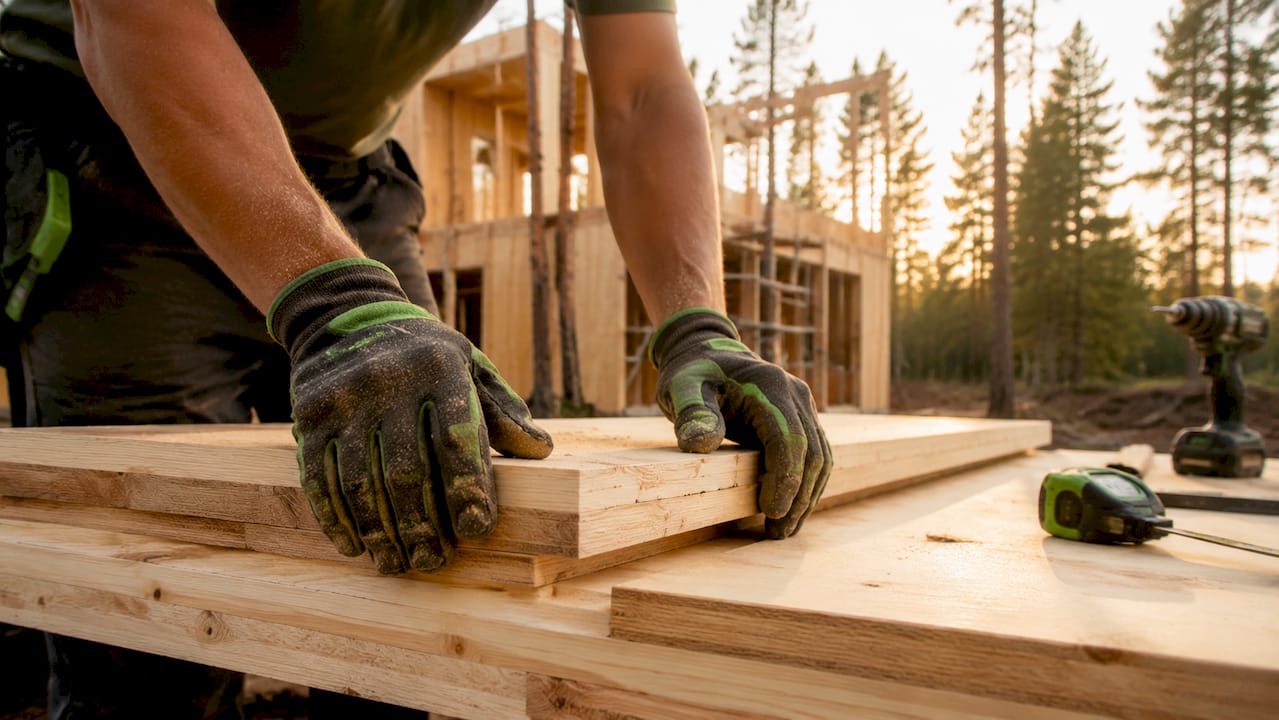
Mass timber is the category name for engineered wood products like cross-laminated timber (CLT) and glulam beams. These products store carbon rather than releasing it, making them one of the lowest-embodied-carbon structural options available. Mass timber sustainability depends entirely on certified sustainable forestry practices. Look for Forest Stewardship Council (FSC) or Sustainable Forestry Initiative (SFI) chain-of-custody certification to avoid greenwashing. In Ontario, mass timber is increasingly accepted under the Ontario Building Code for mid-rise and custom residential construction.
2. Treated bamboo
Treated bamboo holds 40% of sustainable construction market revenue, which reflects how widely it is adopted as a renewable building resource. Bamboo reaches maturity in 3–5 years, compared to 25–70 years for softwood timber. Treatment processes harden it against moisture, insects, and UV degradation, making it viable for flooring, cladding, and structural panels. Its tensile strength rivals mild steel, which surprises most first-time users.
3. Recycled steel
Recycled steel carries a fraction of the embodied carbon of virgin steel because the smelting process is bypassed. It contributes directly to a circular economy by diverting scrap from landfills and reducing demand for raw iron ore. Recycled steel is used in structural framing, roofing, and ICF reinforcement. For builders in Collingwood and Blue Mountain working on larger custom homes, recycled steel framing offers long-term durability with minimal maintenance.
4. Insulated concrete forms (ICF)
ICF construction uses interlocking foam blocks filled with concrete to create walls that are airtight, highly insulated, and structurally strong. The result is a building envelope that dramatically reduces heating and cooling loads, which matters enormously in South Georgian Bay’s cold winters. ICF foundations and walls reduce thermal bridging and air infiltration far beyond standard wood-frame construction. Mighton Construction has built ICF custom homes across Wasaga Beach and Collingwood, and the energy performance results speak for themselves.
Pro Tip: Pair ICF walls with a high-efficiency heat pump system to maximise the thermal mass benefit and reduce your heating costs by 30–50% compared to a standard wood-frame build.
5. Bio-based insulation
Cellulose insulation, sheep’s wool, and mycelium-based panels are the leading bio-based insulation options for residential construction. Cellulose is made from recycled newspaper and cardboard, giving it a negative embodied carbon profile when sourced responsibly. Sheep’s wool regulates moisture naturally and does not require vapour barriers in many applications. Mycelium panels, grown from fungal root structures, are fully compostable at end of life. All three outperform fibreglass batts on lifecycle environmental impact. For more on advanced insulation strategies, the approach to building envelope design matters as much as the material itself.
6. Reclaimed and recycled wood
Reclaimed wood is salvaged from demolished barns, factories, and old-growth structures. It carries zero new embodied carbon from harvesting or milling. Recycled wood products like oriented strand board (OSB) made from certified wood waste serve the same structural purpose as virgin lumber at lower environmental cost. In Clearview Township and Tiny Township, reclaimed barn board is a popular aesthetic choice for custom home interiors that also tells a story of regional heritage.
7. Rammed earth and cob
Rammed earth walls are built by compacting layers of subsoil, clay, sand, and gravel into solid, load-bearing panels. Cob is a similar technique using clay, sand, and straw mixed by hand or machine. Both materials have near-zero embodied carbon because the raw inputs are sourced directly from the building site in most cases. Rammed earth walls provide excellent thermal mass, absorbing heat during the day and releasing it at night. These techniques are best suited to custom builds where the architect and builder have experience with natural building methods.
8. Hempcrete
Hempcrete is a mixture of hemp hurd (the woody core of the hemp plant), lime, and water. It is carbon-negative over its lifecycle because the hemp plant absorbs more CO₂ during growth than the material releases during production. Hempcrete is used for wall infill, insulation, and flooring. Innovative materials like hempcrete may require specialized engineering approvals and longer permitting timelines in Ontario, so plan ahead. It is not a structural material on its own and requires a timber or steel frame.
9. Low-carbon concrete alternatives
Standard Portland cement is one of the most carbon-intensive materials in construction. Ferrock is a low-carbon concrete alternative made from 95% recycled material, including waste steel dust, and it actually absorbs CO₂ as it cures, making it carbon-negative. Geopolymer concrete replaces Portland cement with industrial by-products like fly ash or slag. Both options are gaining traction in Canadian commercial and residential projects where structural performance and sustainability must coexist.
10. Bendable concrete (Engineered Cementitious Composite)
Bendable concrete, formally known as Engineered Cementitious Composite (ECC), is 500 times more resistant to cracking than standard Portland cement. That crack resistance means fewer repairs, less material replacement, and a significantly longer service life. Longer-lasting structures consume fewer resources over time, which is the core logic of sustainable design. ECC is used in bridge decks, pavements, and increasingly in residential foundations and basement slabs.
11. Straw bale construction
Straw bale walls use compressed bales of agricultural straw as insulation within a structural frame. The R-value of a straw bale wall typically reaches R-30 to R-35, which exceeds most standard wood-frame assemblies. Straw is an agricultural by-product with minimal embodied carbon. Like hempcrete, straw bale construction requires a builder experienced with the technique and may involve additional permitting steps in Ontario.
12. Green roofing materials
Living roofs, recycled rubber shingles, and cool-roof membranes all qualify as environmentally friendly materials for roofing. Living roofs support biodiversity, manage stormwater, and add insulation value. Recycled rubber shingles divert waste from landfills and last 50+ years. Cool-roof membranes reflect solar radiation, reducing cooling loads in summer. For waterfront cottages in Wasaga Beach or Blue Mountain vacation properties, green roofing also reduces visual impact on the natural environment.
How do these materials compare in cost, durability, and environmental impact?
Choosing the right materials means weighing upfront cost against total cost of ownership. Green building materials cost 10–20% more upfront but can save 50% on energy bills and last significantly longer. That math delivers strong return on investment over a 10–20 year horizon.
| Material | Embodied carbon | Upfront cost | Durability | Best use |
|---|---|---|---|---|
| Mass timber (CLT/glulam) | Very low | Moderate to high | 50–100+ years | Structural framing, beams |
| Treated bamboo | Very low | Low to moderate | 25–50 years | Flooring, cladding, panels |
| Recycled steel | Low | Moderate | 50–100+ years | Structural framing, roofing |
| ICF walls | Low | Moderate | 50–100+ years | Foundations, exterior walls |
| Hempcrete | Carbon-negative | Moderate | 50–100 years | Wall infill, insulation |
| Ferrock | Carbon-negative | Moderate to high | 50+ years | Foundations, slabs |
| Reclaimed wood | Near zero | Variable | Varies | Flooring, cladding, millwork |
| Bio-based insulation | Very low | Low to moderate | 25–50 years | Wall and roof insulation |
Lifecycle performance and certifications like LEED or BREEAM define green building more accurately than any single material choice. A home built with FSC-certified mass timber, ICF walls, and cellulose insulation will outperform a home with one “green” material surrounded by conventional construction.
Pro Tip: Ask your builder for a lifecycle assessment (LCA) of the proposed material package before finalising your selections. This gives you a full picture of environmental impact from manufacturing through end of life, not just at the point of purchase.
What to consider when choosing sustainable materials for Canadian construction
Selecting the right sustainable building supplies for a project in South Georgian Bay or Simcoe County involves more than reading a product spec sheet. Here are the key factors to weigh:
- Certified sourcing: Certifications like FSC, SFI, LEED, and Declare labels verify that sustainability claims are real. Without certification, “green” is a marketing term, not a fact.
- Local availability: Transportation distance can negate the environmental benefits of even the most sustainable material. Sourcing from Ontario or regional Canadian suppliers reduces embodied energy from shipping.
- Building code compliance: Ontario’s Building Code governs structural, fire, and moisture performance. Non-traditional materials like hempcrete or straw bale may require additional engineering letters or variance approvals.
- Integration with energy systems: Sustainable materials perform best when paired with energy-efficient home features like heat recovery ventilators (HRVs), high-efficiency heat pumps, and triple-glazed windows.
- Source reduction first: The EPA recommends prioritising source reduction over recycling or reuse. The most sustainable material is the one you do not need to produce or ship at all. Right-sizing your home and minimising waste in the design phase is the most powerful sustainability move available.
Working with a local builder who knows regional suppliers, local code requirements, and the climate conditions of South Georgian Bay removes most of the guesswork from this process.
What emerging materials are shaping green construction in 2026?
The next generation of sustainable design materials is moving beyond incremental improvement toward genuinely transformative performance:
- 3D-printed concrete: Additive manufacturing reduces material waste by depositing only what is needed, with no formwork required. Projects in Canada are beginning to use 3D-printed concrete for foundations and modular wall panels.
- Prefabricated mass timber panels: Factory-built CLT panels arrive on site ready to assemble, cutting construction time and site waste simultaneously. Prefab mass timber is gaining ground in Ontario for both residential and commercial builds.
- Mycelium composites: Grown from fungal networks around agricultural waste, mycelium panels are fully compostable, fire-resistant, and competitive with rigid foam insulation on thermal performance.
- Aerogel insulation: Originally developed for aerospace applications, aerogel blankets deliver R-10 per inch, the highest insulation value per thickness of any commercially available material. They are expensive but ideal for retrofitting heritage buildings or tight wall assemblies.
- Transparent solar glass: Photovoltaic glass replaces standard glazing while generating electricity. It is entering the Canadian residential market for south-facing windows and skylights in custom homes.
These materials are not theoretical. Builders and architects across Ontario are specifying them today on projects where performance and environmental credentials both matter.
Key takeaways
The most effective sustainable building materials list combines low-embodied-carbon resources, certified sourcing, and local supply chains to deliver genuine environmental and financial returns over a building’s full lifecycle.
| Point | Details |
|---|---|
| Construction drives 37% of emissions | Choosing green materials cuts embodied carbon by up to 75% and operational costs by up to 50%. |
| Certification prevents greenwashing | FSC, SFI, LEED, and BREEAM labels verify that sustainability claims are real, not marketing. |
| Local sourcing protects gains | Transportation emissions can cancel out a material’s environmental benefit; source within Ontario where possible. |
| Total cost of ownership wins | Green materials cost 10–20% more upfront but deliver up to 50% energy savings over 10–20 years. |
| Source reduction beats recycling | The EPA’s top recommendation is to reduce material use at the design stage before selecting recycled options. |
What I have learned building green homes in South Georgian Bay
After more than 30 years building custom homes across Wasaga Beach, Collingwood, and Clearview Township, I have watched the sustainable materials conversation shift from niche interest to mainstream expectation. Clients who once asked about granite countertops now ask about FSC certification and embodied carbon. That shift is real, and it is permanent.
The hardest lesson I have learned is that no single material makes a home sustainable. I have seen projects use CLT framing and then wrap it in spray foam insulation with no recycled content, or install bamboo flooring shipped from overseas with no certification. The material list matters, but the system matters more. Every choice interacts with every other choice.
ICF construction is the single most impactful upgrade I recommend to clients building in this region. The thermal performance in a South Georgian Bay winter is not comparable to anything else at a similar price point. Pair it with cellulose insulation, triple-glazed windows, and an HRV system, and you have a home that performs for 80 years with minimal energy input.
My honest advice: start with source reduction at the design phase. A well-designed 2,200-square-foot home outperforms a poorly designed 3,500-square-foot home on every sustainability metric, regardless of materials. Then build your green building strategy around certified local materials, and verify every claim your supplier makes.
— Adam
Build your sustainable custom home with Mighton Construction
Mighton Construction has spent over 30 years building premium custom homes, waterfront cottages, and ICF foundations across South Georgian Bay, Simcoe County, and the Collingwood and Wasaga Beach areas. Every project we deliver integrates the sustainable building supplies and green construction methods covered in this article, from FSC-certified mass timber to ICF homes in Collingwood and Wasaga Beach that exceed Ontario energy code by a wide margin.
If you are planning a custom home build in South Georgian Bay and want a builder who understands both the materials and the regional conditions, we invite you to browse our project gallery and reach out for a consultation. We bring the expertise, the supplier relationships, and the 30-year track record to make your green build a reality.
FAQ
What is the most sustainable building material available?
No single material holds that title. Mass timber, hempcrete, and Ferrock all rank among the lowest-embodied-carbon options, but lifecycle performance and certified sourcing determine true sustainability more than any one product.
Are sustainable building materials more expensive?
Green construction materials typically cost 10–20% more upfront, but they deliver up to 50% savings on operational energy costs and last significantly longer, producing strong return on investment over 10–20 years.
Do sustainable materials meet Ontario Building Code requirements?
Most mainstream options like mass timber, ICF, and recycled steel meet Ontario Building Code standards. Non-traditional materials like hempcrete or straw bale may require additional engineering approvals and extended permitting timelines.
How do I verify that a material is genuinely sustainable?
Look for third-party certifications: FSC or SFI for wood products, Declare labels for building products, and LEED or BREEAM project-level certification. Unverified “eco-friendly” claims without certification are marketing, not evidence.
Is ICF construction a sustainable building method?
ICF construction is one of the most practical sustainable choices for Canadian climates. It reduces air infiltration, eliminates thermal bridging, and cuts heating and cooling loads significantly, making it a strong fit for custom homes in South Georgian Bay and Simcoe County.