
Top smart home features for luxury living in 2026
TL;DR:
- Proper integration planning during the design phase ensures reliable, secure, and future-proof smart homes.
- Core features like whole-home automation hubs and AI-driven climate control deliver high ROI and energy savings.
- Wired infrastructure and early sequencing are crucial for large luxury homes to avoid costly retrofit issues.
Choosing the right smart home features for a luxury custom build is one of the most consequential decisions you will make during the planning process. Get it right, and your home delivers effortless comfort, airtight security, and energy efficiency for decades. Get it wrong, and you are left with systems that fight each other, networks that drop at the worst moments, and retrofit bills that nobody budgets for. Whole-home automation hubs integrating lighting, climate, security, AV, and energy management are now the baseline expectation in high-end builds. The real challenge is knowing which features to prioritise, how to sequence them, and how to avoid the expensive missteps that plague even well-intentioned projects.
Table of Contents
- How to evaluate smart home features for a luxury build
- The must-have smart home features for luxury properties
- Comparing top smart home features head-to-head
- Practical considerations, integration tips, and common pitfalls
- What most homeowners miss when planning smart homes
- Bringing your smart home vision to life with expert support
- Frequently asked questions
Key Takeaways
Point
Details
Plan from the start
Smart features deliver the most value and cost savings when integrated during the design phase.
Focus on key systems
Whole-home automation, climate control, security, and lighting are essential for luxury living.
ROI and efficiency
Advanced security and climate solutions can recoup up to 100% of their cost at resale and cut energy use by 10-30 percent.
Invest in infrastructure
Wired networking and open protocols like Matter ensure long-term reliability and adaptability.
How to evaluate smart home features for a luxury build
Before you start browsing product catalogues, you need a framework for making decisions. The homeowners who end up with truly exceptional smart homes are the ones who set clear criteria before a single device is specified.
The most important criterion is integration from the start. Retrofit costs run 35-45% higher than pre-planned installations, and platforms like Matter and Zigbee future-proof your systems against the inevitable march of new technology. This means smart home design belongs on the blueprint, not as an afterthought once framing is complete. A certified integrator should be part of your project team from day one, just like your architect or structural engineer.
Beyond timing, evaluate every feature against these criteria:
- Interoperability: Does it work with your other systems today, and will it in five years?
- Energy savings: Can it demonstrably reduce operating costs and qualify for rebates?
- Security: Does it strengthen access control and monitoring without creating new vulnerabilities?
- User experience: Will your family actually use it, or will it sit unused behind a complicated app?
- Resale value: Does the feature add measurable value that buyers will pay a premium for?
- Adaptability: Can the system grow or change as your needs evolve?
Our smart home integration guide walks through how these criteria apply at each stage of a build. And if you are still in the concept phase, reviewing custom home planning for automation will show you exactly where integration decisions fit into the broader design timeline.
Pro Tip: Ask your integrator which automation platform they have the most certified experience with. The platform matters less than the integrator’s depth of knowledge on that platform.
The must-have smart home features for luxury properties
With your criteria established, the next question is which features consistently deliver the most value. Not all smart home technology is created equal, and luxury builds demand solutions that are reliable, refined, and genuinely useful.
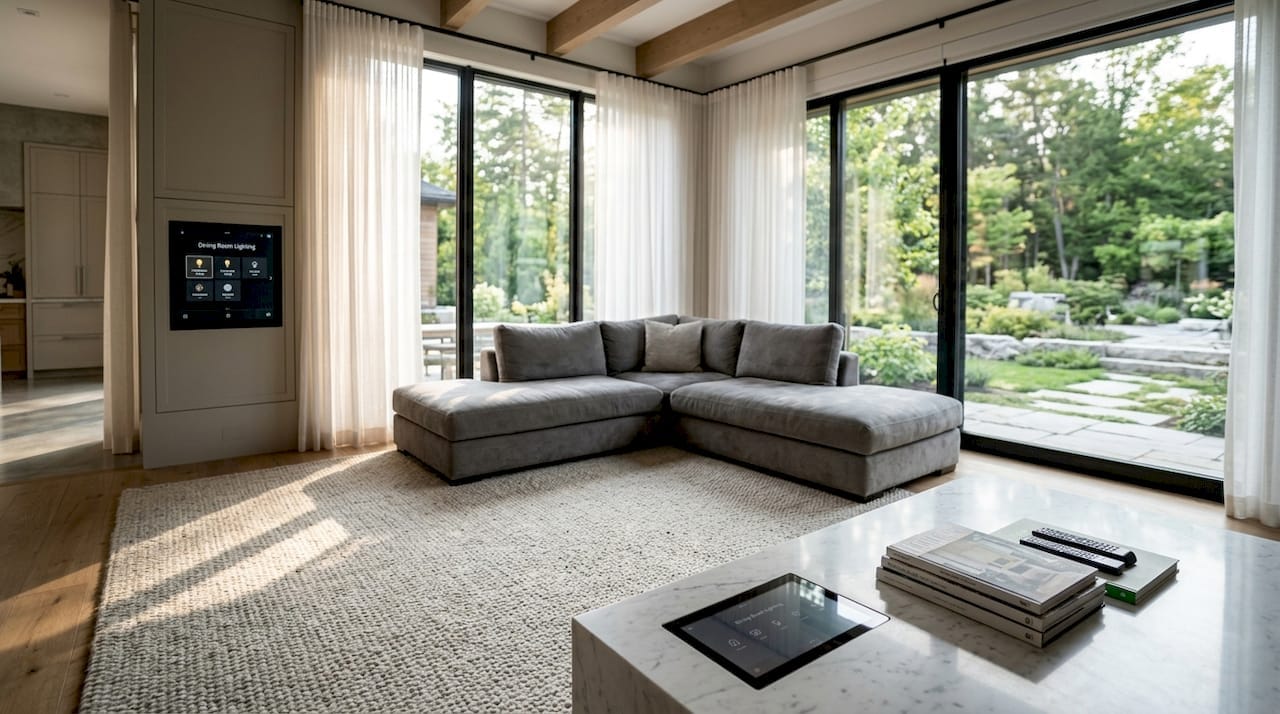
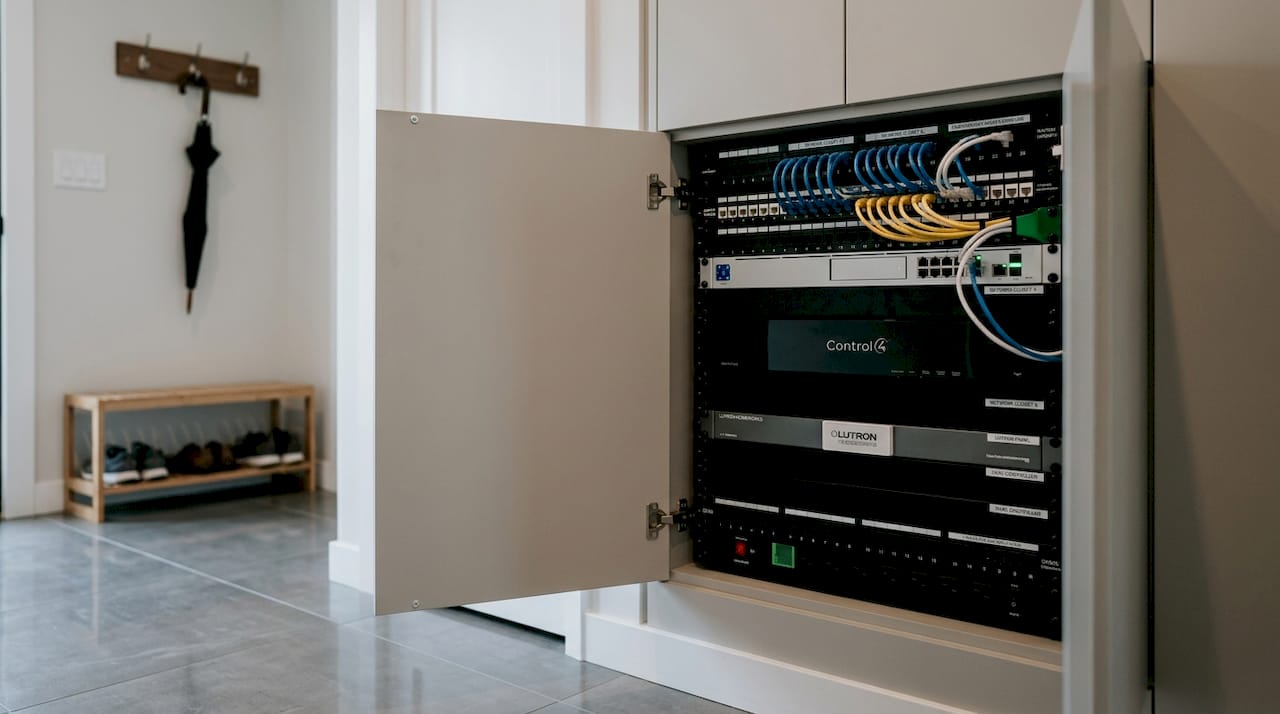
Whole-home automation hubs are the foundation. Platforms like Control4 and Lutron Homeworks unify lighting, motorised shades, security, and AV under a single interface. Core smart home features for luxury builds include energy management tied directly into these hubs, so your home responds intelligently to occupancy and time of day without manual input. Custom scenes, like a “Good Morning” routine that raises shades, adjusts thermostat zones, and starts the coffee maker simultaneously, are what separate genuine smart living from simply having connected gadgets.
AI-driven climate control is the feature that pays for itself. Smart thermostats and zoned HVAC are essential for efficiency and comfort in cold climates like South Georgian Bay, and they often qualify for provincial energy rebates. Cold-climate heat pumps paired with intelligent zoning mean each room maintains its ideal temperature without overworking your system.
Advanced security is both a lifestyle and investment decision. Advanced security systems with facial recognition, biometrics, and vacation modes deliver 75-100% ROI at resale, making them one of the highest-returning features you can specify.
Wellness and living features round out the picture:
- Circadian lighting that shifts colour temperature throughout the day
- Whole-home air purification tied to your automation hub
- Motorised blackout shades for bedrooms and media rooms
- Heated tile floors with smart scheduling
Pro Tip: Specify lighting zones generously during rough-in. Adding zones later is expensive; removing control is free.
Comparing top smart home features head-to-head
Choosing between features is easier when you can see them side by side. Here is how the core categories compare across the metrics that matter most for a luxury South Georgian Bay property.
Feature
Typical install cost
Energy savings
Resale ROI
Best for
Whole-home automation hub
$15,000-$80,000+
10-20% overall
30-50%
Large custom homes
Smart climate and zoned HVAC
$8,000-$30,000
10-30%
25-40%
Cold climate efficiency
Advanced security
$5,000-$25,000
Minimal
75-100%
Resale and peace of mind
Circadian and scene lighting
$10,000-$50,000
15-25%
20-35%
Wellness and ambience
Motorised shades and AV
$8,000-$40,000
10-15%
15-30%
Comfort and entertainment
Smart thermostats produce 9.6% heating savings and up to 17.5% cooling savings in real-world data, with intelligent zoning pushing total HVAC savings as high as 30%. Full automation delivers 30-50% ROI at resale, which is a compelling number for anyone building a property they may eventually sell.
On the wired versus wireless question, the answer for large luxury homes is clear. Wireless is convenient for small retrofits, but at the scale of a 4,000-square-foot custom home or waterfront cottage, you need the reliability of structured wiring. Key considerations:
- Wired systems offer lower latency and far fewer interference issues
- Wireless is faster to install but vulnerable to signal degradation in concrete or ICF construction
- Hybrid approaches work well when some areas are difficult to wire
“The homes that perform best over a decade are built on wired backbones with wireless only where wiring is genuinely impractical.”
For smart home adoption rates and what buyers in this market are actually requesting, our analysis of luxury home data tells a clear story: integrated systems command a meaningful price premium. Readers looking for a broader overview can also explore our luxury home construction essentials guide.
Practical considerations, integration tips, and common pitfalls
Knowing which features to select is only half the work. Executing them well requires disciplined sequencing and an honest look at where projects go sideways.
The ideal project sequence for smart home integration:
- Define automation goals and feature list during design phase
- Engage certified integrator before framing begins
- Install conduit, Cat6/fibre, and PoE infrastructure during rough-in
- Commission and test all systems before drywall is closed
- Programme scenes and routines with the primary homeowner present
- Complete user onboarding before move-in, not after
Pre-wiring Cat6, fibre, and PoE during framing is the single most important infrastructure decision you will make. Matter 2.0 interoperability makes a strong case for open-protocol systems in large luxury homes. Your technology closet should be sized generously, climate-controlled, and accessible for future upgrades.
Common pitfalls and how to avoid them:
Pitfall
Why it happens
Solution
Network latency and drops
Undersized router or poor VLAN setup
Dedicated VLANs for automation, AV, and IoT traffic
Automation conflicts
Scenes programmed without testing
Full scene test before drywall
Vendor lock-in
Single-platform commitment without exit strategy
Specify open protocols like Matter
User abandonment
No onboarding or training
Scheduled handover session with integrator
Cost overruns
Changes after rough-in
Finalise feature list before framing
Retrofit costs are 35-45% higher than pre-planned installations, and the most common pitfalls are network latency, automation conflicts, and incomplete user training. These are not technical failures. They are planning failures.
Pro Tip: Always run a full scene and routine test with your integrator at least two weeks before your scheduled move-in date. You want time to fix problems, not discover them on moving day.
For a closer look at how we manage sequencing on complex builds, our custom home workflow best practices guide covers the full timeline. Those in the early design phase will also find our custom home design tips a useful reference for keeping automation aligned with architectural intent.
What most homeowners miss when planning smart homes
After working on luxury builds across South Georgian Bay for over 30 years, we have observed a consistent pattern: the homeowners who are most disappointed with their smart homes focused on devices rather than infrastructure and experience.
The temptation is to chase the newest panel, the flashiest interface, or the brand that won the most awards at the latest trade show. But the homes that genuinely impress five years after move-in are the ones built around real-life routines. What does your morning actually look like? What happens when guests arrive? How does the house behave when everyone leaves for the ski hill?
Vendor lock-in is a risk that almost nobody talks about during the excitement of a new build. Committing entirely to a single proprietary ecosystem without an exit strategy means you pay premium prices for every future upgrade and have limited recourse if that company changes direction or discontinues support. Specifying open protocols like Matter and investing in a well-structured wired backbone gives you flexibility that proprietary systems simply cannot match.
Our view is that the in-depth integration guide puts it well: a smart home should feel invisible. If your family has to think about the system, something went wrong in the planning.
Bringing your smart home vision to life with expert support
Planning smart home features for a luxury build in South Georgian Bay requires the kind of builder who understands both the technology and the architecture, because the two are inseparable at this level. Mighton Construction brings over 30 years of experience integrating complex systems into custom luxury cottages and high-performance custom homes throughout the region, including ICF construction that demands careful coordination with wired automation infrastructure.

Whether you are starting from a blank lot or undertaking a major renovation, our team at Mighton Construction can help you map out a smart home strategy that suits your site, your lifestyle, and your long-term goals. We also specialise in ICF contractor services that pair exceptionally well with whole-home automation due to their superior thermal and acoustic performance. Reach out to start the conversation about your project.
Frequently asked questions
What is the most cost-effective smart home feature for resale value?
Advanced integrated security and smart climate control offer the highest return on investment. Security features with AI monitoring, biometrics, and facial recognition typically recoup 75-100% at resale.
Do smart home features really save energy in a cold Canadian climate?
Yes, and the data is clear. Smart thermostats deliver 9.6% heating and 17.5% cooling savings on average, with intelligent zoning pushing total HVAC savings up to 30% in cold climates.
Is it better to use wired or wireless systems for a large luxury home?
Wired is the right choice for large custom homes. Cat6 and fibre infrastructure provides the reliability and low latency that whole-home automation demands, whereas wireless alone is insufficient at this scale.
When should you plan smart home features in a new build?
From the blueprint stage, without exception. Planning integration early with certified integrators avoids retrofit costs that run 35-45% higher than pre-planned installations.
What are the most common mistakes with smart home integrations?
Under-investing in network infrastructure and skipping user onboarding are the two most damaging errors. Automation conflicts and network latency are predictable when planning is rushed or when the integrator is brought in too late.
Recommended
- Luxury home design trends 2026 for South Georgian Bay
- 7 Inspiring Examples of Luxury Renovations for Modern Homes
- Blog - Mighton Construction
- What Is Smart Home Technology? 35% Adoption in 2026
- 8 Exciting Electric Gate Innovations in 2025: A Must-Read for Home Owners, Property Managers, and Business Owners in Los Angeles!
- Smart gate installation workflow for luxury Los Angeles homes | LA Electric Gate Service