Secondary suites guide: add living space & income

TL;DR:
- Adding secondary suites is accessible for various types of South Georgian Bay properties.
- Compliance with Ontario Building Code ensures safety but requires careful planning and permits.
- Local regulations, environmental considerations, and regional incentives influence project complexity and costs.
Many South Georgian Bay homeowners assume secondary suites are reserved for large urban properties or require a small fortune to build. Neither is true. Whether you own a winterised waterfront cottage in Tiny Township or a century home near Wasaga Beach, adding a self-contained suite is more accessible than most people realise. This guide cuts through the confusion, outlines exactly what the rules require, and gives you a practical, evidence-based roadmap so you can make a confident decision about adding a secondary suite to your property.
Table of Contents
- What is a secondary suite?
- Key building code requirements and safety standards
- Step-by-step process to add a secondary suite
- Financial incentives, costs, and what to consider
- Unique challenges and advantages in South Georgian Bay
- A fresh perspective: what most guides miss about secondary suites in South Georgian Bay
- Ready to create your secondary suite?
- Frequently asked questions
Key Takeaways
| Point | Details |
|---|---|
| Secondary suite basics | A secondary suite is a legal, self-contained apartment within your home that can boost income and flexibility. |
| Building code compliance | You must meet specific safety and design standards for ceiling height, fire separation, and exits. |
| Local process steps | Zoning checks, permits, plans, and inspections are required steps that help ensure your suite is safe and legal. |
| Financial incentives | Homeowners in Simcoe County can access grants up to $30,000 to reduce costs. |
| Know local challenges | Shoreline, seasonal, and bylaw factors make South Georgian Bay secondary suites unique. |
What is a secondary suite?
A secondary suite is a self-contained dwelling unit located within or on the same lot as an existing home. It has its own entrance, kitchen, bathroom, and living area, making it completely independent from the main residence. You may also hear it called an accessory dwelling unit (ADU), an in-law suite, or a garden suite, depending on its location and configuration.
The most common setups in South Georgian Bay include:
- Basement apartment: A finished lower level with a separate entrance, egress windows, and full amenities. This is the most popular option for bungalows and two-storey homes.
- Above-garage flat: A standalone unit built over a detached or attached garage. Popular on larger rural and waterfront lots.
- Garden suite: A small, separate structure in the backyard. Think of it as a purpose-built cottage on your existing property.
Why do homeowners add them? The reasons fall into three clear buckets:
- Extra income: Long-term rental demand across Simcoe County remains strong, and a finished basement suite can generate meaningful monthly cash flow.
- Multigenerational living: Adult children returning home, aging parents requiring proximity, or family members needing independence without full separation are all driving demand.
- Increased property value: A legally permitted secondary suite is counted as a feature, not just a room, during real estate appraisals.
For South Georgian Bay specifically, secondary suites fill a gap. Seasonal communities like Collingwood and Blue Mountain face housing pressure year-round, and a properly permitted suite adds durable, long-term value whether you use it for family or as a rental.
Key building code requirements and safety standards
This is where many homeowners stall. The rules feel overwhelming, but they exist to protect occupants and reduce liability for you as the property owner. The Ontario Building Code (OBC) sets the baseline, and local municipalities layer on their own requirements.
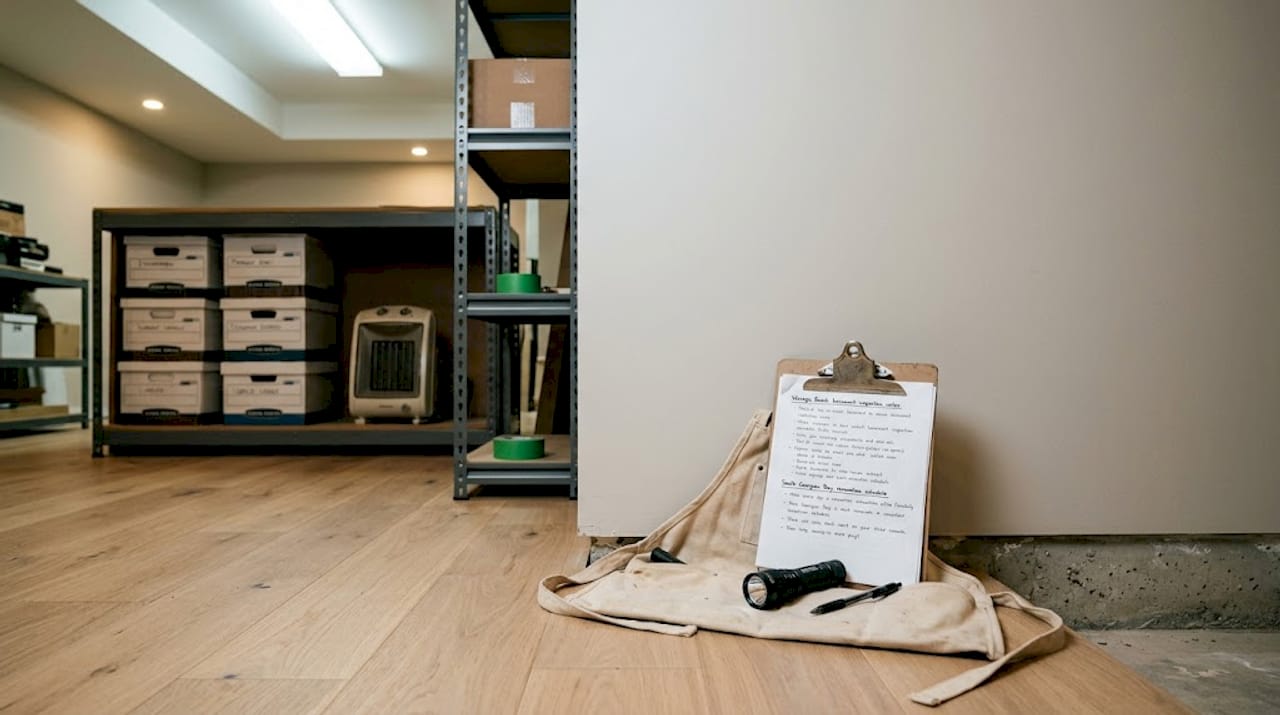
Key OBC requirements include a minimum ceiling height of 1.95 m (6’5“), fire separations using 30-minute walls and 15-minute floor/ceiling assemblies for older homes, separate exits or shared exits with fire-rated doors, egress windows, soundproofing between units, plumbing fixtures including a kitchen sink and full bathroom, and at least one dedicated parking space.
| Requirement | Standard |
|---|---|
| Minimum ceiling height | 1.95 m (6’5“) |
| Fire separation (walls) | 30-minute rating |
| Fire separation (floor/ceiling) | 15-minute rating |
| Egress window (sleeping areas) | Required in all bedrooms |
| Soundproofing | Required between units |
| Separate entrance | Required or shared with fire-rated door |
| Parking | Minimum one space per suite |
“Fire safety is non-negotiable. A suite without proper fire separation puts both occupants and homeowners at serious legal and financial risk.”
For shoreline and cottage-zone properties, parking and environmental drainage requirements may be stricter. The topography of lots near Georgian Bay often means drainage solutions need to be engineered rather than assumed. Following solid fire risk reduction tips during construction is both a code requirement and a practical safeguard for your investment.
Understanding Ontario entry requirements matters too, particularly for separate suite entrances that must function safely through Georgian Bay winters.
Pro Tip: Older homes built before 1995 often need significant upgrades to meet current OBC fire separation standards. Budget for this before finalising your overall project cost.
Step-by-step process to add a secondary suite
Knowing what the code requires is half the battle. The other half is navigating the approval process without losing months to back-and-forth with the municipality.
- Check zoning and bylaw restrictions. Contact your township’s planning department before anything else. Not all residential zones permit secondary suites, and some have additional conditions around lot size or proximity to shorelines.
- Hire a qualified designer early. A designer familiar with OBC Part 11 (existing buildings) can catch compliance gaps before you submit, saving weeks of revision cycles.
- Prepare your permit application. You will need a complete site plan, floor plans drawn to scale, your designer’s credentials, and a description of proposed work.
- Submit and await approval. Municipal review timelines vary. Collingwood and Wasaga Beach typically take four to eight weeks for straightforward applications.
- Schedule inspections at key milestones. Inspectors visit at framing, insulation, and final stages. Missing a scheduled inspection can delay occupancy significantly.
- Obtain occupancy approval. Only after final inspection sign-off can the suite be legally occupied or rented.
| Stage | Typical timeline |
|---|---|
| Zoning check and pre-consultation | 1 to 2 weeks |
| Application preparation | 2 to 4 weeks |
| Municipal review | 4 to 8 weeks |
| Construction | 8 to 20 weeks |
| Final inspection and approval | 1 to 2 weeks |
Familiarise yourself with general building regulations early so nothing surprises you mid-process. When choosing a suite floor plan, consider future flexibility in case your family’s needs change. Reviewing complete renovation steps can also help you anticipate each phase before breaking ground.
Pro Tip: The most common cause of permit delays is an incomplete application. An experienced local designer or builder who knows your municipality’s preferences will submit a cleaner package and get approvals faster.
Financial incentives, costs, and what to consider
Let’s talk real numbers. The cost to create a finished secondary suite in South Georgian Bay varies widely based on configuration, finishes, and existing conditions.
| Suite type | Estimated cost range |
|---|---|
| Basement apartment (unfinished) | $60,000 to $110,000 |
| Basement apartment (finished) | $80,000 to $140,000 |
| Above-garage flat | $90,000 to $160,000 |
| Garden suite (new build) | $120,000 to $220,000 |
The County of Simcoe offers grants up to $30,000 for eligible homeowners creating new secondary suites, which can meaningfully offset your upfront investment.
Common budget surprises that catch homeowners off guard:
- Electrical panel upgrades: Older homes rarely have spare capacity for a full additional unit.
- Plumbing rough-in: Running new drain lines in a concrete slab is more costly than people expect.
- Fire separation upgrades: Especially in homes built before the late 1990s.
- Soundproofing: Acoustic insulation between floors adds cost but is non-negotiable under the OBC.
- Separate utility metering: Some municipalities require or encourage separate hydro and gas meters.
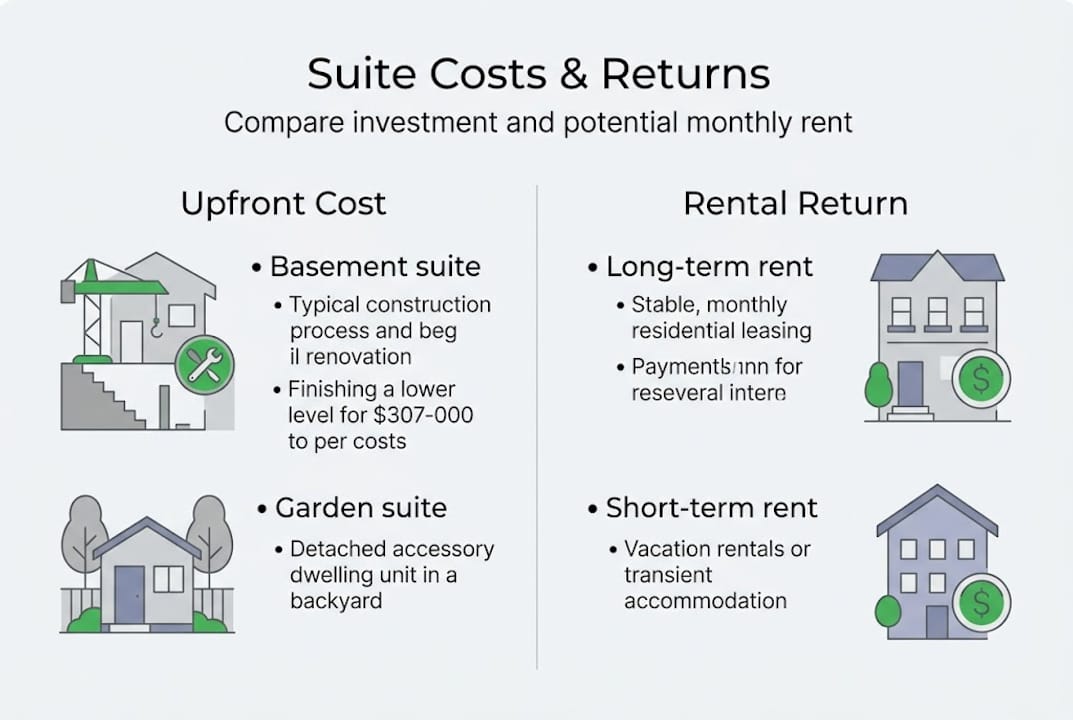
On the return side, a two-bedroom suite in Collingwood or Wasaga Beach can achieve $1,400 to $2,000 per month in long-term rent as of 2026, with a payback period of five to eight years depending on your total investment. For basement suite renovations or cottage suite additions, working with a builder experienced in local code will help you avoid costly surprises.
Unique challenges and advantages in South Georgian Bay
This region is not like building in Mississauga or Hamilton. South Georgian Bay has its own personality, and your secondary suite project needs to account for it.
Shoreline bylaws in townships like Tiny and environmental reviews add real nuances for cottage-zone properties. If your lot is within a regulated shoreline setback, an environmental impact assessment may be required before a building permit is issued. In Wasaga Beach, see which building permits and NVCA approvals a suite project can trigger.
Key local factors to keep in mind:
- Seasonal versus winterised properties: A three-season cottage needs significant upgrades (insulation, heating, water supply) before a suite is viable year-round.
- Municipal short-term rental restrictions: Most townships in South Georgian Bay limit or prohibit short-term rentals in secondary suites, making long-term or family use the practical focus.
- Workforce housing demand: Local employers in the tourism and service sector face a chronic shortage of affordable workforce housing, meaning long-term tenants are not hard to find.
- Well and septic considerations: Rural and waterfront properties on private services require septic capacity assessments before adding a second unit.
- Simcoe incentives driving adoption: The County of Simcoe grant programme is accelerating secondary suite creation across the region, meaning contractors and inspectors are increasingly familiar with the process.
“Properties that adapt to community needs, rather than just market trends, hold their value through every economic cycle.”
Understanding these local layers is what separates a project that sails through approvals from one that stalls for a year.
A fresh perspective: what most guides miss about secondary suites in South Georgian Bay
Most guides focus on the mechanics, checklists and timelines, but they miss something important. Regulations in this region change fast. Zoning bylaws, incentive programmes, and environmental review requirements have all shifted meaningfully in the past three years alone. A suite designed with rigid assumptions about today’s rules may need rework if you try to expand or modify it later. Building adaptable design from the start, with future flexibility in mind, is worth discussing with your builder before plans are drawn.
The second thing most guides miss is the intangible return. Homeowners often fixate on rental income as the measure of success. But the families we see most satisfied with their suites are those who built space for a parent, an adult child, or a family caregiver. That value is real and it does not show up in a spreadsheet.
Finally, DIY approaches routinely cost more than hiring a professional, not less. Municipal back-and-forth, failed inspections, and remedial work eat into savings quickly. Understanding the stages of local home construction before you commit helps you see why professional guidance is an investment, not just an expense.
Ready to create your secondary suite?
Mighton Construction has helped South Georgian Bay homeowners add secondary suites, custom home solutions, and liveable additions for over 30 years. We know the bylaws, the inspectors, and the environmental considerations that make this region unique.
Browse our project gallery to see completed suites, basement conversions, and home additions that might spark your vision. If you are considering an ICF basement as the foundation for your new suite, we can walk you through the benefits for South Georgian Bay’s climate. Reach out today for a no-pressure consultation and let’s map out what is possible on your property.
Frequently asked questions
What’s the difference between a secondary suite and a duplex?
A secondary suite is a self-contained apartment within a single home, while a duplex is a building legally divided into two entirely separate dwellings with distinct addresses and ownership structures.
Can I use my secondary suite for short-term rentals like Airbnb?
Most South Georgian Bay townships restrict short-term rentals in secondary suites, so these units are primarily suited to long-term rental or family occupancy.
Do I need a building permit to add a secondary suite?
Yes. A building permit is required along with scaled floor plans, a site plan, and your designer’s credentials before any work can legally begin.
Is there financial support for adding a secondary suite?
Yes. Simcoe County offers grants up to $30,000 for eligible homeowners who are creating new, permitted secondary suites on their properties.
What are some typical hidden costs of secondary suites?
Soundproofing, plumbing upgrades, electrical panel expansion, and septic capacity assessments are the costs that most frequently catch South Georgian Bay homeowners by surprise.
Recommended
- Step-by-step home addition: A luxury guide for South Georgian Bay
- 7 Essential Types of Home Renovations for Luxury Living
- How to Upgrade Basement for Resale: Boost Value Step-by-Step
- Home Additions & Garage Builders | Mighton Construction
- 8 Creative Interior Ideas to Customize Steel Frame Homes in Jacksonville, FL - Ofir Engineering