
Role of Client in Construction—Shaping Project Success
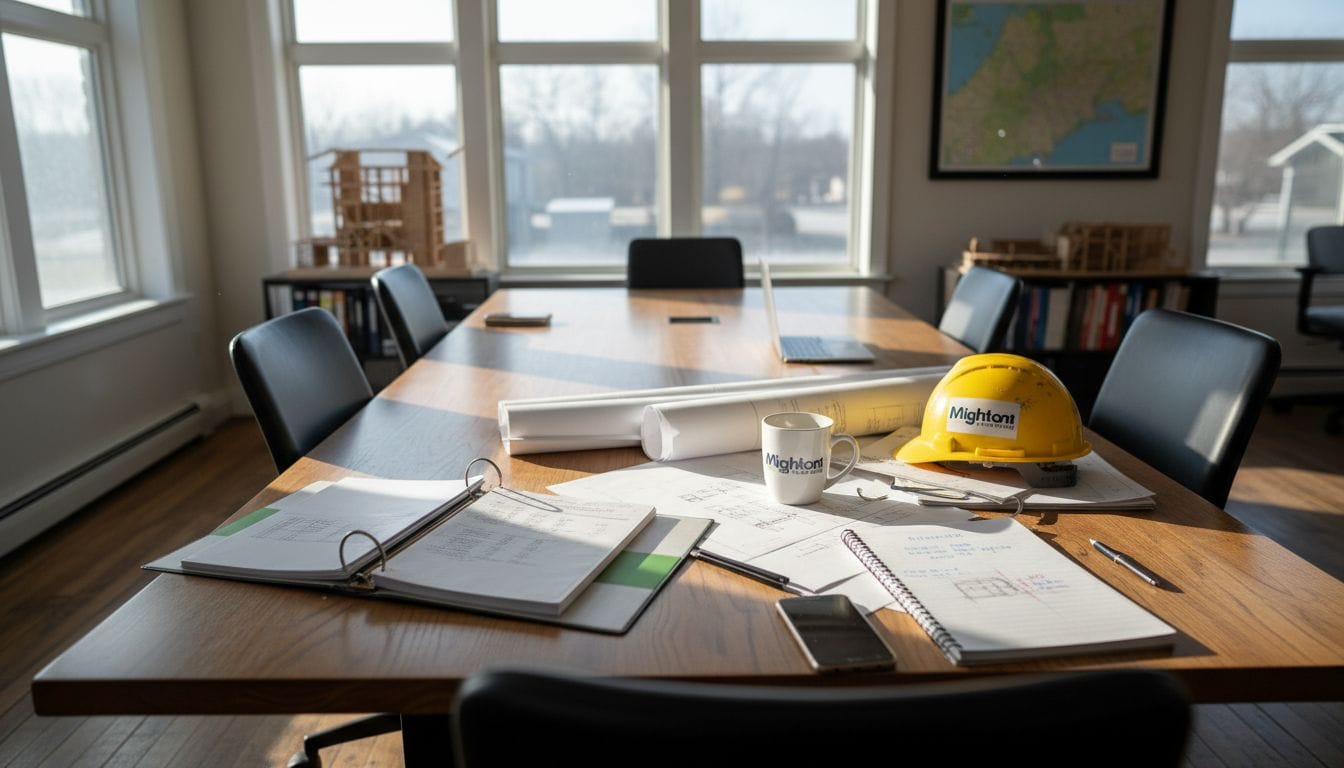
Building a luxury custom home or transforming your property in South Georgian Bay is about more than selecting finishes and writing cheques. As a homeowner, your voice and thoughtful decisions become the driving force that shapes every detail, timeline, and outcome. Clear client involvement and communication are what set a remarkable project apart, ensuring your builder understands your vision and delivers a truly bespoke result.
Table of Contents
- Defining The Client’s Role In Construction
- Types Of Construction Clients And Key Distinctions
- How Clients Influence Design And Decision-Making
- Client Responsibilities During Construction Phases
- Managing Risks, Disputes, And Legal Obligations
- Effective Collaboration With Builders And Professionals
Key Takeaways
Point
Details
Client’s Role
The client’s involvement is crucial, guiding every phase from planning to completion with clear communication and timely decision-making.
Engagement Phases
Clients must actively participate in planning, oversight during construction, and final inspections to ensure project success.
Understanding Client Types
Different client categories such as homeowners, developers, and institutional clients have varying responsibilities, risk levels, and approaches to project management.
Risk Management
Proactive communication, thorough contract review, and early identification of potential issues help clients manage risks and avoid disputes effectively.
Defining the Client’s Role in Construction
You’re not just writing cheques and watching from the sidelines. The client’s role in construction is active, strategic, and foundational to everything that happens on site. Think of yourself as the project’s compass—you set the direction, establish the boundaries, and make the decisions that shape the entire build. Without a clear understanding of what this role entails, even the best builder will struggle to deliver exactly what you envision.
As the project initiator, you define the scope, objectives, and budget that become the framework for your entire project. Your primary responsibility is to articulate what success looks like. This means communicating your vision clearly, setting realistic timelines and financial parameters, and being available to approve major decisions as they arise. Project team roles in construction vary significantly, but the client remains the central authority—the person who initiated the project, secured the funding, and has the final say on outcomes. You’re not delegating this responsibility; you’re orchestrating it.
Your engagement spans three critical phases:
-
Planning and design – You work with architects, designers, and your builder to translate your vision into concrete plans. This is where you establish priorities, identify constraints, and ensure that the design aligns with your lifestyle, aesthetic preferences, and budget expectations. For custom homes in Wasaga Beach, Collingwood, or Blue Mountain, this might mean deciding how your home integrates with waterfront views or how renovation work in a kitchen or bathroom remodels fits within your existing structure.
-
Construction oversight – You remain engaged throughout building, reviewing progress, approving changes, and ensuring quality standards are maintained. This doesn’t mean you need to visit the site daily, but you should understand how decisions made now affect timelines and costs. Regular communication with your builder keeps you informed and prevents misunderstandings that derail projects.
-
Completion and approval – You verify that the finished work meets agreed-upon specifications and your expectations before final payment. Walk-throughs, inspections, and sign-offs protect both you and the builder.
One of your most important responsibilities is active oversight and decision-making. Construction project delivery systems require the client to navigate choices like design-bid-build or design-build approaches. You need to understand which method suits your project—whether it’s a luxury custom home, a cottage renovation, or a basement finishing project. Your builder serves as your representative in managing day-to-day construction activities, but you retain authority over major decisions. When issues arise—and they will—you’re the one who decides how to proceed, whether that means approving change orders, adjusting timelines, or addressing quality concerns.
Beyond the immediate decisions, you provide continuity and accountability. You’re the constant presence in a project where teams rotate and circumstances change. Your clear communication, realistic expectations, and willingness to engage directly with your builder and their team create the conditions for success. This is especially true in custom work, where your home is unique and deserves the attention that comes from an engaged client who understands their role.
Pro tip: Before your project begins, document your priorities in writing—budget limits, timeline expectations, aesthetic preferences, and non-negotiable features—then share this with your builder so everyone operates from the same foundation.
Types of Construction Clients and Key Distinctions
Not all construction clients are the same. A homeowner planning a kitchen renovation in Collingwood operates very differently from a developer building multiple custom homes across Wasaga Beach, or a church organisation undertaking a renovation project. Understanding which category you fall into—and how that shapes your responsibilities, risk exposure, and relationship with contractors—is crucial to project success.
Construction clients generally fall into several distinct categories based on their scope, involvement level, and contractual relationships. Individual homeowners typically commission one-off projects like custom homes, cottage renovations, basement finishing, or home additions. You’re usually working with a single builder, have a personal stake in the outcome, and maintain direct control over decisions. Developers and investors operate at a larger scale, commissioning multiple projects simultaneously and often engaging general contractors to manage complex portfolios. Institutional clients—churches, schools, and organisations—have specific compliance and governance requirements that shape how they engage builders. Commercial property owners focus on operational efficiency, return on investment, and tenant satisfaction. Each client type brings different priorities, timelines, and risk tolerance to the table.
The distinction between client types becomes most apparent in how construction contract types are structured and managed. Some clients prefer fixed-price contracts where the builder absorbs cost overruns, providing certainty but potentially higher initial quotes. Others choose cost-plus arrangements where they pay actual costs plus a percentage markup, gaining transparency but accepting financial uncertainty. Institutional and larger commercial clients often use collaborative delivery models—like design-build or integrated project delivery—that involve contractors earlier, reduce disputes, and align financial incentives. Individual homeowners typically work under traditional design-bid-build models, where design is complete before construction begins and the client maintains tighter control over specifications. Your client type dictates which approach works best. A custom home client in Blue Mountain might value the design precision of design-bid-build, while a developer managing multiple properties benefits from design-build’s speed and cost efficiency.
Client engagement and risk allocation differ significantly by type:
-
Homeowners retain detailed project oversight, approve changes directly, and bear responsibility for timely decision-making. You’re the project’s decision maker, and delays in your approvals cascade through the schedule.
-
Developers and investors delegate day-to-day management to project managers or construction managers, focusing on financial performance and timeline milestones. They accept higher risk in exchange for reduced operational involvement.
-
Institutional clients navigate governance structures, multiple stakeholders, and compliance requirements. Decisions often require committee approval or board sign-off, slowing the approval process but ensuring accountability.
-
Commercial property owners prioritise operational continuity, minimising disruption to tenants or business activity. This shapes scheduling, access, and communication protocols throughout the project.
Your client type also influences how you interact with general contractors, subcontractors, and design professionals. Homeowners typically build relationships based on trust and communication, while larger clients use formal project management structures, regular reporting, and documented decision trails. If you’re commissioning a luxury custom home or cottage in South Georgian Bay, expect a more collaborative, relationship-driven process with your builder. If you’re a developer overseeing multiple projects, you’ll likely work through formal change order procedures, milestone-based payments, and structured communication protocols.
Understanding your client category helps you set realistic expectations about timelines, communication frequency, and decision-making authority. It also clarifies what the builder expects from you and where potential friction points might emerge. A builder experienced in working with homeowners on custom homes may operate differently than one managing large-scale commercial builds. Knowing your role within your client category ensures smoother collaboration and fewer misunderstandings.
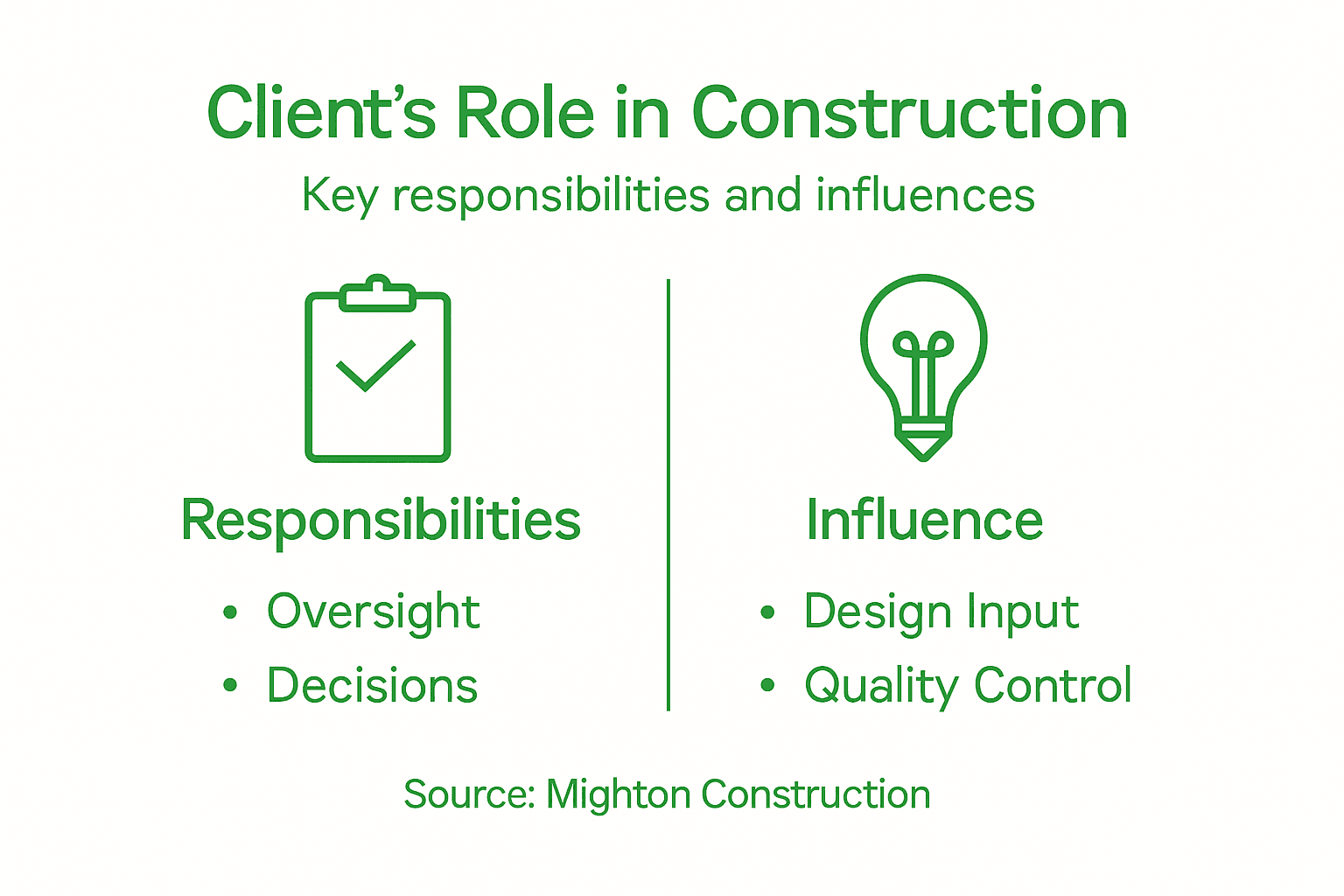
Here’s a comparison of the main construction client types and how their priorities, decision authority, and risk levels differ:
Client Type
Main Priorities
Decision Authority
Risk Exposure Level
Individual Homeowner
Personal vision, budget, quality
Direct; approves all significant changes
Medium; direct oversight
Developer/Investor
ROI, timeline, scalability
Delegated to project managers
High; less day-to-day control
Institutional Client
Compliance, governance, accountability
Committee or board approvals
Low to medium; formal processes
Commercial Property Owner
Operational continuity, tenant satisfaction
Focused on business impacts
Medium; depends on contract setup
Pro tip: Before starting your project, clarify your client classification with your builder—homeowner, investor, or institutional client—and discuss how this shapes contract terms, approval processes, and communication expectations.
How Clients Influence Design and Decision-Making
Your vision doesn’t just influence the project—it drives it. Every line on a blueprint, every material selection, every structural decision flows directly from what you want to achieve. The design phase is where your influence peaks. This is when your preferences, lifestyle needs, and aesthetic vision get translated into the actual home or renovation that will exist for decades. A builder might propose one approach, but your feedback, priorities, and non-negotiables shape the final outcome in ways that are profound and lasting.
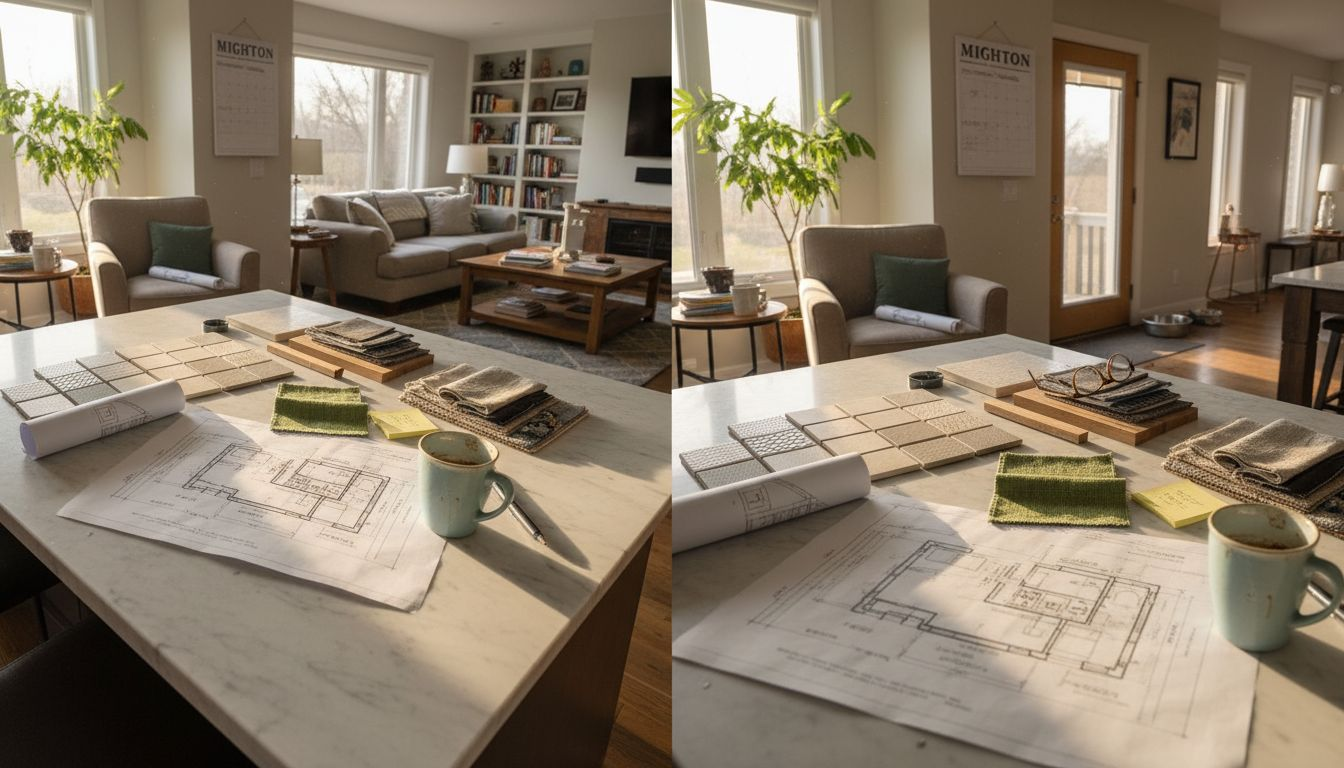
Design decisions start with clarity about what matters most to you. Are you building a waterfront cottage in Wasaga Beach where morning light on the water is non-negotiable? Are you renovating a kitchen to maximise functionality for daily family gatherings? Are you creating a home addition that must blend seamlessly with existing architecture? Your answers to these questions directly influence everything that follows. Understanding client expectations throughout the project lifecycle is essential because misalignment at the design stage becomes expensive and frustrating later. A builder who starts by listening to your lifestyle, preferences, and constraints can shape the design to fit your actual needs rather than asking you to conform to a generic template.
Your input shapes design through several key channels. During initial consultations and design development, you articulate what success looks like. Do you prioritise open concept living or defined separate spaces? Do you want sustainable building practices like ICF foundations, or are you focused on specific aesthetic features? For church renovation projects, what aspects of the original structure must be preserved versus modernised? For bathroom or basement finishing projects, what level of luxury and functionality do you envision? Your answers become design directives. Architects and designers working on your project—whether they’re designing custom cottages in South Georgian Bay or contemporary custom homes in Blue Mountain—incorporate your feedback into floor plans, material palettes, and spatial layouts.
The decision-making process itself is where your influence becomes most visible. Most construction projects use collaborative feedback loops. You’ll review designs at multiple stages: conceptual sketches, detailed plans, material samples, and site mockups. At each stage, you approve, request changes, or redirect. A builder presents options (“We can use James Hardie fibre cement siding or traditional cedar”), and you decide based on durability, aesthetics, and budget. When issues arise during construction—unexpected soil conditions, supply chain delays, design refinements—you’re the one who weighs options and makes the call. Do you approve the change order? Does the modification stay within budget and timeline? These decisions are yours to make.
Key ways clients shape design and decisions:
-
Defining objectives and scope – You establish what the project is meant to accomplish, from functional requirements to aesthetic goals.
-
Setting quality expectations – You decide what “good” looks like. Premium finishes and custom details in one area, cost-conscious choices in another.
-
Providing continuous feedback – Regular design reviews ensure the evolving plans match your vision before construction begins.
-
Approving major changes – During construction, you authorise modifications, change orders, and problem-solving decisions.
-
Prioritising trade-offs – When budget or timeline constraints require choices, you determine what matters most.
Effective influence requires clear communication. A vague preference for “modern but warm” doesn’t guide a designer the way “open concept with natural wood accents and lots of natural light” does. Bringing reference images, describing how you actually live in the space, and explaining your reasoning helps builders understand your priorities. When working with Mighton Construction or any premium builder, this dialogue is continuous. You’re not handing off decisions to someone else; you’re collaborating with professionals who bring expertise to your vision.
Pro tip: Create a visual inspiration folder with photos, material samples, and detailed notes about your lifestyle and preferences, then share it with your builder before design work begins so everyone is aligned on your aesthetic and functional priorities.
Client Responsibilities During Construction Phases
Construction doesn’t happen in one continuous blur. It unfolds across distinct phases, each with its own rhythm, challenges, and decisions. Your responsibilities shift from phase to phase. During planning, you’re defining the vision. During construction, you’re approving changes and monitoring progress. During finishing, you’re conducting inspections and signing off on completed work. Understanding what’s expected of you at each stage prevents bottlenecks, keeps projects on track, and ensures you get the home or renovation you actually want.
Pre-Construction and Planning Phase
This is where you establish the foundation for everything that follows. Your primary responsibility is finalising all plans, specifications, and approvals before construction begins. This includes reviewing architectural drawings, confirming material selections, approving budgets, and ensuring all permits are in place. You need to make decisions about finishes, fixtures, and structural details now, not three months into construction when changes become expensive. For custom homes in Collingwood or Blue Mountain, this means approving floor plans, exterior materials like James Hardie siding, foundation approaches like ICF construction, and interior layouts. For renovations like kitchen or bathroom remodels, it means confirming scope, selecting fixtures, and agreeing on wall placements and finishes.
You’re also responsible for clear communication about your priorities and constraints. What’s your absolute budget ceiling? What timeline do you need to meet? Are there lifestyle factors the builder should know about? If you’re building a cottage in Wasaga Beach, does the design need to accommodate seasonal weather patterns or specific views? These conversations establish mutual understanding and prevent misaligned expectations. Working closely with your builder during this phase means asking questions, seeking clarification, and ensuring you understand the implications of every decision.
Foundation and Framing Phase
Once construction begins, your responsibilities shift to oversight and decision-making. You’re not managing the work—that’s the builder’s job—but you are monitoring progress and making approvals as the project advances. The construction timeline essentials during this phase include foundation setting, framing, and rough-in work for mechanical and electrical systems. Your job is to stay informed about progress, understand how the physical work relates to your approved plans, and be available when decisions arise.
You’ll also conduct regular site visits if you choose. This keeps you connected to how your project is developing. You’ll see the footprint of your home taking shape, spot any concerns early, and maintain dialogue with your builder. Be prepared to make quick decisions when questions arise. Can you approve the concrete supplier’s proposal? Is the framing layout matching your expectations? Are there any changes needed before walls close up?
Finishing and Inspection Phase
As the project nears completion, your responsibilities intensify around quality assurance and final approvals. You’re responsible for coordinating final inspections with municipal authorities, reviewing completed work against specifications, and identifying any deficiencies or incomplete items. Walk through your home or renovation space carefully. Check that finishes match your selections. Verify that workmanship meets agreed-upon standards. Client engagement during construction phases requires you to verify that outcomes match commitments.
You’ll work with your builder on a final punch list—items that need completion or correction before final payment. Be thorough here. This is your opportunity to address any concerns before you officially accept the work. Once you sign off, making changes becomes significantly more difficult and expensive. For custom homes, this includes checking everything from foundation to roof. For renovations like basement finishing or home additions, it means verifying that new spaces integrate properly with existing areas.
Below is a summary of client responsibilities across each construction phase, with emphasis on how their involvement shifts over time:
Construction Phase
Core Client Responsibilities
Impact on Project Outcome
Planning & Design
Define vision, approve plans, set budget
Establishes clear project direction
Foundation & Framing
Review progress, approve revisions
Prevents costly errors and rework
Finishing & Inspection
Conduct final walkthroughs, confirm quality
Ensures satisfaction, protects investment
Your ongoing responsibilities throughout all phases:
-
Stay accessible – Be available for site visits, inspections, and decision-making conversations. Delays in your approvals cascade through the schedule.
-
Communicate clearly – Ask questions, voice concerns promptly, and provide feedback in writing when possible to create a documented trail.
-
Review documentation – Understand change orders, permits, inspections, and warranty information. Keep copies for your records.
-
Make timely decisions – When your builder presents options or needs approvals, respond promptly rather than delaying the project.
-
Conduct inspections – Regularly visit the site or review progress photos, and conduct thorough final inspections before accepting completed work.
-
Honour agreements – Make payments on schedule according to your contract terms and respect the builder’s timeline and processes.
Pro tip: Create a shared project folder with your builder containing all plans, permits, change orders, and inspection reports, and schedule regular review meetings at key milestones so both parties stay aligned on progress and any emerging issues.
Managing Risks, Disputes, and Legal Obligations
Things don’t always go smoothly in construction. A supplier delays material delivery. The crew discovers unexpected soil conditions that affect foundation costs. A design change you request impacts the timeline. Disagreements about workmanship or contract interpretation arise. Managing these situations effectively protects your investment, preserves your relationship with your builder, and prevents minor issues from escalating into expensive legal battles. Your role as a client includes understanding the legal framework governing your project, identifying risks early, and knowing how to address disputes before they spiral out of control.
Construction disputes typically stem from a few consistent sources. Unclear contracts leave room for misinterpretation about scope, timeline, budget, or quality standards. You and your builder might have different understandings of what’s included or how changes are priced. Scope creep happens when requirements expand beyond what was originally agreed. You request “a few small modifications” that compound into significant changes affecting cost and schedule. Communication failures create confusion about expectations, timelines, or decisions. One party makes assumptions instead of confirming details. Unforeseen conditions arise during construction. Ground conditions are different than expected. Existing structures require modifications not anticipated during planning. Payment disputes occur when invoicing doesn’t match agreed-upon terms or completed work. Understanding these common sources helps you prevent them. Start with a detailed contract that clearly defines scope, timeline, budget, change order procedures, and dispute resolution methods. During the project, maintain clear communication with your builder. Document decisions and changes in writing. Address concerns promptly rather than letting frustration build. For custom homes in Wasaga Beach, Collingwood, or Blue Mountain, or for renovations like kitchen remodels or basement finishing, these preventive practices matter equally.
How to manage risks and avoid disputes:
-
Review your contract thoroughly – Understand every term before signing. Know how change orders are priced, how payments are scheduled, what warranties apply, and how disputes are resolved.
-
Communicate in writing – Phone calls and casual conversations lead to misunderstandings. Email confirmations, documented change orders, and written approvals create a clear record.
-
Identify risks early – During planning and design, work with your builder to identify potential issues. What site conditions are uncertain? What design decisions might affect budget or schedule? Planning ahead prevents surprises.
-
Address issues immediately – Don’t wait weeks to voice concerns about workmanship or schedule delays. Prompt communication often leads to quick resolution.
-
Keep documentation organised – Maintain copies of contracts, permits, inspections, change orders, photographs, and correspondence. This documentation is essential if disputes arise.
When disputes do occur, construction claims and dispute resolution approaches matter significantly. Most construction professionals prefer alternative dispute resolution (ADR) methods over litigation. Mediation brings both parties together with a neutral third party to negotiate a solution. It’s faster, less expensive, and preserves the working relationship compared to court proceedings. Arbitration is more formal—a neutral arbitrator hears evidence from both sides and makes a binding decision—but still faster and less adversarial than litigation. Many construction contracts require mediation or arbitration before either party can pursue legal action. This protects both you and your builder by encouraging problem-solving over escalation.
Your legal obligations as a client vary depending on your contract and location, but they generally include honouring your payment obligations, providing access to the property, making decisions in a timely manner, and cooperating with inspections and permit requirements. In Ontario and across Canada, construction law principles emphasise that contracts should clearly specify responsibilities, timelines, and quality standards. Statutory requirements like building codes, safety regulations, and permit procedures apply regardless of your contract terms. As the property owner, you bear ultimate responsibility for ensuring your project complies with these requirements, though your builder typically manages day-to-day compliance.
When working with an experienced builder like Mighton Construction, many disputes are prevented through clear processes and transparent communication. Established builders have standard contract templates, proven change order procedures, and experience managing common issues. They know how to navigate permitting, inspections, and unforeseen conditions. This expertise protects you. Less experienced builders or contractors might lack these systems, creating unnecessary risk.
Pro tip: Before disputes escalate, discuss your concerns directly with your builder’s project manager using specific examples, then request a written response outlining how the issue will be addressed and any impacts on timeline or budget.
Effective Collaboration With Builders and Professionals
Construction is never a solo effort. Your builder brings expertise in project management, building codes, and trade coordination. Architects contribute design knowledge. Engineers solve structural challenges. Subcontractors specialise in specific trades. Your role as the client is to collaborate effectively with this entire team, creating conditions where expertise flows freely and problems get solved quickly. The best projects aren’t just well-built—they’re built by teams that communicate clearly, respect each other’s knowledge, and work toward shared objectives.
Effective collaboration starts with understanding that your builder and the professionals you hire aren’t adversaries to manage. They’re partners with invested interest in delivering quality work on time and within budget. When you approach the relationship this way, you’ll find that most builders are genuinely motivated to exceed your expectations. They want you to be satisfied because satisfied clients refer friends, provide testimonials, and return for future projects. This alignment of interests creates the foundation for collaborative success. It means your builder is incentivised to solve problems efficiently rather than passing costs and delays to you. It means architects and engineers will think creatively about design challenges because they’re invested in your project’s success, not just collecting fees.
How to foster effective collaboration:
-
Select professionals carefully – Your team composition matters enormously. Award-winning builders bring proven track records, established systems, and experience managing complex projects. They’ve built relationships with quality subcontractors, suppliers, and professionals. They understand local building codes and permitting processes. Architects and engineers with experience in your project type—whether it’s custom homes in Collingwood, cottage renovations in Wasaga Beach, or church construction projects—bring relevant expertise that prevents costly mistakes.
-
Establish clear expectations upfront – Before work begins, ensure everyone understands the project scope, timeline, budget, quality standards, and decision-making processes. Written contracts and detailed specifications prevent misunderstandings. A clear expectations plan becomes your reference point throughout the project.
-
Communicate regularly and transparently – Schedule regular project meetings where your builder, key professionals, and you discuss progress, upcoming milestones, and emerging issues. Transparent communication about budget status, timeline challenges, and quality concerns prevents surprises. When problems arise, addressing them openly and immediately prevents escalation.
-
Trust expertise while maintaining oversight – Your builder and professionals have skills you don’t. Trust their recommendations on technical matters like foundation approaches, structural solutions, and construction sequencing. Simultaneously maintain oversight through regular site visits, progress reviews, and inspections. This balance respects professional expertise while protecting your investment.
-
Be decisive and accessible – Slow decision-making cascades through the schedule and increases costs. When your builder or architect needs approvals or decisions, provide them promptly. Be accessible for site visits, consultations, and problem-solving conversations.
Collaboration also means understanding that coordinated efforts among multiple parties require streamlined communication and shared priorities. Your builder must coordinate between architects, engineers, subcontractors, suppliers, and municipal authorities. Each party has requirements and timelines. When communication breaks down between any parties, the entire project suffers delays and cost overruns. As the client, you support collaboration by ensuring your builders and professionals have what they need to coordinate effectively. This might mean approving design changes quickly so the engineer can issue updated structural drawings. It might mean confirming material selections so the builder can coordinate supplier delivery with construction scheduling. It might mean attending site meetings so decisions don’t get delayed waiting for your input.
For complex projects like custom home builds, large renovations, or specialised work like church restoration, collaboration becomes even more critical. Multiple trades must sequence their work precisely. Unexpected conditions discovered during construction require quick problem-solving conversations between your builder, the engineer, and you. Material selections made months earlier must integrate seamlessly with other systems being installed now. Builders experienced in managing these complexities—like Mighton Construction with over 30 years in the South Georgian Bay region—have developed processes that keep complex teams aligned and productive.
Effective collaboration also means being realistic about what’s controllable. You can control your communication, responsiveness, and decision-making. You can influence the quality of the team you hire. You cannot control weather delays, supply chain disruptions, or unexpected site conditions. A collaborative mindset accepts these realities and focuses energy on what can be controlled. When challenges arise, collaborative teams problem-solve together rather than assigning blame. This approach resolves issues faster and preserves relationships that matter for your project’s success.
Pro tip: Establish a communication protocol at the project’s start, including who communicates about what, how often meetings occur, and what documentation gets shared, so everyone understands expectations and information flows smoothly throughout the project.
Take Control of Your Construction Project with Expert Support
Understanding the critical role you play as a client—shaping every decision from design through completion—is the foundation of a successful build or renovation. At Mighton Construction, we appreciate the unique challenges you face: managing budgets, approving detailed plans, and making timely decisions that keep your custom home or renovation on track. We specialise in collaborating closely with you to translate your vision into reality while providing clear communication and trusted expertise every step of the way.
Whether you are planning a luxury custom home, a waterfront cottage, or a comprehensive renovation, our team’s experience in General Contracting and innovative building methods like ICF Construction ensure your project proceeds smoothly with reduced risk and exceptional craftsmanship.
Ready to embrace your role as client and achieve the home you have envisioned? Visit mightonconstruction.com today to explore our full range of services, review past projects, and schedule a consultation with our expert team. Let us guide you from concept to completion with integrity and transparency on your side. Your dream home in South Georgian Bay awaits.
Frequently Asked Questions
What is the client’s role during the planning and design phase of construction?
The client’s role includes articulating their vision, defining project objectives and budget, and collaborating with architects and builders to translate their preferences into concrete plans.
How does a client influence decisions during the construction phase?
A client influences decisions by reviewing progress, approving changes, and engaging in continuous communication with the builder to ensure that the construction aligns with their vision.
What responsibilities does a client have when the construction project is nearing completion?
A client conducts final inspections, verifies that the work meets agreed-upon specifications, creates a punch list of items for completion, and authorizes final payments upon satisfaction with the outcomes.
What are the different types of construction clients and how do they differ in their involvement?
Construction clients include individual homeowners, developers, institutional clients, and commercial property owners. Each type has varying levels of involvement, priorities, and methods of engaging with builders and contractors.
Recommended
- How to Communicate with Contractors for Flawless Projects
- Construction Management in Canada: Why It Matters
- Construction Timeline Explained: Planning Success in Canada
- Custom Home Project Workflow: Step-by-Step Guide for Success
- Auftragsabwicklung mit Laser: Ihr Weg zum perfekten Ergebnis – Laserdienstleistungen