
Quality assurance in luxury custom home building
TL;DR:
- High-end luxury construction requires a proactive quality assurance system to prevent costly defects and structural surprises.
- A rigorous QA process, from pre-construction planning to final walkthrough, ensures durability, performance, and client confidence.
Luxury finishes and premium price tags do not guarantee a flawless result. Even high-end custom builds in South Georgian Bay can suffer from costly rework, structural surprises, and disappointing finishes when proper systems are not in place from the start. Many homeowners and developers assume that spending more automatically produces better outcomes, but the real differentiator is something less visible than Italian marble or engineered hardwood. It is the rigorous quality assurance programme running behind the scenes. This guide explains exactly what quality assurance means in the context of luxury custom builds and renovations, how it works in practice, and what you should look for when choosing a builder you can trust.
Table of Contents
- Understanding quality assurance versus quality control
- The proactive role of quality assurance in custom builds and renovations
- Key metrics and benchmarks for quality assurance success
- Digital tools and cultural shifts reshaping quality assurance
- Why exceptional quality assurance is the best investment in luxury building
- Elevate your custom home build with proven quality assurance
- Frequently asked questions
Key Takeaways
Point
Details
Proactive prevention
Quality assurance prevents issues before they arise, saving time and money on luxury projects.
Clear metrics matter
Top builders use data-driven benchmarks to track and improve their quality processes.
Tech and teamwork
Modern QA relies on digital tools and a quality-focused culture for reliable results.
Value over flash
Exceptional QA protects your investment beyond visual finishes or immediate savings.
Understanding quality assurance versus quality control
The terms “quality assurance” and “quality control” are used interchangeably in conversations about construction, but they are fundamentally different concepts with very different consequences if one is missing. Understanding the distinction puts you in a much stronger position when evaluating builders and renovation contractors.
Quality assurance is proactive, focused on prevention, while quality control is reactive, focused on detection. Think of quality assurance as designing the systems, training the people, and establishing the standards before a single nail is driven. Quality control, by contrast, is the inspection that catches a problem after it has already been built into your home. Both matter, but QA is where the real value lies for luxury projects.
A common misconception is that rigorous property snagging inspections at handover are equivalent to a full quality assurance programme. They are not. Snagging catches visible surface defects after completion. It cannot catch a poorly sealed vapour barrier buried behind drywall, or a concrete pour that cured incorrectly because no one documented the ambient temperature. Those issues surface months or years later, often at significant expense.
Here is a clear side-by-side look at what separates the two approaches:
Aspect
Quality assurance (QA)
Quality control (QC)
Timing
Before and during construction
After work is completed
Focus
Process and prevention
Inspection and detection
Approach
Proactive
Reactive
Documentation
Ongoing, systematic
Point-in-time reports
Cost impact
Reduces rework and delays
May catch issues too late
Responsibility
Entire team, from designer to site lead
Inspector or third party
Solid project management and quality practices are built on this distinction. When builders rely exclusively on final inspections rather than embedding QA throughout every phase, defects get baked into the structure. Fixing a structural issue after framing is complete can cost ten times more than catching it at the design review stage.
Key differences to remember:
- QA is a mindset and a system; QC is a tool within that system
- QA prevents the conditions that cause defects; QC identifies defects that slipped through
- Luxury custom builds require both, but a strong QA culture means QC rarely has to work hard
For anyone planning a luxury home construction project in areas like Collingwood, Blue Mountain, or Wasaga Beach, understanding this distinction is not academic. It is the difference between a home that performs beautifully for decades and one that starts showing problems in year three.
The proactive role of quality assurance in custom builds and renovations
Now that the difference is clear, let’s look at how a best-in-class QA process is woven through every phase of a custom build or major renovation.
Quality assurance is a process, including detailed systems, documentation, and well-trained teams, designed to prevent errors before construction even begins. In practice, this means structured checkpoints from the first design conversation through to the final walkthrough, with documented accountability at each stage.
Here is how a rigorous QA programme unfolds across a typical luxury build:
- Pre-construction planning review. Every drawing, specification, and material selection is reviewed against project goals before ground is broken. Conflicts between structural, mechanical, and architectural plans are resolved on paper, not on site.
- Design validation with the client. Confirming that what is designed actually matches the client’s vision prevents expensive changes during construction, which are far more disruptive than adjustments at the design stage.
- Material selection and verification. Specifying premium materials is only half the process. Confirming delivery schedules, verifying that products match specifications, and storing materials correctly on site are all part of QA.
- Subcontractor onboarding and training. Every trade working on a luxury home should understand the project’s quality standards before they start. Pre-task briefings and documented expectations reduce errors significantly.
- Milestone inspections with sign-off. Before moving from framing to mechanical, from mechanical to insulation, from insulation to drywall, a structured inspection confirms that each phase meets the required standard. Nothing is covered up until it has been approved.
- Continuous documentation. Photo records, inspection reports, and material documentation create a traceable history of the build. This is invaluable for warranty purposes and for any future renovation work.
- Post-completion review and client walkthrough. A formal handover process ensures that the client understands every system in their home and that any outstanding items are documented and resolved promptly.
Prevention is always less costly than correction. Catching a waterproofing issue before the foundation is backfilled takes an afternoon. Addressing it after the landscaping is complete takes weeks, significant cost, and considerable stress for the homeowner.
Accountability is a critical element that separates good builders from great ones. On a truly well-run luxury project, quality assurance is not just the project manager’s responsibility. It is shared by the site supervisor, each trade lead, the designer, and the client’s own representative. When everyone owns quality, it shows in the finished product.
Pro Tip: Ask your builder who specifically is accountable for QA sign-off at each construction milestone. If they cannot give you a clear answer with named individuals, their QA programme may exist only on paper.
The role of project managers in luxury homes extends well beyond scheduling. They are the architects of the QA culture on site, and their attention to detail at every phase directly influences the final product. For luxury finishes to look and perform as expected, the substrate, the framing, and every layer underneath must meet the same high standard.
Key metrics and benchmarks for quality assurance success
A proactive approach only works if it is measurable. Here is how industry leaders quantify and improve their results over time.
Empirical benchmarks used by high-performing builders include the first-time quality (FTQ) rate, defects per 1,000 square feet, rework as a percentage of total budget, and warranty claims per completed home. These numbers tell a clear story about where a builder’s systems are working and where they are falling short. Top-quartile builders drive their FTQ rates as high as possible while keeping warranty claims close to zero through data-driven refinement of their processes.
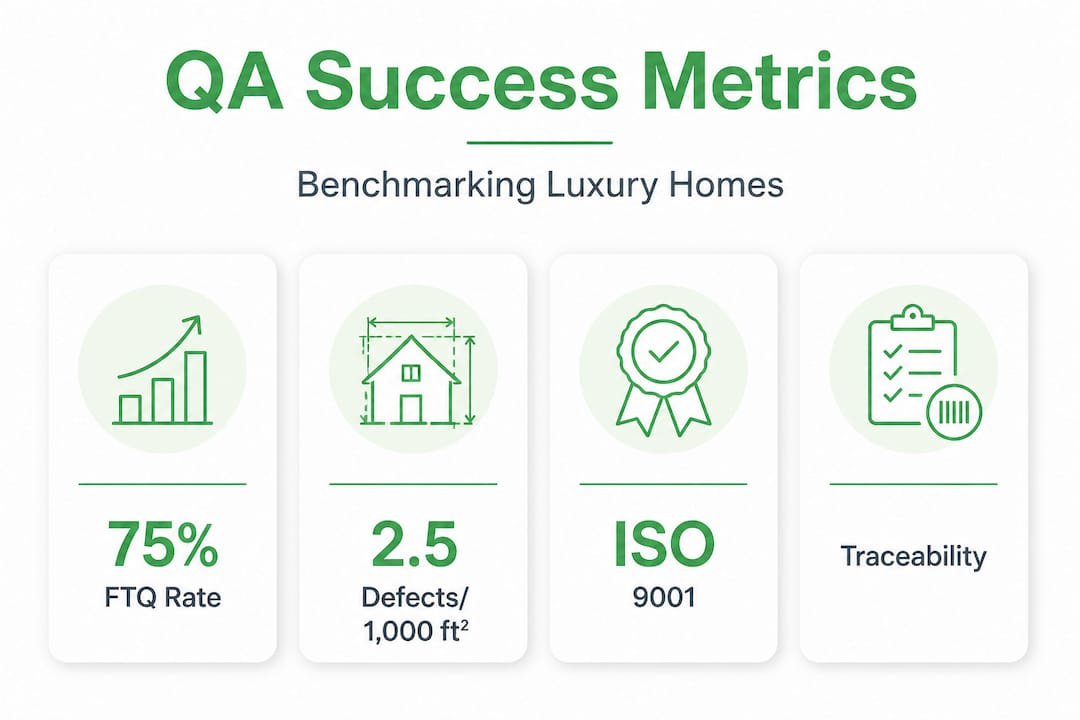
Standards like ISO 9001 provide internationally recognised benchmarks for traceability and continuous improvement in QA programmes. While residential construction does not universally require ISO certification, builders who align their internal systems with those principles tend to produce more consistent, measurable results. The integration of QC software and AI-assisted frameworks is also making it easier to track these metrics in real time rather than waiting until project close-out.
Here is a practical comparison of what average versus top-quartile performance looks like on a luxury residential project:
Quality metric
Industry average
Top-quartile builders
First-time quality (FTQ) rate
65 to 75%
90% or higher
Defects per 1,000 sq ft
8 to 12
2 to 4
Rework as % of total budget
5 to 9%
Under 2%
Warranty claims per project
4 to 7
1 or fewer
These numbers have real dollar implications. On a $2 million custom home, the difference between 7% rework and 2% rework represents $100,000 in wasted labour and materials. That is money that could have gone toward a better kitchen, an upgraded outdoor living space, or simply stayed in your pocket.
When you are evaluating a builder for your next project, consider asking these questions about their QA benchmarks:
- What is your average FTQ rate on luxury builds?
- How do you track defects through the construction process?
- Can you share documentation from a previous project’s QA milestones?
- How many warranty claims did you resolve in the past year, and what were the primary causes?
- Have you ever had a project that required significant rework, and what did you learn from it?
Builders who can answer these questions with confidence and supporting data are operating at a different level. Those who respond with vague reassurances about their “high standards” without measurable evidence deserve closer scrutiny.
Understanding what distinguishes high performance in luxury construction comes down to this framework. Numbers do not lie, and builders who track them are builders who improve. A thorough review of a builder’s step-by-step finishes approach often reveals whether their QA extends beyond the visible surfaces.
Digital tools and cultural shifts reshaping quality assurance
With measurement in mind, see how the technology and team culture behind QA are changing what excellence looks like, and how you can spot the difference.
Digital QA tools including apps and software are transforming how builders track, document, and improve quality, but the most forward-thinking practitioners are equally clear that technology amplifies human diligence rather than replacing it. A crew that does not care about quality will not be reformed by a checklist app. However, a crew that does care produces dramatically more consistent results when given the right digital infrastructure to support their work.
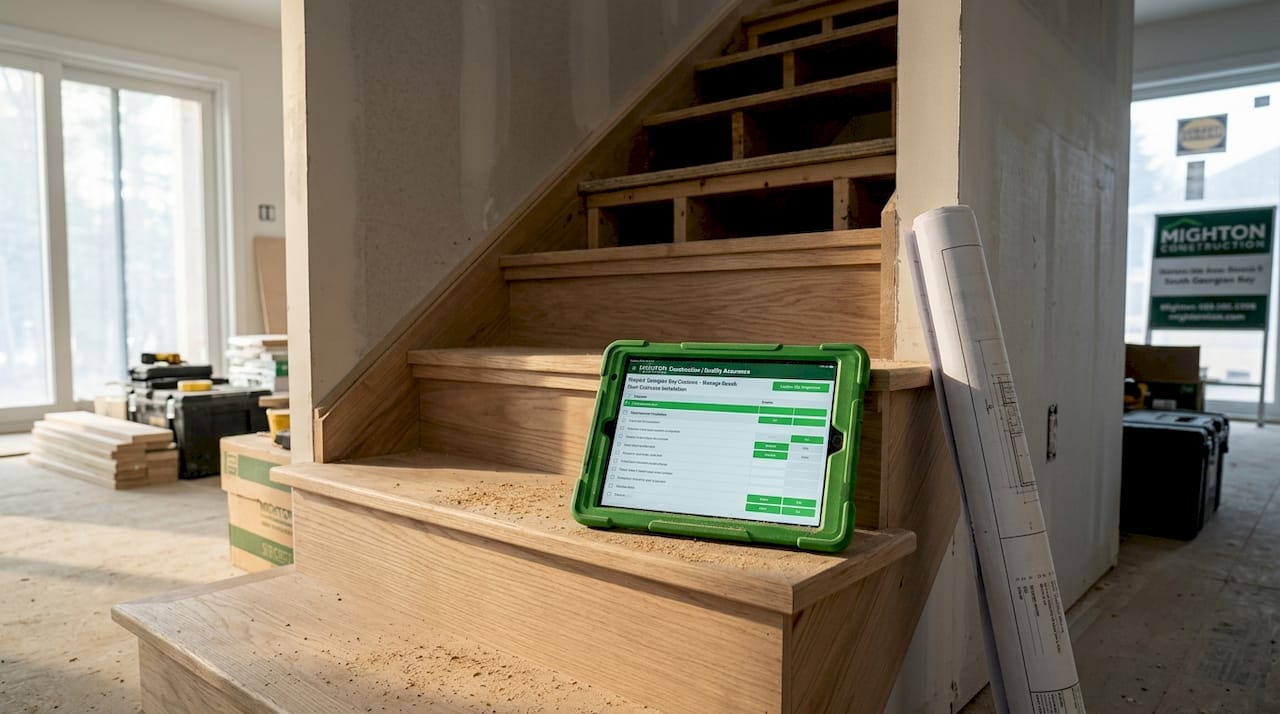
Today’s leading builders use purpose-built QA platforms to conduct photo-linked site inspections, assign defect resolution tasks in real time, and generate transparent reports that clients can access directly. This level of visibility is particularly valued by high-net-worth clients who expect the same transparency from their builder that they receive from the financial advisors managing their portfolios.
The construction industry is also beginning to incorporate 3D technology in construction for clash detection, structural verification, and virtual walkthroughs before a single truss goes up. When digital modelling identifies a conflict between a structural beam and an HVAC duct in the design phase, the savings in materials, labour, and schedule can be substantial.
Pro Tip: Ask your builder if they can provide you with digital documentation of each construction phase, including timestamped photographs and inspection reports. This record protects you long after move-in if any warranty questions arise, and it demonstrates the builder’s genuine commitment to accountability.
The cultural dimension is equally important. Builders who invest in ongoing training for their teams, conduct regular internal audits, and reward quality-conscious behaviour on site produce better outcomes than those who rely solely on external inspections. This is especially relevant for the luxury bathroom renovation workflow and other high-detail phases where the margin for error is extremely small.
Questions worth asking when assessing a builder’s cultural commitment to quality:
- How frequently do your site supervisors receive formal training on QA procedures?
- Do subcontractors working on your projects receive quality briefings before starting work?
- How do you handle a situation where a subcontractor’s work does not meet your quality standard?
- What does your internal QA review process look like between milestones?
A builder who welcomes these questions with specific, thoughtful answers is telling you something important about how they operate.
Why exceptional quality assurance is the best investment in luxury building
Here is a perspective not often heard in the world of luxury property, and it should shape your next project.
Conventional wisdom says that luxury is defined by what you can see and touch: the imported stone, the custom millwork, the chef’s appliances. These elements matter, but they are also the easiest part of a luxury build to source. Any builder can install a premium product. What very few builders can deliver is the invisible architecture of systems and processes that ensure those premium products perform as intended for the full life of the home.
We have seen firsthand in South Georgian Bay how beautifully finished homes can begin to reveal problems within a few years when QA was treated as a box-ticking exercise rather than a genuine commitment. A stunning lakefront property with inadequate moisture management behind its custom stone cladding is not a luxury home. It is an expensive problem waiting to surface. By contrast, a home built with rigorous QA at every phase holds its value, requires less remedial maintenance, and generates the kind of ownership experience that results in strong resale premiums.
The uncomfortable truth is that many builders skip or shortcut QA when schedules get tight or when clients are pressing for faster completion. Speed feels like a value-add in the moment. It rarely is. The cost of rework, warranty disputes, and reputational damage far exceeds any schedule gain. Choosing the right custom home builder means looking past glossy project photos and asking hard questions about process.
What you should demand and reward in a builder goes beyond price and timeline. Reward transparency. Reward documented processes. Reward builders who can tell you exactly how they prevented a problem, not just how they fixed one. The best luxury builds in South Georgian Bay are not accidents. They are the product of deliberate, disciplined quality assurance from the first design meeting to the final handover.
Elevate your custom home build with proven quality assurance
When you invest in a luxury custom home or significant renovation in South Georgian Bay, you deserve more than beautiful finishes. You deserve the confidence that comes from knowing every system, every joint, and every material was managed with the same level of care.
At Mighton Construction, our quality assurance programme is built into every phase of every project, from pre-construction planning through to client walkthrough. With over 30 years of experience building in Wasaga Beach, Collingwood, Blue Mountain, and across Simcoe County, we bring measurable standards to every luxury build and renovation we undertake. Explore our project gallery to see QA in action through completed custom homes and cottages. Visit our custom homes service page to learn about our process, or discover why our ICF construction expertise makes a lasting difference in durability and performance. We would welcome the opportunity to discuss your project.
Frequently asked questions
What specific steps make up a quality assurance programme in luxury home building?
A quality assurance programme includes documented systems and procedures focused on defect prevention, multiple inspections at key project milestones, thorough pre-construction planning, and trained teams who understand and own the quality standards at every phase.
How is quality assurance measured in custom home projects?
Success is measured using benchmarks like FTQ rate and defects per 1,000 square feet, alongside rework as a percentage of the total budget and warranty claims per completed home. Builders with strong QA programmes track these numbers consistently and use them to refine their processes.
What is the difference between quality assurance and issuing a warranty?
Quality assurance is proactive, designed to prevent defects from occurring in the first place, while a warranty serves as a reactive safety net that addresses issues discovered after the build is complete. Both have a role, but a strong QA programme means warranties are rarely tested.
Do digital tools really make a difference in construction quality?
Yes. Digital apps and QA software improve traceability, help catch overlooked issues in real time, and create a permanent documented record of each construction phase. For complex luxury builds, this level of visibility and accountability is increasingly expected by informed clients.