Project Management in Construction: Ensuring Quality Results
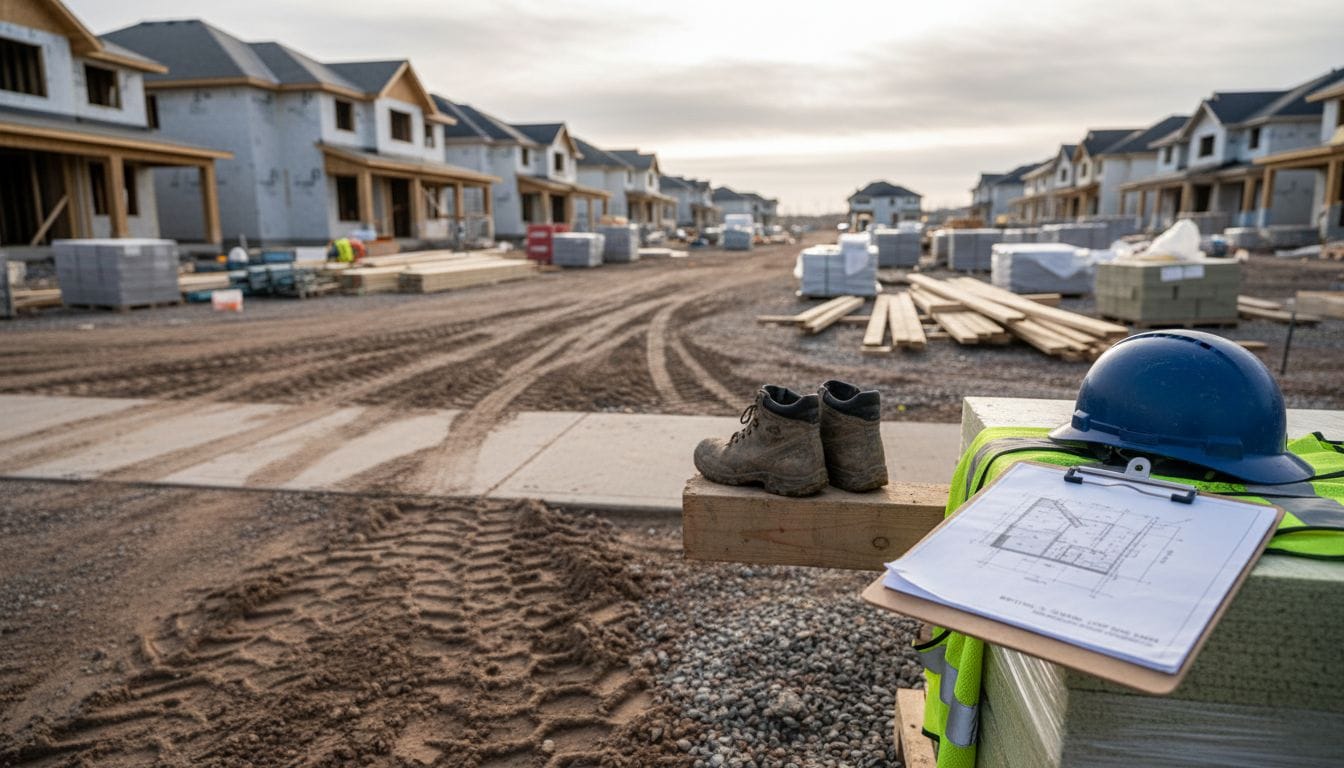
Building a luxury custom home in South Georgian Bay comes with vision, substantial investment, and a drive for perfection. Yet, even the finest plans can encounter setbacks without the right project management at the helm. Construction success hinges on the strategic coordination of team, budget, and technical expertise, ensuring every detail from design to handover meets the highest standards. This guide reveals what high-end homeowners need to know to achieve flawless execution and peace of mind.
Table of Contents
- Core Role Of Project Management In Construction
- Types Of Project Management In Custom Builds
- Key Project Management Processes And Tools
- Legal, Safety And Regulatory Compliance In Ontario
- Major Risks, Costs And Common Pitfalls
- Benefits For Luxury Homes And Renovations
Key Takeaways
Point
Details
Project Management is Critical
Effective project management integrates technical expertise, planning, and coordination to ensure successful completion of construction projects.
Custom Builds Require Unique Strategies
Different project management models, such as Design-Build and Integrated Project Delivery, address the complex needs of custom home construction.
Emphasis on Regulatory Compliance
Understanding and adhering to Ontario’s legal and safety regulations is crucial for protecting both workers and homeowners during construction.
Advanced Tools Enhance Efficiency
Utilising technologies like Building Information Modelling (BIM) and project management software streamlines processes and improves communication in construction projects.
Core role of project management in construction
Project management plays a critical role in transforming complex construction projects from initial concept to successful completion. It represents a sophisticated discipline that integrates technical expertise, strategic planning, and human resource coordination to deliver high-quality building outcomes.
At its core, project management coordinates interdisciplinary elements across multiple domains including engineering, economics, and digital technologies. Construction project managers must possess a comprehensive skill set that enables them to:
- Develop detailed project blueprints and timelines
- Manage financial budgets and resource allocation
- Coordinate multiple contractor and subcontractor teams
- Ensure compliance with building codes and safety regulations
- Monitor quality control throughout construction phases
- Mitigate potential risks and resolve unexpected challenges
The strategic responsibilities extend far beyond simple task management. Effective project managers serve as critical nexus points, translating client visions into tangible built environments while maintaining rigorous standards of efficiency and excellence. They must simultaneously manage technical complexities, human dynamics, and regulatory requirements.
Budget management and timeline adherence represent two fundamental pillars of successful construction project management. Professionals in this role must continuously balance technical specifications with financial constraints, making precise decisions that impact project success.
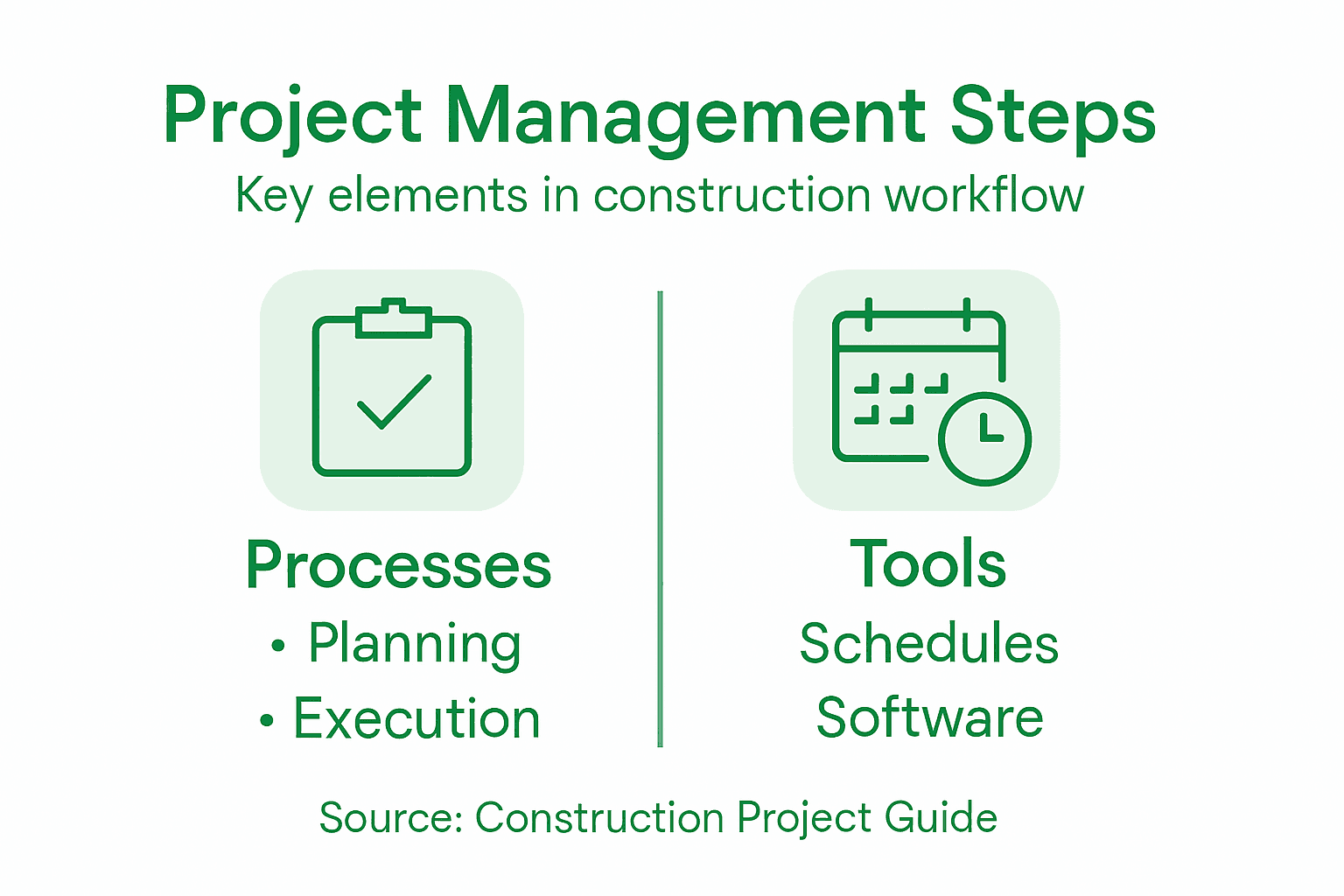
Pro tip: Invest in comprehensive project management software that enables real-time tracking of resources, timelines, and budget allocations to enhance overall project coordination and transparency.
Types of project management in custom builds
Custom home construction requires sophisticated project management approaches that go beyond traditional building methods. Various project management models have emerged to address the unique challenges of bespoke residential projects, each offering distinct advantages for delivering exceptional results.
The primary types of project management in custom builds include:
- Design-Bid-Build (DBB): Traditional model where design, bidding, and construction occur sequentially
- Design-Build (DB): Integrated approach combining design and construction under one contract
- Construction Manager at Risk (CMAR): Contractor assumes project risks while providing management services
- Integrated Project Delivery (IPD): Collaborative model emphasizing shared risks and rewards
- Lean Construction: Methodology focused on minimizing waste and maximizing client value
Each management approach offers unique benefits for custom home projects. Design-Build models, for instance, provide seamless communication between architects and contractors, enabling more efficient problem-solving and creative solutions. This approach is particularly valuable in custom builds where client vision and technical execution must align perfectly.
Integrated Project Delivery represents an advanced management strategy that promotes unprecedented levels of collaboration. By aligning all stakeholders’ interests from project inception, IPD reduces potential conflicts and creates a more cohesive development process. This method ensures that every team member—from designers to subcontractors—is working towards a unified vision.
Here is a side-by-side comparison of custom home project management models and when each excels:
Approach
Best For
Limitations
Design-Bid-Build (DBB)
Clear project scope, traditional builds
Slower timeline, less flexibility
Design-Build (DB)
High integration, creativity, fast tracking
Less owner control over design changes
Construction Manager at Risk
Complex builds, risk transfer needs
Potential cost premium for risk assumption
Integrated Project Delivery
Maximum collaboration, shared outcomes
Requires strong teamwork from outset
Lean Construction
Efficiency-focused, budget-conscious owners
Demands significant process discipline
Pro tip: Select a project management approach that matches your specific custom home’s complexity, budget, and desired level of client involvement to ensure optimal outcomes.
Key project management processes and tools
Successful construction project management relies on a comprehensive set of processes and cutting-edge technological tools. Modern project management strategies encompass sophisticated digital solutions that transform how custom home projects are planned, executed, and monitored.
The key project management processes include:
- Initiation: Defining project scope and objectives
- Planning: Developing detailed project roadmaps
- Execution: Implementing project strategies
- Monitoring: Tracking progress and performance
- Controlling: Managing risks and addressing challenges
- Closeout: Finalizing project deliverables and documentation
Digital tools have revolutionized construction project management, offering unprecedented levels of precision and communication. Building Information Modeling (BIM) allows for detailed 3D visualizations that enable architects, contractors, and clients to explore design possibilities before construction begins. Advanced project management software provides real-time tracking of budgets, timelines, and resource allocation, ensuring transparent and efficient project development.
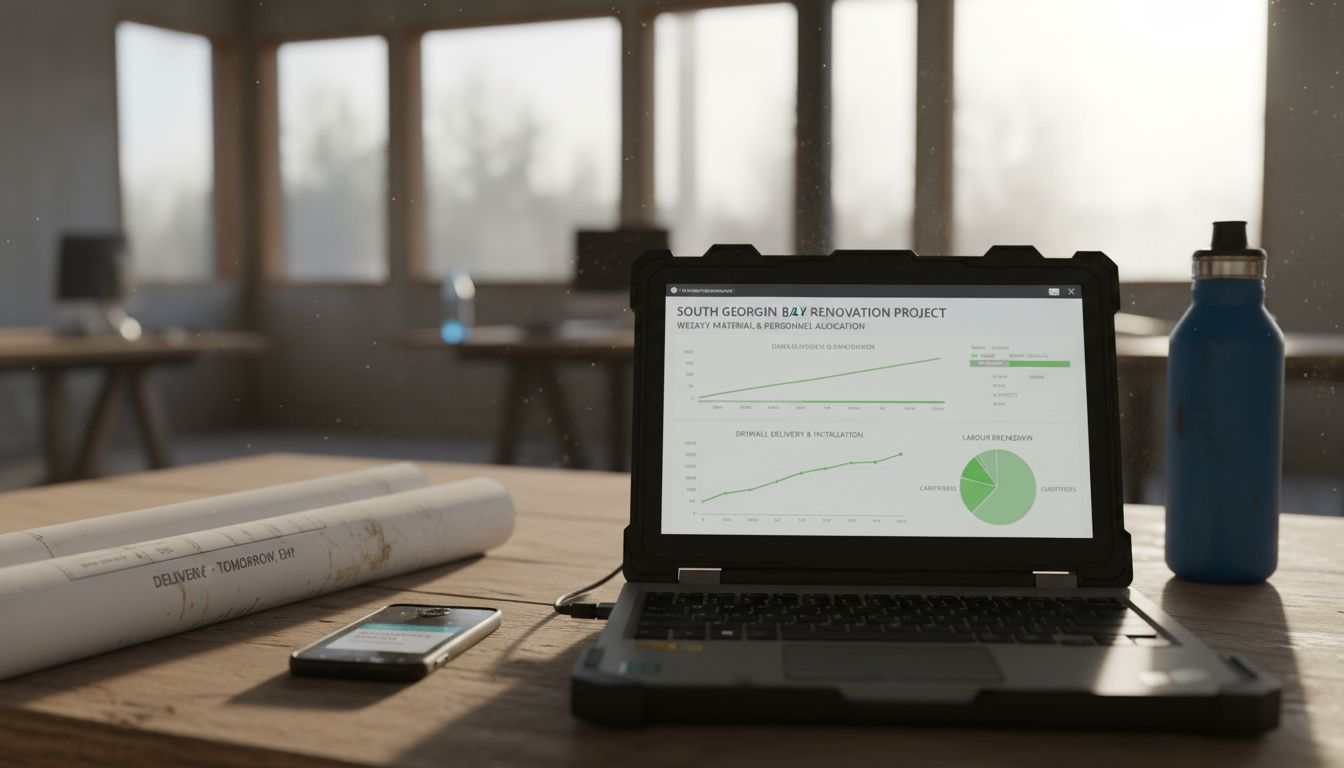
Technological innovations continue to reshape project management approaches. Emerging tools like drone monitoring, virtual reality design validation, and AI-powered workflow optimization are transforming how custom home projects are conceived and executed. These technologies enable more accurate site assessments, more collaborative design processes, and more efficient resource management.
Below is an overview of advanced project management technologies and their key advantages in construction:
Tool/Technology
Main Benefit
Example Application
Building Information Modelling (BIM)
Visualizing design accuracy
3D models to detect issues early
Project Management Software
Real-time resource and budget tracking
Dashboard for live updates
Drones
Efficient site inspection
Aerial imagery for progress
AI Workflow Optimisation
Enhanced scheduling, reduced delays
Predicting ideal resource usage
Virtual Reality (VR)
Immersive design validation
Walkthrough for client approval
Pro tip: Invest in integrated project management software that offers comprehensive tracking, communication, and collaboration features to streamline your custom home construction process.
Legal, safety and regulatory compliance in Ontario
Construction projects in Ontario are governed by a complex framework of legal and safety regulations designed to protect both workers and homeowners. Regulatory roles in construction encompass multiple layers of oversight, ensuring that every aspect of building meets stringent provincial standards.
Key regulatory compliance requirements include:
- Building Code Act standards and regulations
- Mandatory municipal building permits
- Occupational Health and Safety Act (OHSA) compliance
- Professional licensing and certification requirements
- Workplace safety training and documentation
- Detailed site inspection protocols
- Environmental and accessibility standards
Provincial oversight is comprehensive and multifaceted. The Ontario Building Code establishes precise technical and safety requirements that must be meticulously followed during construction. Municipalities play a crucial role by enforcing these standards through rigorous permit processes, regular inspections, and the authority to issue compliance orders when violations are detected.
Workplace safety represents another critical dimension of regulatory compliance. The Occupational Health and Safety Act mandates specific training, hazard control measures, and workplace inspection protocols. Custom home builders must demonstrate comprehensive understanding of these regulations, implement robust safety management systems, and maintain detailed documentation to ensure worker protection and legal adherence.
Pro tip: Consult with a licensed Ontario construction compliance professional to conduct a thorough regulatory review before initiating your custom home project, ensuring complete alignment with provincial standards.
Major risks, costs and common pitfalls
Custom home construction projects involve complex financial and operational challenges that can significantly impact project success. Construction contracts and risk management demand proactive strategies to mitigate potential financial and operational disruptions.
Major risks in custom home construction include:
- Material cost volatility
- Skilled labour shortages
- Unexpected site conditions
- Design and scope change complications
- Regulatory compliance challenges
- Supply chain disruptions
- Potential legal disputes
Financial risks represent a critical concern for custom home builders and clients. Fixed-price contracts can become particularly problematic when material costs fluctuate unexpectedly. Lumber prices, steel, and other construction materials have experienced significant volatility in recent years, potentially creating substantial budget overruns if not carefully managed.
Legal and operational risks can emerge from multiple sources, including incomplete design specifications, unforeseen site conditions, and skilled labour shortages. These challenges can lead to project delays, increased costs, and potential disputes between contractors, suppliers, and clients. Comprehensive risk assessment, detailed contract language, and proactive communication become essential strategies for mitigating these potential complications.
Pro tip: Develop a comprehensive contingency budget of 10-15% to address unexpected costs and potential project complications, providing financial flexibility throughout the construction process.
Benefits for luxury homes and renovations
Luxury home construction and renovation projects demand an exceptionally sophisticated approach to project management that goes far beyond standard building practices. Dedicated construction management ensures precise execution of complex, high-end residential transformations.
Key benefits of professional project management in luxury homes include:
- Seamless stakeholder coordination
- Precise budget and timeline control
- Enhanced quality assurance
- Risk mitigation strategies
- Customized design implementation
- Advanced communication protocols
- Preservation of architectural vision
Client experience represents the paramount consideration in luxury home projects. Professional project managers act as critical intermediaries, translating sophisticated design concepts into tangible realities while maintaining the highest standards of craftsmanship. They provide comprehensive oversight, ensuring every detail aligns with the client’s exacting expectations and preserving the integrity of the original design vision.
Technical expertise and strategic communication become essential in managing complex luxury renovation projects. Specialized project managers coordinate intricate interactions between architects, designers, artisans, and skilled tradespeople, creating a harmonious workflow that minimizes potential disruptions and maximizes project efficiency. This approach allows for nuanced problem-solving and adaptive management strategies tailored to the unique requirements of high-end residential construction.
Pro tip: Invest in a project management team with demonstrable experience in luxury residential projects, prioritizing professionals who understand the delicate balance between artistic vision and technical execution.
Take Control of Your Custom Home Project with Expert Project Management
Managing a custom home or renovation project presents many challenges such as balancing budgets, meeting timelines, coordinating multiple contractors and navigating complex regulations. This article highlights how effective project management is essential to delivering superior quality results while minimising costly delays and risks. At Mighton Construction Limited, we understand these pain points and offer comprehensive project management solutions tailored especially for luxury custom homes, waterfront cottages and large-scale renovations throughout South Georgian Bay.
Explore our detailed Custom Homes service page to discover how our experienced team seamlessly orchestrates every phase from initial design to final finishing. With over 30 years of local expertise in Wasaga Beach, Collingwood, and surrounding communities, we combine meticulous attention to detail with transparent communication to ensure your vision becomes reality without surprises. Visit our homepage at Mighton Construction to learn why discerning homeowners rely on us for high-quality craftsmanship and trusted project execution. For location-specific services, browse South Georgian Bay service hubs to find solutions near you. Start your custom home project right now with a trusted partner who values your goals and delivers lasting quality.
Frequently Asked Questions
What is the role of project management in construction?
Project management in construction coordinates technical, financial, and human resource elements to ensure high-quality building outcomes from conception to completion.
What are the main types of project management approaches for custom home builds?
Key approaches include Design-Bid-Build, Design-Build, Construction Manager at Risk, Integrated Project Delivery, and Lean Construction. Each approach offers distinct benefits tailored to specific project needs.
What are the crucial project management processes in construction?
The vital processes include initiation, planning, execution, monitoring, controlling, and closeout. These steps ensure effective management of the entire construction project lifecycle.
How can technology enhance project management in construction?
Technology improves project management through tools like Building Information Modeling (BIM), project management software, and drones, allowing for real-time tracking, better communication, and more efficient resource management.