Prefab homes in ontario: 2026 buyer's guide
TL;DR:
- Prefab homes in Ontario are factory-built residences that meet Ontario Building Code standards and are installed on permanent foundations, offering a quicker and more affordable path to homeownership. They are certified under CSA standards and appreciate in value like traditional homes, with costs ranging from $175,000 to $410,000 including site preparation and foundation, and benefit from 2026 HST eliminations that save buyers up to $130,000. Permits, inspections, zoning compliance, and proper financing are essential steps, and working with experienced professionals ensures smooth project completion and accurate budget management.
Prefab homes in Ontario are factory-built residences constructed to Ontario Building Code (OBC) standards and installed on permanent foundations, offering buyers a faster, more affordable path to homeownership than traditional construction. The industry uses two main terms: prefabricated houses (the broad category) and modular homes (the most common type in Ontario). Both are certified under CSA standards A277 or Z240MH and appreciate in value just like site-built homes. With 2026 HST eliminations saving buyers up to $130,000 and total installed costs starting around $175,000, prefabricated housing is one of the most compelling options in Ontario’s tight housing market right now.
What do prefab homes in ontario actually cost?
The total installed cost for a modular home in Ontario ranges from $175,000 to $410,000 depending on size, finish level, and site conditions. That range reflects everything from a compact starter home to a fully finished four-bedroom model. Most buyers purchasing a 3-bedroom home on their own land spend between $220,000 and $280,000 all in.
Base factory prices tell only part of the story. Here is how the numbers typically break down:
- Small units (560–900 sq ft): $130,000–$175,000 base price
- Mid-size homes (1,000–1,500 sq ft): $175,000–$240,000 base price
- Large homes (1,600–2,200 sq ft): $240,000–$320,000+ base price
- Foundation (slab, crawl space, or full basement): $25,000–$65,000 depending on type
- Site prep (grading, excavation, utility hookups): $20,000–$60,000 depending on the lot
Site-specific expenses such as grading, excavation, and service hookups are quoted separately from the factory price and vary widely by property. These soft costs can add 20–40% on top of the base modular home price. A rural lot in Clearview Township or Tiny Township will have very different site prep costs than a serviced lot in Wasaga Beach or Collingwood.
Foundation type is one of the biggest cost variables. A concrete slab is the most affordable option. A full ICF basement adds cost but delivers significant energy savings and usable living space, which matters in South Georgian Bay’s cold winters. For a deeper look at how these hidden building expenses add up, it pays to plan your full budget before signing any factory contract.
Pro Tip: Always request a site assessment before committing to a factory quote. A lot that looks straightforward can carry $30,000 or more in unexpected grading or servicing costs.
In 2026, buyers also benefit from a temporary full elimination of Federal and Ontario HST on new homes priced up to $1 million, saving up to $130,000. Standard HST New Housing Rebates of approximately $24,000 remain available for qualifying homes as well. These savings are direct, not deferred, but require proper filing at closing.
What permits and inspections does ontario require?
Every prefab home in Ontario requires a municipal building permit regardless of factory certification. This surprises many first-time buyers who assume a CSA-certified factory build skips the permit process. It does not.
Permit fees vary significantly across the province:
- City of Toronto: approximately $6,029
- Town of Lincoln: approximately $4,791
- Rural municipalities: often $2,000–$4,000
Beyond the permit fee, you will need to pass several on-site inspections. These typically include:
- Footing and foundation inspection before concrete is poured
- Framing inspection after the modules are set
- Mechanical tie-in inspection for plumbing, HVAC, and electrical
- Final occupancy inspection before you can move in
CSA factory certification reduces on-site visits but does not eliminate them. Footings, mechanical connections, and final occupancy checks remain mandatory regardless of how the home was built. The certification simply means the factory’s production process has already been audited, so inspectors focus on site-specific work rather than the structure itself.
Zoning is the other major responsibility that falls entirely on the homeowner. Municipal bylaws across Ontario vary greatly. A lot in Springwater Township may have different setback, lot coverage, or minimum square footage requirements than one in Blue Mountain. Engaging professionals experienced with Ontario’s permit processes early in your project avoids costly delays and redesigns.
Pro Tip: Contact your local municipality before purchasing land for a prefab home. Confirm the zoning permits the home type, size, and foundation you are planning. This one call can save months of frustration.
How does CSA certification affect quality and buyer confidence?
CSA certification is the clearest signal of quality in the prefab home market. Two standards apply in Ontario:
- CSA A277: Covers modular homes built to the Ontario Building Code for permanent residential use
- CSA Z240MH: Covers manufactured homes, a category sometimes confused with mobile homes
Modular homes built to CSA A277 meet the full Ontario Building Code and are installed on permanent foundations. They are not mobile homes. They appreciate in value similarly to traditional stick-built properties. This distinction matters enormously for financing, insurance, and resale.
“Modular homes meet the full Ontario Building Code and offer permanent, appreciating real estate. Confusing them with mobile homes is one of the most common and costly misconceptions buyers bring to the table.” — Norsemen Haus
Factory certification means every module is inspected by a third-party auditor during production. Structural integrity, insulation values, electrical wiring, and plumbing are all checked before the home leaves the factory. This level of quality control is difficult to replicate on a traditional job site exposed to weather and scheduling pressures.
For buyers, verifying certification is straightforward. Ask the factory for their current CSA licence number and confirm it with CSA Group directly. Certified factories will provide this without hesitation. Non-certified builds face more extensive on-site inspections and may encounter resistance from lenders and insurers.
Certification also affects resale value. A CSA A277-certified modular home in Collingwood or Wasaga Beach carries the same market credibility as a site-built home. Banks, appraisers, and future buyers recognise the standard.
What financing options are available for prefab homes in ontario?
Financing a prefab home differs from financing a site-built home, and buyers who treat them the same often run into problems. Financing prefab homes may require specialised manufactured-home lenders, chattel loans, or credit unions rather than a standard Schedule A bank mortgage.
Here is how to approach financing in the right order:
- Confirm the home type. CSA A277 modular homes on permanent foundations qualify for traditional mortgages at most major lenders. CSA Z240MH manufactured homes may require specialised lenders.
- Engage a real estate lawyer early. A lawyer familiar with prefab financing can identify the right mortgage product, structure the purchase correctly, and handle HST rebate filings at closing.
- Apply for the 2026 HST elimination. The temporary full HST elimination on new homes up to $1 million is direct and applies at closing. Missing the filing means leaving significant money behind.
- Budget for the full project, not just the factory price. Lenders will want a complete cost picture including land, site prep, foundation, and permits before approving financing.
- Explore credit union options. Ontario credit unions such as Meridian Credit Union have historically been more flexible with modular and manufactured home financing than the big banks.
Legal counsel familiar with prefab financing and rebate processes can improve buyer outcomes significantly. The HST rebate alone, worth up to $24,000 on qualifying homes, is frequently missed when buyers close without proper legal guidance.
Pro Tip: Ask your lender specifically whether they finance “modular homes on permanent foundations” versus “manufactured homes.” The answer determines your mortgage options and interest rate.
For a broader look at how custom home financing works in Ontario, the same principles around draw schedules and construction mortgages apply to prefab builds.
How do prefab homes compare to traditional site-built homes?
The comparison between prefab and site-built construction comes down to four factors: time, cost predictability, quality control, and sustainability.
Build timeline
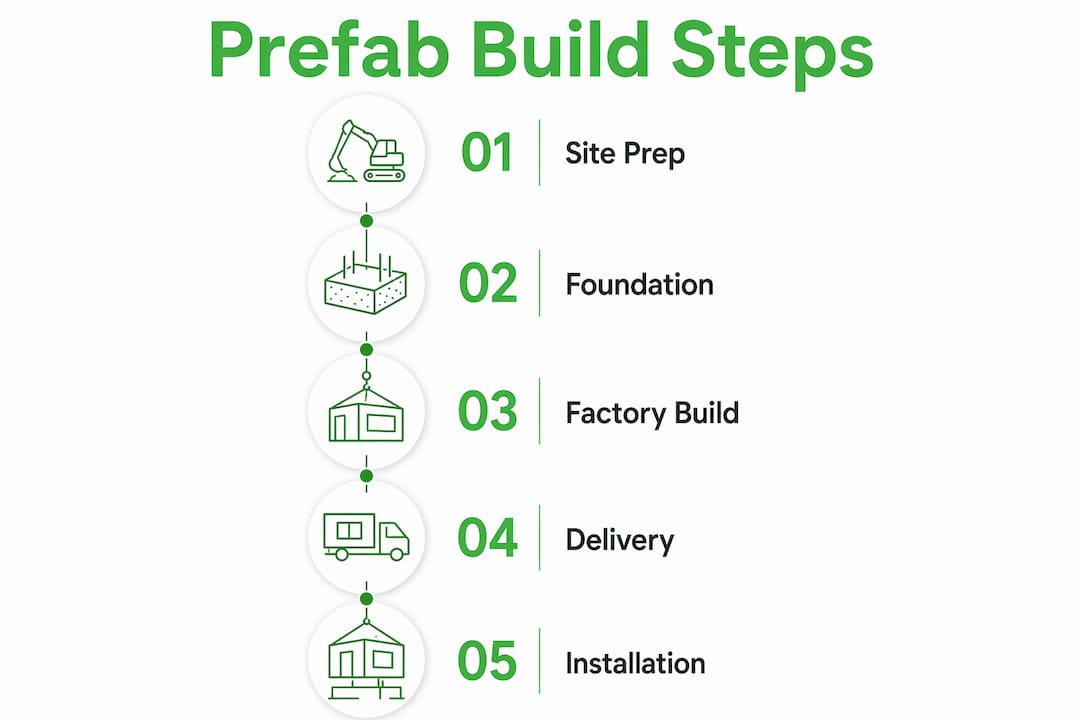
Factory production for a modular home typically takes about 12 weeks. Total project time including site prep, foundation, and installation runs roughly 4–6 months. A comparable site-built home in Ontario takes 12–24 months. That difference is significant for buyers paying rent while waiting to move in.
Factory production is weather-independent. Ontario winters do not delay a modular build the way they delay traditional framing. This scheduling advantage is especially valuable in areas like Blue Mountain and Collingwood where winter conditions can shut down outdoor construction for months.
Cost and quality comparison
Factor
Prefab/Modular Home
Traditional Site-Built
Build timeline
4–6 months total
12–24 months
Cost predictability
High (fixed factory price)
Lower (subject to change orders)
Weather delays
Minimal (factory production)
Common in Ontario winters
Quality control
Factory audited, CSA certified
Variable by contractor
Energy efficiency
High (controlled factory conditions)
Variable
Customisation
Moderate to high (floor plan options)
High
Foundation options
Slab, crawl space, full basement
Full range
Factory-built homes benefit from controlled production environments where materials stay dry, measurements are precise, and every step is audited. Site-built homes offer more design flexibility but carry more risk of cost overruns and schedule delays.
Prefab homes also suit Ontario’s diverse climates and zoning areas well. A modular cottage near Wasaga Beach or a year-round home in Springwater can be engineered to meet local thermal and structural requirements. Panelised, kit, and fully modular approaches each offer different levels of factory completion and on-site assembly, giving buyers options across a range of budgets and timelines.
For a full breakdown of what building a custom home costs in Ontario by comparison, the numbers help put prefab pricing in clear context.
Key takeaways
Prefab homes in Ontario offer buyers a faster, more cost-predictable path to ownership than site-built construction, provided buyers budget for total installed costs and engage the right legal and building professionals from the start.
Point
Details
Total installed cost
Budget $175,000–$410,000 including foundation, site prep, and utility hookups.
Permits are mandatory
Every prefab home requires a municipal building permit regardless of CSA certification.
CSA certification matters
A277 and Z240MH certifications confirm OBC compliance and support financing and resale value.
2026 HST savings
The temporary HST elimination saves up to $130,000 on new homes priced up to $1 million.
Financing requires planning
Engage a real estate lawyer early to secure the right mortgage product and file rebates correctly.
What i’ve learned after watching buyers navigate prefab projects
The biggest mistake I see prospective buyers make is treating a prefab home purchase like a furniture delivery. They focus on the floor plan, fall in love with the factory price, and then get blindsided by site costs, permit timelines, and financing complications that nobody warned them about.
The modular-versus-mobile-home confusion is still rampant, and it costs people real money. Buyers who do not understand that a CSA A277 modular home is permanent, appreciating real estate sometimes accept worse financing terms than they qualify for. That misconception is worth correcting before you speak to a single lender.
What I find genuinely exciting about prefab housing in 2026 is the combination of the HST elimination and improved factory quality. The savings are real. The build quality from reputable Ontario modular home builders has improved substantially over the past decade. For buyers in South Georgian Bay looking at vacation properties near Wasaga Beach or year-round homes in Clearview Township or Tiny Township, prefab is no longer a compromise. It is often the smarter choice.
The one thing I would tell every buyer: get your lot assessed and your zoning confirmed before you visit a single showroom. The home is the easy part. The land is where projects succeed or fail. Work with builders and legal professionals who know Ontario’s municipal requirements cold, and you will avoid the delays that derail most prefab projects.
— Adam
Build your prefab vision with Mightonconstruction
Mightonconstruction brings over 30 years of building expertise to South Georgian Bay, serving Wasaga Beach, Collingwood, Blue Mountain, Clearview Township, Tiny Township, and Springwater. Whether you are planning a year-round modular home or a waterfront cottage, the team manages every step from site assessment and foundation engineering to final finishing.
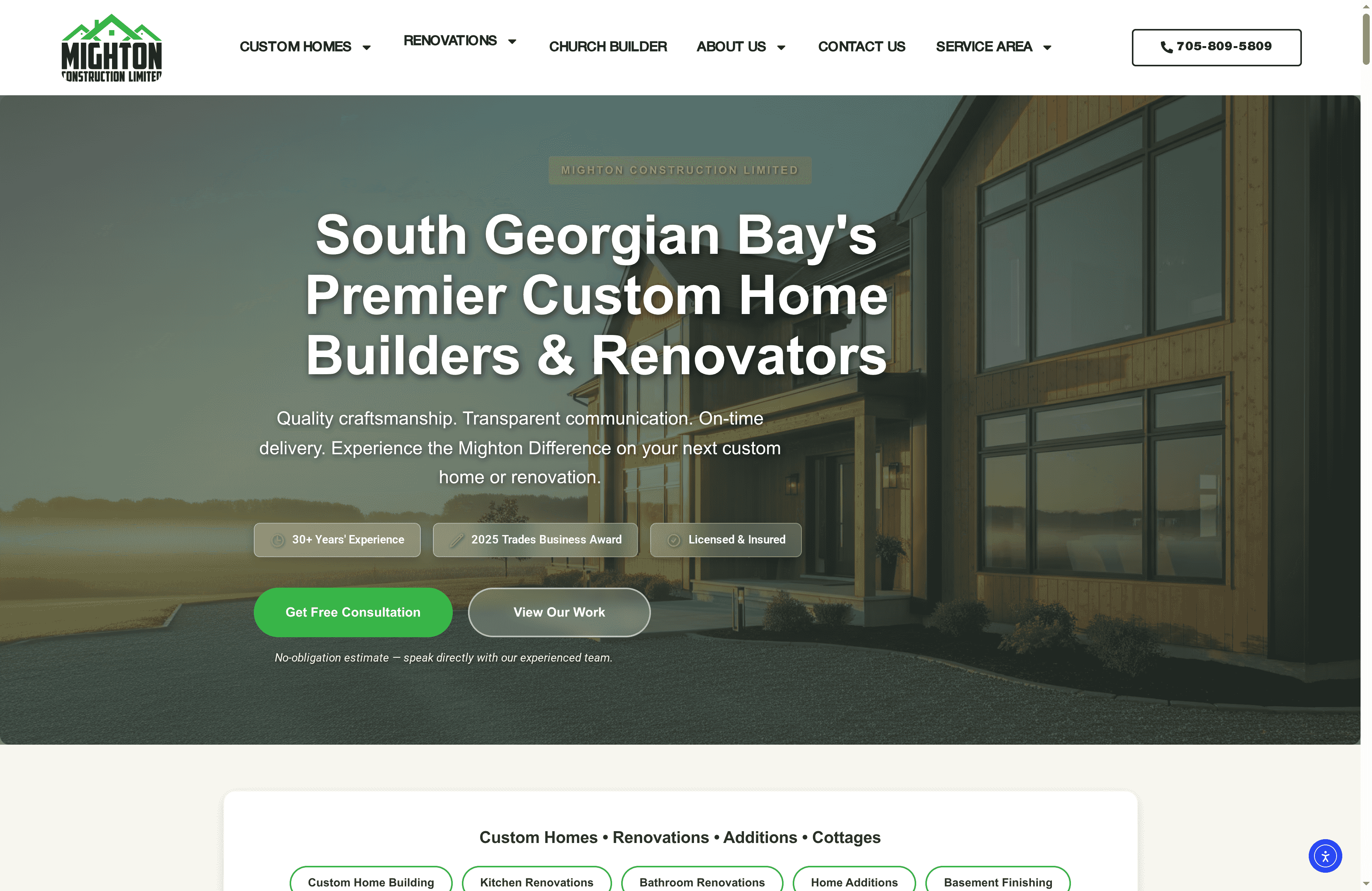
Mightonconstruction’s custom home building services include full permit coordination, foundation expertise including ICF construction, and transparent project management from concept to occupancy. For vacation property buyers, the team’s luxury cottage expertise in Wasaga Beach brings the same precision to waterfront builds. Contact Mightonconstruction today to discuss your prefab or custom home project and get a clear, complete quote.
FAQ
What is the difference between a prefab and a modular home in ontario?
Prefab is the broad term for any factory-built home, while modular refers specifically to homes built in sections to the Ontario Building Code and installed on permanent foundations. All modular homes are prefab, but not all prefab homes are modular.
Do prefab homes qualify for a traditional mortgage in ontario?
CSA A277-certified modular homes on permanent foundations qualify for traditional mortgages at most major lenders. Manufactured homes under CSA Z240MH may require specialised lenders or credit unions depending on the property and foundation type.
How long does it take to build a prefab home in ontario?
Factory production takes approximately 12 weeks, with total project time including site prep, foundation, and installation running roughly 4–6 months. This is significantly faster than the 12–24 months typical for site-built construction.
Are prefab homes in ontario subject to property taxes and building codes?
Yes. Modular homes on permanent foundations are assessed and taxed as real property, the same as any site-built home. They must comply with the Ontario Building Code and all applicable municipal zoning bylaws.
What is the 2026 HST elimination for new homes in ontario?
The 2026 temporary measure eliminates Federal and Ontario HST on new homes priced up to $1 million, saving buyers up to $130,000. The saving is applied directly at closing and requires proper filing, so engaging a real estate lawyer is strongly advised.