Passive House Design: Energy Savings for Canadian Homes

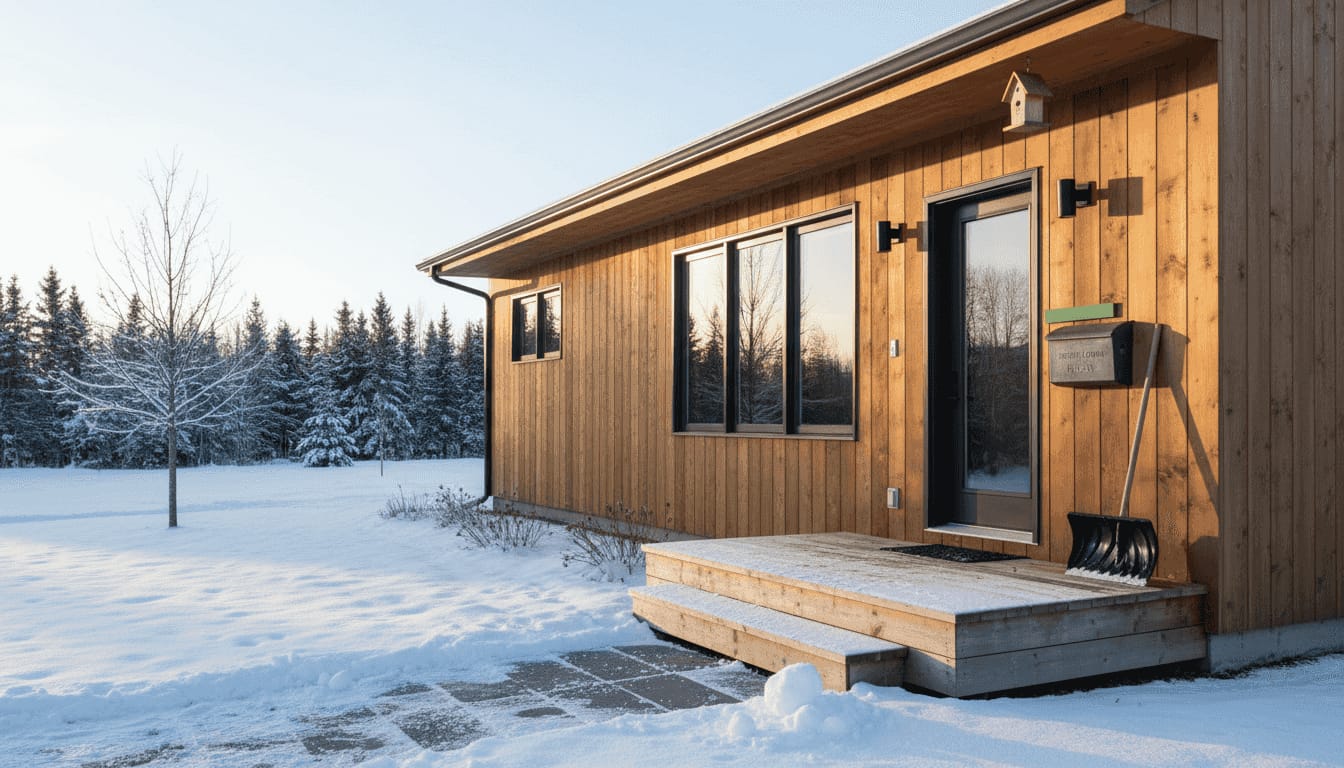
Every winter, luxury homes around Collingwood and Wasaga Beach face the challenge of balancing comfort with skyrocketing energy bills. For affluent homeowners, building with Passive House principles means enjoying stable indoor temperatures while significantly reducing reliance on mechanical heating. By harnessing natural elements like site orientation and thermal mass, Passive House design delivers unmatched efficiency and comfort without sacrificing architectural elegance. This guide sorts fact from fiction so you can plan a home that performs beautifully in South Georgian Bay’s unique climate.
Table of Contents
- Passive House Design Principles And Misconceptions
- Types Of Passive Houses In Canadian Context
- Essential Features And Building Techniques
- Costs, Incentives, And Investment Value
- Comparing Passive House To Traditional Builds
Key Takeaways
| Point | Details |
|---|---|
| Energy Efficiency | Passive House homes can reduce heating and cooling energy use by 75 to 90 percent compared to conventional homes, leading to significant monthly savings. |
| Misconceptions Addressed | Common misconceptions about Passive Houses include discomfort and high costs, but they provide excellent air quality and repay initial investments through energy savings. |
| Strategic Design | Proper insulation, airtight construction, and smart placement of windows are crucial in maximizing energy performance in Canadian climates. |
| Investment Value | While Passive House construction may incur a higher upfront cost, the long-term energy savings and property value appreciation make it a wise investment. |
Passive House Design Principles and Misconceptions
Passive House design sounds technical, but the core concept is refreshingly simple: build homes that stay comfortable without relying heavily on heating or cooling systems. This approach transforms how luxury homes perform in Canadian climates—especially around Wasaga Beach and Collingwood, where winters demand intelligent building strategies.
The Core Principles That Drive Energy Savings
Passive House design rests on five fundamental strategies that work together seamlessly.
Superior insulation forms the foundation. Walls, roofs, and foundations receive significantly thicker insulation than standard builds, creating a thermal envelope that minimizes heat loss. Proper envelope solutions directly support this principle by ensuring consistent performance across all home components.
Airtight construction prevents warm air from leaking through cracks and gaps. Builders seal every joint, penetration, and seam meticulously during framing and finishing stages.
Strategic window placement and orientation captures solar heat in winter while rejecting it in summer. Passive solar design principles emphasize proper window placement, thermal mass, and shading to balance seasonal sun exposure naturally.
Key design elements include:
- High-performance triple-glazed windows positioned to maximize winter sun
- Thermal mass (concrete floors, stone) that absorbs and releases heat slowly
- Proper roof overhangs and external shading that prevent summer overheating
- Natural ventilation strategies that provide fresh air without energy loss
Thermal mass stores heat energy during the day and releases it gradually at night, moderating temperature swings. Concrete floors and masonry walls in Canadian homes provide this stabilizing effect beautifully.
Mechanical ventilation with heat recovery extracts stale indoor air while capturing its heat to warm incoming fresh air. This system delivers comfort without opening windows in harsh winters.
Passive House homes reduce heating and cooling energy use by 75 to 90 percent compared to conventional Canadian homes, translating to measurable annual savings that compound over decades.
Clearing Up Common Misconceptions
Many homeowners hold outdated ideas about Passive House design that simply don’t reflect reality.
Misconception 1: “Passive House homes feel stuffy and uncomfortable.”
This belief stems from misunderstanding mechanical ventilation. Modern heat recovery ventilators deliver continuous fresh air while maintaining indoor temperature. Residents enjoy constant air quality without drafts or discomfort—especially valuable during Simcoe County’s cold winters.
Misconception 2: “Passive House design only works in mild climates.”
The opposite is true. Regions with harsh winters—like South Georgian Bay—benefit most from Passive House strategies. The thick insulation and airtight construction excel when outdoor temperatures drop significantly, reducing reliance on expensive heating.
Misconception 3: “Passive House homes cost dramatically more to build.”
Upfront costs run 5 to 10 percent higher than conventional builds, but energy savings recoup this investment within 10 to 15 years. For luxury homes in Clearview Township and surrounding areas, the long-term value and resale appeal far outweigh initial premiums.
Misconception 4: “You cannot open windows in a Passive House.”
Residents can open windows freely. The mechanical ventilation system simply stops when windows open, then resumes when they close. This flexibility matters for those summer evenings overlooking Georgian Bay.
Misconception 5: “Passive House design limits architectural creativity.”
Passive House principles integrate seamlessly into any architectural style—from contemporary waterfront cottages to traditional custom homes. Design flexibility remains completely intact.
Why Passive House Matters for Canadian Homeowners
Passive design strategies reduce energy consumption by leveraging natural elements like site orientation, daylighting, and thermal mass rather than mechanical systems. For affluent homeowners in premium locations around Blue Mountain and Collingwood, this translates to stable utility costs, enhanced comfort, and reduced environmental impact without sacrificing luxury or style.
The strategy prioritizes efficiency first, then adds renewable energy if desired. This sequencing proves far more cost-effective than retrofitting solar panels onto poorly insulated homes.
Pro tip: When planning a custom home or major renovation in South Georgian Bay, consult with builders experienced in Passive House construction to understand orientation, window sizing, and thermal mass placement early—these decisions shape energy performance more than any mechanical upgrades added later.
Types of Passive Houses in Canadian Context
Passive House design isn’t one-size-fits-all. Different building types require distinct approaches, especially when you’re building in Canadian climates. Whether you’re planning a single-family home in Wasaga Beach or a multi-family property near Blue Mountain, understanding which Passive House type suits your project matters tremendously.
Single-Family Residential Homes
Single-family detached homes represent the most common Passive House type across Canada. These homes benefit from maximum control over orientation, window placement, and exterior shading—critical advantages in Canadian climates.
Key characteristics include:
- Complete design freedom for solar orientation and positioning
- Simplified thermal management with fewer adjacent units
- Individual mechanical systems tailored to family needs
- Easier construction logistics on residential lots
Single-family Passive Houses excel in South Georgian Bay locations where you can position homes to capture winter sun while minimizing summer heat gain. Ground-level access makes maintenance straightforward, and homeowners enjoy uncompromised privacy and independence.
Multi-Family Residential Buildings
Passive design strategies applied across multiple units require sophisticated planning and coordination. Apartments, townhouses, and condominiums present different thermal challenges than single-family homes.
Multi-family advantages in Canadian contexts:
- Shared mechanical ventilation systems reduce per-unit costs
- Shared thermal mass moderates temperature swings across units
- Exterior walls in corner units require heavier insulation
- Interior units benefit from neighbouring heat generation
These buildings work beautifully in Collingwood and surrounding communities where density and walkability matter. Shared mechanical systems achieve exceptional efficiency at scale while reducing individual maintenance burdens. Luxury cottage communities near Blue Mountain increasingly adopt multi-unit Passive House designs to balance density with premium living standards.
Hybrid and Mixed-Use Properties
Some Canadian developments combine residential and commercial spaces. These complex projects demand careful passive design type selection to optimize distinct temperature and ventilation needs.
Hybrid projects balance:
- Different operational schedules between residential and commercial zones
- Separate mechanical systems for distinct occupancies
- Ground-floor commercial needing flexible layouts
- Upper residential requiring consistent thermal performance
These properties suit urban locations like Clearview Township where development pressure encourages vertical mixed-use projects. The complexity increases costs and design time, but the long-term energy and operational efficiency rewards justify the investment.
Climate-Specific Design Variations
Canadian geography demands regional adaptation. Passive House principles remain constant, but implementation varies significantly.
South Georgian Bay and Collingwood locations experience:
- Harsh winters requiring superior insulation and airtight construction
- Moderate summer cooling needs due to water proximity
- High solar exposure on south-facing facades
- Strong wind patterns affecting window placement and shading strategies
Builders adjust thermal mass quantities, window specifications, and ventilation rates based on local climate data. A Passive House in Wasaga Beach differs from one in Toronto, though both achieve the same energy performance standards.
Different building types require different passive design approaches, but all achieve the same fundamental goal: dramatically reduced energy consumption through intelligent design rather than mechanical force.
Pro tip: Determine your building type early in the planning process—single-family, multi-family, or hybrid—since this decision shapes orientation strategy, thermal mass placement, mechanical system design, and ultimately your total project cost and long-term energy savings.
Essential Features and Building Techniques
Building a Passive House requires precision across multiple systems working together. The features and techniques that create these high-performance homes aren’t complicated—but they demand careful attention to detail during design and construction. For affluent homeowners in Simcoe County and South Georgian Bay, understanding these essentials helps you evaluate builders and ensure your investment delivers promised energy savings.
Window Placement and Solar Orientation
Windows represent the primary tool for capturing free heat in Canadian winters. Strategic placement transforms them from thermal liability into energy asset.
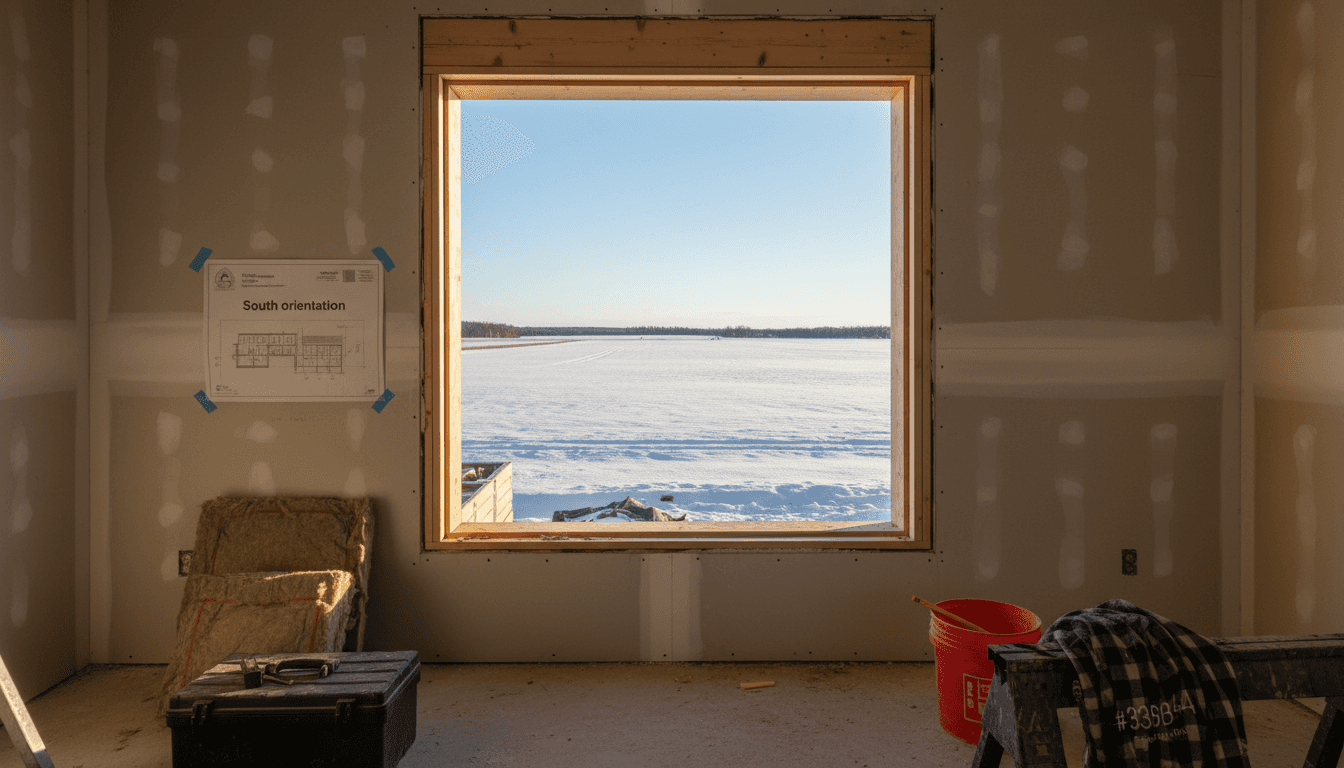
Optimal window positioning means placing 60 to 70 percent of glazing on south-facing walls, oriented within 30 degrees of true south. East and west-facing windows receive morning and afternoon sun respectively, but south-facing windows provide winter heat gain when the sun sits low. Winter sun penetrates deeply into homes, while summer sun stays high and is blocked by properly designed overhangs.
Window placement strategy includes:
- Maximizing south-facing triple-glazed windows for winter solar gain
- Minimizing north-facing windows to reduce heat loss
- Positioning windows to avoid summer overheating through strategic shading
- Using high-performance frames that reduce thermal bridging
In Wasaga Beach and Collingwood locations, south orientation typically faces Georgian Bay or water views—a fortunate alignment where energy performance meets premium vistas.
Thermal Mass and Heat Storage
Thermal mass consists of dense materials that absorb solar heat during the day and release it slowly at night. Concrete floors, masonry walls, and tile surfaces work beautifully. This passive storage moderates temperature swings without mechanical equipment.
Effective thermal mass requires:
- Direct exposure to south-facing sunlight (not carpeted or covered)
- Adequate thickness—typically 4 to 6 inches of concrete or masonry
- Strategic placement to collect winter sun and release heat after sunset
- Sufficient surface area to absorb meaningful heat quantities
Masonry fireplaces, concrete foundation walls exposed to south-facing windows, and tile or stone floors all contribute. In luxury homes near Blue Mountain, quality materials selection ensures thermal mass performs reliably across decades.
Shading Systems and Seasonal Control
Natural ventilation and shading work together to prevent summer overheating while maximizing winter heat gain. Fixed overhangs, deciduous trees, and retractable shades create seasonal balance.
Shading strategies balance cooling and heating:
- Building overhangs sized to block summer sun but allow winter penetration
- Planting deciduous trees on south and west sides for summer shade
- Installing operable exterior shading on east and west windows
- Using low-emissivity (low-E) window coatings to reflect summer heat
Proper overhang design proves critical in South Georgian Bay where summer heat gain becomes problematic. Overhangs typically extend 18 to 24 inches beyond walls, calculated precisely for your latitude.
Airtight Construction and Envelope Integrity
Airtightness prevents conditioned air from leaking through cracks, gaps, and poorly sealed penetrations. Every outlet, window, door, and mechanical opening gets sealed meticulously.
Building airtight envelopes requires:
- Continuous air barriers throughout the envelope
- Sealed electrical outlets and penetrations
- Taped window and door installations
- Sealed rim board and rim joist areas
- Careful coordination between trades to prevent damage to air barriers
This differs fundamentally from standard construction. Builders train crews specifically in airtight techniques, and third-party testing verifies performance through blower door testing.
The combination of proper orientation, thermal mass, shading, and airtight construction creates homes that maintain comfort with minimal mechanical heating or cooling.
Pro tip: During construction, insist on blower door testing at rough-in and final stages to verify airtightness—this single step prevents costly energy performance failures that emerge only after occupancy.
Costs, Incentives, and Investment Value
Passive House construction costs more upfront than conventional building. For affluent homeowners in South Georgian Bay, the critical question isn’t whether you can afford the premium—it’s whether you understand the financial returns. The answer is resoundingly clear: Passive House design delivers measurable investment value that compounds over decades.
Initial Construction Costs
Expect to pay 5 to 10 percent more for Passive House construction compared to standard Canadian builds. This premium reflects superior insulation, high-performance windows, airtight construction details, and mechanical ventilation with heat recovery systems.
Cost drivers include:
- Triple-glazed windows instead of double-glazed units
- Increased insulation thickness in walls, roofs, and foundations
- Continuous air barrier materials and sealing labour
- Heat recovery ventilation equipment and installation
- Blower door testing and third-party certification
- Specialized trade training and quality control
For a $1.5 million luxury home near Collingwood, expect an additional $75,000 to $150,000 in construction costs. This premium feels significant until you calculate annual energy savings.
Annual Energy Savings
Passive House homes typically reduce heating and cooling costs by 75 to 90 percent. In Canadian climates, this translates to dramatic annual savings.
Typical annual savings include:
- Heating costs reduced from $3,000 to $500
- Cooling costs nearly eliminated
- Ventilation electricity reduced through heat recovery efficiency
- Total utility cost reductions of $2,500 to $4,000 annually for luxury homes
These aren’t theoretical estimates. Occupied Passive Houses in Ontario consistently demonstrate 85 percent energy use reductions measured against comparable conventional homes. Over a 30-year period, $75,000 in upfront premium costs recover through energy savings alone—without considering home value appreciation.
Federal and Provincial Incentive Programs
Federal energy efficiency incentives provide grants supporting Canadians adopting high-performance heating and cooling systems. While the Greener Homes Initiative primarily focuses on heat pump installations and retrofits, provincial programs in Ontario increasingly support new Passive House construction through rebates and tax incentives.
Available incentive opportunities:
- Provincial grants for ENERGY STAR certified homes
- Municipal incentives in progressive communities like Collingwood
- Utility company rebates for superior energy performance
- Tax deductions for energy-efficient home construction
- Potential carbon credits as emissions regulations tighten
Contact your municipality in Wasaga Beach, Clearview Township, or surrounding areas to identify current incentive programs. These evolve regularly as governments prioritize carbon reduction.
Long-Term Investment Value
Passive House homes command premium resale values. Affluent buyers near Blue Mountain increasingly seek homes with documented energy performance and lower operating costs. A home that costs $150,000 more to build but operates at 80 percent lower energy expense proves dramatically more attractive than conventional alternatives.
Investment value drivers include:
- Reduced lifetime operating costs that enhance resale appeal
- Premium pricing justified by energy performance documentation
- Lower mortgage qualification friction due to reduced utility expenses
- Climate resilience as extreme weather increases and energy costs rise
- Alignment with wealth preservation goals for luxury property portfolios
A Passive House premium that requires 12 to 15 years to recover through energy savings represents a conservative investment returning steady annual gains—similar to premium property location decisions.
Mortgage and Financing Considerations
Some lenders offer preferential financing rates for energy-efficient homes, recognizing that reduced utility expenses improve borrower financial stability. Discuss Passive House premium financing with your mortgage broker before committing to construction budgets.
Pro tip: Request energy performance modelling from your builder before construction begins, showing projected annual utility costs—this documentation supports mortgage qualification and demonstrates commitment to performance accountability.
Below is a summary of the main financial factors relevant to Passive House investment decisions:
| Factor | Passive House | Conventional Home |
|---|---|---|
| Upfront cost premium | 5–10% higher | Standard market cost |
| Energy savings payback | 10–15 years | Not applicable |
| Typical resale value trend | Premium, rising demand | Market rate |
| Financing incentives | Preferential rates often | Rarely available |
Comparing Passive House to Traditional Builds
Understanding how Passive House performance stacks against conventional Canadian construction reveals why affluent homeowners increasingly choose this approach. The differences extend far beyond energy bills—they touch comfort, durability, indoor air quality, and long-term property value. For discerning buyers in South Georgian Bay, this comparison matters tremendously.
Energy Consumption and Operating Costs
Passive House homes use dramatically less energy than traditional builds. The gap isn’t marginal—it’s transformative.
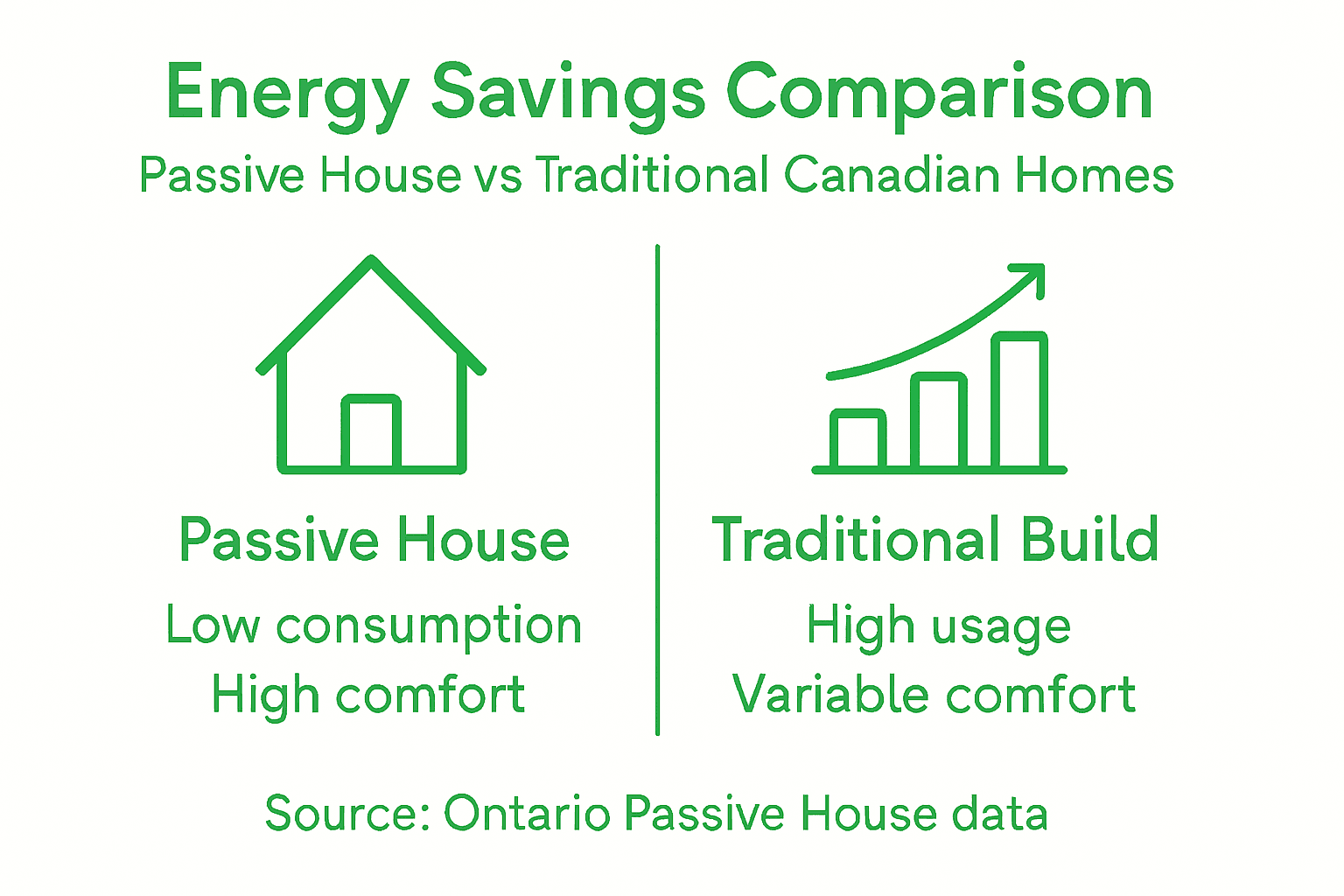
Passive House standards reduce heating and cooling energy by up to 90 percent compared to conventional construction. Overall energy use drops by 75 percent or more. In practical terms, a $1.5 million home near Collingwood consumes approximately $4,000 annually in heating, cooling, and ventilation costs instead of the $15,000 to $20,000 typical of conventional construction.
Energy comparison highlights:
- Passive House annual heating costs: $300 to $700
- Traditional home annual heating costs: $2,500 to $4,000
- Passive House cooling costs: nearly eliminated
- Traditional home cooling costs: $1,500 to $3,000 annually
- Total 30-year energy cost difference: $150,000 to $200,000
These aren’t theoretical projections. Occupied Passive Houses across Ontario and Canada consistently deliver these performance levels, verified through utility bill analysis and energy monitoring.
Here’s how Passive House compares to traditional Canadian homes in key performance categories:
| Category | Passive House | Traditional Build |
|---|---|---|
| Annual heating cost | $300–$700 | $2,500–$4,000 |
| Air quality | Consistent, filtered | Variable, outdoor air |
| Durability | 50+ years | 10–20 years before issues |
| Carbon footprint (30 yrs) | 15–25 tonnes CO₂ eq. | 60–80 tonnes CO₂ eq. |
Indoor Air Quality and Comfort
Traditional homes rely on occupants opening windows for fresh air, creating drafts and thermal discomfort. Passive House mechanical ventilation with heat recovery solves this elegantly.
Comfort advantages include:
- Consistent temperature throughout the home (no cold rooms or hot spots)
- Continuous fresh air without draughts or temperature loss
- Humidity control preventing mould growth and dry air problems
- Superior indoor air quality through continuous filtration
- Elimination of infiltration noise and outdoor air pollution
In Simcoe County’s climate, traditional homes experience significant temperature stratification—basements stay cold while upper floors overheat. Passive House design eliminates this through superior insulation, airtightness, and thoughtful mechanical ventilation positioning.
Construction Quality and Durability
Passive House construction demands rigorous attention to detail. Every joint, seal, and penetration receives careful quality control that exceeds standard building practice.
Durability benefits include:
- Superior airtightness prevents moisture infiltration and structural rot
- Thick insulation protects walls from temperature cycling and degradation
- Consistent interior temperatures extend mechanical system lifespan
- Heat recovery ventilators operate at lower capacity, reducing wear
- Reduced moisture movement prevents foundation issues and wood decay
While traditional homes may develop air leakage problems within 10 to 15 years, Passive House construction maintains performance for 50 plus years. For luxury properties in Blue Mountain and waterfront locations, this durability protection proves invaluable.
Environmental Impact and Carbon Footprint
Passive design strategies dramatically reduce operating emissions by minimizing mechanical system dependence. A Passive House in Wasaga Beach generates approximately one-quarter the greenhouse gas emissions of equivalent conventional construction over its lifespan.
Emissions comparison:
- Passive House 30-year carbon footprint: 15 to 25 tonnes CO2 equivalent
- Traditional home 30-year carbon footprint: 60 to 80 tonnes CO2 equivalent
- Equivalent to eliminating 15 to 20 years of average vehicle emissions
For environmentally conscious affluent homeowners, Passive House design aligns personal values with measurable climate action.
Traditional homes treat energy efficiency as an afterthought through mechanical upgrades; Passive House design treats it as foundational architecture—the difference between retrofitting versus building right.
Pro tip: When evaluating custom home construction costs, request side-by-side energy modelling comparing proposed Passive House design against conventional building—this 30-year cost comparison transforms upfront premium perception.
Discover How Passive House Design Elevates Your Luxury Home Experience
Building a home that excels in energy efficiency without sacrificing elegance is a challenge many Canadian homeowners face today. The article highlights common hurdles like achieving airtight construction, maximising thermal mass, and securing significant energy savings amidst Wasaga Beach or Collingwood winters. If you are seeking to transform your vision into a high-performance luxury residence that reduces energy costs by up to 90 percent, the right partner makes all the difference.
At Mighton Construction Limited, we specialise in crafting premium custom homes tailored to Passive House principles for South Georgian Bay clients. From expert window placement to meticulous insulation and ventilation system integration, our team delivers homes that are comfortable, durable, and beautifully designed. Experience the advantage of working with a builder who understands the nuances of custom homes and incorporates advanced sustainable techniques seamlessly.
Ready to embrace energy-efficient luxury living in your next build or renovation? Visit Mighton Construction Limited today to explore how our expertise can help you realise your dream home with lasting value. Begin your journey by checking our detailed Wasaga Beach custom homes page for location-specific insights and connect with us to schedule your personalised consultation.
Frequently Asked Questions
What are the core principles of Passive House design?
Passive House design is based on five core principles: superior insulation, airtight construction, strategic window placement and orientation, thermal mass, and mechanical ventilation with heat recovery. Together, these strategies enhance energy efficiency and comfort in homes.
How much can energy costs be reduced by adopting Passive House design?
Passive House homes can reduce heating and cooling energy use by 75 to 90 percent compared to conventional homes, leading to significant annual savings on utility costs.
Do Passive House homes feel uncomfortable or stuffy due to airtight construction?
No, modern Passive House designs utilize mechanical ventilation systems that provide continuous fresh air while maintaining indoor temperatures, ensuring comfort without draftiness or stuffiness.
Is building a Passive House more expensive than traditional construction?
Yes, upfront costs for Passive House construction are typically 5 to 10 percent higher compared to conventional builds. However, the energy savings usually allow homeowners to recoup this investment within 10 to 15 years.