Ontario prefab homes: your 2026 buyer's guide
TL;DR:
- Ontario prefab homes are factory-built residences assembled on-site, offering quality construction, cost savings, and sustainability. Certification standards like CSA A277 ensure factory quality, but municipal approvals and site prep remain the buyer’s responsibility. The typical cost is around $450 per square foot, with a significant 2026 HST rebate making prefab more accessible than traditional building.
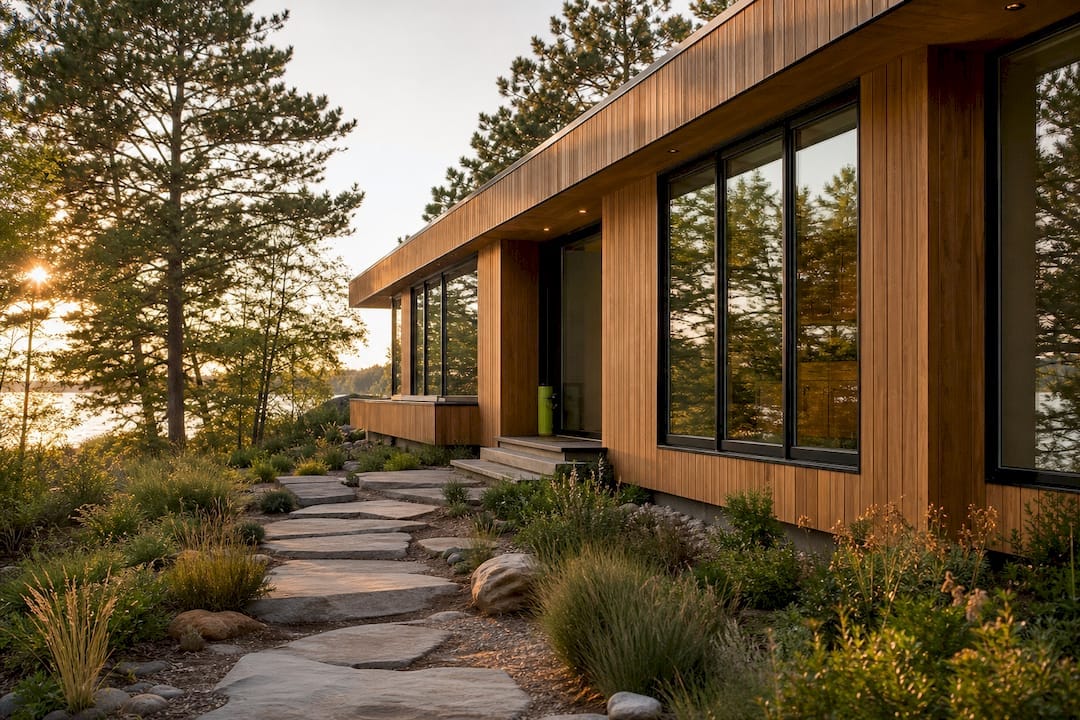
Ontario prefab homes are factory-built residences assembled on-site, designed to deliver quality construction, cost efficiency, and sustainable living in a controlled manufacturing environment. The industry term is modular or prefabricated construction, and it covers everything from full modular houses to panelised systems and pre-built homes. For families and individuals across South Georgian Bay, Wasaga Beach, Collingwood, and Simcoe County, prefabricated homes Ontario represent a serious alternative to traditional site-built construction. This guide covers certification standards, real cost data, popular design options, and the municipal approval steps you need to know before you build.
What is the quality and certification process for Ontario prefab homes?
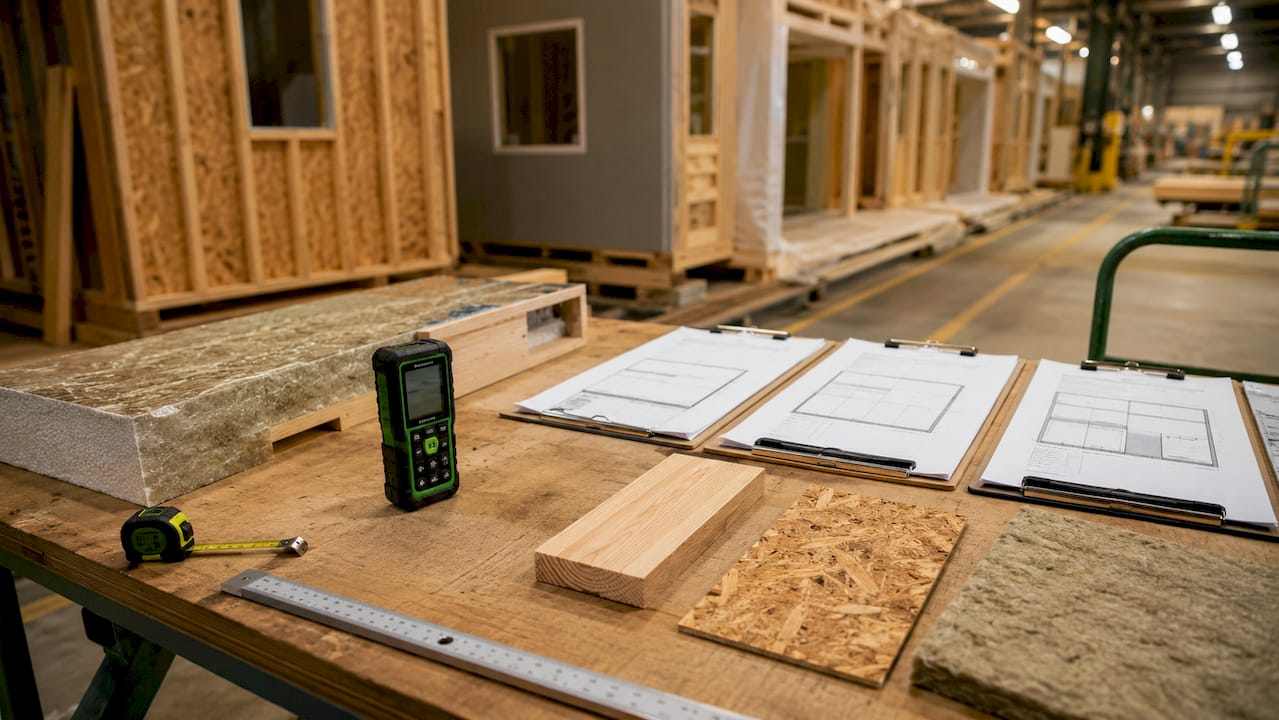
The CSA A277 standard governs factory quality programmes for prefab buildings in Canada. It covers factory certification and auditing of the production process, product certification, and in-factory inspections. Transport and on-site erection fall only partially within its scope.
The Ontario Building Code applies fully to modular construction. Code compliance is verified through a combination of factory certification under CSA A277, third-party audits, and on-site inspections. The requirements are equal to those for traditional site-built homes. Nothing is waived simply because the home was built in a factory.
This is where many buyers get caught off guard. CSA A277 certification is a quality assurance framework, not a pass that replaces municipal inspection. Local documentation, site-specific drawings, and on-site approvals remain the buyer’s responsibility. Treating factory certification as the finish line is the most common and costly mistake in prefab projects.
Here is what the certification and compliance process covers:
- Factory quality programme: The manufacturer’s production process is audited and certified under CSA A277.
- In-factory inspections: Third-party inspectors verify that modules meet Ontario Building Code requirements before they leave the plant.
- Third-party audits: Ongoing audits confirm the factory maintains its certified quality standards throughout production.
- On-site inspections: Municipal building officials inspect the foundation, utility connections, and final assembly after delivery.
- Site-specific drawings: Engineers produce drawings tailored to your lot, soil conditions, and local code requirements.
Pro Tip: Request a copy of the manufacturer’s CSA A277 certification before signing any contract. A reputable builder will provide it without hesitation.
How do prefab home costs in Ontario compare to traditional construction?
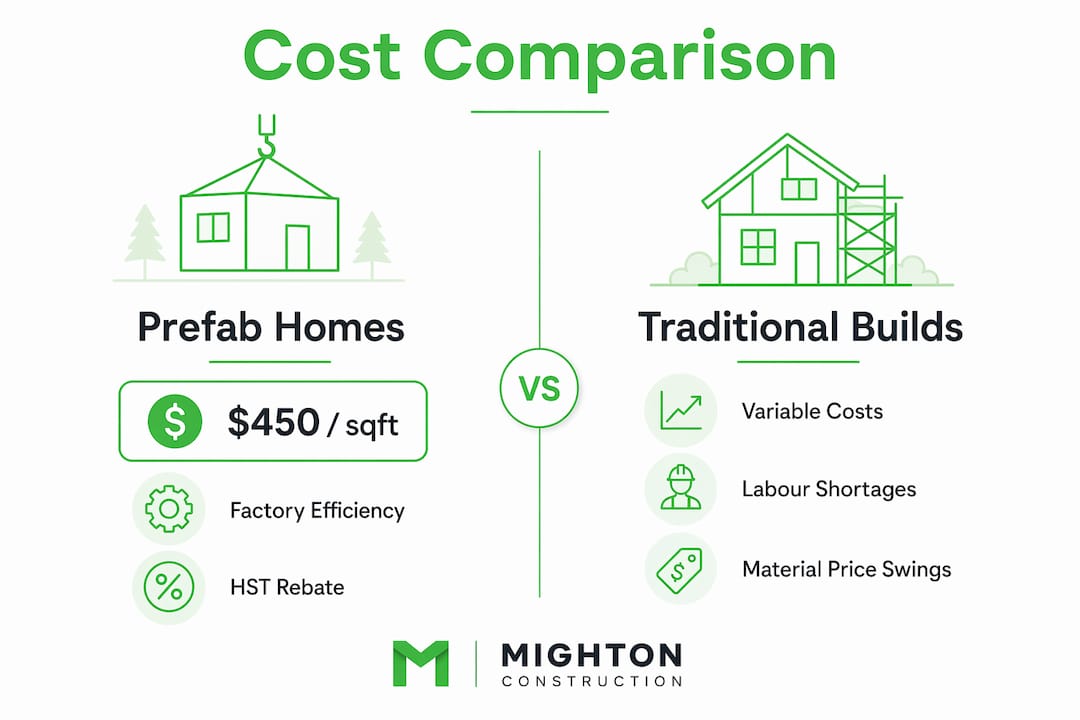
Prefab homes in Ontario typically cost about $450 per square foot, depending on customisation, size, and site-specific factors. A 1,500 sq ft home lands at roughly $675,000 before incentives. That figure sits in a similar range to many traditional custom builds in the province, but the key difference is schedule predictability and reduced weather delays.
Traditional site-built construction in Ontario carries its own cost variables: labour shortages, material price swings, and extended timelines that push carrying costs higher. Prefab construction compresses the build schedule significantly because the factory environment controls quality and pace. That time saving translates directly into lower financing costs for most buyers.
Ontario’s full 13% HST rebate on qualifying new homes up to $1 million applies from april 1, 2026 to march 31, 2027. The maximum rebate is $130,000, and all buyers qualify, not just first-time purchasers. For a prefab home priced at $675,000, that rebate represents a substantial reduction in total cost. The expanded HST rebate makes prefab homes more accessible to a broader market than at any previous point.
Cost factor
Prefab homes
Traditional builds
Typical cost per sq ft
~$450
Varies widely, often $400–$600+
Build schedule
Shorter, factory-controlled
Longer, weather-dependent
HST rebate eligibility
Yes, up to $130,000
Yes, up to $130,000
Cost predictability
Higher
Lower
For a detailed breakdown of custom home construction costs in Ontario, the custom home cost data published by Mightonconstruction provides useful 2026 benchmarks.
What design styles and floor plans are available for Ontario prefab homes?
Ontario prefab house designs cover a wide spectrum. Modular bungalows, two-storey homes, and cottages are the most common configurations, and builders offer flexible floor plans that can be adapted to suit families, retirees, or seasonal property owners. The idea that prefab means cookie-cutter is outdated. Modern manufacturers offer genuine customisation at the layout, material, and finish level.
Sustainable materials are a defining feature of current prefab construction in Ontario. Thermally efficient envelopes and composite wood finishes appear frequently in prefab builds, delivering durability and lower energy consumption over the home’s lifetime. Buyers in Collingwood, Blue Mountain, and Wasaga Beach benefit particularly from high-performance thermal envelopes given the region’s cold winters.
Popular design features available through Ontario prefab builders include:
- Open-concept main floors with flexible kitchen and living configurations.
- Energy-efficient window packages rated for Ontario’s climate zones.
- Accessible layouts with wider doorways and single-level options for aging-in-place.
- Loft and bonus room additions common in cottage and recreational property designs.
- Composite and reclaimed wood finishes for exterior cladding that performs in freeze-thaw cycles.
Pro Tip: Ask your builder to show you completed projects in your climate zone, not just showroom models. A cottage near Wasaga Beach faces different thermal demands than a home in Toronto’s urban core.
For families considering a waterfront or recreational property, prefab construction pairs well with custom cottage building in areas like Wasaga Beach, where site access and build timelines are critical factors.
How do you navigate municipal approvals and site prep for prefab homes?
Municipal permitting for prefab homes in Ontario requires site-specific drawings and coordination with local building authorities before any module is erected. Factory certification does not replace this step. Every municipality in Ontario, from Clearview Township to Springwater, has its own permit submission process, and timelines vary.
Follow these steps to move through the approval and site preparation process efficiently:
- Engage your builder and engineer early. Site-specific drawings must reflect your lot’s soil conditions, setbacks, and local zoning. Commission a geotechnical report before finalising your floor plan.
- Submit permit applications to your local municipality. Include the factory’s CSA A277 certification, site drawings, and any engineering schedules required by the building department.
- Prepare the site before delivery. Foundation work, utility rough-ins, and access roads must be complete before modules arrive. Delays at this stage are the leading cause of cost overruns in prefab projects.
- Coordinate delivery and crane logistics. Module delivery requires advance notice to local utilities and, in some cases, road use permits for oversized loads.
- Schedule on-site inspections. Book municipal inspections for foundation, framing, mechanical, and final occupancy stages. These are mandatory regardless of factory certification status.
- Obtain your occupancy permit. The municipality issues this only after all inspections pass. Do not plan a move-in date until this permit is confirmed.
Successful prefab projects in Ontario consistently share one trait: the builder and the municipal building department are in contact before the factory begins production. That early coordination prevents costly redesigns after modules are already built.
Key takeaways
Ontario prefab homes deliver cost predictability, factory-controlled quality, and access to the 2026 HST rebate, but success depends on early regulatory coordination and realistic site preparation planning.
Point
Details
CSA A277 is not a permit
Factory certification confirms quality but does not replace municipal inspections or site approvals.
Cost benchmark is $450/sq ft
A 1,500 sq ft prefab home costs roughly $675,000 before the 2026 HST rebate is applied.
HST rebate saves up to $130,000
All buyers of qualifying new homes up to $1 million are eligible from april 2026 to march 2027.
Design options are genuinely flexible
Modular bungalows, two-storey homes, and cottages are all available with sustainable material packages.
Site prep drives the schedule
Foundation, utilities, and access must be complete before modules arrive to avoid costly delays.
What I have learned about buying prefab in Ontario
Most buyers come to prefab construction focused on the factory price tag. That is understandable. The cost per square foot is clear, the schedule is predictable, and the HST rebate makes the numbers look very attractive right now. What buyers underestimate is the municipal coordination side of the project.
I have seen well-planned prefab projects stall for months because the permit submission did not include the right site-specific engineering schedules. The factory had the modules ready. The crane was booked. The site was not approved. That gap costs real money in storage fees, financing, and contractor rebooking.
The other thing most buyers overlook is the value of choosing a builder with local relationships. In Simcoe County, Clearview Township, and Tiny Township, building departments have their own rhythms and preferences. A builder who has worked with those offices before moves through approvals faster. That local knowledge is worth more than a slightly lower factory quote from a builder with no presence in the region.
My honest advice: treat the municipal approval process as seriously as you treat the factory selection. Get your engineer and your builder talking to the building department before production starts. Use the 2026 HST window deliberately. And if sustainability matters to you, push your builder on thermal envelope specifications, not just the surface finishes. The envelope is what you will feel every winter for the next 40 years.
— Adam
Building your prefab home with Mightonconstruction
Mightonconstruction has served South Georgian Bay for over 30 years, building custom homes, waterfront cottages, and premium residential projects across Wasaga Beach, Collingwood, Blue Mountain, Clearview Township, Tiny Township, and Springwater.
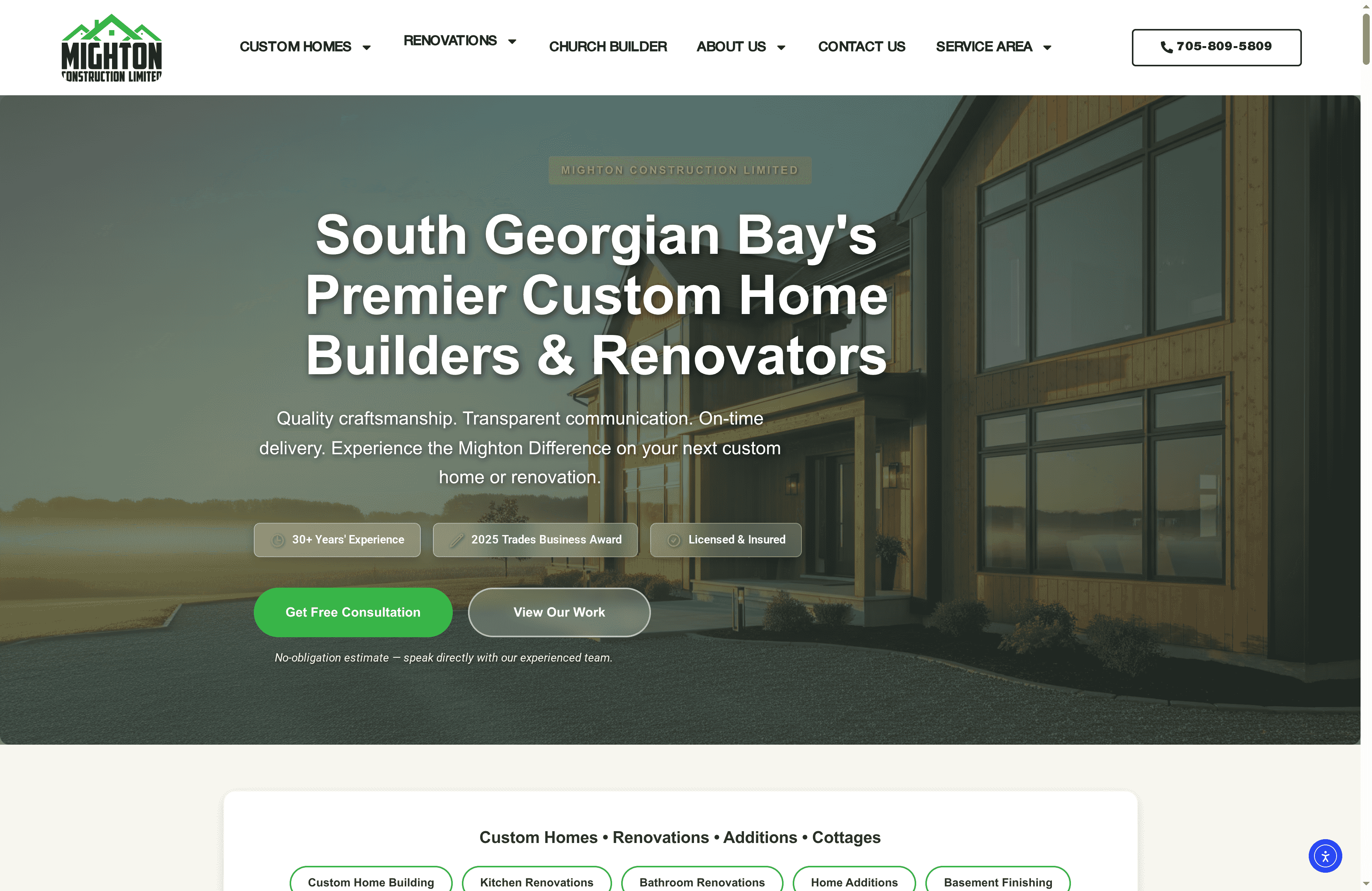
Families exploring prefab and custom home options in Ontario benefit from Mightonconstruction’s deep knowledge of local permitting, site conditions, and regional building codes. The team manages every stage from design and permits through to final occupancy. Browse completed projects in the project gallery to see the quality and range of builds delivered across Simcoe County. Contact Mightonconstruction to book a consultation and discuss your prefab or custom home project in South Georgian Bay.
FAQ
What does CSA A277 certification mean for prefab homes?
CSA A277 certifies a manufacturer’s factory quality programme and covers in-factory inspections. It does not replace on-site municipal inspections or local permit requirements.
Are prefab homes worth it in Ontario in 2026?
Prefab homes offer cost predictability and a compressed build schedule compared to traditional construction. The 2026 HST rebate of up to $130,000 on homes priced up to $1 million makes them particularly attractive this year.
How long does it take to build a prefab home in Ontario?
Build timelines vary by manufacturer and project complexity, but factory production typically runs faster than site-built construction. Municipal permitting and site preparation are the stages most likely to extend the overall schedule.
Can I customise a prefab home design in Ontario?
Modular builders in Ontario offer flexible floor plans including bungalows, two-storey homes, and cottages, with options for sustainable materials, accessible layouts, and energy-efficient window packages.
Do prefab homes require the same permits as traditional homes in Ontario?
Prefab homes require the same municipal permits, site-specific drawings, and on-site inspections as traditional builds. Factory certification under CSA A277 supports but does not replace the local approval process.