Complete Guide to New Church Building Process Ontario

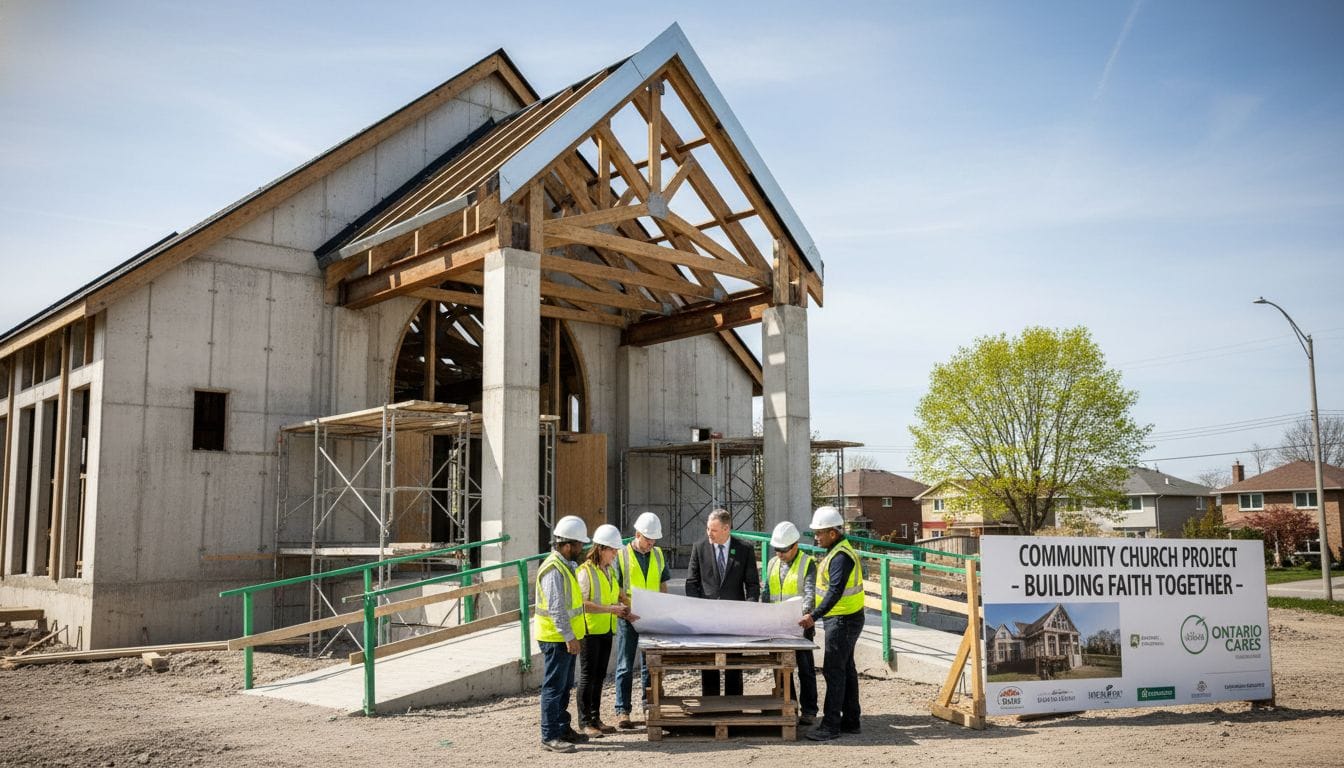
The path to building or renovating a church in Ontario involves much more than pouring concrete and raising walls. Over 60 percent of church projects in Canada invest months just in planning and permits, reflecting how these efforts shape not only physical spaces but entire communities. Understanding the demands of church construction helps congregations translate spiritual visions into accessible, lasting resources that support worship and local engagement. This guide reveals the core steps, challenges, and strategies unique to church building projects across Ontario.
Table of Contents
- Defining Church Building Projects In Ontario
- Planning And Feasibility: Key Early Steps
- Navigating Zoning, Permits, And Legal Approvals
- Designing For Function, Community, And Compliance
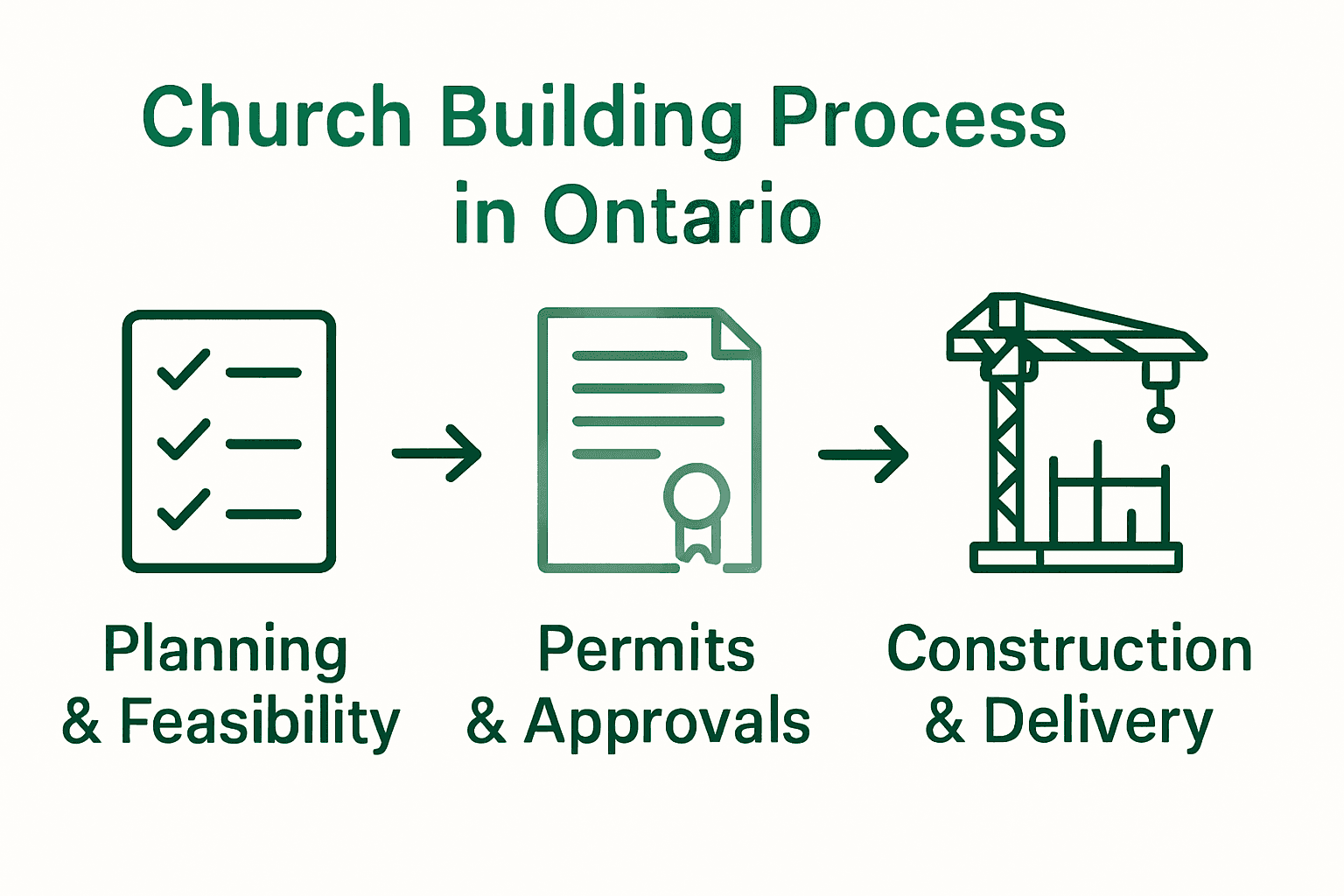
- Construction Phases And Project Management
- Budgeting, Fundraising, And Avoiding Common Pitfalls
Key Takeaways
| Point | Details |
|---|---|
| Holistic Approach | Church building projects in Ontario should integrate community needs, spiritual vision, and architectural design to create multifunctional spaces. |
| Early Planning | Comprehensive feasibility studies are essential, assessing infrastructure, community engagement, and congregation demographics to inform building options. |
| Regulatory Navigation | Successful projects require knowledge of zoning laws, legal approvals, and proactive engagement with municipal authorities for compliance. |
| Financial Strategies | Innovative financial planning and diverse funding sources are vital to balance project ambitions with fiscal responsibility. |
Defining Church Building Projects in Ontario
Church building projects in Ontario represent complex, multifaceted undertakings that go far beyond simple construction. These initiatives are strategic transformations that blend architectural design, community needs, spiritual vision, and practical functionality. According to National Churches Trust, successful church projects require comprehensive planning that addresses not just physical infrastructure, but also the evolving ways communities worship and connect.
In the Ontario context, church building projects encompass several distinct categories of development:
- New Construction: Building entirely new church facilities from the ground up
- Renovation: Modernizing and updating existing church structures
- Expansion: Adding new wings, facilities, or community spaces to current buildings
- Adaptive Reuse: Transforming existing structures to meet contemporary ministry needs
As demonstrated by Knox Toronto, church building projects in Ontario are increasingly becoming holistic community development initiatives. Modern church construction isn’t just about creating worship spaces, but about developing integrated community resources that can provide rental units, social service spaces, and sustainable infrastructure. These projects require careful navigation of zoning regulations, community engagement, heritage preservation considerations, and alignment with broader municipal development strategies.
Successful church building projects demand a collaborative approach involving architects, congregational leadership, community stakeholders, and specialized construction partners who understand the unique requirements of ecclesiastical construction. New Church Construction Ontario requires deep expertise in translating spiritual vision into functional, inspiring architectural realities that serve both the congregation and the broader community.
Planning and Feasibility: Key Early Steps
Church building projects demand meticulous early-stage planning that transforms abstract vision into actionable strategy. According to National Churches Trust, successful initiatives begin with comprehensive feasibility studies that thoroughly assess current infrastructure, congregational needs, and long-term ministry objectives. These initial assessments are critical for determining whether a church requires renovation, expansion, or entirely new construction.
Key Feasibility Components typically include:
- Detailed facility condition assessment
- Congregation demographic analysis
- Financial capacity and funding potential
- Ministry program space requirements
- Accessibility and infrastructure needs
- Community engagement and impact evaluation
Knox Toronto demonstrates the importance of municipal engagement during these early planning stages. Successful church building projects require proactive communication with city planning departments, understanding zoning regulations, and developing proposals that align with broader community development strategies. This collaborative approach helps churches navigate potential regulatory challenges and ensures their building projects contribute positively to local urban landscapes.
The feasibility process isn’t just about physical infrastructure—it’s about creating spaces that reflect a congregation’s spiritual mission and community service objectives. This means conducting thorough consultations with church leadership, congregation members, and potentially external stakeholders to develop a comprehensive project vision. Church Design-Build Services play a crucial role in translating these early planning insights into architectural and constructible designs that balance spiritual, functional, and budgetary considerations.
Navigating Zoning, Permits, and Legal Approvals
Navigating the complex landscape of zoning, permits, and legal approvals is a critical challenge for church building projects in Ontario. According to Ontario Municipal Board, successful church construction requires a comprehensive understanding of local zoning by-laws, precise compliance with the Planning Act, and strategic engagement with municipal authorities to obtain necessary approvals.
Key Legal and Regulatory Considerations include:
- Comprehensive zoning by-law analysis
- Potential requirement for zoning amendment applications
- Site plan control compliance
- Heritage preservation assessments
- Environmental impact evaluations
- Accessibility standard conformity
- Detailed municipal consultation processes
The Ontario Land Tribunal emphasizes that church redevelopment projects must develop robust planning rationales that demonstrate how proposed developments align with broader municipal development strategies. This involves preparing detailed documentation that illustrates the project’s community benefits, potential positive impacts, and alignment with local urban planning objectives.
Successful navigation of legal approvals demands a proactive, collaborative approach. Church leadership must work closely with experienced Church Design-Build Services that understand the intricate municipal approval processes.
This includes developing comprehensive proposal packages, engaging in meaningful community consultations, addressing potential stakeholder concerns, and demonstrating how the proposed church building project will contribute positively to the local community’s social and urban landscape.
Designing for Function, Community, and Compliance
Modern church building design transcends traditional architectural approaches, focusing instead on creating versatile, inclusive spaces that serve multiple community purposes. According to National Churches Trust, successful church designs must incorporate flexible spaces that can adapt to evolving worship practices, community needs, and demographic shifts while maintaining strict compliance with building regulations.
Design Principles for Modern Church Facilities include:
- Multi-purpose worship and community spaces
- Integrated accessibility features
- Sustainable and energy-efficient infrastructure
- Technological infrastructure for digital engagement
- Spaces supporting intergenerational interactions
- Flexible areas for community programming
- Universal design principles
Knox Toronto demonstrates an innovative approach to church design by integrating rental units, community spaces, and updated worship facilities. This model illustrates how church buildings can become comprehensive community hubs that generate additional revenue while serving diverse local needs. The design process requires careful balance between spiritual functionality, community service objectives, and regulatory compliance.
Successful church design demands collaboration between Church Design-Build Services, architectural professionals, congregational leadership, and community stakeholders. This holistic approach ensures that the final design not only meets technical building standards but also reflects the congregation’s spiritual vision, supports community engagement, and creates a welcoming, adaptable environment that can evolve with changing societal needs.
Construction Phases and Project Management
Effective church building projects require a structured, methodical approach to construction management that balances technical precision with strategic coordination. According to National Churches Trust, successful project management demands establishing clear timelines, maintaining transparent communication with all stakeholders, and implementing robust monitoring systems to ensure the project remains on schedule and within budgetary constraints.
Key Construction Management Phases include:
- Pre-construction planning and coordination
- Site preparation and foundation work
- Structural framing and envelope construction
- Mechanical, electrical, and plumbing installations
- Interior finishing and systems integration
- Technology and accessibility infrastructure implementation
- Final inspections and compliance verification
- Post-construction documentation and handover
Knox Toronto exemplifies a sophisticated phased approach to construction, demonstrating how complex church building projects can be systematically executed through carefully planned development stages. This strategy involves coordinating multiple work streams, managing diverse contractor teams, and maintaining flexibility to address unexpected challenges while preserving the project’s core objectives.
Navigating the construction process requires partnering with experienced Church Design-Build Services that understand the unique complexities of ecclesiastical construction. With a custom home construction timeline as a reference, church building projects demand even more nuanced project management, combining technical expertise, spiritual sensitivity, and community-focused implementation to transform architectural plans into functional, meaningful spaces of worship and community engagement.
Budgeting, Fundraising, and Avoiding Common Pitfalls
Church building projects demand sophisticated financial strategies that balance ambitious vision with fiscal responsibility. According to National Churches Trust, successful financial planning requires realistic budgeting, comprehensive cost analysis, and proactive exploration of diverse funding sources to transform architectural dreams into tangible realities.
Critical Financial Considerations include:
- Comprehensive project cost estimation
- Establishing robust contingency funds
- Identifying multiple fundraising streams
- Exploring grant opportunities
- Evaluating long-term maintenance costs
- Developing transparent financial reporting
- Creating sustainable revenue generation strategies
- Managing potential financial risks
Knox Toronto demonstrates an innovative approach to church project financing by leveraging 99-year land leases, showcasing how creative financial strategies can support ambitious building initiatives. This approach illustrates the importance of thinking beyond traditional fundraising methods and exploring alternative revenue generation mechanisms that can support long-term project sustainability.
Navigating the financial complexities of church construction requires partnering with experienced Church Design-Build Services that understand both architectural and financial considerations. By referencing custom home construction timelines, church leadership can gain insights into budgeting nuances, helping them develop comprehensive financial plans that balance spiritual aspirations with fiscal pragmatism.
Turn Your Church Vision Into Reality with Expert Guidance
Navigating a new church building project in Ontario involves complex challenges like zoning approvals, community engagement, and designing flexible spaces that serve spiritual and community needs. These critical steps can feel overwhelming but with the right expertise, your vision can become a meaningful sanctuary and vibrant community hub. At Mighton Construction, our skilled team brings over 30 years of local experience to church construction projects, ensuring every detail aligns with your congregation’s goals and the unique demands of ecclesiastical building.
Start your journey today by exploring our Design Archives to see how thoughtful planning and innovation bring church spaces to life. Discover how our Custom Home Archives demonstrate the same commitment to craftsmanship and precision that applies to church construction. Visit Mighton Construction now to schedule a consultation and take the first step toward a church building project that truly serves your community. Don’t wait to create a space that inspires worship and connection for generations to come.
Frequently Asked Questions
What are the key components of church building projects in Ontario?
Church building projects in Ontario involve new construction, renovation, expansion, and adaptive reuse, focusing on community development and church functionality.
What is the importance of feasibility studies in church building projects?
Feasibility studies assess facility conditions, congregation demographics, financial capacity, and community engagement to determine the most appropriate building strategy, whether it’s renovation, expansion, or new construction.
How can churches navigate zoning and permits for their building projects?
Churches must understand local zoning by-laws, comply with the Planning Act, and engage with municipal authorities to obtain necessary approvals, ensuring proposed projects align with community development strategies.
What design principles should churches consider for modern facilities?
Design principles for modern church facilities include multi-purpose spaces, accessibility features, sustainable infrastructure, and technological integration to adapt to community and worship needs.