Net zero building explained: A luxury homeowner's guide

TL;DR:
- Net zero homes balance energy use with on-site renewable generation, suitable for luxury estates.
- Achieving net zero involves layered strategies, including passive design, efficient systems, and monitoring.
- Certification enhances resale value and marketability, with costs around 3-7% higher than conventional construction.
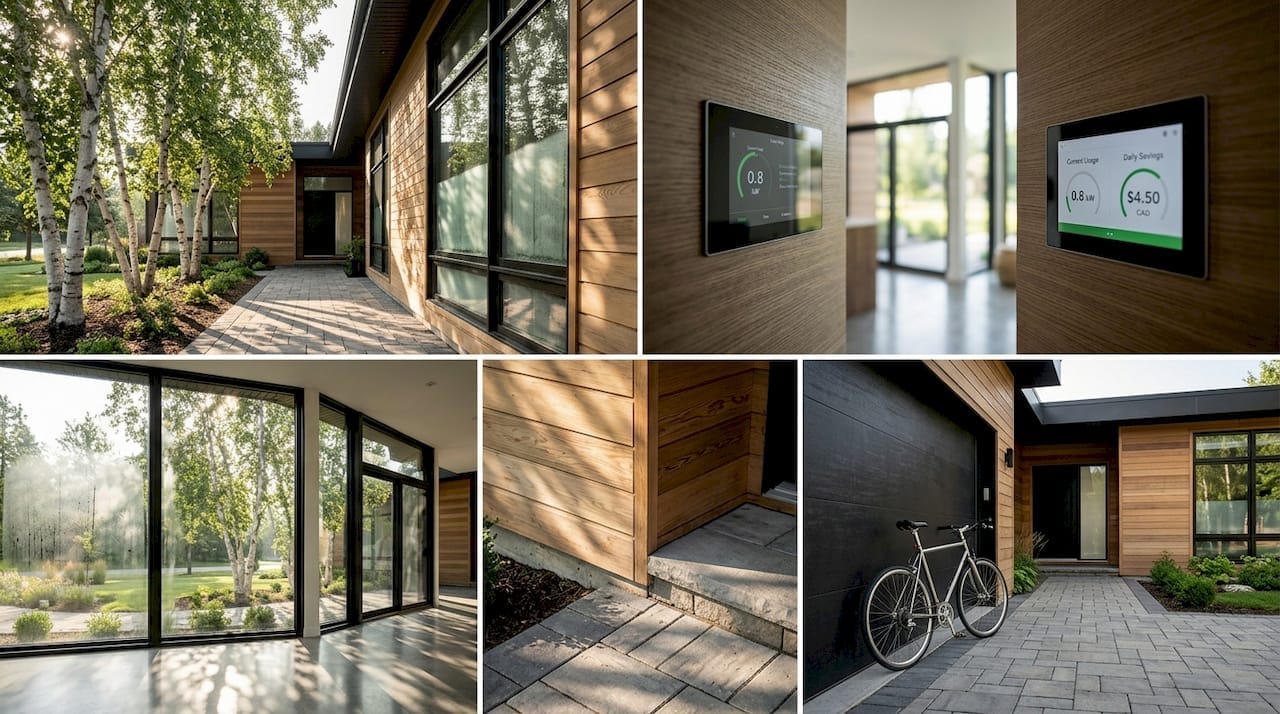
A net zero building balances annual energy use with on-site renewable energy production — and no, that does not mean sacrificing your heated floors, wine cellar, or floor-to-ceiling glazing overlooking Georgian Bay. The idea that net zero is reserved for tiny off-grid cabins is one of the most persistent myths in sustainable construction. In reality, some of the most stunning custom estates and waterfront cottages being built today are also among the most energy-efficient buildings in Canada. This guide will clarify what net zero actually means, what it takes to achieve it, how certification works, and what luxury homeowners and developers in South Georgian Bay should realistically expect when pursuing this standard.
Table of Contents
- Defining net zero: Energy, carbon, and how the bar is set
- Core ingredients: Strategies and technologies for net zero success
- Certification and benchmarks: How to know you’re truly net zero
- Nuances, challenges, and ROI: Setting expectations for luxury projects
- Why net zero for luxury homes is more attainable (and meaningful) than you think
- Take the next step: Build your net zero dream home
- Frequently asked questions
Key Takeaways
| Point | Details |
|---|---|
| Net zero definition matters | Understand exactly whether your goal is zero energy use, zero carbon, or both—each involves different requirements. |
| Tech and design integration | Combining deep insulation, advanced systems, and renewables is essential for true net zero performance in luxury homes. |
| Certification adds value | Choosing an accredited certification can increase home value and verify genuine sustainability. |
| Costs and ROI | Expect premium expenses at first, but enjoy major energy savings, comfort, and resale advantages over time. |
| Net zero is achievable | With expert guidance, net zero building is practical—even for large custom builds and renovations in cold climates. |
Defining net zero: Energy, carbon, and how the bar is set
The term “net zero” gets used loosely, but there are two distinct concepts worth understanding before you speak with any builder or designer.
Net zero energy (NZE) means your home balances delivered energy with exported renewables over a 12-month period. Every kilowatt-hour consumed on-site is matched by energy generated on-site, typically through solar photovoltaic panels. The grid acts as a kind of battery, absorbing your surplus in summer and supplying you in winter.
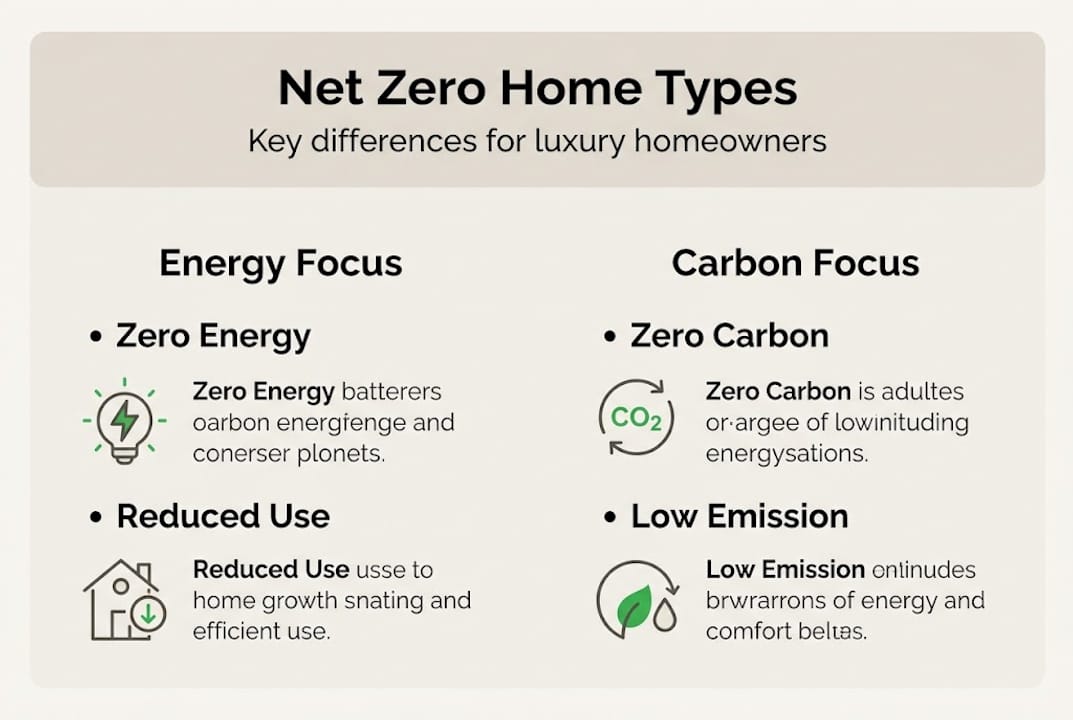
Net zero carbon (NZC) goes further. Net zero carbon buildings minimise both operational and embodied carbon, meaning they account for the greenhouse gas emissions tied to running the home and the carbon embedded in the materials used to build it. Concrete, steel, and even insulation all carry a carbon cost before a single switch is flipped.
For luxury homeowners, the distinction matters because a sprawling estate can technically achieve NZE through a large enough solar array, yet still carry significant embodied carbon from its construction. True leadership means addressing both.
“Net zero carbon is not just about what your home uses — it’s about what it took to build it.” — CaGBC Zero Carbon Building Standard
The leading standards you’ll encounter include:
| Standard | Focus | Key requirement | Canadian adoption |
|---|---|---|---|
| ILFI Zero Energy | Energy balance | Annual source energy | Growing |
| LEED Zero | Energy or carbon | 12-month verification | Established |
| CaGBC ZCB | Operational carbon | Carbon intensity limits | Strong in Canada |
| Phius Zero | Energy + comfort | Source EUI + airtightness | Rising |
For high-end projects, luxury home certifications like CaGBC’s Zero Carbon Building standard are particularly well-suited to the Canadian climate. Choosing quality construction materials with low embodied carbon is increasingly part of what separates a genuinely sustainable luxury build from one that simply looks the part.
Core ingredients: Strategies and technologies for net zero success
Achieving net zero is not a single product decision. It is a layered sequence of design and technical choices, each building on the last.
Key methodologies include passive design, efficient systems, renewables, electrification, and 12-month verification. In practice, that sequence looks like this:
- Passive envelope first. Maximise insulation, eliminate thermal bridges, and achieve exceptional airtightness before specifying any mechanical system. A well-designed building envelope does the heavy lifting.
- Ultra-efficient mechanical systems. Cold-climate heat pumps, heat recovery ventilators (HRVs), and smart controls dramatically reduce the energy load that renewables must offset.
- Full electrification with renewables. Once the load is minimised, a properly sized solar PV array can realistically balance annual consumption.
- Real-world monitoring. Post-occupancy data tells you whether the building performs as modelled — and it often surprises people.
Here are the performance benchmarks to aim for in a South Georgian Bay climate:
| Element | Target | Why it matters |
|---|---|---|
| Wall insulation | R-40 or higher | Reduces heating load significantly |
| Airtightness | Under 0.6 ACH50 | Eliminates drafts and heat loss |
| Windows | Triple-glazed, low-e | Balances solar gain and insulation |
| Heat pump COP | 3.0+ at -15°C | Efficient heating in cold snaps |
| PV output | 10-15 kWp typical | Offsets annual consumption |
For insulation in high-performance homes, the cold winters around Collingwood and Blue Mountain make thermal performance non-negotiable. ICF construction is one of the most effective tools available, delivering continuous insulation and exceptional airtightness in a single system. Passive house design principles layer on top of that with careful solar orientation and shading.
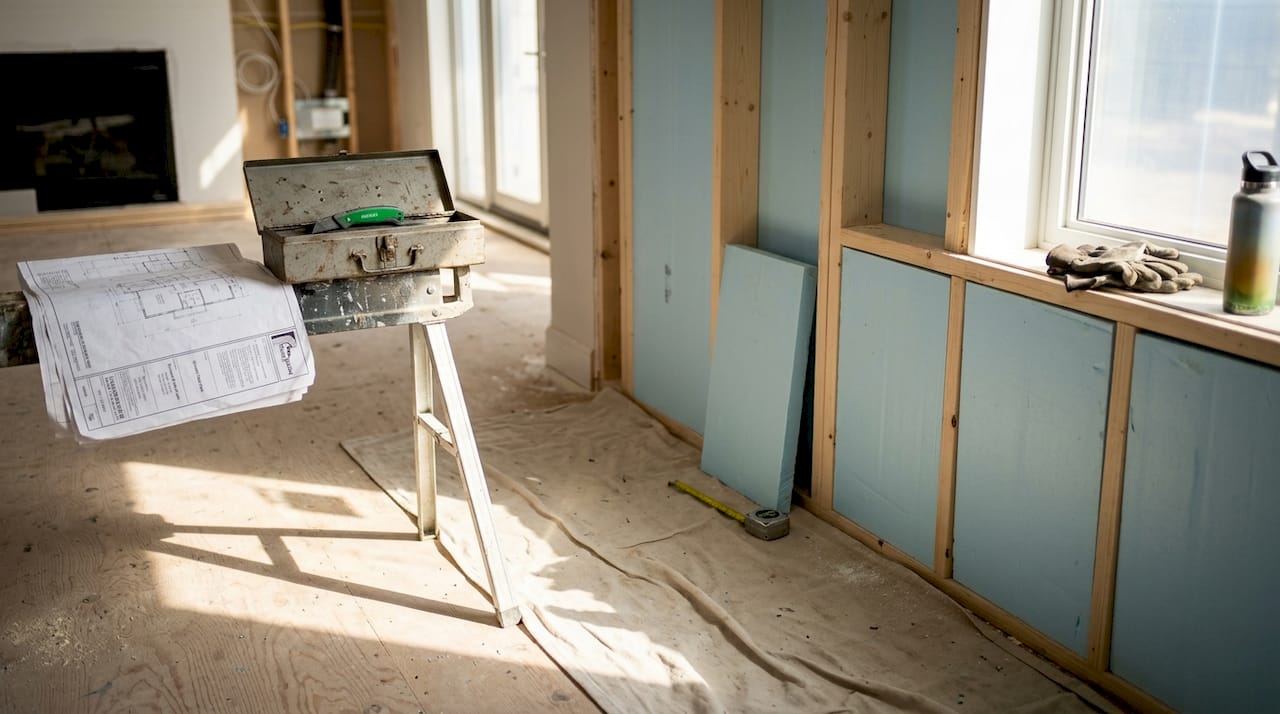
The HouseZero project at Harvard demonstrated that a deep retrofit of an existing building could achieve near-zero energy use — evidence that even challenging existing structures can get there with the right approach.
Pro Tip: Post-occupancy monitoring almost always reveals gaps between modelled and actual performance. Budget for a smart monitoring system from the start and plan a 12-month review. Smart system integration makes this far easier to manage without adding complexity to daily life.
Certification and benchmarks: How to know you’re truly net zero
Meeting net zero criteria in design is one thing. Proving it with real data is another — and that proof matters for resale value, insurance, and your own peace of mind.
There are currently 80 ZCB-Performance and 130 ZCB-Design certified buildings in Canada, a number growing quickly as awareness builds. Research tracking 50 net zero energy buildings found a median energy use intensity of 16.8 kBtu per square foot per year, well below the Canadian average for residential construction.
Here is how the main standards compare for a luxury residential project:
| Standard | Monitoring period | Third-party testing | Best for |
|---|---|---|---|
| CaGBC ZCB-Performance | 12 months post-occupancy | Yes | New builds and retrofits |
| LEED Zero Energy | 12 months | Yes | Larger estates |
| ILFI Zero Energy | 12 months | Yes | Ambitious new builds |
| Phius Zero | Ongoing | Yes | Cold-climate projects |
The certification process for sustainable luxury homes typically follows these steps:
- Design-phase modelling: Energy and carbon modelling submitted for review before construction begins.
- Construction documentation: Material declarations, air barrier testing, and commissioning records.
- Blower door test: Confirms airtightness meets the target at project completion.
- 12-month energy monitoring: Utility data and on-site generation records submitted for final verification.
- Annual renewal: Some certifications require ongoing data submission to maintain status.
For luxury homeowners, certification is not just a plaque on the wall. Certified net zero homes command measurable premiums at resale, attract environmentally conscious buyers, and provide documented evidence that the home performs as promised. In a market like South Georgian Bay, where discerning buyers are increasingly carbon-conscious, that distinction is becoming a genuine competitive advantage.
Nuances, challenges, and ROI: Setting expectations for luxury projects
Net zero is achievable. It is also honest to say it requires real investment and careful planning, particularly in a cold climate like ours.
Expect a premium of roughly 3 to 7% over conventional builds, translating to approximately $1.50 to $3.00 per square foot, with a payback period of 4 to 10 years through energy savings and higher resale value. For a 4,000 square foot luxury home, that upfront premium is real but finite.
Retrofits present greater complexity than new builds, particularly around embodied carbon reduction and waste diversion. Existing homes may require significant envelope upgrades to the roof, walls, and foundation before mechanical upgrades make sense. Adding renewables to a renovation project requires careful structural and electrical planning.
Here are the must-know realities for luxury clients pursuing net zero:
- Upfront investment is front-loaded. Most of the premium is spent during construction, not spread over time.
- Occupant behaviour matters. Even the best-designed net zero home can miss its target if ventilation is overridden or plug loads are excessive.
- Embodied carbon in renovations is tricky. Replacing functional materials generates waste and carbon. Prioritise upgrading what performs poorly first.
- South Georgian Bay’s climate demands rigour. Our heating season is long and cold. A system that works in Vancouver may underperform here without cold-climate-specific specification.
- Mechanical redundancy adds resilience. A net zero home with battery storage and a heat pump is effectively blackout-proof, a real advantage during winter storms.
Pro Tip: Never rely solely on design-phase energy modelling to set your expectations. Real buildings perform differently from models. Require your builder to show you verified performance data from comparable completed projects before finalising your specification.
Why net zero for luxury homes is more attainable (and meaningful) than you think
The conventional wisdom in high-end construction has long been that luxury means large, and large means high energy use. That thinking is outdated. The best passive house lessons from projects across Canada show that a 5,000 square foot estate can use less energy than a poorly built 1,500 square foot bungalow. The physics work in your favour when the envelope is right.
We have seen projects in cold Canadian climates achieve 70 to 80% reductions in energy use compared to code-built homes, with occupants reporting superior comfort, quieter interiors, and dramatically more stable temperatures room to room. These are not trade-offs. They are upgrades.
The scarcity of skilled design-build teams who genuinely understand net zero in this region is real. But that scarcity also means early adopters in South Georgian Bay are setting the market standard, not chasing it. As carbon-conscious buyers become a larger share of the luxury market, a certified net zero home will carry a premium that conventional builds simply cannot match.
Sustainability, in 2026, is not a compromise. It is the definition of true luxury.
Take the next step: Build your net zero dream home
Ready to begin your net zero journey at the highest standard?
At Mighton Construction, we bring over 30 years of South Georgian Bay expertise to every luxury build and renovation. Whether you are planning a new custom estate, a waterfront cottage, or a deep retrofit of an existing property, we can guide you through every stage — from envelope design and system selection to certification and post-occupancy monitoring. Our team works with clients across Wasaga Beach, Collingwood, Blue Mountain, and beyond to deliver homes that are genuinely future-ready. Explore our custom luxury cottages and learn how our expert ICF contractors can form the foundation of your net zero vision. Contact us today to schedule your personal consultation.
Frequently asked questions
What is the main difference between net zero energy and net zero carbon?
Net zero energy balances a home’s total energy use with on-site renewable generation, while net zero carbon addresses both operational and embodied carbon emissions, considering materials, construction waste, and offsets.
How much does it cost to build a net zero luxury home in South Georgian Bay?
Expect a 3 to 7% premium over conventional builds, roughly $1.50 to $3.00 per square foot, with a typical payback period of 4 to 10 years through energy savings and higher resale value.
Do net zero homes still depend on the electrical grid?
Most net zero homes remain grid-connected, exporting surplus energy when renewables are producing well and drawing clean electricity when they are not, balancing consumption over a full year.
Is net zero possible for major renovations or only new builds?
Deep retrofits can achieve net zero, but they typically involve higher costs and more technical complexity than new construction, particularly around embodied carbon and airtightness improvements.