
ICF Foundation: Why It Matters for Custom Homes
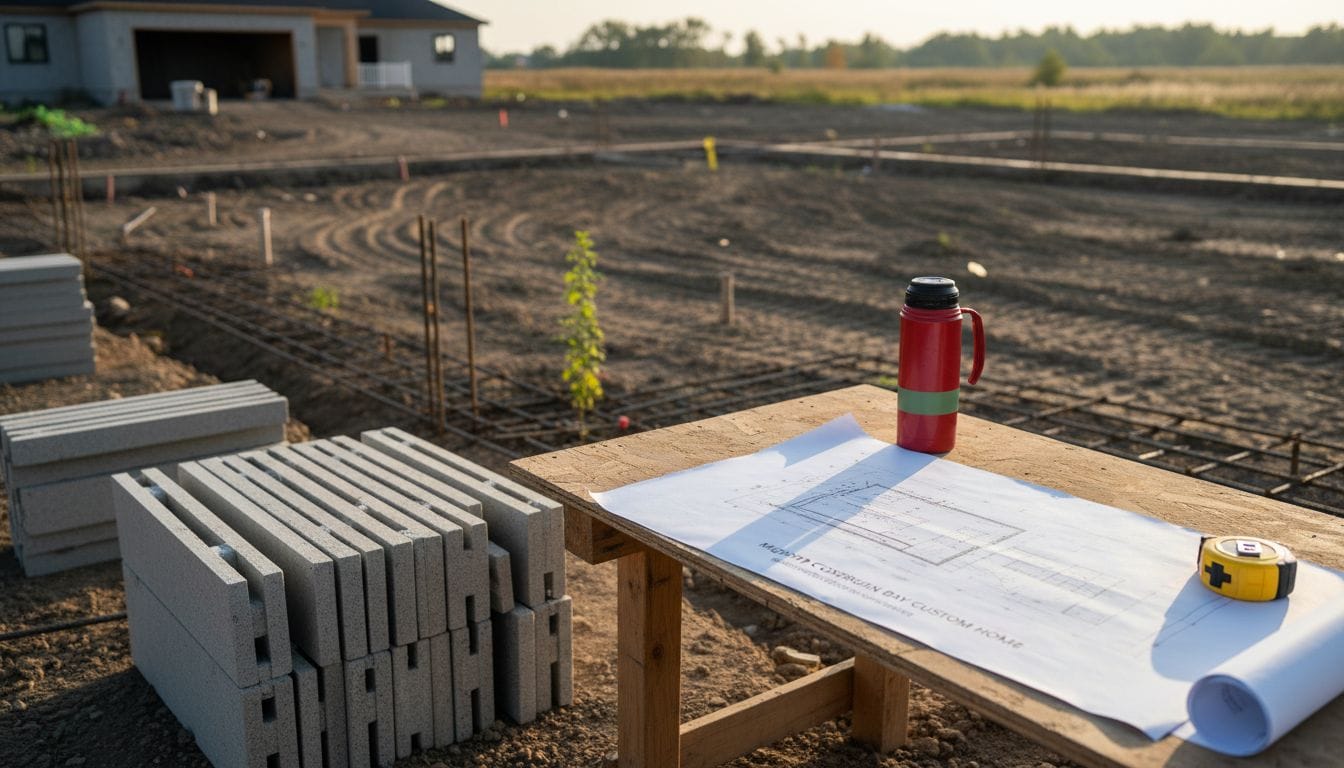
Most Canadian builders now recognize that energy efficiency goes far beyond traditional foundation methods. With up to 50 percent energy savings possible on heating and cooling costs, Insulating Concrete Forms are rapidly changing expectations for custom home construction across the country. As the demand for sustainable and resilient foundations rises in the Canadian market, understanding ICF fundamentals, system types, and core advantages helps homeowners and industry professionals make truly informed building decisions.
Table of Contents
- ICF Foundations Defined And Core Concepts
- Main Types Of ICF Systems Used In Canada
- How ICF Foundation Construction Works
- Energy Efficiency And Durability Factors
- Comparing ICF To Traditional Foundations
- Common Mistakes When Building With ICF
Key Takeaways
Point
Details
Innovative Building Technology
Insulating Concrete Forms (ICFs) provide superior thermal, structural, and energy efficiency benefits for custom homes in Canada.
Types of ICF Systems
Block, panel, and plank systems offer different assembly speeds, design flexibility, and suitability for various project sizes.
ICF Construction Process
The ICF process ensures continuous insulation and structural integrity, crucial for durability and energy efficiency in harsh climates.
Comparative Benefits
While ICF foundations have a higher initial cost, they offer significant long-term savings and performance advantages over traditional methods.
ICF Foundations Defined and Core Concepts
Insulating Concrete Forms (ICFs) represent an innovative building technology that is transforming custom home construction in Canada. Insulating concrete forms are modular units typically made from expanded polystyrene that create permanent formwork for concrete walls, offering exceptional structural and thermal performance.
At their core, ICF foundations consist of two layers of insulating material with a concrete core, creating a robust three-part wall system. The expanded polystyrene panels interlock and remain in place after concrete is poured, providing continuous insulation and creating a highly energy-efficient building envelope. This design allows for superior thermal resistance compared to traditional concrete foundation methods, with typical R-values ranging between R-20 and R-26.
The structural advantages of ICF foundations are particularly significant for custom homes in regions with challenging environmental conditions. These foundations deliver remarkable benefits:
- Exceptional thermal insulation
- Superior sound dampening
- High wind and impact resistance
- Moisture and pest resistance
- Reduced thermal bridging
- Enhanced structural integrity
While ICF foundations represent a more advanced construction technique, they offer substantial long-term value for homeowners seeking durable, energy-efficient building solutions.
Pro Tip: Consult with experienced ICF specialists during the design phase to maximize the thermal and structural benefits specific to your custom home’s architectural requirements.
Main Types of ICF Systems Used in Canada
In the Canadian custom home construction landscape, three primary types of Insulating Concrete Form (ICF) systems dominate the market, each offering unique characteristics for foundation and wall construction. Builders can select from block systems, panel systems, and plank systems to meet specific architectural and environmental requirements.
The block system represents the most traditional ICF approach, featuring interlocking foam blocks that are stacked and reinforced with steel rebar before concrete is poured. These modular units typically come in standard sizes and provide exceptional thermal performance, which is crucial for managing energy efficiency in custom homes. Block systems are particularly popular in residential construction due to their ease of installation and adaptability to various foundation designs.
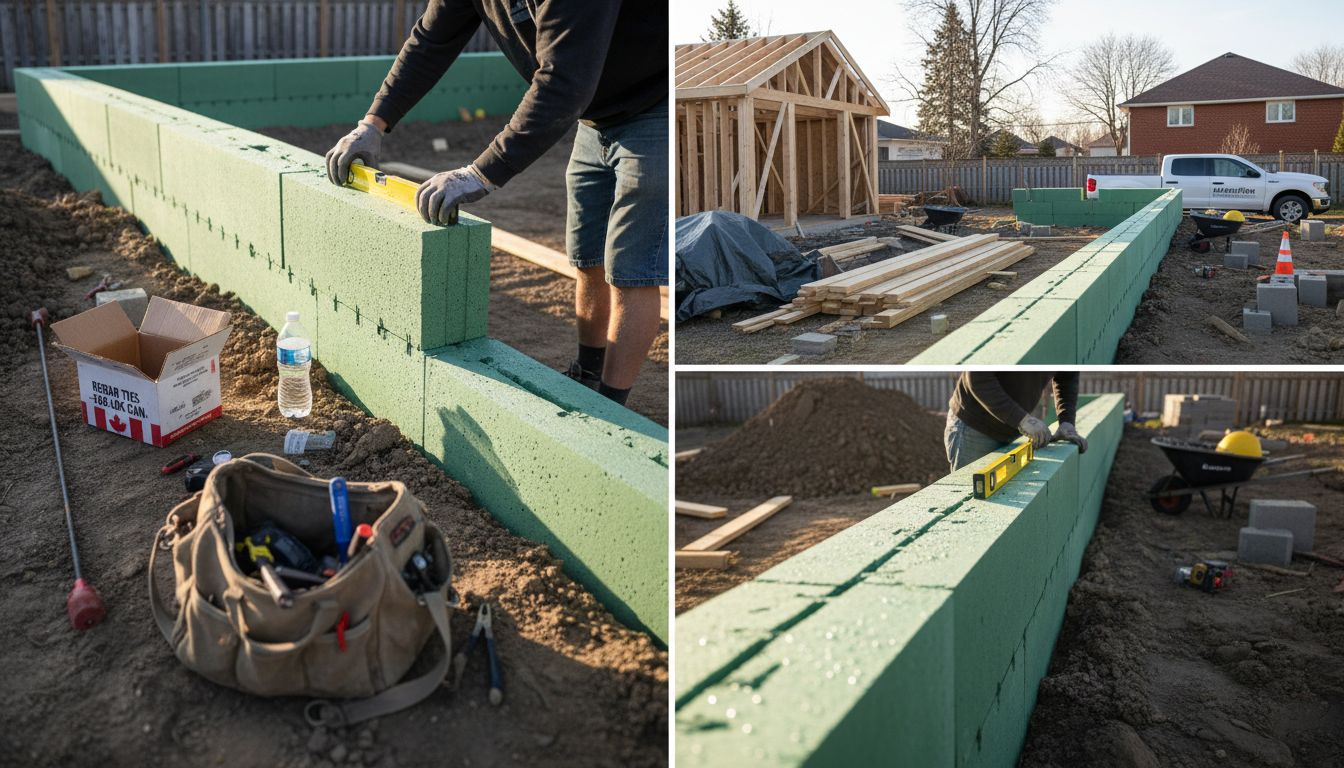
Panel systems offer a more versatile alternative, featuring larger foam panels that can be quickly assembled and braced. These systems are engineered for faster construction timelines and are especially effective for larger commercial and residential projects requiring precise architectural specifications. Unlike block systems, panel systems allow for greater design flexibility and can accommodate more complex structural requirements.
The plank system represents the most innovative ICF technology, utilizing horizontal foam planks that are connected with specialized ties. This system provides superior insulation and structural integrity, making it an excellent choice for custom homes in regions with extreme weather conditions. Plank systems also offer enhanced moisture resistance and can be more cost-effective for larger foundation areas.
Here is a comparison of the main ICF foundation system types available in Canada:
System Type
Assembly Speed
Design Flexibility
Ideal Project Size
Block System
Moderate, easy stacking
Moderate, suits most homes
Standard residential
Panel System
Fast, large panels
High, complex architecture
Large or custom builds
Plank System
Variable, innovative
Moderate, enhanced strength
Extreme weather regions
Pro Tip: Consult with local ICF specialists to determine the most suitable system for your specific climate zone and architectural design requirements.
How ICF Foundation Construction Works
ICF foundation construction is a sophisticated process that transforms traditional building techniques through innovative engineering and materials. Concrete foundation construction using ICF begins with carefully assembling interlocking foam blocks that create a precise structural framework for the foundation or wall system.
The construction sequence follows a meticulously planned approach. First, contractors create a level foundation base and carefully align the foam blocks, ensuring they interlock seamlessly. Steel reinforcement bars are strategically placed within the foam forms to provide additional structural strength. These rebar grids are positioned to distribute load-bearing capabilities and enhance the overall structural integrity of the foundation.
Once the foam forms are prepared and reinforced, concrete is carefully poured into the assembled structure. The expanded polystyrene forms remain permanently in place, serving multiple critical functions. These forms create a continuous insulation layer, protect the concrete during curing, and provide an excellent surface for interior and exterior finishes. The result is a foundation with remarkable thermal performance, moisture resistance, and structural durability.
The construction process offers significant advantages over traditional foundation methods. The foam forms enable precise concrete placement, reduce thermal bridging, and create an airtight building envelope. Builders can effectively construct foundations in challenging Canadian climate conditions, as the insulating forms protect the concrete during curing and provide consistent temperature control.
Pro Tip: Ensure proper site preparation and precise foam block alignment to guarantee optimal concrete placement and foundation performance.
Energy Efficiency and Durability Factors
Thermal Performance is the cornerstone of ICF foundation technology, offering unprecedented energy efficiency for custom homes. ICF homes in Canada demonstrate remarkable insulation capabilities, with typical foundations achieving R-values ranging from R-20 to R-25, and potentially exceeding R-40 in optimal configurations.
The unique construction of ICF foundations provides multiple layers of energy conservation. The continuous insulation created by expanded polystyrene forms eliminates thermal bridging, a common problem in traditional foundation systems. This design significantly reduces heat transfer, creating a more stable interior environment and dramatically lowering heating and cooling costs. The thermal mass of the concrete core further enhances temperature regulation, storing heat during warm periods and releasing it slowly during cooler times.
Durability represents another critical advantage of ICF foundations. These structures offer exceptional resistance to environmental challenges, including extreme temperature fluctuations, moisture infiltration, and structural stress. The reinforced concrete core surrounded by robust foam forms creates a foundation that can withstand severe Canadian weather conditions, from intense winter freezes to summer heat waves. Additionally, ICF foundations demonstrate superior performance in noise reduction, moisture resistance, and fire protection, making them an ideal choice for homeowners seeking long-term structural integrity.
Beyond energy efficiency, ICF foundations contribute to overall home sustainability. The reduced air leakage, combined with superior insulation properties, means significantly lower energy consumption and reduced carbon footprint. Homeowners can expect substantial long-term savings on utility costs, with some estimates suggesting up to 50% reduction in heating and cooling expenses compared to traditional foundation methods.
Pro Tip: Consult with an energy efficiency specialist to optimize your ICF foundation’s thermal performance and maximize potential energy savings for your specific climate zone.
Comparing ICF to Traditional Foundations
Construction methodologies for foundations vary widely, but Insulating Concrete Forms (ICF) represent a significant leap forward from traditional concrete and concrete masonry unit (CMU) wall systems. Foundation construction techniques reveal substantial differences between conventional and modern approaches, with ICF offering remarkable advantages in performance, durability, and long-term value.
Traditional foundations typically involve poured concrete or concrete block walls that require separate insulation and moisture barrier installations. In contrast, ICF foundations integrate insulation, structural strength, and moisture protection into a single comprehensive system. The expanded polystyrene forms create a continuous thermal envelope, eliminating the thermal bridging common in traditional construction methods. This integrated approach means fewer construction steps, reduced labour costs, and a more seamless building envelope.
Cost considerations reveal an important nuance in foundation selection. While ICF foundations initially cost 30-40% more than traditional methods, the long-term financial benefits are substantial. Homeowners can expect significant energy savings, reduced maintenance expenses, and enhanced structural durability. The superior insulation properties of ICF foundations translate into lower heating and cooling costs, potentially offsetting the higher upfront investment within a few years of construction.
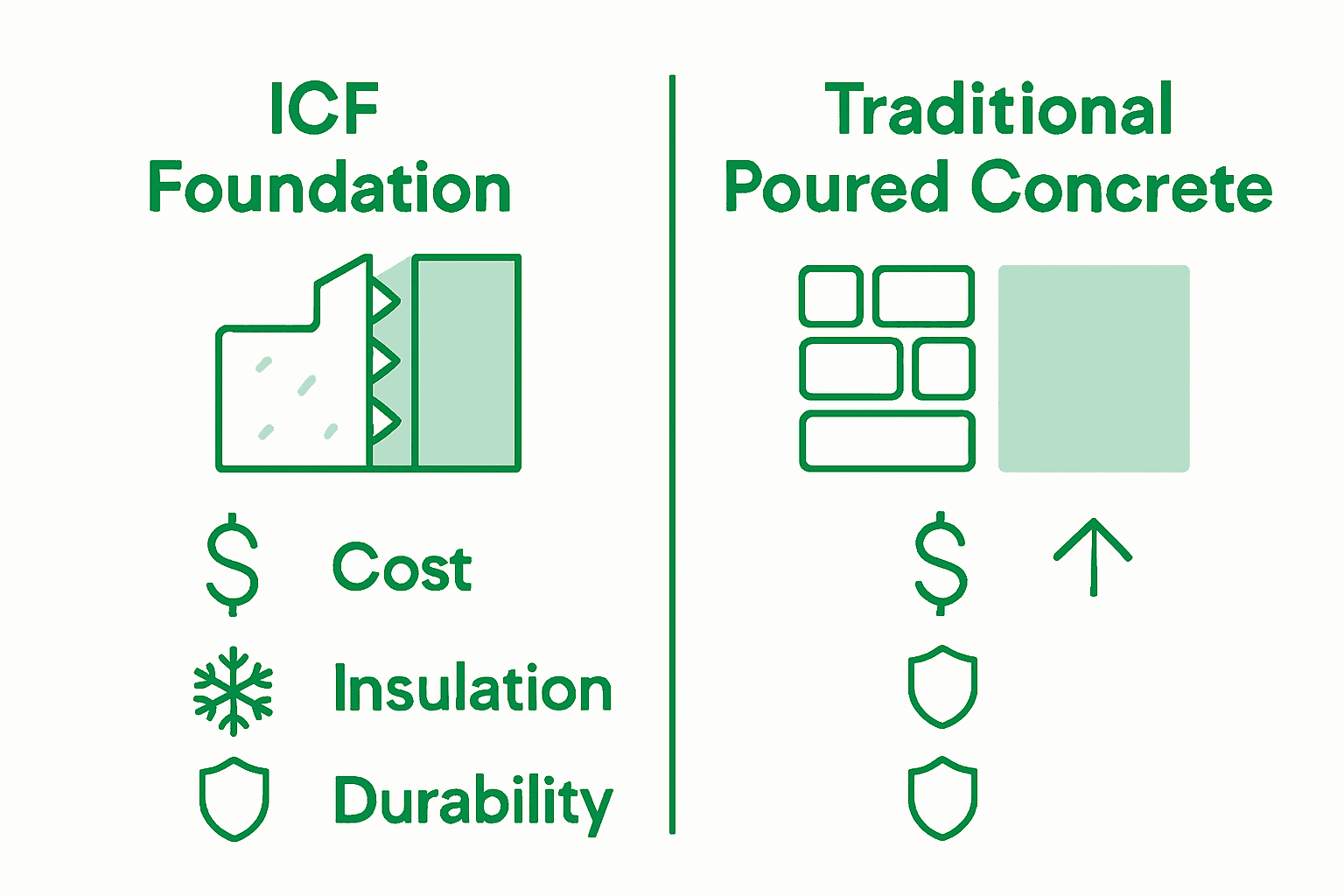
Performance metrics further distinguish ICF foundations from traditional systems. These modern foundations offer exceptional sound dampening, fire resistance, and protection against environmental challenges. With a three-hour fire resistance rating and superior strength, ICF foundations provide homeowners with a more robust, resilient foundation solution compared to conventional concrete walls. The ability to withstand extreme temperature variations, moisture infiltration, and structural stress makes ICF an increasingly preferred choice for discerning homeowners.
Below is a summary of how ICF and traditional foundations differ in key aspects:
Aspect
ICF Foundations
Traditional Foundations
Insulation Method
Integrated continuous foam
Separate insulation required
Initial Cost
30-40% higher upfront
Lower construction cost
Long-term Savings
Significant energy bill reductions
Minimal, higher maintenance
Structural Strength
Reinforced, high wind/fire resistance
Variable, lower in emergencies
Pro Tip: Conduct a comprehensive cost-benefit analysis that considers long-term energy savings and maintenance expenses when comparing foundation technologies.
Common Mistakes When Building With ICF
Foundation construction requires precision, and ICF projects are no exception. Common errors in ICF construction can compromise structural integrity and performance, making it crucial for builders and homeowners to understand potential pitfalls before beginning their project.
One of the most significant mistakes involves inadequate bracing and preparation during concrete pouring. Improperly secured ICF forms can lead to catastrophic blowouts, where the forms shift or collapse under the concrete’s weight. This not only compromises the wall’s structural integrity but can result in costly repairs and potential project delays. Builders must meticulously brace the forms, ensuring they are level, plumb, and capable of withstanding the pressure of wet concrete.
Reinforcement placement represents another critical area where mistakes frequently occur. Incorrect positioning of steel rebar can severely weaken the foundation’s structural capacity. Builders must follow precise guidelines for rebar spacing, ensuring proper coverage and alignment within the ICF forms. Additionally, inadequate attention to joint sealing can create significant energy efficiency problems. Even small gaps can lead to air leakage, reducing the thermal performance that makes ICF foundations so attractive. Careful attention to detail during installation is paramount.
Environmental considerations often catch inexperienced builders off guard. Thermal expansion and contraction can create unexpected challenges, particularly in regions with extreme temperature variations. Failing to account for material movement can lead to cracking, reduced insulation performance, and potential long-term structural issues. Successful ICF construction requires a comprehensive understanding of material properties and local climate conditions.
Pro Tip: Invest in professional training or consultation before starting an ICF project to minimize potential mistakes and ensure optimal foundation performance.
Elevate Your Custom Home with Expert ICF Foundation Solutions
Building a custom home with a strong ICF foundation means solving major challenges like energy efficiency, structural durability, and moisture protection from the start. If you want to ensure your new home performs exceptionally in every Canadian season, understanding key concepts like continuous insulation, thermal bridging reduction, and reinforced concrete cores is essential. At Mighton Construction, we bring over 30 years of hands-on expertise delivering durable ICF-built homes and foundations that combine innovation with luxury craftsmanship.

Discover how our dedicated team manages each project from concept through completion to provide seamless, turn-key solutions tailored specifically to your vision. Explore our ICF Construction Archives to learn more about the technology that makes our foundations stand out. Ready to build a home with superior energy efficiency and lasting strength? Visit Mighton Construction today and take the first step toward a custom home foundation built to exceed expectations. For insights on maintaining comfort year-round, also visit our Insulation Archives.
Frequently Asked Questions
What are the main benefits of using ICF foundations for custom homes?
ICF foundations provide exceptional thermal insulation, sound dampening, moisture resistance, and structural integrity. They reduce thermal bridging and offer high resistance to wind and pests, making them a durable and energy-efficient choice for custom homes.
How do ICF foundations compare to traditional concrete foundations?
ICF foundations integrate insulation and structural strength into a single system, eliminating the need for separate insulation and moisture barriers. While they may have a higher initial cost, homeowners benefit from significant long-term energy savings and reduced maintenance compared to traditional foundations.
What are the different types of ICF systems available for construction?
The main types of ICF systems include block systems, panel systems, and plank systems. Block systems are traditional and easy to install, panel systems offer more design flexibility, and plank systems provide enhanced insulation and strength, making them suitable for extreme weather conditions.
What are common mistakes to avoid when constructing with ICF?
Common mistakes include inadequate bracing during concrete pouring, incorrect placement of steel reinforcement bars, neglecting joint sealing, and failing to account for thermal expansion. Proper preparation and attention to detail are crucial to ensuring structural integrity and optimal performance.