
How to Communicate with Contractors for Flawless Projects
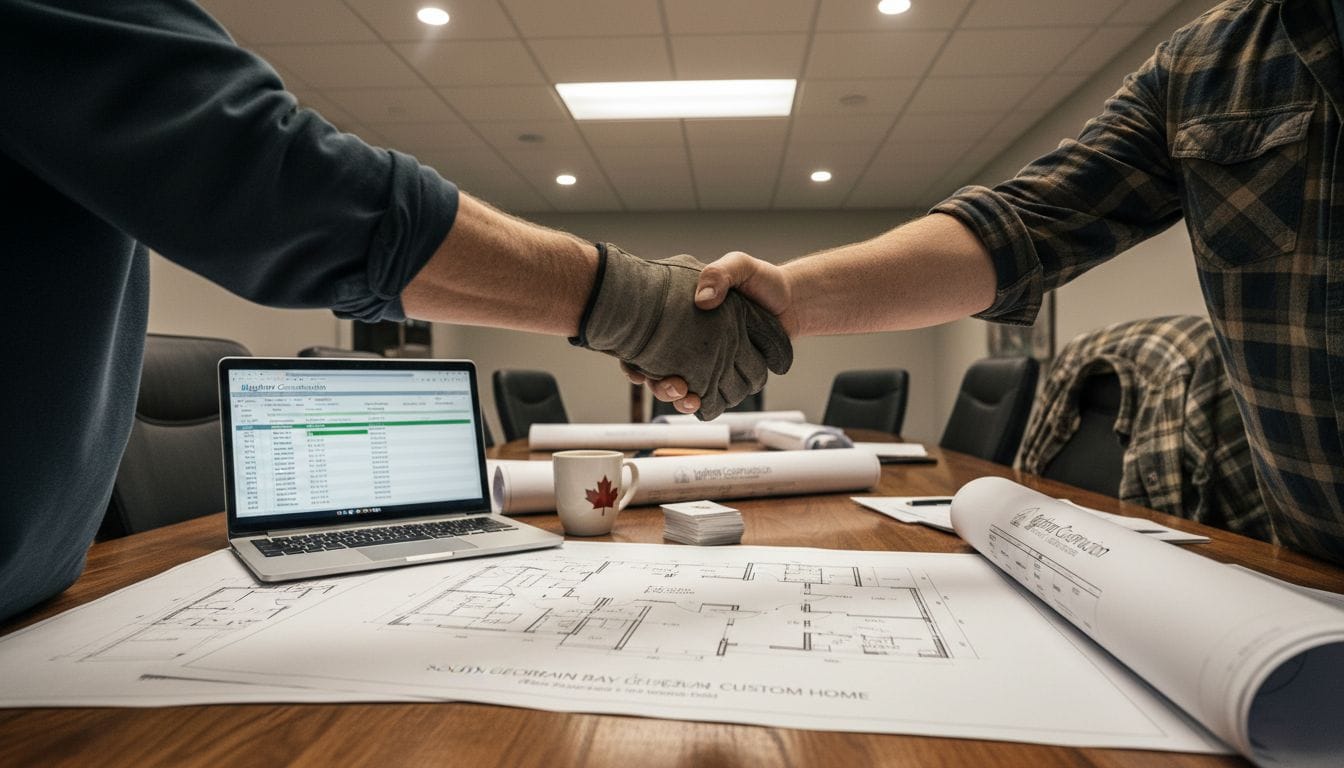
Most Canadian luxury home renovation setbacks can be traced to poor communication with contractors. For South Georgian Bay homeowners investing in high-end projects, even small misunderstandings can have costly ripple effects. Knowing exactly how to express your expectations and build an open dialogue with your contractor helps protect your vision and your investment from avoidable mistakes. This guide reveals the communication strategies every Canadian homeowner needs for a smooth renovation experience.
Table of Contents
- Step 1: Define Your Project Goals And Expectations
- Step 2: Establish Clear Lines Of Communication
- Step 3: Document Every Agreement And Instruction
- Step 4: Schedule Regular Check-Ins And Updates
- Step 5: Verify Work Quality And Resolve Concerns
Quick Summary
Main Insight
Detailed Explanation
1. Define clear project goals
Articulate specific objectives and requirements for your renovation project to ensure alignment with your contractor.
2. Establish effective communication
Create a structured communication plan detailing preferred channels and response times to avoid misunderstandings.
3. Document agreements thoroughly
Maintain comprehensive records of all project discussions and decisions to eliminate ambiguity and protect your investment.
4. Schedule regular check-ins
Set up consistent meetings to review project progress, address concerns, and make collaborative decisions with your contractor.
5. Conduct quality inspections
Proactively inspect work quality at each stage and address any issues immediately to ensure adherence to project standards.
Step 1: Define your project goals and expectations
Successful construction projects start with crystal clear goals and expectations. Your ability to articulate precise objectives sets the foundation for a smooth collaboration with your contractor.
Begin by documenting exactly what you want to achieve with meticulous detail. Understanding client project expectations means going beyond broad statements like “renovate my kitchen” to specific plans. For instance, instead of a vague goal, specify “Install custom maple cabinetry with soft close hinges, replace existing countertops with quartz in a light grey tone, and upgrade lighting to LED recessed fixtures.”
Break down your project into specific categories:
- Functional requirements
- Aesthetic preferences
- Budget constraints
- Timeline expectations
- Quality standards
When you develop comprehensive construction planning, include measurable milestones that allow both you and your contractor to track progress objectively. This approach transforms abstract desires into tangible project specifications that guide your entire renovation journey.
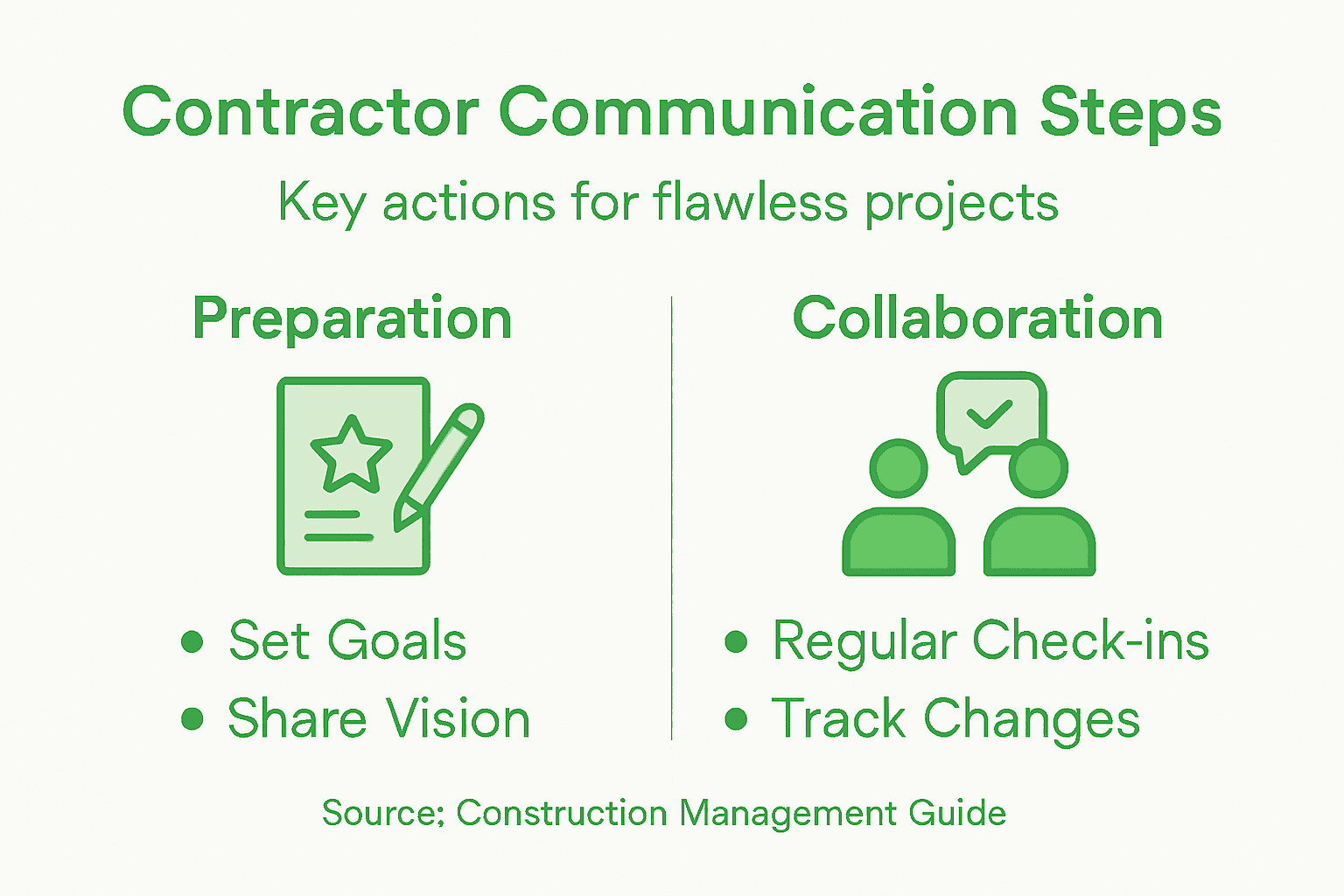
Pro tip: Create a visual mood board or digital folder with reference images to help your contractor precisely understand your vision and design preferences.
Step 2: Establish clear lines of communication
Communication is the backbone of any successful construction project. Your objective in this step is to create a transparent communication framework that prevents misunderstandings and keeps your project moving smoothly.
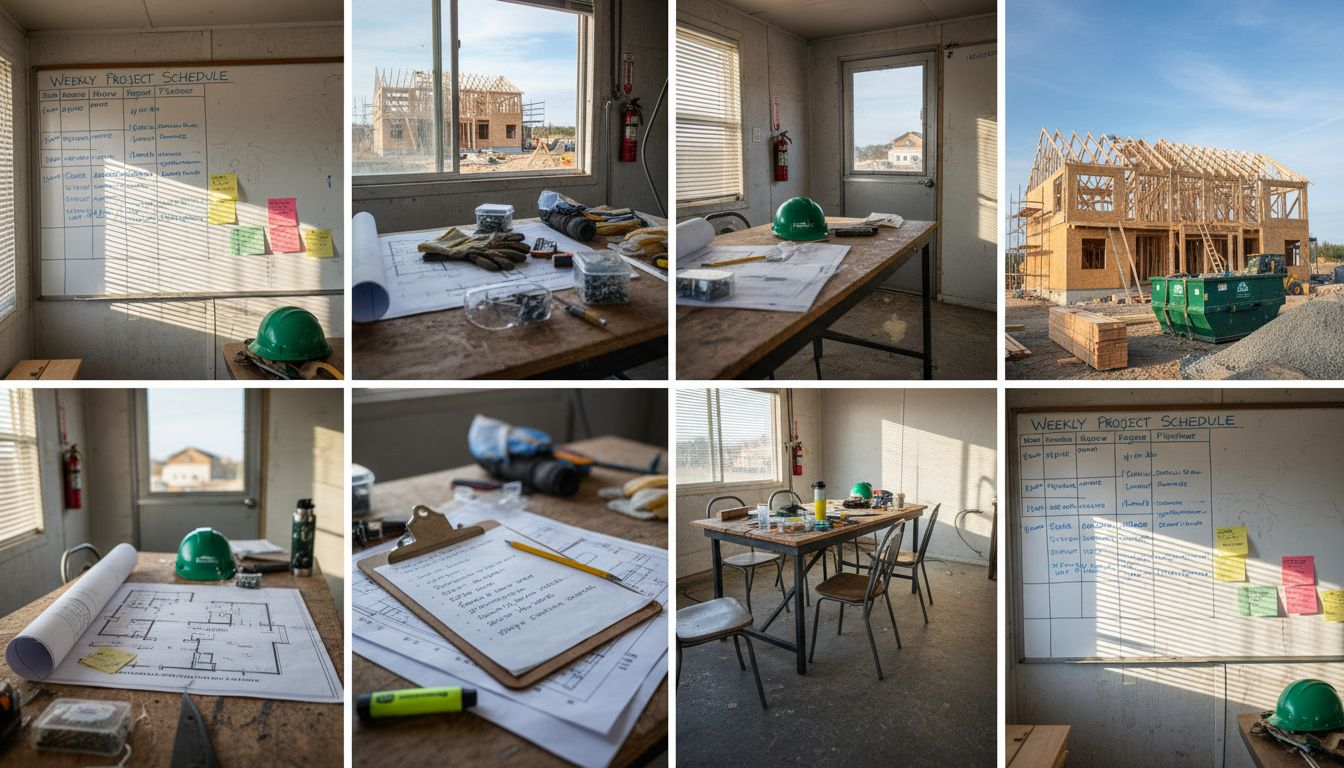
Effective communication in construction management requires establishing a structured approach from the start. Determine your preferred communication channels upfront. Will you use email, weekly in-person meetings, project management software, or a combination? Specify your preferred method of contact and expected response times. For instance, agree that emails will be responded to within 24 hours and complex questions will be discussed during scheduled weekly meetings.
Decide on a primary point of contact from both your side and the contractor’s team. This creates a clear chain of communication that prevents message fragmentation. Contractor communication protocols emphasize the importance of knowing exactly who is authorized to make decisions and communicate about specific project aspects.
Create a communication log or shared document where all project discussions, decisions, and changes are documented. This provides a transparent record that can prevent future disputes and helps everyone stay aligned on project progress and expectations.
Pro tip: Consider using a shared digital project management platform where all communication can be tracked, timestamped, and easily referenced by all stakeholders.
Below is a quick reference for frequently used construction communication channels:
Channel
Typical Usage
Strengths
Weaknesses
Routine updates, confirmations
Written record, asynchronous
Delayed responses possible
In-person Meetings
Complex discussions, planning
Instant feedback, nuanced talk
Requires scheduling
Project Management App
Task tracking, shared documents
Centralised updates, visibility
Learning curve for users
Phone Call
Urgent issues, simple queries
Immediate answers, fast
No written record
Step 3: Document every agreement and instruction
Protecting your investment means creating a paper trail that captures every detail of your construction project. Your goal is to establish a comprehensive written record that eliminates ambiguity and provides clear evidence of all project discussions and decisions.
Understanding contract documentation is crucial for preventing potential misunderstandings. Start by requesting a detailed written contract that outlines project scope, materials, timelines, payment schedules, and specific expectations. Each discussion about project modifications should be followed up with a written confirmation. This might include email summaries, annotated design sketches, or formal change order documents that all parties review and sign.
Consider creating a standardized communication template for tracking project instructions and agreements. This template should include date of discussion, participants present, specific details discussed, decisions made, and action items assigned. Basic ordering agreement frameworks suggest maintaining a structured approach where every significant conversation is documented with precision.
Include specific details such as exact measurements, material specifications, colour codes, and precise location descriptions. The more granular your documentation, the less room there is for interpretation or potential disputes. Photographs can also serve as excellent supplementary documentation, providing visual confirmation of discussions and agreements.
Here is a summary comparing key project documentation approaches:
Documentation Method
Advantages
Potential Drawbacks
Best Use Case
Formal Written Contract
Legally binding, detailed
Can be lengthy to create
Defining project scope
Email Summaries
Easy to use, time-stamped
May be less detailed
Confirming minor changes
Annotated Design Sketches
Visual clarity, quick reference
Not legally binding
Clarifying design details
Formal Change Orders
Tracks modifications officially
Requires contractor sign-off
Documenting major alterations
Pro tip: Maintain a dedicated digital folder where all project documents are organized chronologically and backed up in multiple locations to ensure you never lose critical project information.
Step 4: Schedule regular check-ins and updates
Effective project management hinges on consistent communication and proactive tracking of your construction project’s progress. Your goal is to establish a rhythm of regular interactions that keep everyone aligned and informed.
Ongoing project check-in strategies recommend creating a structured approach to project updates. Propose a realistic meeting cadence that suits your project complexity—this might be weekly in-person meetings for complex renovations or biweekly video conferences for smaller projects. During these check-ins, create an agenda beforehand that covers project milestones, current progress, potential challenges, and upcoming tasks.
One-on-one meeting best practices suggest preparing specific discussion points in advance. Come equipped with questions about material deliveries, workforce progress, budget adherence, and any potential deviations from the original project plan. Use these meetings not just as status updates, but as collaborative problem-solving sessions where both you and your contractor can discuss nuanced project details.
Remember that flexibility is key. While maintaining a consistent schedule, be open to additional check-ins if significant project changes or challenges emerge. Document each meeting with concise minutes that outline discussions, decisions, and next steps.
Pro tip: Create a shared digital calendar with pre-scheduled check-in slots and send calendar invites to ensure all stakeholders are synchronised and prepared for each update session.
Step 5: Verify work quality and resolve concerns
Quality control is your safeguard against potential construction mishaps and ensures your project meets the highest standards. Your mission is to proactively inspect work, address issues immediately, and maintain open communication about quality expectations.
Quality assurance surveillance techniques recommend developing a systematic approach to evaluating contractor performance. During each site visit, conduct thorough visual inspections comparing completed work against original design specifications. Look for precision in measurements, material quality, installation techniques, and alignment with approved plans. Document your observations with dated photographs and detailed notes that clearly highlight any discrepancies or areas of concern.
Construction quality control principles emphasize addressing issues promptly and professionally. When you identify potential problems, schedule an immediate discussion with your contractor. Present your observations objectively, using specific examples and referencing original contract specifications. Request a clear action plan for remediation, including timelines for corrections and steps to prevent similar issues in future work stages.
Remember that quality verification is an ongoing process. Do not wait for major milestones to assess work quality. Consistent, detailed inspections throughout the project will help catch and resolve minor issues before they become significant problems.
Pro tip: Create a standardised inspection checklist tailored to your specific project that allows for consistent and comprehensive quality assessments during each site visit.
Elevate Your Construction Communication for Truly Flawless Projects
Clear and consistent communication is the foundation of flawless construction projects, yet many homeowners struggle with keeping their vision aligned with the contractor’s work. The article highlights key pain points like setting precise expectations, documenting all agreements, and scheduling regular progress check-ins — all essential to avoiding costly misunderstandings and delays. At Mighton Construction, we specialise in luxury custom homes and meticulous renovations where transparent communication and attention to detail ensure your dream project comes to life exactly as planned.
Take control of your home building journey today by partnering with a trusted contractor who prioritizes your vision through every stage. Explore our expertise in General Contracting Archives - Mighton Construction | Luxury Custom Homes & Renovations and see how our approach transforms client collaboration into seamless reality. Visit Mighton Construction now to start your consultation and experience the peace of mind that comes from clear communication, expert craftsmanship, and a true turn-key solution.
Frequently Asked Questions
How can I clearly define my project goals when communicating with contractors?
Start by documenting detailed objectives for your project, such as specific features, materials, and timelines. This clarity helps set precise expectations and ensures that both you and your contractor are aligned.
What communication channels should I establish with my contractor?
Determine your preferred methods for communication, whether it’s email, in-person meetings, or project management software. Schedule regular updates and agree on response times to keep your communication streamlined and effective.
How can I ensure that all agreements and instructions are documented?
Create a comprehensive paper trail by documenting every conversation and decision related to your project. Use templates to record discussion points, agreements, and changes, which will provide clarity and prevent misunderstandings.
What is the best way to conduct regular check-ins with my contractor?
Establish a consistent schedule for check-ins, such as weekly meetings or biweekly updates. Prepare an agenda for each meeting to cover project milestones, challenges, and next steps, ensuring all stakeholders stay informed.
How do I verify work quality and resolve concerns during the project?
Conduct regular inspections to compare completed work against the original specifications. Document any discrepancies with notes and photographs, and communicate concerns to your contractor immediately, requesting a clear plan for resolution.