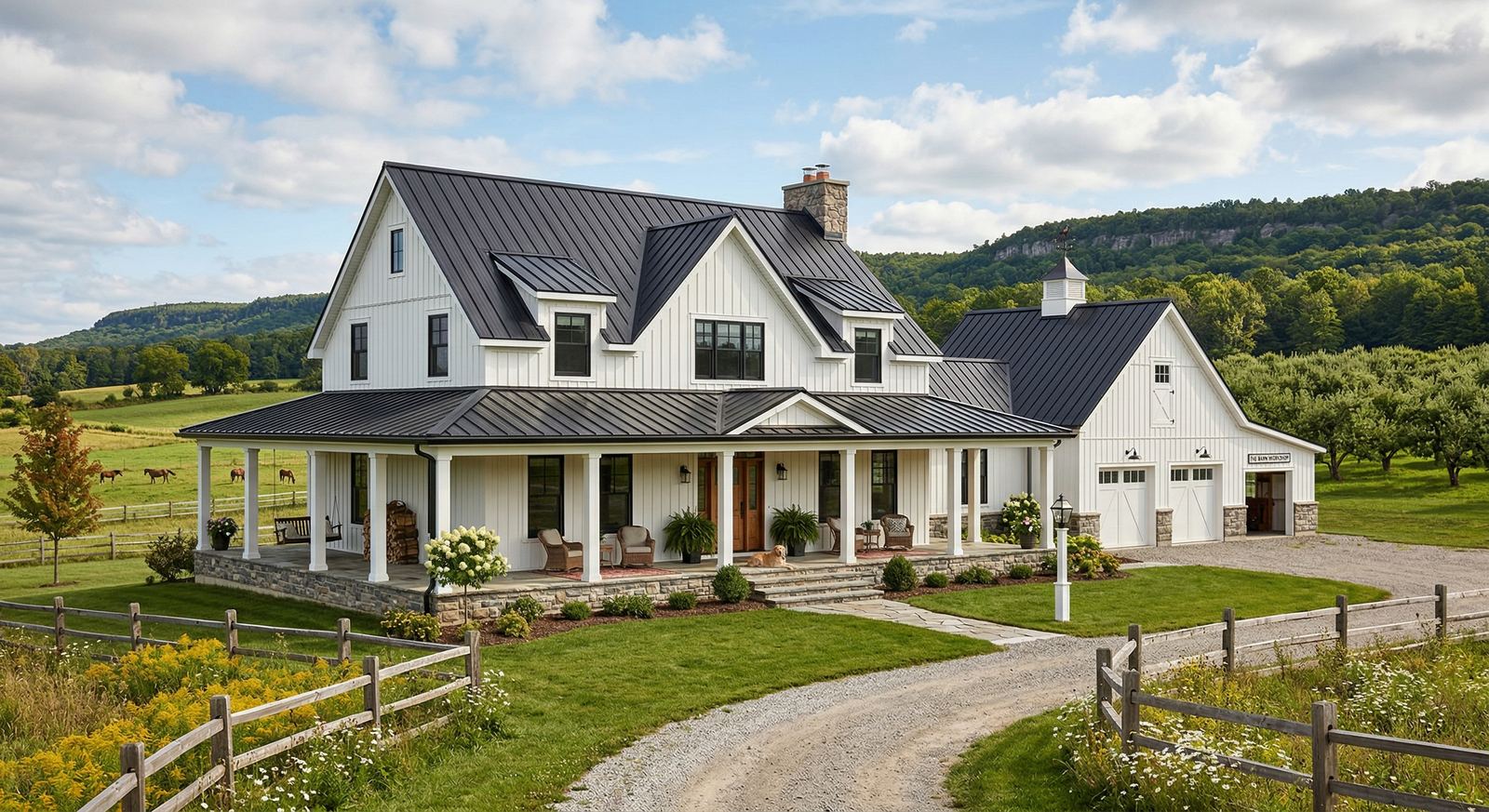
How to Choose the Perfect Floor Plan for Your Ontario Home: A Complete Guide

When it comes to building your custom home or renovating your dream home in Ontario, few decisions are as impactful as choosing the right floor plan. With 81% of Canadians preferring to age in place according to recent CMHC data, your floor plan selection becomes one of the most critical investments you’ll make for your family’s future comfort, safety, and financial security.
Ontario’s unique housing landscape presents distinct challenges and opportunities that generic floor plan advice simply can’t address. From our province’s extreme temperature variations spanning from -30°C winters in Thunder Bay to +35°C summers in Windsor, to our evolving building codes that mandate Net Zero energy readiness by 2030, Ontario homeowners need specialized guidance that accounts for our specific climate zones, building regulations, and lifestyle demands.
This comprehensive guide will walk you through every aspect of floor plan selection specifically tailored to Ontario’s requirements. You’ll discover how to navigate our provincial building codes, optimize your design for our challenging climate conditions, future-proof your investment for changing family needs, and ensure your home remains comfortable, efficient, and valuable for decades to come.
Whether you’re planning a custom cottage in cottage country, considering a multi-generational layout in the GTA, or designing an energy-efficient rural retreat, understanding Ontario’s unique design requirements is essential for making informed decisions that will serve your family well into the future.
Understanding Ontario’s Unique Design Requirements
Climate Considerations for Ontario Homes
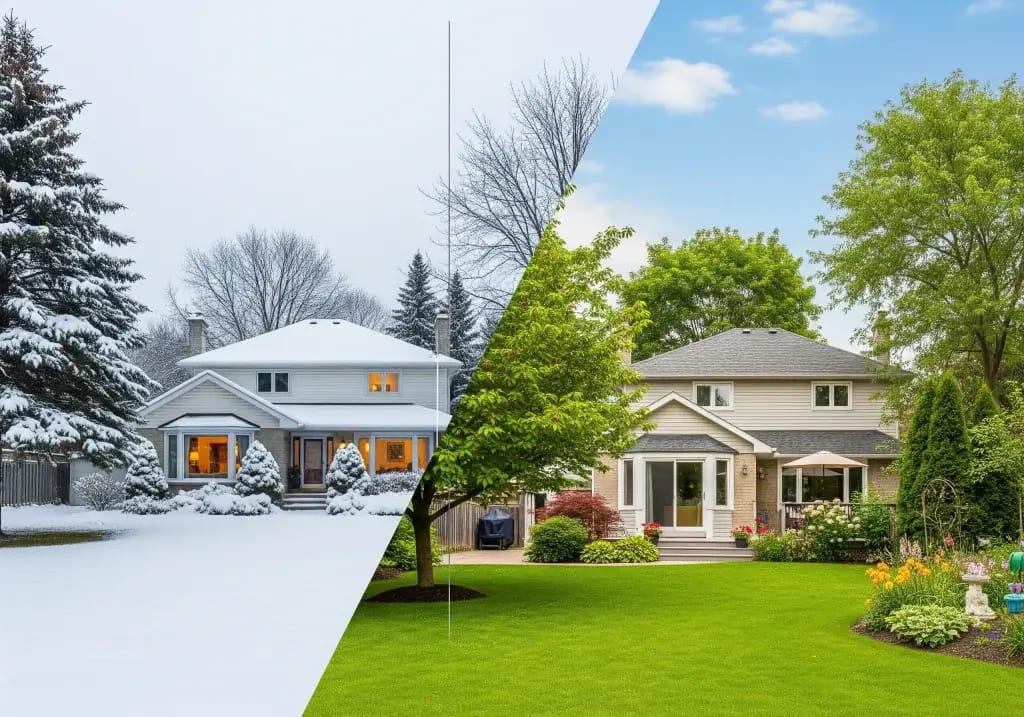
Ontario’s diverse climate zones create specific design challenges that significantly impact floor plan decisions. Our province’s extreme weather conditions, ranging from harsh northern winters with temperatures dropping to -40°C to humid southern summers exceeding 35°C, require thoughtful planning to ensure year-round comfort and energy efficiency.
Extreme Weather Adaptation
The dramatic temperature swings across Ontario’s seasons demand floor plans that accommodate sophisticated heating and cooling systems. Your layout must consider the placement of HVAC equipment, ductwork routing, and zone control systems. In northern Ontario regions like Sudbury and Timmins, heating system accessibility and maintenance access become critical factors, while southern regions require enhanced cooling strategies and cross-ventilation planning.
Snow load considerations are particularly crucial for multi-story designs and homes with large roof spans. Ontario’s building code requires structural calculations that account for ground snow loads ranging from 1.5 kN/m² in southwestern regions to over 4.5 kN/m² in northern areas. This directly impacts ceiling heights, beam sizing, and the feasibility of large open spaces.
Natural light optimization becomes essential during Ontario’s shorter winter days, when some regions receive less than 8 hours of daylight. Strategic window placement, particularly maximizing south-facing exposures, can reduce artificial lighting needs and provide passive solar heating benefits during cold months.
Energy Efficiency Mandates
Ontario’s commitment to Net Zero energy homes by 2030 fundamentally changes how we approach floor plan design. The provincial government’s climate action plan requires new construction to meet increasingly stringent energy performance standards, making compact, efficient layouts more valuable than ever.
Your floor plan must accommodate enhanced insulation requirements, including continuous insulation strategies that minimize thermal bridging. This affects wall thickness calculations and impacts room dimensions and usable floor space. Heat pump systems, now mandated in many Ontario municipalities, require specific spatial considerations for both indoor air handlers and outdoor condenser units.
Solar panel integration planning should influence roof design and orientation decisions from the earliest planning stages. South-facing roof areas with minimal shading and appropriate structural support become premium real estate in your floor plan design.
Ontario Building Code Requirements
Minimum Room Size Standards
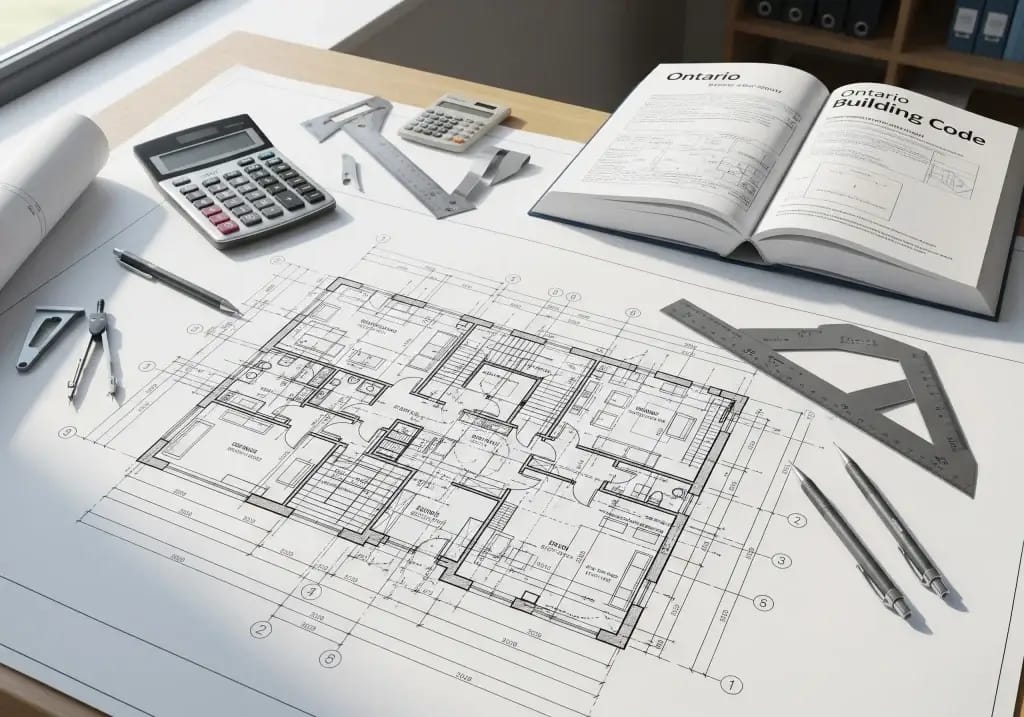
The Ontario Building Code sets specific minimum requirements that directly impact your floor plan options. Living areas must provide at least 13.5 square meters (145 square feet) of floor space, while master bedrooms require 9.8 square meters and secondary bedrooms need 7 square meters minimum.
Ceiling height requirements mandate 2300mm (7’6.5“) minimum clearance in habitable rooms, though many designers recommend 2440mm (8’) for improved proportions and future flexibility. This seemingly small difference can impact heating costs, construction expenses, and overall room feel.
Hallway widths must meet 860mm (2’10“) minimum standards, but accessibility-conscious designs often specify 1065mm (3’6“) to accommodate mobility aids and aging-in-place modifications. These decisions significantly affect the efficiency of your floor plan and the percentage of space dedicated to circulation versus living areas.
BCIN Certification Requirements
All residential construction in Ontario requires plans stamped by a Building Code Identification Number (BCIN) certified professional. This requirement ensures your floor plan meets structural, health, and safety standards, but also means modifications can’t be made without professional oversight.
Working with BCIN-certified designers early in the planning process helps avoid costly revisions and ensures your preferred floor plan concept can be realized within Ontario’s regulatory framework. Structural engineering considerations, particularly for open-concept designs and custom features, must be integrated into the initial planning process rather than addressed as afterthoughts.
Municipal variations across Ontario’s 444 municipalities can add additional requirements. Toronto’s Green Standard, for example, imposes energy performance requirements beyond provincial codes, while rural municipalities may have specific septic and well water integration requirements that affect utility room sizing and placement.
Assessing Your Family’s Current and Future Needs
Current Lifestyle Analysis
Family Composition Considerations
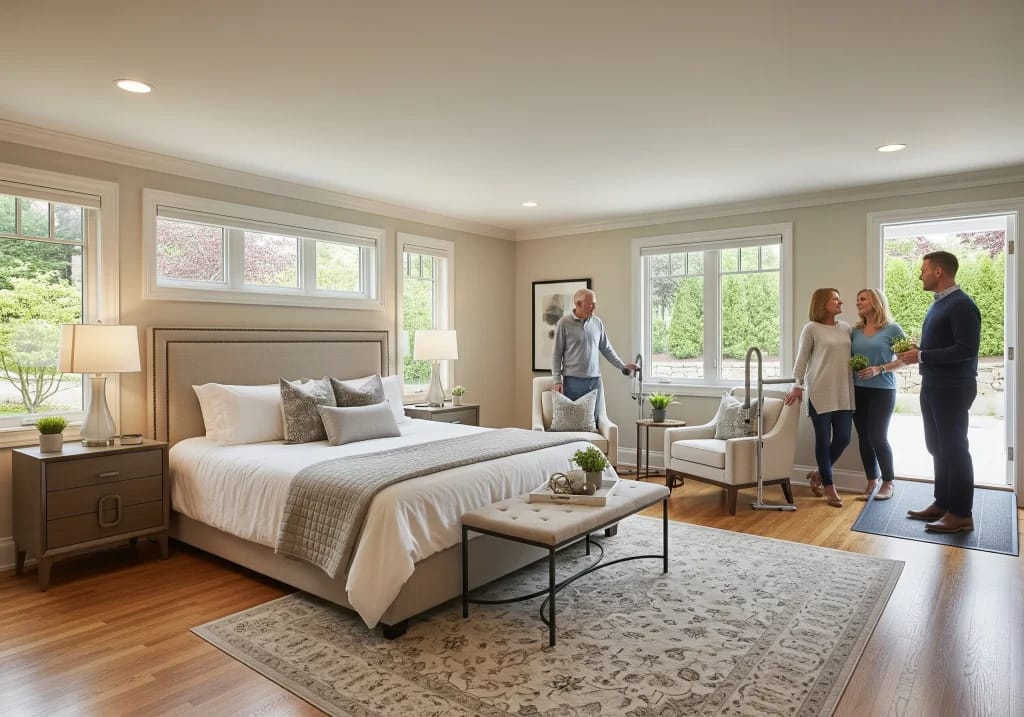
Understanding your family’s current dynamics while planning for future changes ensures your floor plan investment serves you well long-term. Ontario families are increasingly diverse, with multi-generational households growing by 37.5% over the past decade according to Statistics Canada data.
Consider not just current bedroom needs, but how spaces might evolve. A nursery near the master suite might later serve as a home office, while a main-floor guest room could become a grandparent’s suite or teenage retreat. The key is designing flexible spaces that can adapt without major renovation.
Age-appropriate layouts become particularly important in Ontario’s family-focused housing market. Young families need sight lines for child supervision, while families with teenagers benefit from separate zones that provide privacy while maintaining connection. Empty nesters often prefer single-floor living but want guest accommodation for visiting family.
Daily Routine Optimization
Post-pandemic lifestyle changes have fundamentally altered how Ontario families use their homes. With remote work becoming permanent for many, dedicated office space or flexible work areas are now essential rather than optional features.
Traffic flow patterns deserve careful analysis, particularly during Ontario’s long indoor seasons. Efficient circulation reduces heating and cooling costs while improving daily convenience. Consider how family members move through spaces during morning routines, evening activities, and weekend gatherings.
Entertainment and socializing preferences have evolved significantly. Ontario families increasingly value indoor-outdoor connections that extend usable seasons, requiring floor plans that facilitate easy patio and deck access. Storage for seasonal equipment, from hockey gear to camping supplies, requires dedicated space that doesn’t compromise living areas.
Future-Proofing Strategies
Aging in Place Design
With 81% of Ontario seniors preferring to age in their current homes, incorporating aging-in-place features from the beginning represents smart long-term planning. This doesn’t mean compromising aesthetics for institutional design, but rather making thoughtful choices that provide flexibility for future needs.
Bathroom placement becomes critical, with at least one full bathroom accessible without stairs. Shower design should accommodate future grab bar installation and potential roll-in access. Bedroom positioning on the main floor provides options for single-level living if mobility becomes challenging.
Consider elevator-ready design for multi-story homes. This involves allocating space above and below for future elevator installation and ensuring structural support is available. While few families install elevators initially, having the option preserves long-term livability and property value.
Family Evolution Planning
Ontario’s dynamic housing market rewards flexibility. Homes that can adapt to changing needs maintain stronger resale values and provide better long-term satisfaction for owners. Plan spaces that can serve multiple functions throughout your family’s lifecycle.
Flexible room design might include a main-floor office that could become a bedroom, or a bonus room over the garage that serves as a playroom, then teenager’s retreat, then exercise room, then craft space as needs evolve. The key is providing proper electrical, heating, and ventilation infrastructure to support various uses.
Technology integration planning becomes increasingly important. Ensure adequate electrical capacity and networking infrastructure to support evolving smart home technologies, home automation systems, and electric vehicle charging requirements.
Layout Options: Open Concept vs. Defined Spaces
Open Concept Advantages
Natural Light Maximization
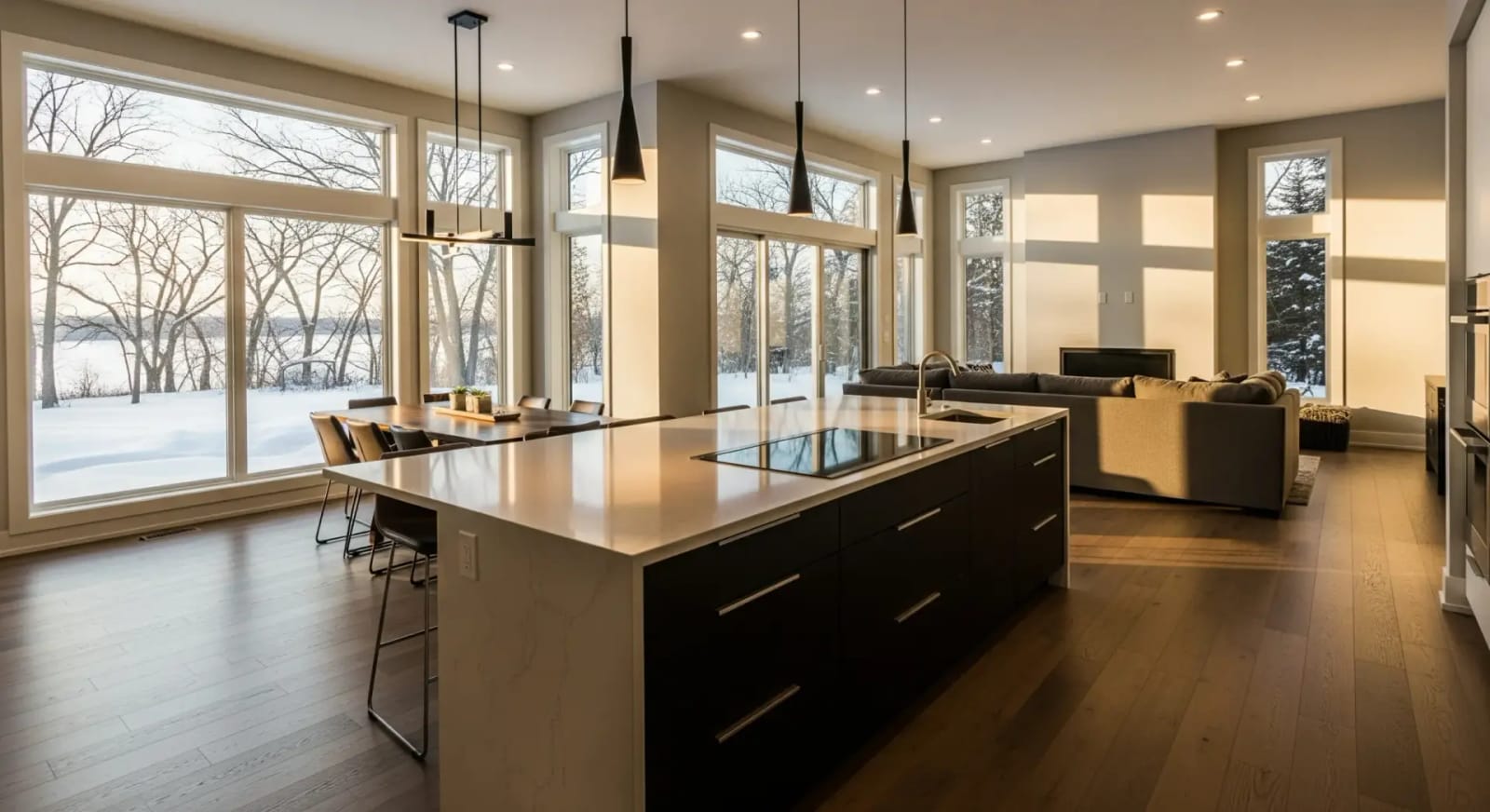
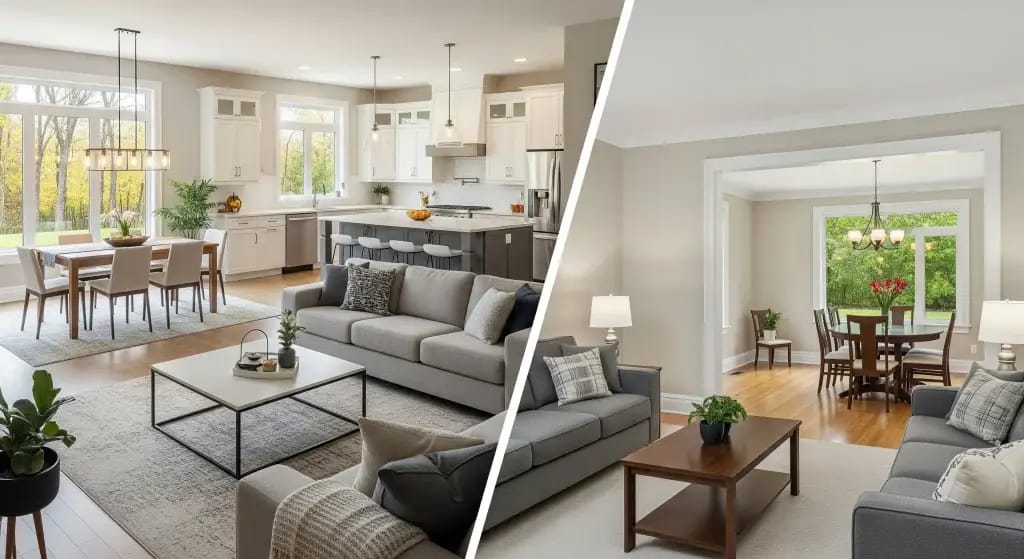
Open concept designs excel at distributing precious natural light throughout Ontario homes, a critical advantage during our extended winter months when some regions experience less than eight hours of daylight. By eliminating walls between living spaces, natural light from south-facing windows can penetrate deep into the home’s interior, reducing reliance on artificial lighting and supporting mental health during darker seasons.
Strategic window placement in open designs can create dramatic light corridors that make homes feel significantly larger and more welcoming. Skylights become particularly effective in open layouts, as their light can illuminate multiple functional areas simultaneously. This approach not only reduces energy costs but also creates the bright, airy atmosphere that helps combat seasonal affective patterns common in Ontario’s climate.
Cross-ventilation opportunities multiply in open designs, allowing summer breezes to flow freely through multiple spaces. This natural cooling reduces air conditioning demands during Ontario’s increasingly warm summers, supporting both comfort and energy efficiency goals.
Family Connection Benefits
Open concept layouts have become increasingly popular with Ontario families for their ability to facilitate supervision and interaction. Parents can prepare meals while monitoring children’s activities, maintain conversations across multiple spaces, and create inclusive environments for entertaining that don’t isolate kitchen workers from guests.
The flexibility for furniture arrangement allows families to adapt spaces for different activities and seasons. During winter months when outdoor entertaining isn’t possible, open spaces can accommodate larger gatherings. As families grow and change, furniture can be reconfigured without structural modifications.
Modern aesthetic appeal continues to drive market preference, with open concept homes typically showing stronger resale values in Ontario markets. Real estate data consistently shows buyer preference for open layouts, particularly in the GTA and other urban centers where maximizing perceived space is crucial.
Defined Spaces Benefits
Privacy and Noise Control
Defined spaces offer significant advantages for families with diverse schedules and activities. With remote work becoming permanent for many Ontario residents, having quiet zones separate from household activity has become essential rather than optional.
Temperature control becomes more precise with defined spaces, allowing families to heat or cool only occupied areas. This zoned approach can significantly reduce energy costs, particularly important given Ontario’s extreme seasonal temperature variations. Individual rooms can be closed off when not in use, focusing heating and cooling efforts where needed.
Separate entertaining areas allow different age groups to enjoy simultaneous activities without conflict. Teenagers can socialize in family rooms while parents entertain in living rooms, or children can play while adults conduct business calls in home offices.
Hybrid Solutions
Modern Ontario homes increasingly embrace hybrid approaches that combine open concept benefits with defined space advantages. Flexible wall systems, including pocket doors and moveable partitions, allow spaces to be opened for entertaining and closed for privacy as needed.
Partial walls and strategic architectural elements can define spaces while maintaining visual connection and light flow. Kitchen islands, built-in bookcases, and ceiling beam treatments create natural boundaries without complete separation.
Multi-purpose rooms represent another hybrid solution, with spaces designed to serve different functions throughout the day or seasons. A breakfast nook might transform into a homework station, or a formal dining room might double as a home office.
Room Placement and Flow Optimization
Strategic Room Positioning
Kitchen Placement as Home Hub
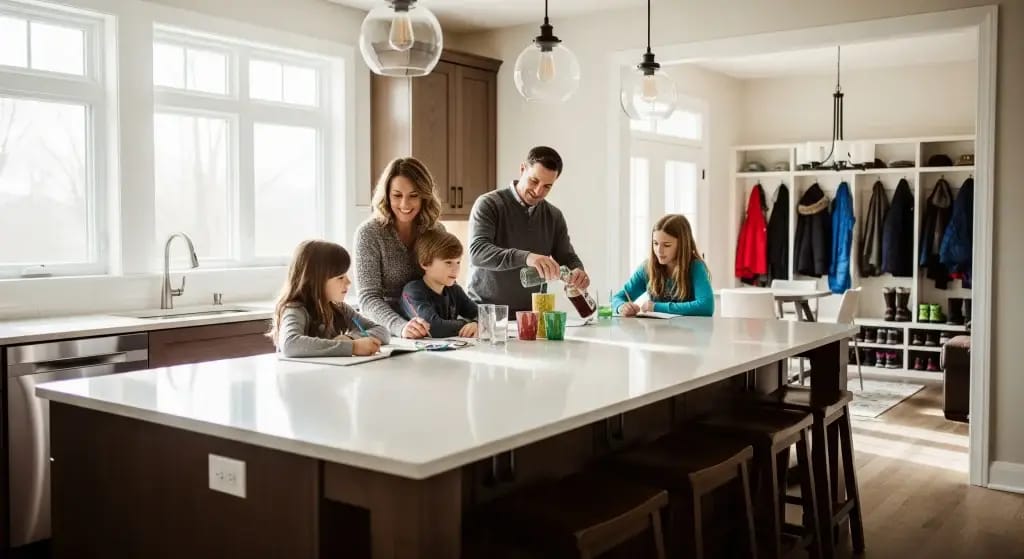
The kitchen’s role as the heart of Ontario homes requires careful positioning that considers both daily functionality and seasonal entertaining patterns. Central kitchen placement facilitates family connectivity while providing easy access to dining areas, living spaces, and outdoor entertainment zones.
Natural light access for kitchen tasks becomes particularly important during Ontario’s shorter winter days. East-facing windows provide morning light for breakfast preparation, while west-facing windows offer afternoon illumination for dinner preparation. South-facing exposures maximize day-long natural light but require consideration for summer heat gain and glare control.
Proximity to outdoor spaces extends entertaining seasons and facilitates the indoor-outdoor lifestyle increasingly valued by Ontario homeowners. Direct patio or deck access from the kitchen area supports summer entertaining while maintaining convenient service access during outdoor gatherings.
Bedroom Wing Planning
Master suite positioning requires balancing privacy with convenience. Location away from main living areas provides quiet retreat space, while proximity to laundry facilities offers practical benefits for busy Ontario families.
Children’s room clustering facilitates supervision and shared bathroom usage, while separation strategies provide privacy for different age groups. Consider future needs as children grow and require more independence and personal space.
Guest room placement affects both convenience and privacy. Main-floor guest rooms provide accessibility for elderly visitors while potentially serving as future master suites if mobility becomes challenging. Upper-level guest rooms offer more privacy but may be less accessible for some visitors.
Multi-generational suite considerations have become increasingly important as Ontario families adapt to changing demographics and housing costs. Self-contained suites with separate entrances, kitchenettes, and bathrooms provide independence while maintaining family connection.
Bathroom Distribution Strategy
Efficiency and Convenience
Powder room placement near main entertaining areas provides guest convenience without compromising private bathroom privacy. Strategic location near both formal and informal entertainment spaces maximizes utility without requiring guests to navigate through private family areas.
En-suite versus shared bathroom decisions impact both construction costs and daily convenience. Master suite en-suites are expected in Ontario’s housing market, while shared bathrooms for secondary bedrooms can provide cost savings and easier maintenance.
Laundry room integration with bathroom spaces offers efficiency in plumbing installation and daily convenience. Second-floor laundry locations reduce carrying loads up and down stairs, while main-floor locations provide accessibility and convenience for aging homeowners.
Future accessibility modifications should be considered during initial planning. Doorway widths, turning radii, and grab bar blocking can be incorporated during construction at minimal cost but become expensive retrofits later.
Storage Integration Throughout
Ontario-Specific Storage Needs
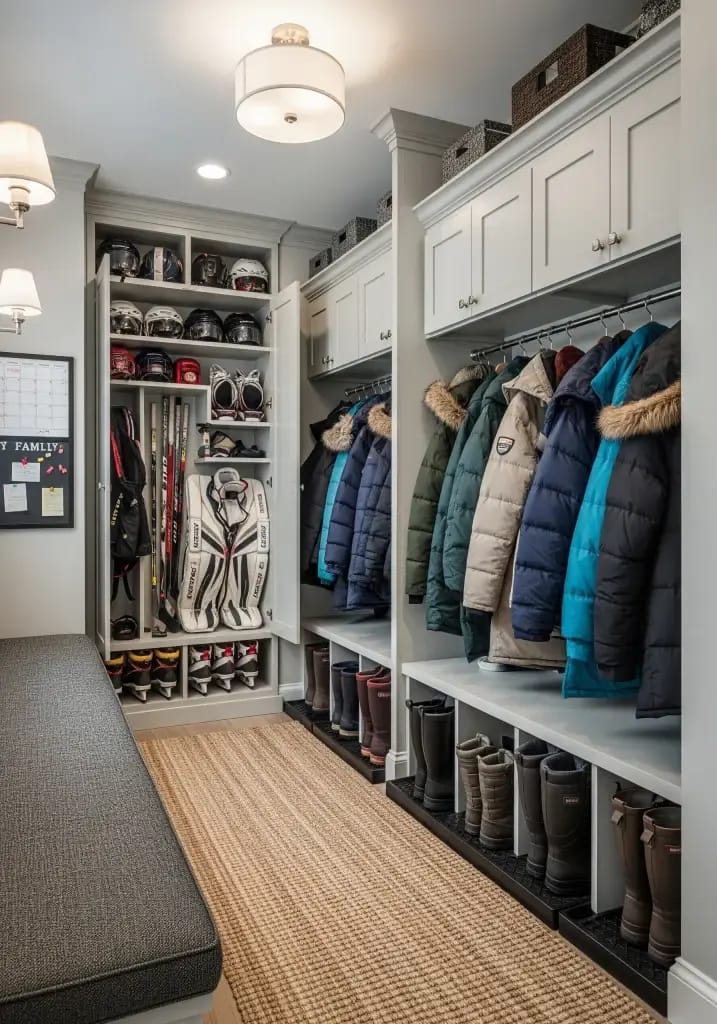
Seasonal storage requirements in Ontario exceed those in most other regions due to our dramatic seasonal variations. Winter sports equipment, summer recreational gear, holiday decorations, and seasonal clothing require dedicated storage spaces that don’t compromise daily living areas.
Mudroom design becomes essential for managing Ontario’s winter conditions. Proper mudroom planning includes boot storage, coat hanging, glove and hat storage, and floor surfaces that handle snow, salt, and mud without damage to other home areas.
Pantry sizing considerations differ between urban and rural Ontario locations. Urban homes may require less bulk storage space, while rural homes often benefit from larger pantries to accommodate less frequent shopping trips and seasonal food preservation activities.
Basement and attic utilization planning maximizes storage potential while ensuring proper climate control and access. Finished storage areas provide year-round access, while unfinished spaces can accommodate seasonal items that tolerate temperature fluctuations.
Ontario-Specific Special Considerations
Regional Climate Variations
Northern vs. Southern Ontario Differences
Ontario’s vast geography creates significantly different design requirements across regions. Northern Ontario communities like Thunder Bay, Sudbury, and Timmins face heating challenges that southern regions cannot imagine, with heating seasons extending from October through April and design temperatures reaching -35°C or lower.
Increased insulation requirements in northern regions affect wall thickness and room dimensions. R-values for walls, ceilings, and foundations increase substantially, requiring careful planning to maintain usable interior space while meeting energy efficiency requirements.
Foundation depth variations accommodate frost line differences that range from 1.2 meters in southern Ontario to over 2.4 meters in northern regions. These deeper foundations create opportunities for full-height basements but also increase construction costs and complexity.
Snow load calculations significantly impact roof design and room layout options. Northern Ontario regions may experience snow loads exceeding 4.5 kN/m², limiting large spans and affecting ceiling height decisions. These requirements influence the feasibility of cathedral ceilings, large family rooms, and other popular design features.
Seasonal access and emergency planning become critical in remote northern locations where winter weather can isolate homes for extended periods. Floor plans should consider emergency heating alternatives, food storage capacity, and communication equipment placement.
Urban vs. Rural Considerations
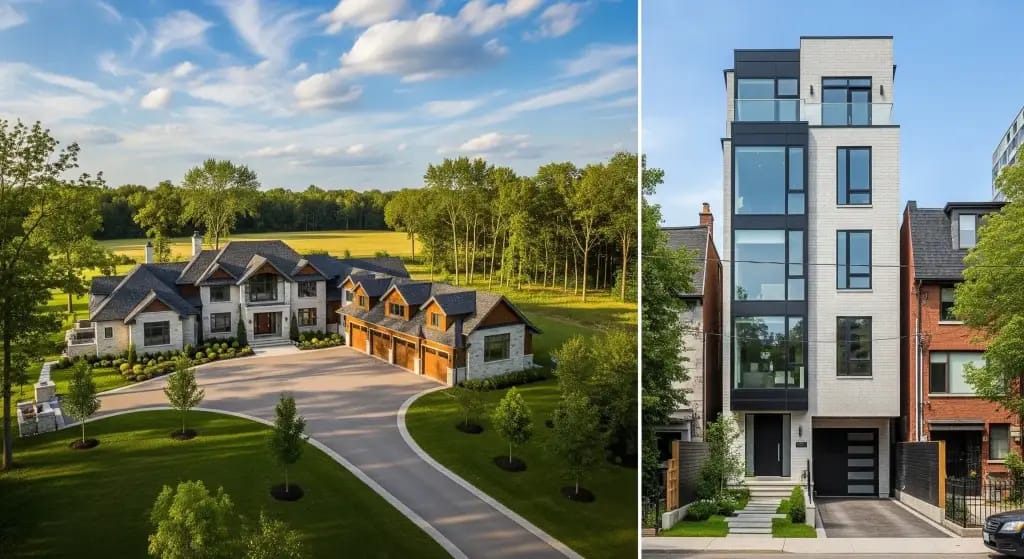
Urban Lot Constraints
Greater Toronto Area markets face unique challenges with narrow lot development and infill construction. Lots as narrow as 20 feet require creative design solutions that maximize livable space while meeting setback requirements and providing adequate natural light.
Multi-story living optimization becomes essential when horizontal expansion is limited. Three and four-story designs allow families to achieve desired square footage while respecting lot coverage restrictions and neighboring properties’ privacy and light access.
Noise mitigation strategies address urban environment challenges including traffic, neighboring properties, and commercial activities. Strategic room placement, sound-absorbing materials, and window selection help create peaceful interior environments despite urban settings.
Green space maximization in limited urban areas requires creative integration of outdoor living spaces. Roof decks, balconies, and efficient backyard designs help urban families access outdoor recreation and entertaining opportunities within space constraints.
Rural Ontario Opportunities
Rural Ontario locations offer design freedom unavailable in urban settings, including larger footprint possibilities and expanded outdoor living integration. These opportunities allow for single-story designs, extensive storage areas, and specialized spaces like workshops, craft rooms, or exercise facilities. Professional custom home builders understand how to maximize these rural opportunities while addressing unique challenges.
Well water and septic system integration requires careful planning for utility room sizing, water treatment equipment, and backup power systems. These rural infrastructure requirements affect floor plan design but also offer independence from municipal utility systems.
Agricultural zoning considerations may affect home placement, outbuilding integration, and business use allowances. Farm properties often benefit from office space, equipment storage, and facilities that support agricultural operations.
Fire safety and emergency access planning take on greater importance in rural locations where emergency response times may be extended. Floor plan design should consider escape routes, emergency communication equipment, and backup power systems for essential systems.
Energy Efficiency and Sustainability
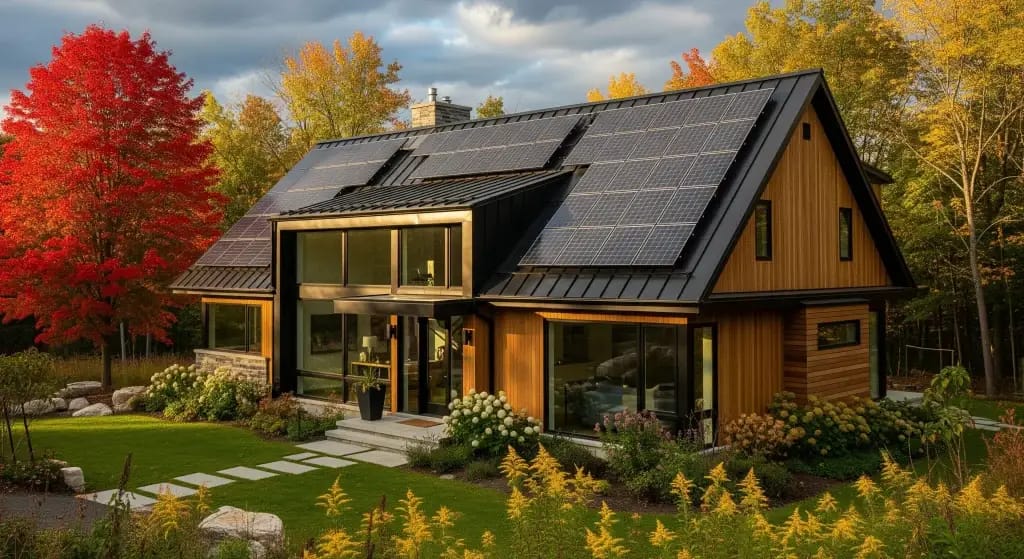
Ontario Green Building Standards
Provincial green building incentives and requirements continue evolving, with programs like the Canada Greener Homes Grant providing rebates for energy-efficient construction and renovations. Floor plan design affects eligibility for these programs and the potential rebate amounts available.
Net Zero ready design considerations include passive house principles, enhanced insulation strategies, and renewable energy integration. These approaches require specific architectural features and mechanical system planning that should be integrated into floor plan design from the beginning.
Renewable energy integration possibilities extend beyond solar panels to include geothermal heating systems, wind power, and battery storage systems. Each technology requires space allocation and infrastructure planning that affects room layout and mechanical room sizing.
Water conservation and rainwater harvesting systems require storage space, filtration equipment, and distribution systems that impact utility room design and basement planning. These sustainable features often qualify for rebates while reducing long-term operating costs.
Future Regulatory Considerations
Anticipated Building Code Changes
Climate adaptation requirements continue evolving as Ontario addresses extreme weather events and changing precipitation patterns. Future codes may mandate enhanced storm protection, flood resilience, and extreme temperature preparation that affect foundation design, utility placement, and emergency preparation spaces.
Energy efficiency mandate increases will likely require even higher insulation levels, more sophisticated mechanical systems, and renewable energy integration. Planning for these anticipated changes during initial design prevents costly future retrofits.
Accessibility standard improvements reflect Ontario’s aging population and commitment to inclusive design. Future codes may mandate wider doorways, accessible bathrooms, and elevator-ready construction in more building types and situations.
Municipal green standard compliance varies across Ontario but trends toward more stringent requirements. Understanding local municipality plans for green building requirements helps ensure floor plan designs remain compliant as regulations evolve.
Conclusion: Building Your Perfect Ontario Home
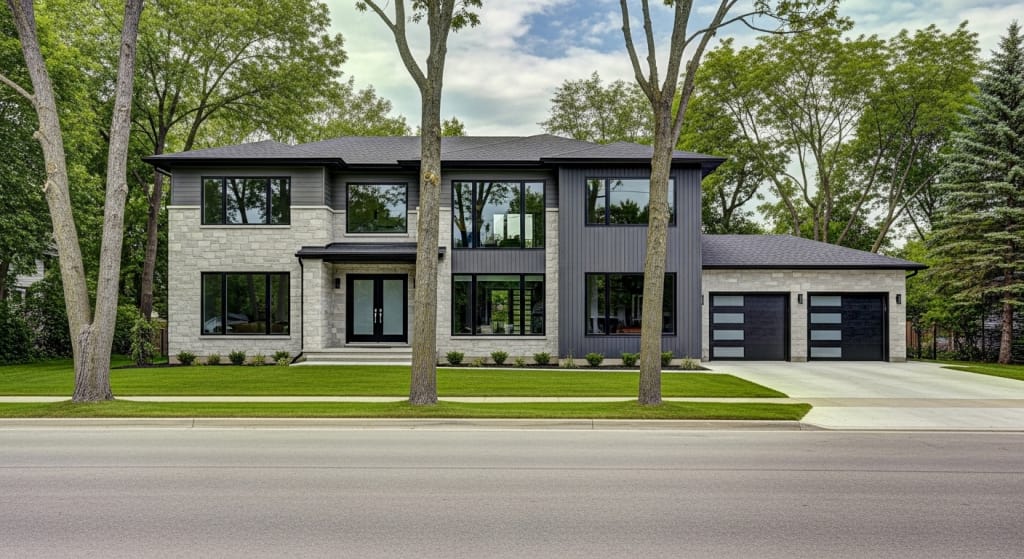
Choosing the perfect floor plan for your Ontario home requires balancing immediate needs with long-term flexibility, regulatory compliance with personal preferences, and energy efficiency with comfort and livability. The decisions you make during the planning process will impact your family’s daily life, energy costs, and property value for decades to come.
Climate-responsive design isn’t optional in Ontario—it’s essential for creating homes that remain comfortable and affordable to operate through our extreme seasonal variations. From maximizing natural light during short winter days to providing effective cooling during increasingly warm summers, your floor plan must work with Ontario’s climate rather than against it.
The balance between current needs and future adaptability determines whether your home will serve your family throughout life’s changes. With 81% of Canadians preferring to age in place, incorporating flexibility and accessibility features from the beginning represents wise long-term planning that preserves options and property value.
Building code compliance and professional consultation with BCIN-certified designers ensure your dream floor plan can become reality while meeting Ontario’s safety and efficiency standards. The investment in professional design services pays dividends in avoided complications, energy savings, and long-term satisfaction.
Thoughtful floor plan selection represents one of your most important investment decisions as an Ontario homeowner. Understanding what it costs to build a custom home in Ontario helps inform these critical design decisions. The time and energy invested in proper planning creates returns in daily comfort, energy savings, and property appreciation that benefit your family for generations.
Take Action on Your Dream Home Today
Ready to transform your vision into reality? The floor plan decisions you make today will shape your family’s comfort, energy costs, and lifestyle for decades to come. Don’t leave these critical choices to chance—partner with professionals who understand Ontario’s unique requirements and your family’s specific needs.
Contact Mighton Construction Limited today to begin planning your custom home or cottage project in Wasaga Beach and Simcoe County. Our experienced team combines deep knowledge of Ontario building codes with innovative design solutions that maximize comfort, efficiency, and value.
Whether you’re envisioning a year-round family home, a seasonal cottage retreat, or a multi-generational living solution, we’ll help you navigate the complexities of floor plan selection while ensuring your project meets all regulatory requirements and exceeds your expectations.
Contact us to schedule your consultation. Your perfect Ontario home starts with the right floor plan—let’s make it happen together.