
Home Automation: Elevating Luxury Living in Canada
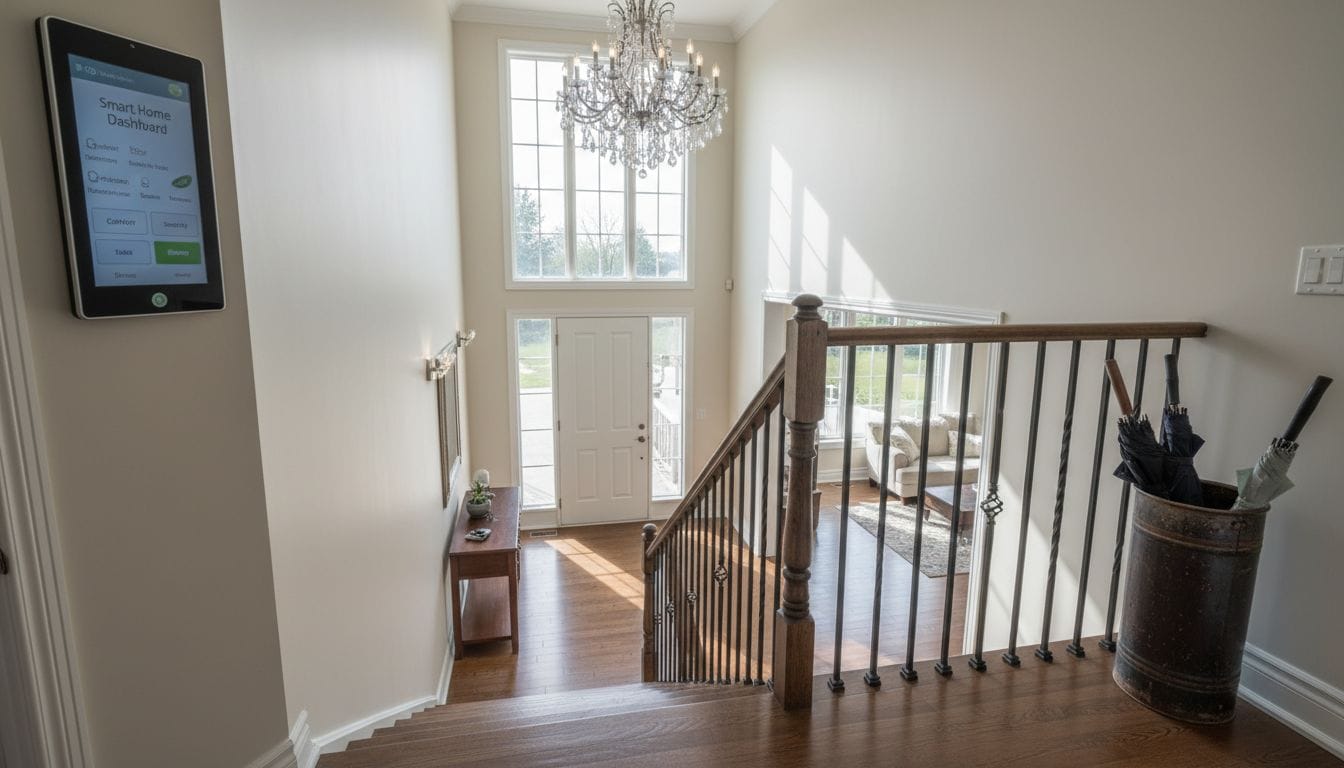
Managing a luxury property in South Georgian Bay often feels like juggling countless systems, from climate control to security. This complexity can lead to wasted energy and time, especially across homes in Wasaga Beach or Collingwood. Home automation promises a smarter way, connecting devices and routines into a seamless ecosystem for improved convenience and energy efficiency. Discover how defining and implementing advanced automation transforms custom homes into modern, efficient spaces that operate effortlessly.
Table of Contents
- Defining Home Automation In Modern Homes
- What Actually Qualifies As Home Automation?
- Why Luxury Homes In South Georgian Bay Need This
- The Three Levels Of Home Automation
- Real-World Benefits For Your Lifestyle
- Types Of Home Automation Systems Explained
- Wireless Vs. Wired Systems
- Communication Protocols Explained
- System Types By Scope
- Hub-Based Vs. Hub-Free Systems
- Key Features And Smart Devices Overview
- Essential Smart Devices For Luxury Homes
- How These Devices Communicate
- The Three Layers Of Smart Home Control
- Energy Monitoring And Efficiency
- Real-World Applications In Luxury Homes
- Climate Control And Energy Management
- Security Beyond Traditional Locks
- Personalized Living Environments
- Whole-Home Integration
- Practical Safety And Monitoring
- Risks, Costs, And Integration Considerations
- Security And Privacy Risks
- The True Cost Of Home Automation
- Interoperability And Integration Challenges
- Planning For Future Scalability
- Existing Home Complexity
Key Takeaways
Point
Details
Understanding Home Automation
Home automation integrates devices for seamless control, unlike standalone smart devices. It requires centralised management and automated routines to function effectively.
Luxury Homes Advantage
In affluent areas like South Georgian Bay, automation improves operational efficiency, especially for multiple properties, reducing energy costs and enhancing convenience.
Automation Levels
Basic, integrated, and advanced automation levels cater to different needs; most luxury homeowners begin with integrated systems and upgrade to advanced features over time.
Planning Importance
Investing in home automation should start during the design phase of new builds or renovations to ensure seamless integration and cost-effectiveness, reducing future retrofitting challenges.
Defining Home Automation in Modern Homes
Home automation means using technology to control your home’s systems automatically or remotely. It connects devices like lighting, heating, security cameras, and appliances so they work together seamlessly.
The confusion starts when people use “smart home” and “automated home” interchangeably. Recent research shows these terms actually describe different things. AI, IoT, and digital technologies are transforming homes into interconnected ecosystems, but without clear definitions, homeowners struggle to understand what they’re really buying.
What Actually Qualifies as Home Automation?
True home automation goes beyond having smart devices scattered throughout your home. It requires these core components:
- Programmable control systems that follow schedules you set (lights on at sunset, temperature adjustments at night)
- Sensor integration that responds to conditions (motion triggers lights, humidity sensors control ventilation)
- Centralized management through one app or interface instead of controlling each device separately
- Automated routines that execute multiple actions simultaneously (leaving home locks doors, turns off lights, adjusts thermostat)
Without these elements, you have individual smart devices, not a truly automated home.
Why Luxury Homes in South Georgian Bay Need This
For affluent homeowners in Wasaga Beach, Collingwood, and Blue Mountain, home automation addresses real lifestyle challenges. Your home is likely substantial—perhaps a primary residence plus a cottage or vacation property. Managing multiple properties manually wastes time and increases energy costs.
Automation systems can enhance operational efficiency through programmable schedules and sensors, reducing heating and cooling waste. You control everything from your smartphone whether you’re at the lake, on business travel, or across the country.
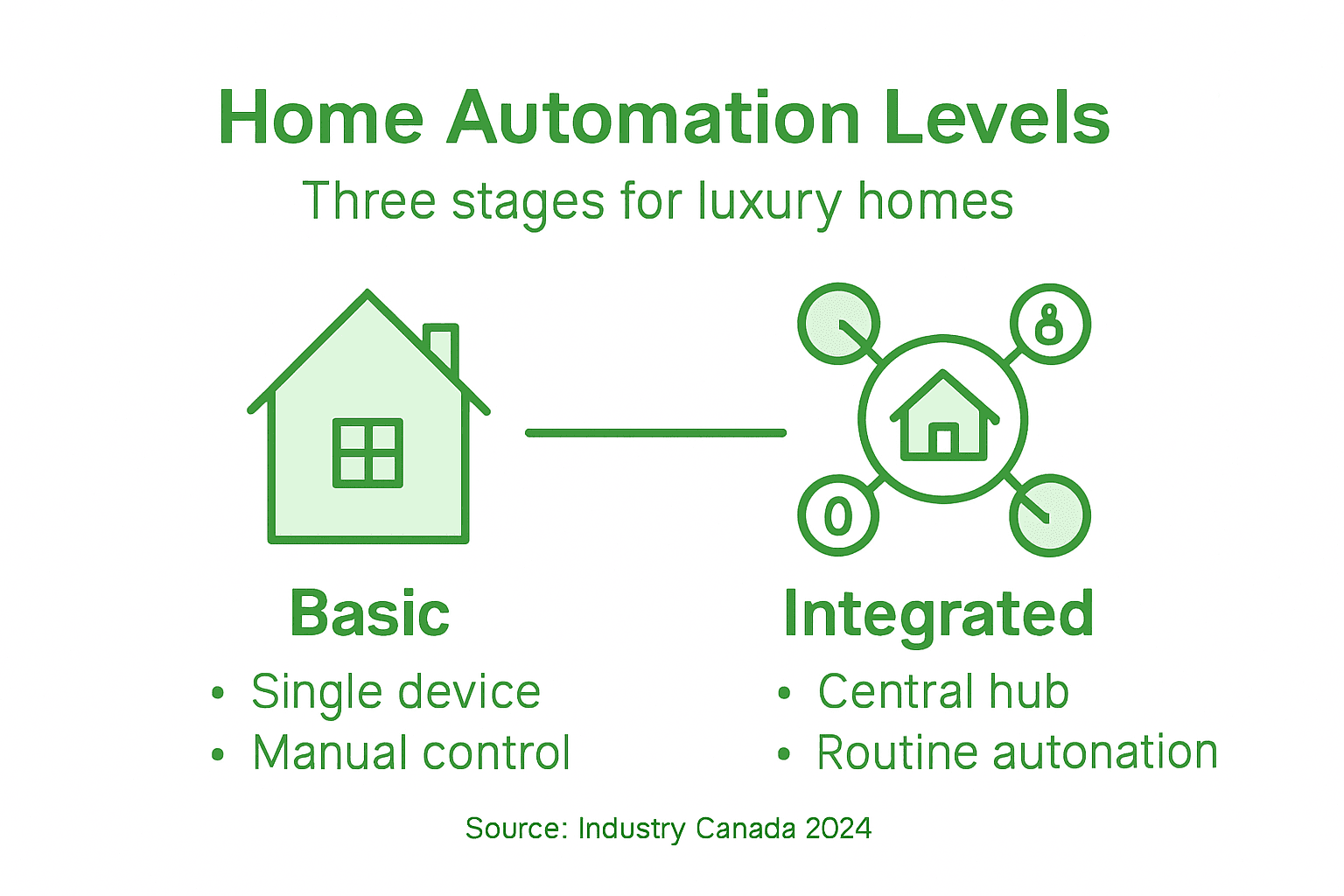
The Three Levels of Home Automation
Understanding the spectrum helps you make informed decisions:
- Basic automation — Individual devices and simple routines (smart thermostat, connected door locks)
- Integrated automation — Multiple systems communicate and share data (temperature adjusts when doors unlock, lighting responds to occupancy)
- Advanced automation — AI learns your preferences and optimises everything automatically (systems predict your arrival and prepare your home)
Most luxury homes start with integrated automation, then add advanced features over time.
Here’s how basic, integrated, and advanced home automation compare:
Automation Level
Typical Features
Complexity
User Involvement
Basic
Single-device control
Low
Manual setup and control
Integrated
Devices communicate and share data
Moderate
Occasional adjustments
Advanced
AI-powered, system learns routines
High
Minimal, system adapts automatically
Real-World Benefits for Your Lifestyle
Home automation isn’t just convenient—it delivers measurable advantages:
- Energy savings through precise climate control and automated lighting
- Enhanced security with integrated cameras, smart locks, and motion detection
- Property protection when you’re away at your cottage or travelling
- Accessibility improvements for aging-in-place comfort
- Remote management of rental properties or guest cottages
These benefits matter to discerning homeowners who value both luxury and practicality. When you’re investing in a custom home or renovating existing space, automation planning should happen during the design phase, not as an afterthought.
A properly designed home automation system becomes invisible to daily life—it works behind the scenes, solving problems before you notice them.
Pro tip: Start your automation planning with your most pain-heavy system—whether that’s heating bills, security monitoring, or lighting management—then expand systematically as you understand the technology better.
Types of Home Automation Systems Explained
Home automation systems fall into distinct categories based on how they communicate and what they control. Understanding these types helps you choose the right solution for your South Georgian Bay home.
The oldest systems used power-line signaling through protocols like X10, sending signals through your existing electrical wiring. Modern systems rely on wireless networks instead, making them easier to install in existing homes without rewiring walls.
Wireless vs. Wired Systems
Your two main choices come down to installation complexity and reliability:
Wired systems run dedicated cables throughout your home during construction. They’re extremely reliable and secure but require planning during the build phase. Most custom homes in Wasaga Beach and Collingwood incorporate wired infrastructure when built or significantly renovated.
Wireless systems use radio frequencies to communicate between devices and hubs. They’re flexible, easier to expand, and work in existing homes without major retrofitting. The trade-off is occasional interference and slightly lower reliability than hardwired setups.
Communication Protocols Explained
Different devices speak different “languages.” These communication protocols like Zigbee, Z-Wave, Wi-Fi, and Bluetooth determine compatibility between components.
- Wi-Fi — Faster, more familiar, but uses more power and bandwidth
- Zigbee — Low-power mesh network, excellent for battery-operated sensors
- Z-Wave — Similar to Zigbee, designed specifically for home automation
- Bluetooth — Ideal for direct device connections, less for whole-home systems
Most systems use multiple protocols simultaneously. Your hub might connect to the internet via Wi-Fi while controlling door locks through Z-Wave.
System Types by Scope
Home automation systems typically focus on specific areas:
- Climate control — Smart thermostats, zone-based heating and cooling
- Lighting automation — Programmable schedules, occupancy sensors, mood scenes
- Security systems — Smart locks, cameras, motion detection, alarm integration
- Entertainment — Audio distribution, home theatre control, streaming device management
- Energy monitoring — Smart meters tracking usage, appliance-level control
- Access and gates — Automated garage doors, driveway gates, front entrance systems
Integrated systems combine multiple categories through a central hub or app.
Below is a summary showing how different system types serve major lifestyle needs in luxury homes:
System Type
Best For
Core Benefit
Example Use Case
Climate Control
Energy efficiency
Lowers heating/cooling costs
Preparing cottage remotely
Security Systems
Peace of mind
Real-time alerts & deterrence
Monitoring primary and vacation homes
Lighting Automation
Comfort & ambience
Customizable moods and schedules
Welcoming guests with preset scenes
Entertainment
Lifestyle
Seamless multi-room audio/video
Outdoor parties with synced music
Hub-Based vs. Hub-Free Systems
A central hub acts as the brain—connecting all devices, storing automation rules, and providing remote access. Popular options include Apple Home Hub, Amazon Alexa, and Google Home.
Some devices work without a hub, communicating directly with your smartphone. This works for small setups but becomes unreliable as you add more devices.
Most affluent homeowners benefit from a hub-based system because it provides reliability, remote access when you’re away at your cottage, and the ability to expand without limitations.
Pro tip: Choose your central hub first—it determines which devices you can add later, so picking a mature ecosystem like Apple or Amazon prevents costly incompatibilities down the road.
Key Features and Smart Devices Overview
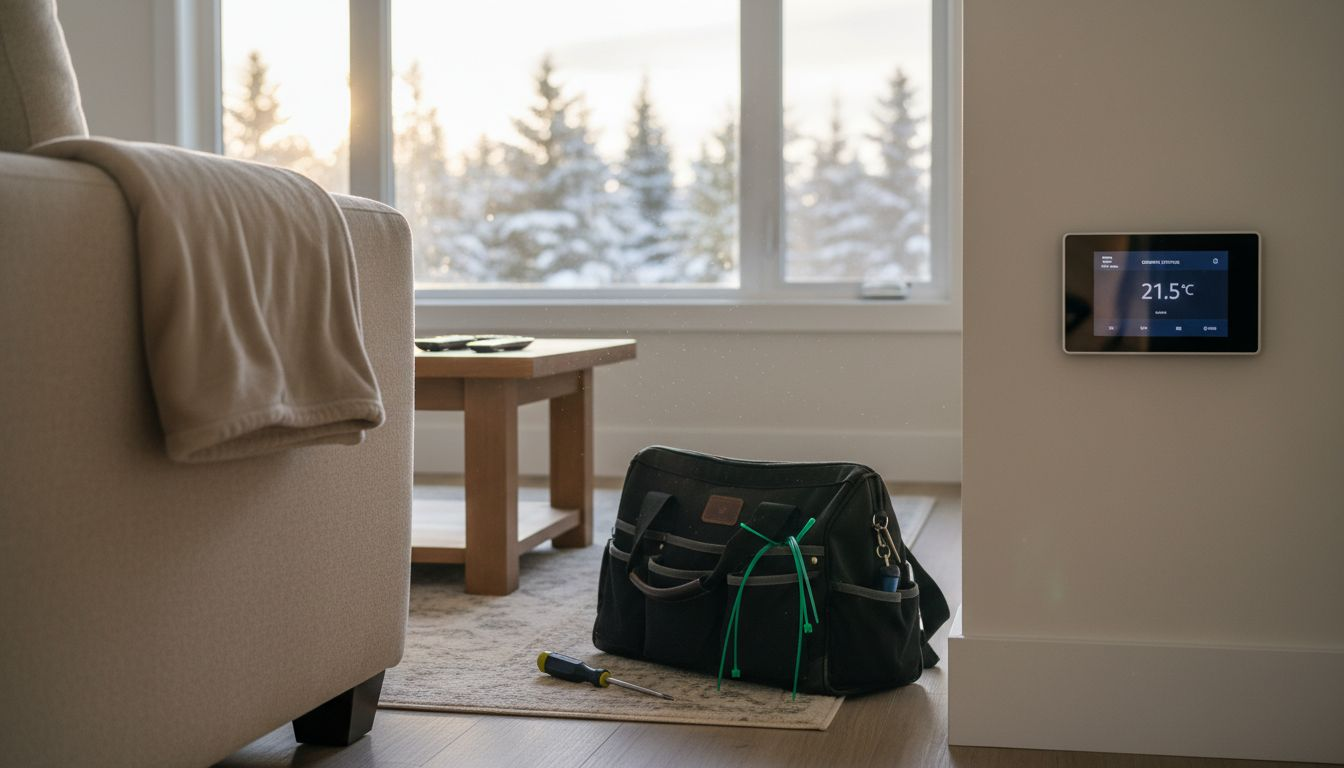
Smart home devices work together to create seamless automation. Each device serves a specific purpose, but their real power emerges when they communicate as a unified system.
The foundation includes sensors that detect conditions (temperature, motion, light levels), controllers that manage responses, and user interfaces like mobile apps or voice commands. These three components work in harmony to deliver automation that feels effortless.
Essential Smart Devices for Luxury Homes
Most affluent homeowners in Collingwood, Blue Mountain, and Wasaga Beach start with these core devices:
- Smart thermostats — Learn your preferences, adjust temperatures automatically, and report energy usage
- Connected lighting — Programmable scenes, occupancy sensors, and colour temperature control
- Smart locks — Remote access, guest permissions, and integration with other systems
- Security cameras — Indoor and outdoor monitoring with cloud storage and motion alerts
- Motion and environmental sensors — Detect occupancy, humidity, air quality, and door/window status
- Smart appliances — Refrigerators, ovens, washers that notify you of issues remotely
You don’t need all of these immediately. Start with systems addressing your biggest pain points.
How These Devices Communicate
Smart devices use sensors, controllers, and user interfaces to create seamless experiences. Communication happens through your home’s network infrastructure.
Your system needs reliable Wi-Fi coverage throughout every room where devices operate. Dead zones cause frustration and unreliable automation. Many luxury homes install mesh Wi-Fi networks during construction to eliminate this problem entirely.
Voice assistants like Alexa or Google Home provide natural interaction. Instead of opening an app, you simply say what you want. For waterfront properties, voice control proves especially useful when your hands are occupied or when you’re relaxing on the deck.
The Three Layers of Smart Home Control
Every automation system operates on three levels:
- Direct control — You tell a device what to do (turn on the light, lock the door)
- Automation routines — Devices respond to conditions (lights turn on when motion is detected)
- Intelligent learning — Systems predict needs and optimise automatically (temperature adjusts before you wake up)
Basic systems handle direct control. Advanced systems do all three, learning your patterns and optimising energy consumption.
Energy Monitoring and Efficiency
Smart meters and appliance-level monitoring show exactly where your energy goes. This matters when heating a large home or managing multiple properties.
Some systems automatically reduce heating or cooling when nobody’s home. Others shift energy-intensive tasks like laundry to off-peak hours when rates are lower. Over time, these optimisations meaningfully reduce your monthly utility bills.
A well-designed smart home system pays for itself through energy savings while dramatically improving daily convenience and security.
Pro tip: Install a smart energy monitor before adding automation devices—understanding your baseline consumption helps you see exactly how much each upgrade saves, making future expansion decisions more strategic.
Real-World Applications in Luxury Homes
Home automation transforms daily life in luxury residences across Canada. It’s not about gadgets for gadgets’ sake—it’s about solving real problems that affluent homeowners face.
Consider a waterfront property in Wasaga Beach where you split time between your primary residence and cottage. Automation lets you manage both properties remotely, adjusting heating before you arrive and monitoring security while you’re away. This convenience becomes invaluable.
Climate Control and Energy Management
Heating a large custom home costs significantly more than a standard residence. Smart thermostats reduce waste by learning your patterns and adjusting zones automatically.
AI-powered automation systems optimize energy use through programmable schedules and real-time monitoring. Your system knows when rooms are occupied and when nobody’s home, adjusting accordingly.
Integrating renewable energy like solar panels with smart systems maximizes efficiency. Excess energy gets stored or sold back to the grid automatically. Over a year, this integration significantly reduces utility bills and environmental impact.
Security Beyond Traditional Locks
Luxury homes demand premium security. Modern automation goes far beyond basic alarm systems.
Biometric security features include:
- Facial recognition entry systems
- Fingerprint-activated locks
- Voice-activated security routines
- AI surveillance that distinguishes between family, guests, and threats
These systems work 24/7 without fatigue. They learn what’s normal for your property and alert you instantly if something’s unusual. For cottage properties, continuous monitoring provides peace of mind when you’re not there.
Personalized Living Environments
Your home should adapt to your preferences automatically. Voice-activated assistants control lighting, temperature, music, and entertainment throughout your home.
Imagine arriving home to your preferred lighting scene already set, your favourite music playing softly, and the temperature at exactly your preferred level. These routines happen without lifting a finger.
Guest rooms automatically switch to visitor-friendly settings when guests arrive. Your home essentially greets them appropriately before they even step inside.
Whole-Home Integration
When planning automation alongside luxury renovations, integration matters most. Lighting should coordinate with security cameras. Thermostats should communicate with smart vents and dampers. Entertainment systems should extend to outdoor spaces.
This coordination requires planning during design and construction phases. Retrofitting automation into finished homes works but costs more and achieves less seamless integration.
Practical Safety and Monitoring
Advanced programmable systems enhance safety through continuous monitoring and automated responses. Detect water leaks instantly and shut off the main valve automatically. Identify gas leaks and activate ventilation systems without waiting for manual intervention.
For aging-in-place comfort, automated lighting prevents falls by illuminating pathways at night. Smart locks ensure residents don’t accidentally lock themselves out. Health monitoring integrates with emergency contacts when needed.
Real luxury isn’t about having the most advanced technology—it’s about having technology so well-designed it becomes invisible to daily life.
Pro tip: Plan your home automation strategy during the design phase of any custom build or major renovation, not after—coordinating electrical, networking, and structural systems upfront costs less and performs better than retrofitting later.
Risks, Costs, and Integration Considerations
Home automation promises convenience and efficiency, but it comes with real considerations. Understanding the risks, costs, and integration challenges helps you make informed decisions before investing.
Think of home automation like any significant investment in your luxury property. You wouldn’t renovate a kitchen without understanding the budget, timeline, and potential complications. The same thoughtful approach applies to automation systems.
Security and Privacy Risks
Connected devices create potential vulnerabilities. Every device connected to your network is a potential entry point for hackers.
Security risks include data privacy concerns and cyberattacks that could expose personal information or grant unauthorized home control. A compromised system could allow someone to disarm your security, unlock doors, or access security camera footage.
Protection requires strong passwords, regular software updates, and choosing reputable brands with solid security records. Budget for professional installation—DIY systems often miss critical security configurations.
The True Cost of Home Automation
Costs extend far beyond the devices themselves. Most luxury homeowners underestimate the complete investment:
- Equipment costs — Devices, hubs, and sensors ($5,000–$50,000+ depending on scale)
- Installation labour — Professional integration and configuration ($3,000–$15,000)
- Infrastructure upgrades — Electrical work, network cabling, Wi-Fi mesh systems ($2,000–$10,000)
- Ongoing maintenance — Software updates, technical support, device replacements ($500–$2,000 annually)
- Future upgrades — New protocols, technology replacements, system expansion (variable)
For a comprehensive whole-home system in a luxury property, expect $15,000–$75,000 total investment. Smaller, phased approaches cost less initially but limit functionality.
Interoperability and Integration Challenges
Interoperability issues arise among diverse devices and protocols, creating compatibility problems. Not all devices work together seamlessly, even with a central hub.
Your smart thermostat may use Z-Wave while security cameras use Wi-Fi. Voice assistants from different manufacturers don’t always communicate. This fragmentation forces compromises or limits your device options.
Planning matters enormously. Choose your primary hub first, then build around its ecosystem. Mixing incompatible systems leads to frustration and wasted investment.
Planning for Future Scalability
Technology evolves quickly. What seems cutting-edge today becomes outdated in five years. Your system must accommodate future upgrades without major reconstruction.
Consider these during planning:
- Choosing protocols with broad manufacturer support
- Installing conduit and cabling for future expansion
- Selecting modular components rather than integrated-only systems
- Ensuring your network infrastructure handles growth
- Planning electrical capacity for additional devices
This forward-thinking approach prevents costly retrofitting later.
Existing Home Complexity
Integrating automation into established homes costs more than building it in. Retrofitting requires running cables, drilling walls, and managing existing electrical systems.
Older homes present particular challenges—limited electrical capacity, outdated networking infrastructure, and structural constraints. Budget accordingly or accept wireless-only solutions with slightly less reliability.
The most expensive automation system is one that doesn’t work reliably because you skimped on infrastructure during installation.
Pro tip: If undertaking a major renovation or custom build, integrate automation planning from the design phase—coordinating with electrical, structural, and HVAC systems during construction costs 40–60% less than retrofitting the same functionality later.
Elevate Your Luxury Living With Expert Home Automation Integration
Struggling to manage multiple properties or seeking smarter ways to enhance energy efficiency and security in your South Georgian Bay luxury home? Home automation provides transformational benefits but requires thoughtful design and professional execution to avoid costly pitfalls and fully unlock its potential. At Mighton Construction Limited, we combine over 30 years of local expertise in luxury custom homes and renovations with a deep understanding of modern home automation needs. Our comprehensive approach ensures your smart home system seamlessly integrates with your custom build or renovation plans—maximizing comfort, security, and energy savings.
Discover how our dedicated team can help you plan and implement sophisticated automation solutions tailored to your lifestyle. From the initial design phase to final construction, we ensure your systems are reliable, expandable, and future-proofed. Start transforming your property with luxury custom homes built to accommodate the latest technologies. Explore our services specific to Wasaga Beach and other South Georgian Bay communities. Don’t wait to experience effortless control and peace of mind—connect with Mighton Construction today at mightonconstruction.com to begin your smart home journey.
Frequently Asked Questions
What is home automation?
Home automation refers to the use of technology to control various systems within your home, such as lighting, heating, security, and appliances, automatically or remotely, creating a seamless and interconnected living environment.
How does home automation improve energy efficiency?
Home automation enhances energy efficiency by utilizing programmable schedules and sensor integration to optimize heating, cooling, and lighting based on occupancy and environmental conditions, reducing waste and lowering utility bills.
What are the different levels of home automation?
The three levels of home automation are: 1) Basic automation, which includes individual devices and simple routines; 2) Integrated automation, where multiple systems communicate and share data; and 3) Advanced automation, where AI learns preferences and optimizes functionalities automatically.
What are the key features to look for in a home automation system?
When selecting a home automation system, look for features like programmable control systems, sensor integration, centralized management through a single app or interface, and the ability to create automated routines that execute multiple actions simultaneously.
Recommended
- What Makes a Home High-End in Canada Today
- 7 Modern Cottage Features for Luxury Living in Canada
- 7 Must-Have Features for Luxury Cottages in Canada
- Whole Home Renovation: Transforming Luxury Living Spaces
- 10 Must-Have Features on Your Luxury Property List - Living on the Côte d’Azur
- Smart Home schritt für schritt realisieren und steuern - Elektrotechnik Ernst