
Custom Home Renovations Workflow for Premium Results
Most canadian homeowners underestimate how much planning goes into a successful renovation. Every choice you make, from defining your vision to selecting the right team, shapes the end result. A clear road map transforms renovation from a stressful guessing game into a manageable project. If you want a home that reflects your needs and style while increasing property value, understanding each key step is non-negotiable. You will discover exactly what it takes to achieve an extraordinary custom renovation experience.
Table of Contents
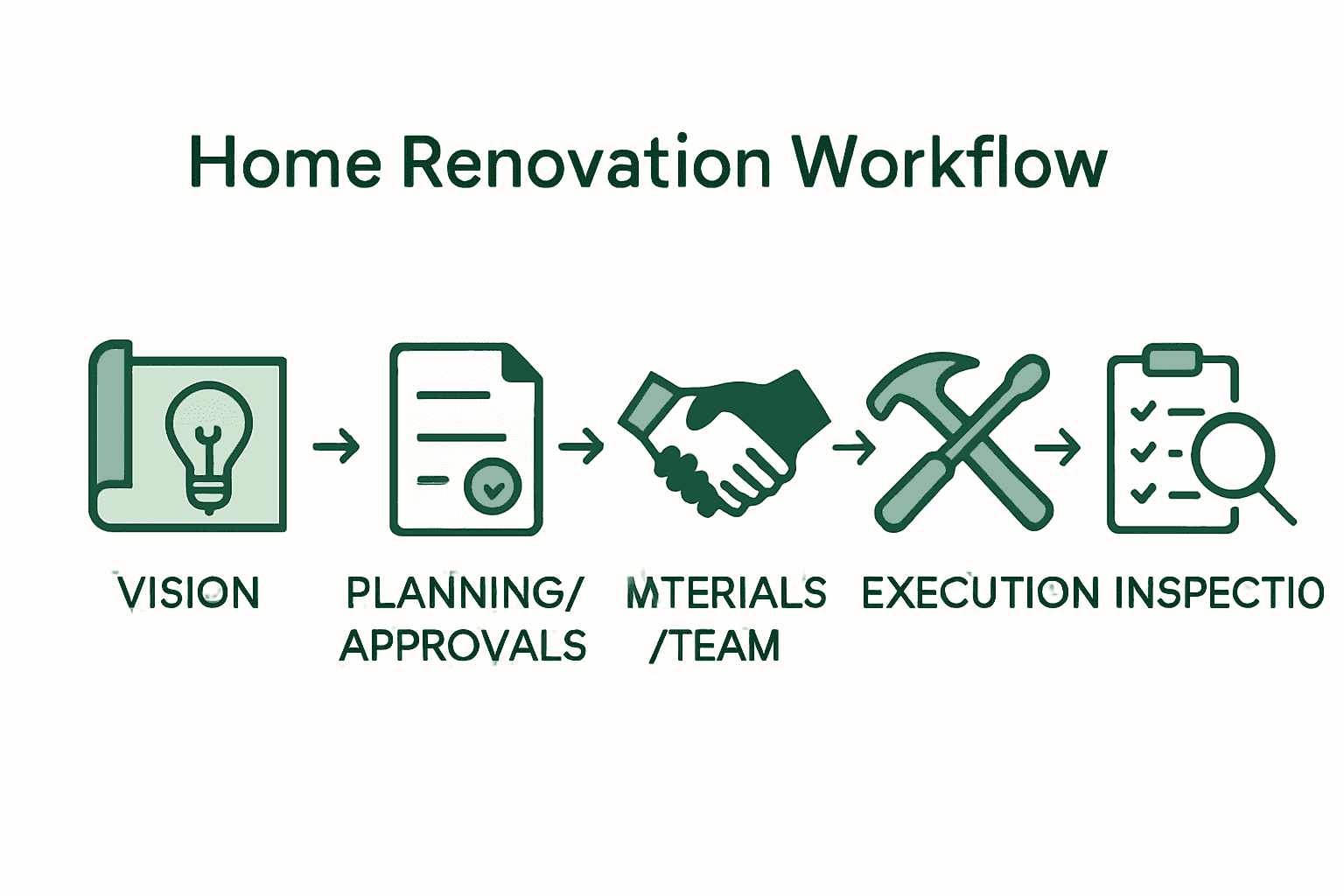
- Step 1: Define Your Renovation Vision And Objectives
- Step 2: Plan Project Scope And Secure Approvals
- Step 3: Select Materials And Finalize Your Team
- Step 4: Execute Each Renovation Phase Seamlessly
- Step 5: Inspect, Verify Quality, And Address Final Details
Quick Summary
Key Insight
Explanation
1. Define Your Renovation Vision
Clearly outline your renovation goals to guide decisions and budget. Assess your current space and visualize improvements for a successful project.
2. Plan Project Scope and Approvals
Document your renovation details and obtain necessary local approvals to comply with regulations and avoid delays. Engage with local authorities from the start.
3. Choose Materials and Professionals Carefully
Select high-quality materials and skilled contractors to ensure your renovation meets your vision. Research options, check references, and maintain clear communication.
4. Execute Phases with Precision
Manage each renovation phase meticulously to track progress and face challenges effectively. Build flexibility into your timeline for unexpected issues.
5. Conduct Final Inspections
Thoroughly inspect the renovated space against your plans. Document any discrepancies and ensure that all aspects of the project meet your expectations before completion.
Step 1: Define your renovation vision and objectives
Defining a clear and comprehensive vision transforms your custom home renovation from a basic project to an extraordinary transformation. Your renovation vision serves as the strategic roadmap that guides every decision, budget allocation, and design choice throughout the entire process.
To craft a powerful renovation vision, start by thoroughly assessing your current space and identifying specific pain points or desired improvements. Walk through each room and ask yourself critical questions: What functionality is currently missing? How does the space feel? What aesthetic elements would enhance your lifestyle? Consider factors like family needs, entertaining requirements, future accessibility, and long-term property value.
Break down your objectives into three key categories: functional improvements, aesthetic upgrades, and lifestyle enhancements. For functional improvements, document precise requirements like additional storage, better traffic flow, or modernized electrical systems. Aesthetic upgrades might involve updating colour schemes, replacing dated fixtures, or creating more open and bright living spaces. Lifestyle enhancements could include creating a home office, designing a gourmet kitchen, or developing multipurpose areas that adapt to your evolving family dynamics.
A helpful tip is to create a visual inspiration board using platforms like Pinterest or Houzz. Collect images that represent your desired style, colour palette, and overall atmosphere. This visual representation will help communicate your vision to home renovation professionals and ensure everyone involved understands your specific goals and expectations.
By investing time in meticulously defining your renovation vision, you set a solid foundation for a successful project that will truly transform your living space into a personalised sanctuary that reflects your unique lifestyle and aesthetic preferences.
Step 2: Plan project scope and secure approvals
Planning your renovation project scope and securing necessary approvals are critical steps that establish a legal and structured foundation for your custom home transformation. This phase ensures your project aligns with local regulations, building codes, and municipal requirements.
The Royal Architectural Institute of Canada emphasizes the importance of consulting various municipal authorities to obtain required renovation approvals. Begin by scheduling a preliminary meeting with your local planning department to discuss your proposed renovation. Gather all necessary documentation, including detailed project plans, architectural drawings, property surveys, and proposed changes to the existing structure.
Carefully document the full extent of your renovation project, breaking down specific elements such as structural modifications, electrical upgrades, plumbing changes, and aesthetic improvements. The National Research Council Canada recommends demonstrating comprehensive code compliance for all proposed modifications. This means ensuring that every aspect of your renovation meets current building standards, energy efficiency requirements, and safety regulations.
A critical tip is to anticipate potential challenges by consulting with a professional who understands local building codes and zoning regulations. Some municipalities have specific requirements for heritage properties, environmental considerations, or neighbourhood aesthetic guidelines. Your renovation plans might require additional permissions if you are in a designated historic district or have specific environmental restrictions.
Prepare a comprehensive project timeline that includes buffer periods for potential approval delays. Most municipal approval processes can take anywhere from two to eight weeks, depending on the complexity of your renovation and local government procedures. By proactively managing this stage, you set the groundwork for a smooth, legally compliant renovation that transforms your living space while respecting all regulatory requirements.
Step 3: Select materials and finalize your team
Selecting the right materials and assembling a skilled professional team are pivotal steps in transforming your renovation vision into a tangible reality. This phase requires careful research, strategic decision making, and thoughtful collaboration to ensure exceptional results.
West Experts Renovation emphasizes the critical importance of finding skilled professionals with substantial experience and demonstrated expertise. Begin by conducting comprehensive interviews with potential contractors, architects, and designers. Request detailed portfolios, verify professional credentials, and check references from previous clients to assess their track record of delivering high quality custom renovation projects.
When selecting materials, prioritize quality, durability, and compatibility with your overall design aesthetic. Consider factors such as longevity, maintenance requirements, performance characteristics, and how different materials interact within your specific renovation context. Research sustainable and energy efficient options that align with contemporary building standards and potentially offer long term cost savings through improved home performance.
A strategic approach involves creating a comprehensive material selection matrix that evaluates each potential material across multiple dimensions including cost, durability, aesthetic appeal, environmental impact, and maintenance requirements. This systematic method helps you make informed decisions that balance your budgetary constraints with your desired design outcomes.

Ensure clear communication protocols are established with your selected team. Schedule regular project meetings, define precise expectations, and create transparent documentation outlining roles, responsibilities, timelines, and potential contingency plans. By meticulously selecting your materials and professional team, you lay the groundwork for a successful renovation that will transform your living space with precision and excellence.
Step 4: Execute each renovation phase seamlessly
Successful home renovation demands strategic planning, precise coordination, and meticulous execution across multiple complex phases. Your ability to manage each stage with precision will determine the ultimate quality and success of your transformation project.
McNamara Design emphasizes the critical importance of balancing functional design considerations with project budget and specific client needs. Begin by creating a comprehensive project timeline that breaks down each renovation phase into manageable segments. This approach allows you to track progress, anticipate potential challenges, and maintain clear communication with your professional team throughout the entire process.
Peace of Mind Interiors recommends establishing rigorous documentation protocols to ensure smooth progression through each renovation stage. This includes maintaining detailed records of design approvals, material selections, permit documentation, and ongoing progress reports. Develop a centralised project management system that enables real time tracking and transparent communication among all stakeholders.
A strategic tip is to build flexibility into your project timeline. Unexpected challenges are inevitable in complex renovations, so incorporate buffer periods and contingency funds to address potential delays or unforeseen circumstances. Regular weekly meetings with your renovation team can help identify and mitigate potential issues before they become significant obstacles.
Prepare for potential disruptions by creating alternative living arrangements if necessary. Some renovation phases may temporarily render parts of your home unusable, so plan accordingly to minimise stress and maintain your quality of life during the home renovation process. By approaching each phase with careful planning, adaptability, and clear communication, you transform a potentially stressful experience into a smooth and rewarding journey towards your dream living space.
Step 5: Inspect, verify quality, and address final details
The final stage of your home renovation is a critical phase where meticulous attention to detail determines the ultimate success and satisfaction of your entire project. This is your opportunity to ensure every aspect of the renovation meets your exacting standards and vision.
The Canada Mortgage and Housing Corporation emphasizes the necessity of preparing detailed plans and specifications to ensure clarity and quality in the final outcome. Conduct a comprehensive walkthrough of the renovated space, systematically examining each element against your original design specifications. Pay close attention to craftsmanship, material quality, finish precision, and functional performance of all new installations.
Create a detailed inspection checklist that covers every aspect of the renovation. This should include structural integrity, electrical and plumbing systems, paint and finish quality, flooring alignment, cabinetry installation, hardware functionality, and overall aesthetic coherence. Document any discrepancies or areas requiring adjustment, and discuss these findings immediately with your renovation team to ensure prompt resolution.
A strategic tip is to schedule your final inspection during natural daylight hours, which reveals subtle imperfections that artificial lighting might conceal. Bring your original design plans and take comprehensive photographs to document the completed work. This visual record serves as both a quality verification tool and a potential reference for future maintenance or additional renovation phases.
Prepare a final punch list of minor adjustments or touch-ups required to achieve perfection. Schedule a dedicated meeting with your home renovation contractor to review these items and establish a clear timeline for completing any remaining work. By maintaining a rigorous and systematic approach to final inspections, you ensure that your renovation not only meets but exceeds your expectations, transforming your living space into the dream environment you envisioned.
Elevate Your Custom Home Renovation with Expert Guidance and Craftsmanship
Every successful custom home renovation begins with a clear vision and precise execution to overcome challenges like managing project scope, securing approvals, selecting quality materials, and maintaining flawless coordination throughout each phase. At Mighton Construction, we understand the emotional impact of transforming your living space and the importance of meticulous attention to detail in delivering premium results that reflect your unique lifestyle.
Trust our experienced team to guide you through every step from concept to completion. With over 30 years of local expertise, we specialize in comprehensive renovation services including kitchen and bathroom makeovers, accessible upgrades, and whole-home transformations. Discover how our proven workflow aligns perfectly with the critical stages outlined in “Custom Home Renovations Workflow for Premium Results” to turn your vision into reality.
Ready to experience a seamless renovation led by trusted professionals who value transparent communication and exceptional craftsmanship? Visit our General Contracting Archives and explore our Kitchen Archives for inspiration and insights. Connect with Mighton Construction today at mightonconstruction.com to start your personalised renovation journey and secure your dream home transformation now.
Frequently Asked Questions
What are the key steps in the custom home renovations workflow?
The key steps in the custom home renovations workflow include defining your renovation vision, planning the project scope, selecting materials and professionals, executing each phase, and inspecting the final results. Start by outlining your specific objectives to ensure a clear roadmap for your project.
How can I effectively communicate my renovation vision to my team?
You can effectively communicate your renovation vision by creating a visual inspiration board that showcases your desired styles, colours, and layouts. Gather images and reference materials to present during initial meetings with your renovation team, ensuring they fully understand your goals.
What should I consider when planning the scope of my renovation project?
When planning the scope, consider the functionalities you wish to improve, the aesthetic upgrades you desire, and any lifestyle enhancements for your home. Document these clearly, breaking them into actionable items such as increased storage or enhanced lighting.
How do I ensure that my renovation project meets local building codes?
To ensure your renovation meets local building codes, consult with professionals who have expertise in your area’s regulations. Prepare detailed project plans and submit them for review to the local planning department before beginning any work.
What should I include in my final inspection checklist?
Your final inspection checklist should include aspects such as material quality, craftsmanship, and the functionality of installations. Systematically assess each element against your original design specifications and document any discrepancies for prompt resolutions.
How can I manage potential delays during the renovation process?
To manage potential delays, build buffer time into your project timeline and maintain regular communication with all team members. Schedule weekly meetings to identify and address challenges early, which can prevent significant setbacks.
Recommended
- What Is Luxury Home Renovation? Complete Overview
- How to Hire Renovation Contractor for High-End Homes
- Master Home Renovation Project Management for Luxury Results
- 7 Inspiring Examples of Luxury Renovations for Modern Homes
- Master Your Extension Project Management Workflow Efficiently - Reltic Extend
- Save Time & Money with Our Design & Build Process