
Cost Estimation Explained: Building With Confidence

Building a luxury cottage or transforming your primary residence in South Georgian Bay demands careful financial planning and a clear understanding of what drives construction costs. High-end property owners know that every detail, from design vision to material selection, influences the overall investment. This guide reveals how professionals create a comprehensive financial roadmap through effective cost estimation, offering clarity and confidence whether you are planning a custom build or a major renovation.
Table of Contents
- Defining Cost Estimation In Construction
- Major Cost Estimation Methods Used In Canada
- Key Cost Drivers For Custom Home Builds
- How Builders Ensure Transparent Costing
- Common Pitfalls And How To Avoid Them
Key Takeaways
Point
Details
Importance of Cost Estimation
Accurate cost estimation is essential for transforming architectural plans into financially viable construction projects. It provides a clear financial roadmap for stakeholders.
Utilizing Multiple Methods
Combine various cost estimation methods to enhance financial projections, ensuring comprehensive and reliable estimates throughout the project’s lifecycle.
Understanding Cost Drivers
Key factors like labour market dynamics, material pricing, and geographic location significantly influence construction budgets, necessitating careful consideration in planning.
Ensuring Transparency
Implement transparent costing strategies including detailed documentation and open book accounting to build trust and clarity with clients throughout the project.
Defining Cost Estimation in Construction
Cost estimation in construction represents a critical process where professionals forecast and calculate the total financial investment required to transform architectural plans into completed structures. Construction cost estimation is both a scientific methodology and an artistic skill that demands precision, experience, and strategic analysis.
At its core, cost estimation involves comprehensive financial planning that goes far beyond simple material and labour calculations. Project cost forecasting encompasses multiple complex components, including:
- Capital investment expenses
- Land acquisition costs
- Design and planning fees
- Construction materials and labour
- Equipment and machinery requirements
- Supervision and management expenses
- Insurance and financing costs
- Long-term operational maintenance expenses
Construction professionals recognize that effective cost estimation requires a multi-layered approach with varying levels of accuracy depending on project stage and available information. Different estimation methods provide progressively detailed financial projections, ranging from initial rough approximations to highly precise final budgets.
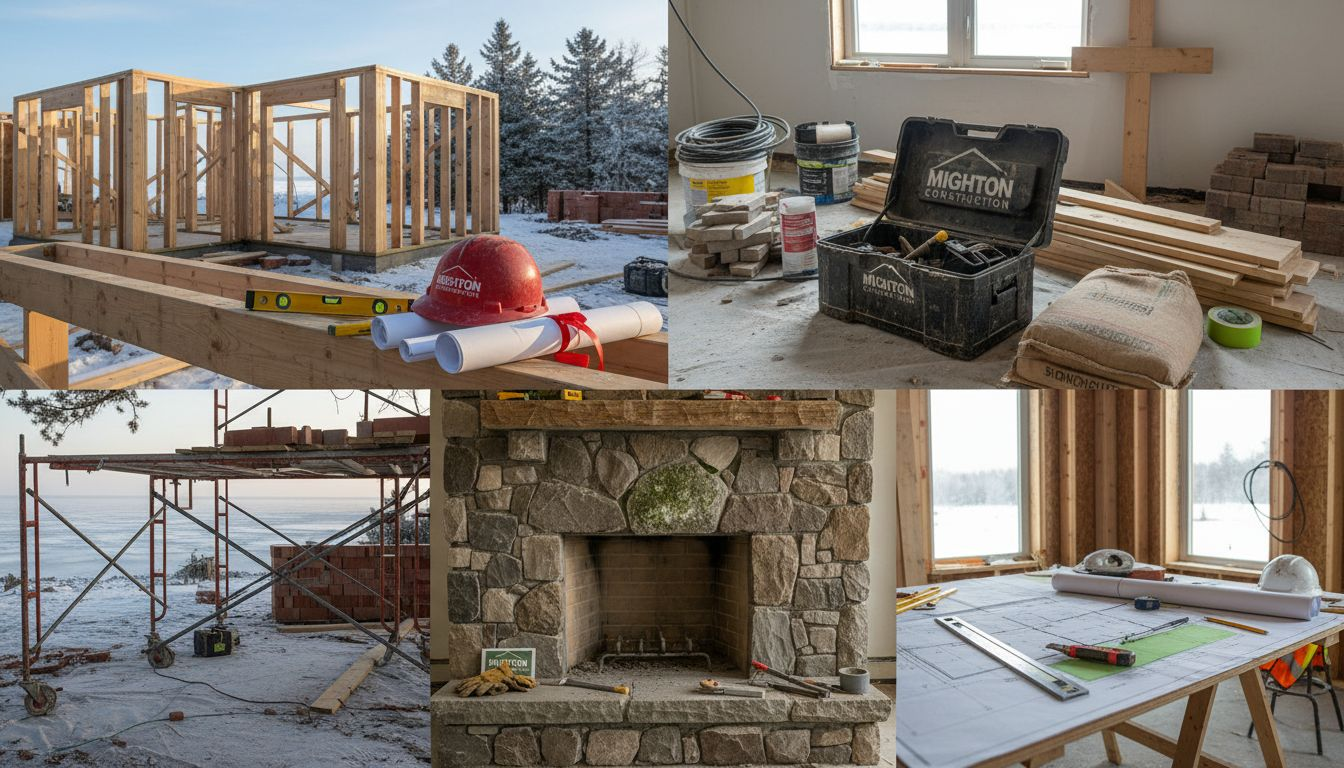
The primary goal of cost estimation remains consistent: delivering a comprehensive financial roadmap that helps owners, developers, and contractors understand potential investments, manage risks, and make informed decisions. Accurate cost estimation transforms abstract design concepts into tangible, financially viable construction projects by providing clear, actionable financial insights.
Pro tip: Always include a 10-15% contingency buffer in your initial cost estimates to account for unexpected expenses and potential market fluctuations.
Major Cost Estimation Methods Used in Canada
Canadian construction professionals employ multiple sophisticated cost estimation methods to ensure financial accuracy and project success. These methodologies range from data-driven analytical approaches to nuanced expert assessments, each offering unique insights into potential project investments.
The primary cost estimation techniques used in Canadian construction include:
- Analogous Estimation: Comparing current project costs with similar past projects
- Parametric Estimation: Using statistical relationships and historical data to calculate projected expenses
- Bottom-Up Estimation: Detailed cost calculation at individual component levels
- Expert Judgment: Leveraging professional experience and industry insights
- Actual Cost Methods: Using precise historical financial records for future projections
Parametric estimation provides particularly robust financial forecasting by establishing mathematical models that correlate project variables with potential costs. This method allows construction professionals to develop highly accurate budget predictions by analyzing complex relationships between design specifications, material requirements, and labour expenses.
Analytical cost estimation techniques help contractors manage financial risks by creating progressively refined budget models throughout a project’s lifecycle. These approaches enable more transparent communication between stakeholders, helping owners, developers, and construction teams align their financial expectations and investment strategies.
Pro tip: Combine multiple cost estimation methods to create more comprehensive and reliable financial projections for your construction project.
Here’s a comparison of major cost estimation methods used in Canadian construction projects:
Method
Data Requirement
Accuracy Level
Typical Usage Scenario
Analogous Estimation
Minimal historical data
Low to moderate
Early project planning
Parametric Estimation
Detailed statistics
Moderate to high
Budgeting for repetitive tasks
Bottom-Up Estimation
Comprehensive detail
Very high
Final budget confirmation
Expert Judgment
Professional insights
Varies by experience
Unique or first-time projects
Actual Cost Methods
Exact financial records
Highest
Future projects post-completion
Key Cost Drivers for Custom Home Builds
Custom home construction in Canada involves navigating complex residential building construction costs influenced by multiple dynamic factors. Understanding these cost drivers is crucial for homeowners planning their dream custom home in regions like South Georgian Bay.
The primary cost drivers impacting custom home builds include:
- Labor Market Dynamics: Skilled trade shortages and elevated wage rates
- Material Pricing: Fluctuating costs for key construction materials
- Geographic Location: Regional variations in construction expenses
- Specialized Trade Requirements: Premium costs for intricate fabrication and finishing work
- Supply Chain Complexities: Sourcing challenges and material availability
Construction price escalations have been particularly pronounced, with residential construction prices experiencing significant jumps. Since 2020, the Canadian construction market has seen material costs for steel, lumber, and concrete increase dramatically, directly impacting overall project budgets.
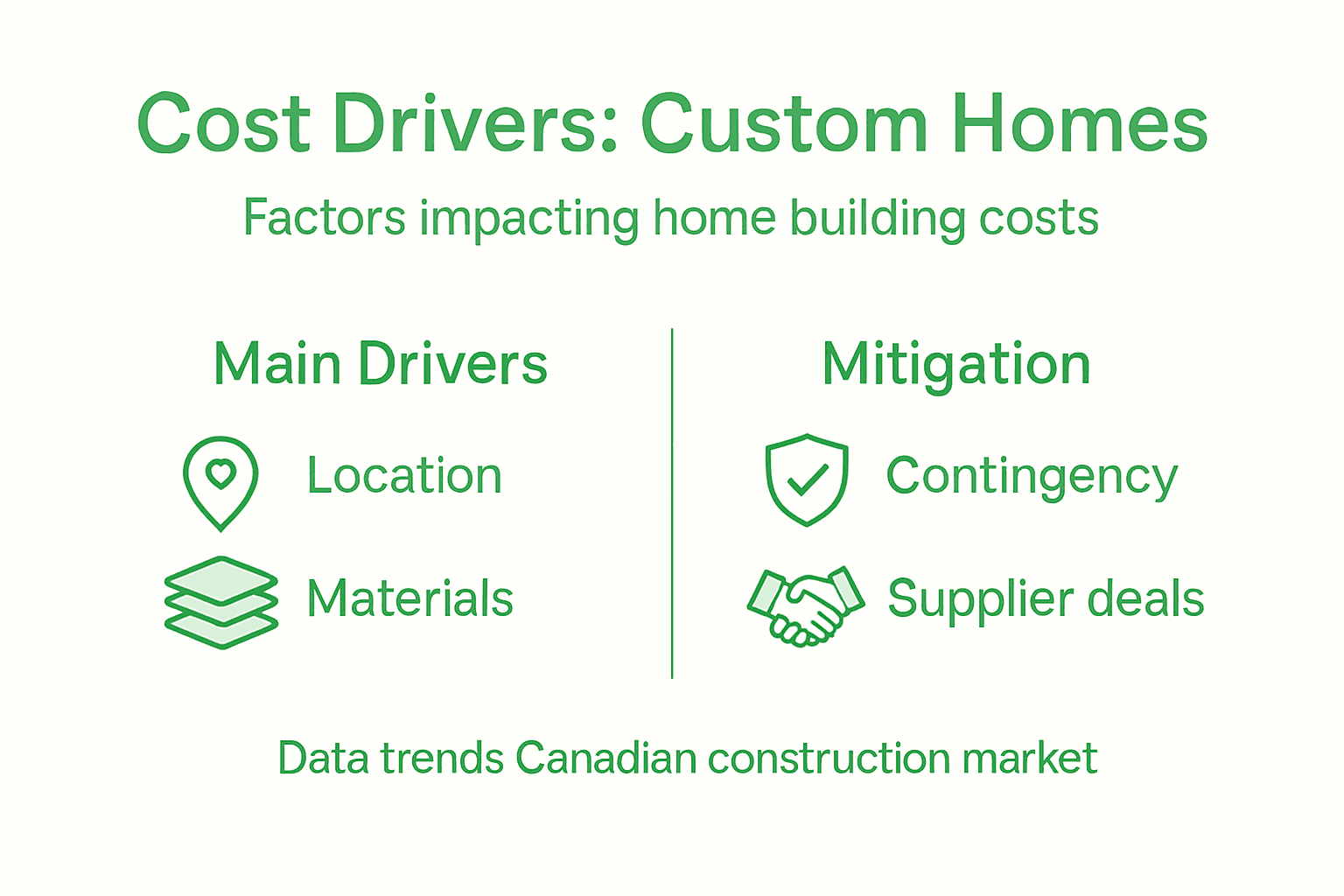
Geographical considerations play a substantial role in cost variations. Urban centres like Toronto and Vancouver typically experience higher construction expenses compared to rural regions in South Georgian Bay. Local factors such as terrain complexity, municipal regulations, and accessibility can significantly influence the final project budget.
Pro tip: Build a 15-20% contingency buffer into your initial budget to accommodate potential material and labour cost fluctuations.
To clarify the most influential factors in custom home budgets, here’s a summary of key cost drivers and their specific impacts:
Cost Driver
Impact on Budget
Typical Mitigation Approach
Labour Market Trends
Raises overall labour spend
Contract skilled trades early
Material Price Shifts
Causes budget revisions
Lock-in material prices upfront
Location Differences
Regional cost fluctuation
Assess regulations before design
Trade Specialization
Premium charges for skills
Prioritise essential specialities
Supply Chain Issues
Delay increases costs
Source locally where possible
How Builders Ensure Transparent Costing
Transparent costing is a fundamental commitment for professional construction firms, requiring meticulous documentation and clear communication of comprehensive cost tracking strategies. By implementing rigorous financial management practices, builders create trust and clarity throughout the project lifecycle.
Key strategies for ensuring cost transparency include:
- Detailed Documentation: Itemizing every expense with precise categorization
- Regular Financial Reporting: Providing ongoing cost updates to clients
- Open Book Accounting: Sharing actual invoices and material costs
- Digital Cost Tracking: Using advanced software for real-time expense monitoring
- Standardized Cost Frameworks: Adopting industry-standard estimation protocols
Construction financing approaches have evolved to support greater transparency, with modern builders leveraging technology to provide clients unprecedented visibility into project expenses. Sophisticated digital tools now enable real-time expense tracking, allowing homeowners to understand exactly where their investment is being allocated.
Each project requires a tailored approach to financial communication. Proactive reporting means clients receive comprehensive breakdowns that explain not just costs, but the reasoning behind specific expenditures. This approach transforms potentially complex financial information into clear, understandable insights that build client confidence and trust.
Pro tip: Request a detailed, line-item budget breakdown before project commencement to ensure complete understanding of potential expenses.
Common Pitfalls and How to Avoid Them
Cost estimation in custom home building requires strategic awareness of potential challenges that can derail financial planning. Construction cost estimation risks demand meticulous attention to prevent budget overruns and project complications.
Key pitfalls to anticipate and mitigate include:
- Incomplete Scope Definition: Failing to detail all project requirements
- Material Price Volatility: Neglecting potential market fluctuations
- Unrealistic Labor Productivity: Underestimating actual workforce constraints
- Inadequate Risk Management: Overlooking potential unexpected expenses
- Poor Market Research: Ignoring regional construction cost variations
Project estimating techniques emphasize the importance of progressive estimate refinement. Successful builders continuously update their financial projections as more information becomes available, using probabilistic estimating methods to establish realistic cost ranges and uncertainty margins.
Probabilistic estimating transforms cost projection from a rigid calculation to a flexible, adaptive process. By establishing realistic ranges and accounting for potential variations, custom home builders can provide more accurate and trustworthy financial insights to their clients, reducing the likelihood of unexpected expenses and maintaining project transparency.
Pro tip: Implement a dynamic budgeting approach that includes regular cost reassessments and maintains a 15-20% contingency buffer for unforeseen expenses.
Build Your Custom Home With Confidence and Transparent Costing
Understanding the complexities of construction cost estimation is essential when planning your dream home or renovation in South Georgian Bay. At Mighton Construction Limited, we specialise in tackling the common challenges like material price fluctuations, labour cost variability, and transparent budgeting discussed in the article. We bring over 30 years of trusted local expertise to provide you with clear financial roadmaps and upfront communication, so you avoid surprises and stay in control every step of the way.
Ready to take the next step? Explore our detailed Custom Homes services designed to meet your individual vision while keeping budgeting transparent and precise. Whether you are building in Wasaga Beach or nearby communities, we manage your project from design to completion. Visit our Home page and take advantage of our expert team committed to delivering luxury craftsmanship and honest, reliable cost estimation. Secure your consultation today and build with confidence knowing your investment is in capable hands.
Frequently Asked Questions
What is construction cost estimation?
Cost estimation in construction is the process of forecasting the total financial investment needed to complete a project, encompassing various components such as labor, materials, and other associated expenses.
What are the primary methods used for cost estimation in construction?
The main methods include Analogous Estimation, Parametric Estimation, Bottom-Up Estimation, Expert Judgment, and Actual Cost Methods, each offering different levels of accuracy and data requirements.
How can I effectively manage risks associated with cost estimation?
Managing risks can be achieved through detailed scope definition, regular updates of cost projections, using probabilistic estimating methods, and maintaining a contingency buffer in the budget to account for unexpected expenses.
What are the key cost drivers in custom home building?
Key cost drivers include labor market dynamics, material pricing, geographic location, specialized trade requirements, and supply chain complexities, all of which significantly impact overall project budgets.